
The Cornish pasty is more than a lunch. It is a Protected Geographical Indication, a folk emblem of the county alongside the black-and-white St Piran’s flag, and the single food most visitors ask about. Walk through any Cornish town and you will pass three or four bakeries claiming the best pasty in Cornwall; eat one a day for a week and you will understand why locals hold strong, unshakeable opinions about which is worth queuing for. What follows covers the whole story: where the pasty came from, the recipe the law actually protects, how a good one is made, where to find them by area, and how to tell a proper Cornish pasty from a petrol-station imitation.
What a Cornish Pasty Actually Is
A Cornish pasty is a savoury baked parcel of shortcrust pastry filled with chunky-cut beef, swede, potato and onion, seasoned with salt and plenty of pepper. That is the whole list. The filling goes in raw, the pastry is folded over and sealed with a thick rope crimp along one side, and the pasty is baked slowly so the meat and vegetables cook in their own steam. Cut one open and you should see distinct chunks and a little liquor pooling at the bottom, not a smooth paste.
The word most people get wrong is swede. In Cornwall the orange root vegetable that English shops sell as swede is often called turnip, which confuses visitors no end, but the vegetable in the tin is the same either way. There is no carrot, no pea, no gravy and no cheese in the traditional article. Those things are all perfectly nice; they are simply a different food.
The Protected Recipe
In 2011 the Cornish pasty was granted Protected Geographical Indication (PGI) status, first under European law and carried into UK law after Brexit. The protection is specific, and worth knowing if you care whether the thing in your hand is the real deal. To be sold as a “Cornish pasty” it must be made in Cornwall, contain at least a rough one-eighth beef along with swede, potato and onion, be seasoned only with salt and pepper, be filled raw and then slow-baked, and be crimped on the side rather than over the top. The finished shape is the familiar letter D. Anything failing those tests can be a very good pastry; it just cannot legally borrow the name.
None of this is food-snobbery for its own sake. The PGI exists because the pasty is genuinely tied to this place, and the standard is what stops a factory two hundred miles away from stamping “Cornish” on a minced-beef turnover. When a Cornish baker talks about a “proper” pasty, this is roughly the checklist in their head.
Where the Pasty Came From
The pasty as we know it was shaped by the tin and copper mines. Through the 18th and 19th centuries Cornwall was the largest tin producer on earth and a major source of copper, and thousands of men worked ten-hour underground shifts in the great mines around Camborne, Redruth and St Just. They needed a lunch that travelled well, held its heat and could be eaten with filthy hands, and the pasty answered all three.
The thick crimped edge was the practical genius of it. A miner could hold the pasty by that crust, eat the rest, and throw the handled end away, so the arsenic and other minerals on his fingers never reached the food. The pastry casing kept the filling warm for hours down a shaft, and a sturdy pasty could survive being carried, dropped and jostled without falling apart. Bal-maidens working the surface and farm labourers in the fields ate them for the same reasons.
One charming story deserves puncturing. You will often hear that the classic miner’s pasty had savoury filling at one end and something sweet, apple or jam, at the other, a two-course meal in one crust. It is a lovely idea and it makes a good line on a tour, but the evidence for it is thin; most working pasties were a single savoury filling from tip to tip. The initials-in-the-corner tradition, where a family’s pasty was marked so each person could set theirs aside half-eaten and finish it later, is on firmer ground.
The Crimp
The side crimp is the pasty’s fingerprint. It is made by folding the edge of the pastry over itself in a run of overlapping pinches, building a thick rope that seals the parcel and runs the length of one side. Done well it is even and confident; done by a person rather than a machine it is never quite identical twice. A practised crimper at a busy bakery will close a pasty one-handed in well under a minute, and watching it is oddly satisfying. If you only remember one test, remember this: crimp on the side is Cornish, crimp over the top is a Devon pasty, and the two counties have been mildly at war about it for a very long time.
What Separates a Great Pasty from a Merely Adequate One
Once you have eaten a few, the differences become obvious. The pastry should be golden and hold its shape, crisp enough to have some bite but not so hard it shatters, and crucially it should be cooked underneath as well as on top. A soggy base is the commonest failing of a mass-produced pasty that has sat too long in a warm cabinet. Good bakers use strong flour and a proper fat, often lard, sometimes butter, occasionally both, and they do not skimp on the thickness so the parcel survives handling.
The filling is where the real ones pull ahead. Beef should be hand-cut skirt, the cheap-but-flavoursome cut that turns meltingly tender over a long slow bake; chuck is an acceptable stand-in. Never mince. The vegetables should be recognisable, cut into chunks or thin slices rather than pulped, and the swede should be present enough to taste. Seasoning is where timid bakers lose the plot: a pasty needs a genuinely assertive amount of white pepper and salt, because the pastry is bland and the filling steams rather than fries. A slightly peppery hit as you bite in is a good sign.
The final tell is the liquor. Cut a great pasty in half and a little savoury juice should run out, the sign that the raw filling cooked in its own steam and kept its moisture. A dry, crumbly interior usually means pre-cooked filling or an overbaked pasty. When people rave about a particular bakery, this combination, honest pepper, chunky filling, juicy centre and a base that stays crisp, is almost always what they are responding to, even if they would not put it in those words.
Where to Find the Best Pasties, by Area
Cornwall does not have a single best pasty, and anyone who tells you otherwise is picking a fight. What it has is a scattering of bakeries that locals rate, clustered around the towns you are likely to visit anyway. Here is a working map, grouped roughly west to east, using places that have earned their reputations.
West Cornwall and the Far West
Philps Pasties is the name most often spoken with reverence, with bakeries at Hayle, St Ives, Marazion and beyond. The Hayle original in particular draws a steady queue and is widely held to be about as authentic as a shop-bought pasty gets. Down on the Lizard, Ann’s Pasties has an almost devotional following; the shops in Helston and in the Lizard village itself are treated as small pilgrimages by people who plan a whole day’s walk around collecting one. Around St Ives and Penzance you will also find Warrens Bakery, which has a fair claim to being Britain’s oldest Cornish pasty maker, and the small St Ives Bakery tucked behind the harbour. If you are basing yourself out here, the western tip is arguably the strongest pasty territory in the county, and it pairs naturally with the wider food scene covered in our Cornwall food and drink guide.
North Cornwall and Padstow
Padstow punches above its size, partly because of its status as a food town. The Chough Bakery on the harbour is a multiple award winner and takes its crimping seriously, while Stein’s Patisserie sells a pricier but very well-made version alongside the pastries. Smaller artisan places such as Buttermilk round out the town. If you are exploring the north coast, the pasty slots neatly into a day around Padstow, and our complete guide to Padstow covers where else to eat and what to see. Further up the coast, the surf town of Bude has its own bakeries worth a stop after a windswept beach walk.
Truro, the South Coast and the East
Around the county town and the south coast the chains become more visible, and they are not to be dismissed. Rowe’s Cornish Bakers, which grew out of Falmouth, and Pengenna Pasties both have loyal local custom and turn out a reliable, honest pasty. The Cornish Bakery has branches in most sizeable towns and is consistent rather than legendary, useful to know when you are hungry in an unfamiliar place. Over towards the quieter south-east, Sarah’s Pasty Shop in Looe has taken prizes at pasty competitions, and the estuary town of Fowey and the Roseland peninsula make a gentle base for the eastern end of the county.
Beyond the Classic: Variations You’ll Actually See
The protected recipe is beef, but Cornish bakeries have always sold more than the one thing, and some of the alternatives are excellent. Cheese and onion is the long-standing vegetarian choice and, done properly with a sharp mature cheese and real onion, it holds its own against the beef. Steak and Stilton turns up as a slightly plusher option, still made with chunky meat. Lamb versions appear as seasonal specials. None of these can legally be called “Cornish pasties” under the PGI, since only the beef recipe qualifies, but any Cornish baker will happily sell you one.
Vegan pasties have improved enormously in the past few years and are now a fixture rather than a novelty; some of the plant-based fillings are genuinely good, and a decent bakery will keep them separate to avoid cross-contamination. If you are eating this way more broadly, our guide to vegan and vegetarian dining in Cornwall goes further. At the other end sit the sweet pasties, apple, blackberry, the occasional chocolate, which are more novelty than tradition and best treated as a pudding rather than proof of the old two-course legend.
Dietary Notes
Gluten-free pasties are increasingly common, though they are usually a separate small batch rather than a standard line, so it is worth a phone call or an early visit if you specifically need one. The classic beef pasty is dairy-free by default, since the pastry is made with lard or a dairy-free fat and the filling contains no milk, but cheese and steak-and-Stilton versions obviously are not. If a nut allergy is a concern, most savoury pasties are fine, but a small artisan bakery producing sweet lines too may not be able to guarantee it. When in doubt, ask; Cornish bakers are used to the question.
How a Pasty Is Made
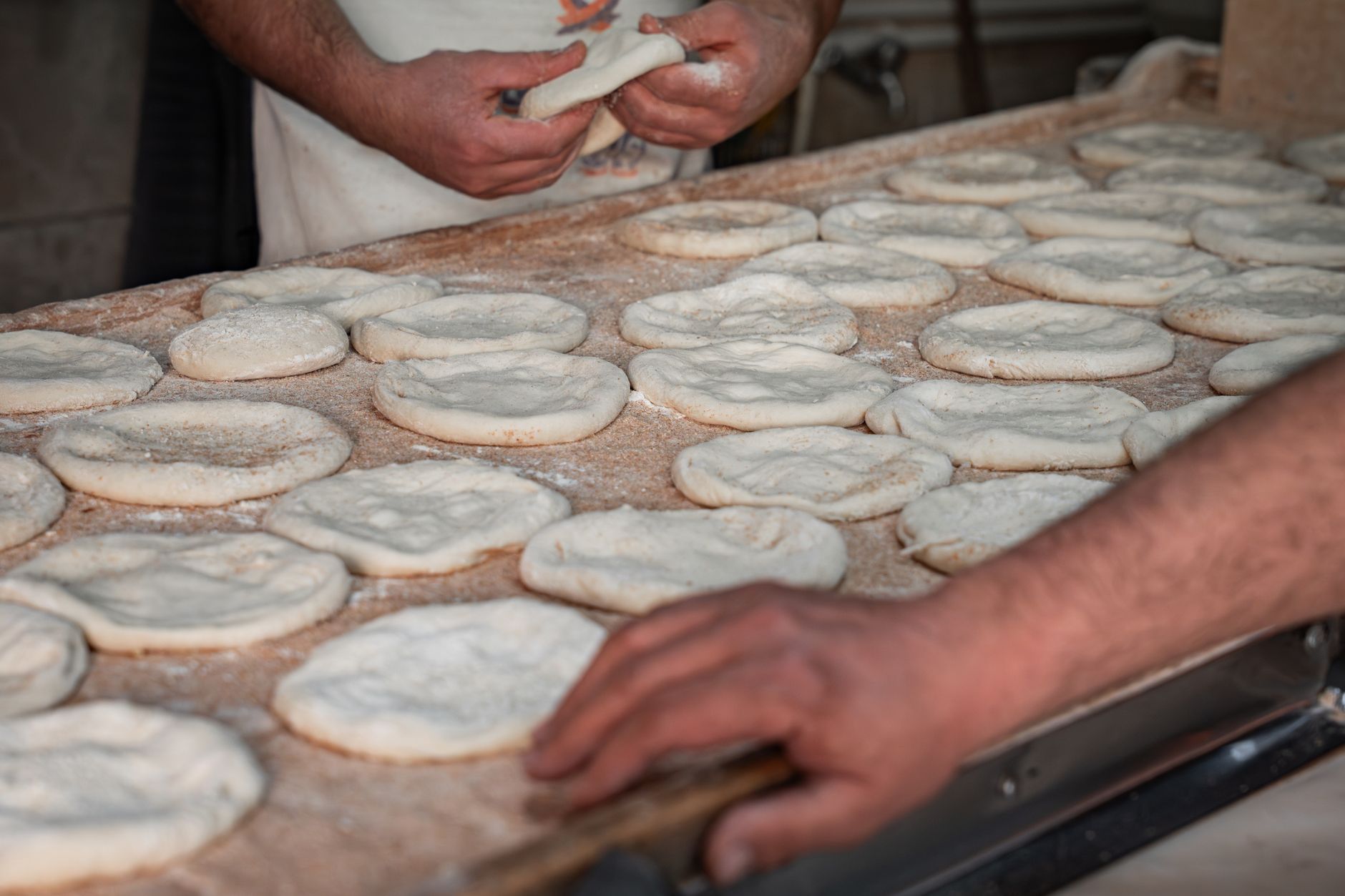
Understanding the method makes it much easier to judge a good one, and it is simpler than it looks. The pastry is strong bread flour, fat and a little salt and water, mixed, kneaded only briefly and rested so it rolls out without shrinking back. Some bakeries add a rough-puff step for extra flake, but the traditional pasty is a sturdy shortcrust built to hold its shape, not a delicate thing.
The filling is prepared raw and layered rather than mixed. Skirt beef is cut into small chunks, swede and potato are sliced thin, the onion is chopped fine, and everything is seasoned hard with salt and pepper. The pastry is rolled to a circle roughly the width of a dinner plate, and the vegetables and meat are stacked on one half, usually potato and swede first as a cushion, then beef, then onion on top so its moisture works down through the rest as it cooks.
Then the pastry is folded over and crimped along the side, and the pasty goes into a hot oven for a short blast before the heat is dropped for a long, slow finish, often close to an hour. That slow second stage is the whole trick: it lets the raw filling steam and soften and release its juices without the pastry burning. It is also why a genuine pasty cannot really be rushed, and why the best ones are worth building a lunch stop around.
Reheating and Freezing
A pasty is at its peak straight from the oven, still too hot to hold comfortably, but it reheats well if you treat it kindly. Wrap it loosely in foil and warm it through in a low oven; never use the microwave, which turns the pastry to damp cardboard and is regarded locally as something close to vandalism. Pasties freeze happily, both raw and cooked. A cooked one keeps a month or two in the freezer and can be reheated from frozen in a moderate oven over half an hour or so, which makes buying a few extra from a favourite bakery a sensible plan.
Eating a Pasty the Cornish Way
There is no ceremony to this, which is part of the appeal. A pasty needs no plate and no cutlery; you hold it by the crimp, bite from the end so the first burst of steam escapes away from your face, and work along it. The crust is not a garnish, and eating the whole thing is entirely normal now that nobody’s fingers are covered in arsenic.
On the vexed question of sauce, the honest answer is that a properly seasoned Cornish pasty does not need ketchup, brown sauce or anything else, and a fair number of locals will tell you so at length. If you want it, nobody will actually stop you, but try one plain first from a good bakery and you may find the argument makes sense. The other thing worth saying is that a warm pasty eaten outdoors, on a harbour wall or halfway round a cliff walk, simply tastes better than the same pasty eaten standing in the shop. Cornwall’s great pasty ritual is portable for a reason.

Combining a Pasty With a Day Out
The pasty was designed to be carried, so the best way to enjoy it is still to take it somewhere. A pasty in a paper bag and a stretch of the coast path is one of the county’s genuinely perfect combinations, and the pairings almost suggest themselves. Pick one up in Padstow from the Chough or Stein’s and walk a section of the Camel Trail along the estuary. Collect a Philps or Warrens in St Ives and carry it round to Carbis Bay along the low cliff path. Buy an Ann’s pasty on the Lizard and eat it out at Lizard Point, the most southerly place in Britain, with the sea working below you. For more routes that end well with a pasty, our best circular walks in Cornwall is a useful companion.
Timing helps. Bakeries sell out of the popular fillings by early afternoon in high summer, so a mid-morning purchase gives you the best choice and lets the pasty cool to a sensible eating temperature by the time you have walked out to your spot. If you are staying somewhere with a good breakfast, a pasty makes the ideal late, movable lunch; our guide to what to expect at a Cornish bed and breakfast explains how the mornings usually run.
Common Mistakes Visitors Make
The first is buying a pasty at a motorway services or a supermarket on the way down and deciding, on that evidence, that pasties are overrated. A mass-chilled, reheated pasty is to a fresh bakery one roughly what a service-station sandwich is to lunch in a good cafe. Wait until you are actually in Cornwall.
The second is judging by size. The enormous pasties in some tourist-facing shops look like value, but a pasty that is mostly pastry, or one padded out with cheap filling to hit a weight, is not the goal. A medium pasty with a generous, well-seasoned filling beats a giant one with a hollow middle every time. The third mistake is eating it too hot straight from the oven and scalding your mouth on the steam, then not tasting the next three bites. Give it a few minutes. The fourth, forgivable in the moment, is not buying a spare for later.
Pasty Events Worth Timing a Visit Around
If you are the sort of visitor who likes to build a trip around something, the pasty has its own small calendar. The World Pasty Championships are held at the Eden Project each spring, with categories for professionals and amateurs and a good deal of cheerful seriousness about crimping. St Piran’s Day on the 5th of March, Cornwall’s national day, brings pasty events and processions across the county. Cornish Pasty Week in late winter sees bakeries running their own celebrations and offers. None of these is essential to enjoying a pasty, but if your dates happen to line up, they add a bit of colour, and they sit alongside the county’s wider programme in our Cornwall events and festivals calendar.
What to Drink With a Pasty
A pasty is happy with very little, and the classic accompaniment is simply a mug of strong tea, the builders’ brew that miners would recognise. If you want something Cornish and grown-up, a local cask ale such as Skinner’s Cornish Knocker or one of Sharp’s pale ales suits the peppery filling well, and a dry Cornish cider cuts through the pastry nicely. For a celebratory pasty, a glass of Camel Valley sparkling is not as daft as it sounds. If touring the county’s drinks is part of the plan, our guide to Cornwall brewery and distillery tours maps the breweries and distilleries worth a visit.
Frequently Asked Questions
What is a real Cornish pasty?
A side-crimped, D-shaped baked pastry made in Cornwall and filled with chunky beef, swede, potato and onion, seasoned only with salt and pepper. The recipe carries PGI protection, so the name is legally reserved for pasties meeting that standard.
Where is the best place to buy a pasty in Cornwall?
There is no single answer, but the names locals return to include Philps in Hayle and the far west, Ann’s Pasties on the Lizard, and the Chough Bakery in Padstow. The honest advice is to try two or three from different bakeries and pick your own favourite.
What’s the difference between a Cornish and a Devon pasty?
The crimp. A Cornish pasty is sealed along the side; a Devon pasty is crimped over the top. The fillings and traditions differ too, but the crimp is the instant giveaway.
Can a pasty be vegetarian and still be a Cornish pasty?
Not under the PGI rules, which reserve the name for the beef recipe. Cheese-and-onion and vegan pasties are sold everywhere in Cornwall and can be excellent, but they cannot legally be called “Cornish pasties”.
Can you freeze Cornish pasties?
Yes, raw or cooked. A cooked pasty keeps a month or two in the freezer and reheats from frozen in a moderate oven in around half an hour. Reheat in a low oven wrapped in foil, never the microwave.
Does a Cornish pasty need sauce?
A well-made, properly seasoned one really does not, and plenty of locals feel strongly about it. Try a good bakery’s pasty plain before you reach for the ketchup.
The pasty is the food that gives a Cornish holiday its punctuation. A cliff walk without one somewhere in the middle feels unfinished; a beach day is better for a warm parcel eaten on the sand. Buy from a couple of the bakeries above, carry it out to a view rather than eating it standing in the shop, and you have the simplest good lunch the county can hand you.