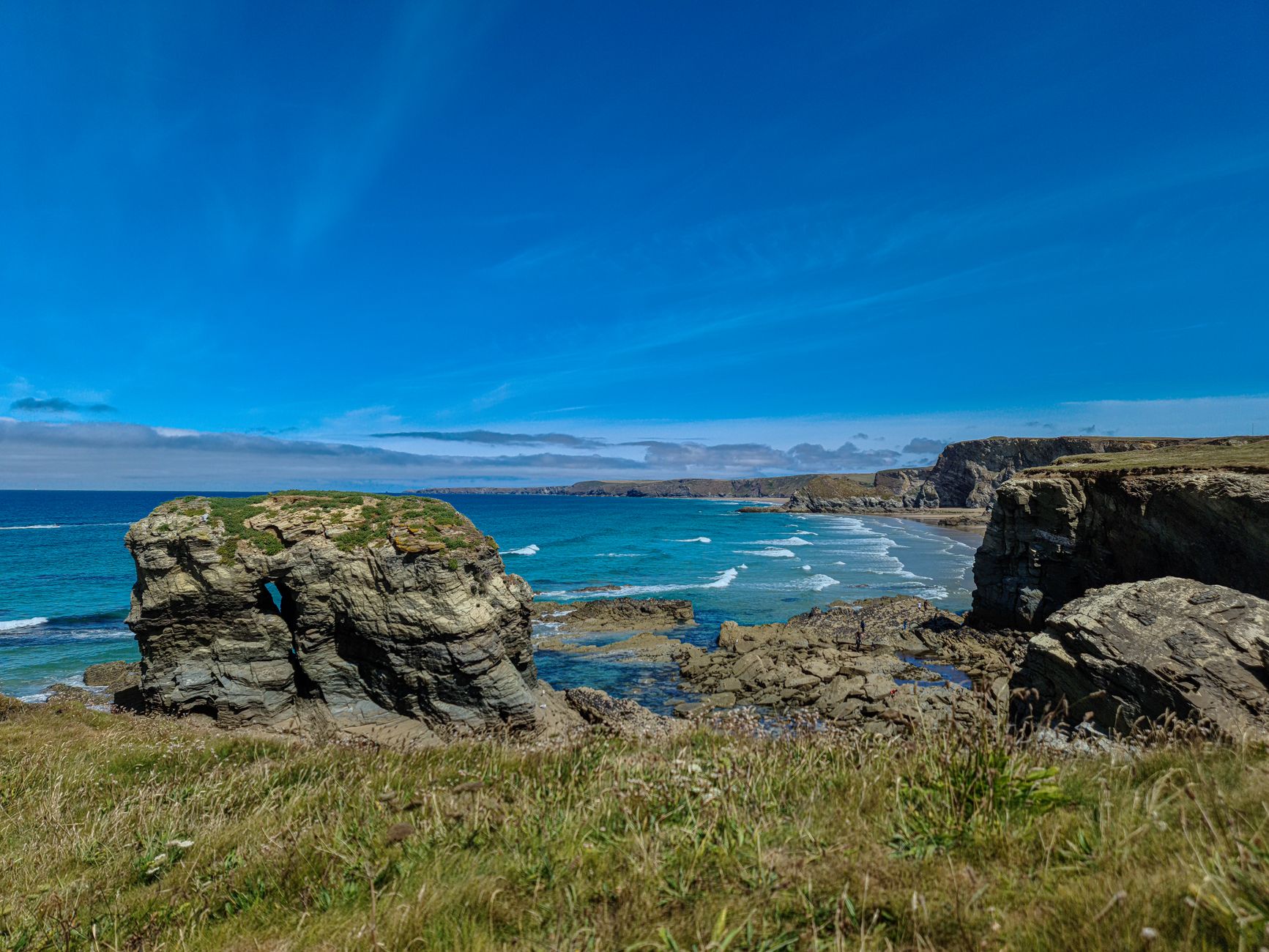
The South West Coast Path gets the headlines, but most visitors to Cornwall actually walk in loops. You pick a good starting point, follow the coast out for a while, then cut back inland through farmland or along a country lane to the car. No shuttle bus, no logistics, and a return leg that is often as lovely as the way out. Circular walks are the everyday bread and butter of Cornish day-walking, and there are enough of them to keep you busy for a fortnight without repeating one.
This guide to the best circular walks in Cornwall covers routes for every ability, every region and every season. Each one lists the distance, rough time, terrain and what earns it a place over the dozens of near-identical options nearby. They are grouped by difficulty, so you can match the walk to the day and the legs you actually have. For the wider picture, start with our complete Cornwall walking and hiking guide.
Easy Circular Walks in Cornwall (1-4 miles)
Perranuthnoe Village to Cudden Point Loop
Distance: 4 km (2.5 miles).
Time: 1-1.5 hours.
Terrain: Easy, mostly flat with one gentle climb.
Starts in Perranuthnoe village, follows a stretch of the coast path with views across Mount’s Bay to St Michael’s Mount, and returns inland through stone-walled fields. A brilliant short walk for a first day or for anyone easing back into it.
River Camel Walk From Camelford
Distance: 5 km (3 miles).
Time: 1.5 hours.
Terrain: Easy, flat.
Through wildflower meadows along the young River Camel to the Fenteroon clapper bridge, then back across fields above the valley. Gentle, green and almost always quiet.
Cotehele Estate Loop
Distance: 4 km (2.5 miles).
Time: 1.5 hours.
Terrain: Easy woodland paths.
A National Trust route from Cotehele Quay up through woodland to the Tudor house, then down to the Calstock viewpoint and the little Chapel-in-the-Wood. There is a good cafe at the quay to start or finish on.
Lanhydrock Garden Loop
Distance: 3 km (2 miles).
Time: 1 hour.
Terrain: Easy, gentle hills.
Loops through the formal gardens, woodland and parkland of the Lanhydrock estate. Especially good in May when the magnolias and bluebells are out.
Bedruthan Steps Cliff Loop
Distance: 3 km (2 miles).
Time: 1 hour.
Terrain: Mostly flat clifftop, one gentle ascent.
From the National Trust car park along the cliff path above the great rock stacks, returning by the road. Best saved for the end of the day, when the light drops behind the islands.

Moderate Circular Walks (4-8 miles)
Tintagel to Rocky Valley Loop
Distance: 6.5 km (4 miles).
Time: 2 hours.
Terrain: Moderate, with cliff-path sections.
Past the Iron Age enclosure at Willapark to Bossiney Haven and Benoath Cove, then inland through the wooded gorge of Rocky Valley with its strange, much-debated labyrinth carvings. Pair it with a look round Tintagel; the wider Cornwall towns and villages guide covers the village.
Cadgwith to Church Cove and Back
Distance: 10 km (6.5 miles).
Time: 3 hours.
Terrain: Moderate, undulating coast path.
One of the loveliest stretches of the Lizard: serpentine cliffs, a working fishing village and the medieval Church Cove. There is a pub at Cadgwith for lunch. The whole peninsula gets a route-by-route treatment in our guide to walking the Lizard Peninsula.
St Just to Cape Cornwall
Distance: 8 km (5 miles).
Time: 2.5 hours.
Terrain: Moderate cliff walking.
A loop from St Just town through the old mine workings to Cape Cornwall and back – UNESCO-listed mining heritage with an Atlantic finish, and rarely busy.
Polruan to Lansallos
Distance: 9 km (5.5 miles).
Time: 3 hours.
Terrain: Moderate, with steep ups and downs.
From Polruan along the coast to the wide sweep of Lantic Bay, on to the hidden cove at Lansallos, and back inland through fields. One of the prettiest circulars on the south-east coast, and handy for the villages in our Fowey and Roseland guide.
St Ives Circular via Carbis Bay
Distance: 6 km (3.5 miles).
Time: 2 hours.
Terrain: Moderate, with cliff path.
Around St Ives Head to Porthminster, on to Carbis Bay along the coast, and back via the old Hain railway path with the whole bay laid out below. More St Ives options are gathered in our guide to coastal walks near St Ives.
Padstow to Stepper Point Loop
Distance: 10 km (6 miles).
Time: 3 hours.
Terrain: Moderate.
From Padstow along the Camel Estuary to the daymark tower on Stepper Point, returning via Trevone or the fields. Estuary, open cliff and a finish in Padstow’s harbour.
Challenging Circular Walks (8+ miles)
The Hurlers and Bodmin Moor Tors Circular
Distance: 8.5 km (5.3 miles).
Time: 3-4 hours.
Terrain: Challenging, rocky and boggy.
From Minions, taking in Rough Tor, the Bronze Age Hurlers stone circles and the mine ruins of the Caradon country. Demanding underfoot and easy to lose in mist; the full moor is covered in our Bodmin Moor walking guide.
Tinner’s Way (St Ives to Cape Cornwall and Back)
Distance: 29 km (18 miles).
Time: Full day.
Terrain: Demanding, with many ancient sites.
Cornwall’s classic ancient long-distance loop, passing dozens of prehistoric sites, mine engine houses, moorland and coast. Very long – treat it as a serious full day and start early.
Lizard Peninsula Circular
Distance: 15 km (9.5 miles).
Time: 5 hours.
Terrain: Challenging cliff walking.
Lizard village to Kynance Cove, on to Mullion Cove, and back through farmland. The spring wildflowers here are extraordinary, and the cliffs are dramatic whatever the season.
St Ives to Zennor Circular
Distance: 16 km (10 miles).
Time: 5-6 hours.
Terrain: Demanding, rocky, sometimes boggy.
One of the hardest stretches of the coast path. You go out along the cliffs and return on the inland Coffin Path, with a well-earned lunch at the Tinners Arms in Zennor in between.
Boscastle to Tintagel Circular
Distance: 13 km (8 miles).
Time: 4-5 hours.
Terrain: Demanding cliffs.
Past the harbour at Boscastle, along the high cliffs to Tintagel via Rocky Valley, and back inland through fields and woodland. A big, satisfying day with two of north Cornwall’s best-known spots at either end.
Best Circular Walks by Region
North Cornwall (Padstow, Bude, Tintagel)
Bedruthan cliff loop, Tintagel to Rocky Valley, Padstow to Stepper Point, the Hartland Quay loops near the border, and the Crackington Haven circular.
South Cornwall (Falmouth, Helston, Looe)
Helford to Frenchman’s Creek, Trebah to Glendurgan along the river, Looe to Talland, and Polperro to Talland.
West Cornwall (Penzance, St Ives, Land’s End)
The St Ives circular, St Ives to Zennor, the Sennen Cove circular, St Just to Cape Cornwall, and the long Tinner’s Way.
Lizard Peninsula
Lizard to Kynance, Cadgwith to Church Cove, the Mullion Cove circular, and Coverack to Black Head.
Bodmin Moor and Inland
The Hurlers and Tors circular, the Cardinham Woods loops, Tehidy Country Park, and the Lanhydrock estate.
South East Cornwall
Polruan to Lansallos, Polperro to Talland, the Looe to Whitsand circuits, and the Cotehele estate.

Getting There and Parking
The great advantage of a circular walk is that you only need to park once, but where you park still matters. National Trust car parks – Bedruthan, Lanhydrock, Cotehele, Kynance – are the easy option and often the trailhead itself, though they fill early on fine summer days and charge non-members. Village starts like Cadgwith, Polruan and St Just usually have a car park on the edge of the settlement; use it rather than nosing down single-track harbour lanes with nowhere to turn.
For the moorland and woodland loops, the car park is frequently the only formal parking for miles, so an early arrival is worth it. And on Cornwall’s narrow lanes, never block a field gate or a passing place – a considerately parked car is part of being welcome back. If you would rather leave the car behind altogether, our Cornwall holiday planning guide covers how the buses and branch lines link the main walking areas.
Reading the Route: Maps and Waymarking
This is the one thing that catches people out. The coast path is beautifully waymarked with acorn signs, but the inland return leg of a circular walk usually is not. You navigate that half by footpath signs, stiles and field boundaries, and in poor visibility on the moor there may be no visible path at all. A proper map earns its place here.
Carry the relevant OS Explorer sheet or run the OS Maps app with the route downloaded for offline use – phone signal is patchy to non-existent across much of the moor and the west coast. The locally made iWalk Cornwall app is the gold standard for turn-by-turn circular routes and worth the small cost if you plan to walk more than a couple. Whatever you use on a screen, a paper backup means a flat battery never turns into a genuine problem.
What to Expect Underfoot
Cornish loops rarely offer a consistent surface. A single walk might give you grassy clifftop, a muddy field margin, a granite-slabbed lane, a boggy patch of moor and a flight of coast-path steps – sometimes all before lunch. The coast sections are the most obviously demanding, with steep descents to each cove and matching climbs out; the inland half tends to be gentler but muddier, especially in winter and after rain.
Boots with ankle support and a decent tread are the sensible choice on all but the flattest estate walks. Granite gets genuinely slippery when wet, moorland hides ankle-turning holes in the grass, and slate steps are unforgiving. This is not a place for smooth-soled trainers.
Safety and Common Sense
Most of these walks are low-risk if you use a bit of judgement. The two things to respect are cliff edges and the weather. Clifftops can be undercut and unstable, particularly after winter storms, so keep to the worn path and well back from the edge. On the moor, thick mist can descend fast and turn a straightforward loop into a navigation problem; carry a map and compass and know roughly how to use them before you rely on them.
Tell someone your route and rough return time, because signal fails across large areas. Check the forecast, especially for the exposed coast and the high moor, and do not be too proud to swap a wild cliff circuit for a sheltered woodland loop when the Atlantic is in a temper. Our guide to woodland and river walks in Cornwall is full of good foul-weather alternatives.
Best Family Circular Walks in Cornwall
A good loop for young legs is short, has a clear payoff – a beach, a play area, a cafe – and does not involve too many stiles. A few that reliably keep everyone happy:
- Cotehele Estate – easy, kid-friendly paths with a tearoom.
- Lanhydrock Garden – wide paths, gentle hills and family cycle trails.
- Bedruthan Steps cliff loop – short and dramatic, best with hand-holding near the edge.
- Tehidy Country Park – woodland, a lake and free entry.
- Cardinham Woods – Forestry England trails, marked and buggy-friendlier than most.
- Short loops from the Camel Trail at Wadebridge – flat and traffic-free.
For pushchair notes, cafe stops and honest terrain grading, see our dedicated guide to family-friendly walks in Cornwall.
Best Dog-Friendly Circular Walks
- Bedruthan Steps cliff loop – open, year-round cliffs.
- Tehidy Country Park – off-lead in most areas.
- Cardinham Woods – dog-friendly throughout.
- St Just to Cape Cornwall – wild and uncrowded.
- Polruan to Lansallos – varied terrain, mostly off-lead.
Mind the summer beach restrictions at the coastal ends, and check stiles if you have a larger dog. Our guide to the best dog-friendly walks in Cornwall has the full rundown.
Combining a Walk with a Beach or a Pub
The best-planned circular finishes somewhere worth lingering. Time a coastal loop to reach a beach at the far point and pack swimwear; the water on a warm day is hard to walk past. Better still, build the day around a pub – Cadgwith, Polperro, Zennor and St Just all have inns within sight of the route, and a slow lunch halfway is half the reason to go. Our guide to the best pubs in Cornwall flags the ones that genuinely welcome walkers and wet dogs.
Turning a Short Loop into a Longer Day
Many of the easy circulars sit next to something bigger, so a gentle morning can grow into a proper day without any driving in between. The St Ives loop via Carbis Bay extends naturally along the coast towards Zennor if the legs are willing. The Bedruthan cliff loop links into the longer Padstow-to-Newquay walking either side of it. The Lizard village circular can be stretched to take in Cadgwith and Church Cove for a full peninsula day. The trick is to start early, carry enough water and food for the bigger version, and pick the point where you will honestly decide whether to press on or turn for home. A loop is forgiving that way – the car is never more than a couple of miles off.
The other way to lengthen a day is to stitch two nearby short loops together with a cafe or pub in the middle. Cotehele and Cardinham are close enough to pair; so are Lanhydrock and the Camel Trail. If you find you want several days of this rather than isolated outings, our guide to Cornwall walking holidays and multi-day routes covers stringing walks into a week with your luggage moved on ahead.
Best Seasons for Circular Walks in Cornwall
- Spring (March-May): wildflowers at their peak, especially on the Lizard. Mild but changeable.
- Summer (June-August): warmest and longest days, but the popular loops and their car parks are busy.
- Autumn (September-November): arguably the best walking of the year – quiet trails, clear light, settled weather.
- Winter (December-February): empty paths, dramatic seas and short daylight. Pack full waterproofs and start early.
Cornish Weather and What to Wear
Cornwall’s weather is not so much bad as fast. A bright start can turn to horizontal drizzle by mid-morning and back to sunshine by lunch, particularly on the exposed coast and the high moor. The answer is layers you can add and shed without stopping for long, plus a genuinely waterproof jacket rather than a shower-resistant one. On the clifftops the wind does most of the work of making you cold, so a windproof outer layer matters more than sheer warmth for much of the year.
Sun is the other half of the story. There is very little shade on a Cornish clifftop and the UV coming off the sea is stronger than it feels in the breeze, so a hat and sun cream belong in the pack even on a cool day. Bring more water than you think you need on the inland and moorland loops, where there is often nowhere to refill. Our full Cornwall walking packing list goes through footwear, layers and the small extras that make a wet day bearable.
Practical Tips for Cornwall Circular Walks
- Carry a map. Many inland legs are unmarked; do not rely on the coast-path acorns to see you round.
- Allow extra time. Cornish hills add ascent that flat mileage never shows.
- Wear proper boots. Granite, slate and bog all reward ankle support.
- Park considerately. Leave passing places and field gates clear.
- Take water and a snack. Cafe coverage is patchy on inland and remote loops.
- Tell someone your route. Signal is poor across the moor and much of the west.
Where to Stay for Cornwall Walking Holidays
Walker-friendly B&Bs are common along the coast and inland, and the good ones offer drying rooms, early breakfasts and packed lunches on request. Base yourself near the walking you most want to do – the north coast for the cliff loops, the Lizard for the wildflower circuits, Bodmin for the moor. See our main Cornwall B&B guide, and our guide to Cornwall walking holidays and multi-day routes if you would rather string several days together.
How to Choose the Right Loop for the Day
With this many options, the hardest part is often deciding. A useful rule of thumb: pick the walk to fit the weakest walker and the shortest daylight in your group, not the strongest legs. On a bright summer morning with older children, a moderate coastal loop like the St Ives circular or Cadgwith to Church Cove gives real coast-path drama without committing anyone to a full day. When the forecast is grim or the party is mixed, the estate and woodland loops – Lanhydrock, Cotehele, Cardinham – hold up in wind and rain and never leave you far from a cafe or the car.
Think about the return leg as much as the outward one, too. A loop that climbs steeply back inland at the end can feel much harder than its mileage suggests when everyone is already tired. Reading the contour lines on the map before you set off, rather than discovering them on tired legs, is the single habit that turns a decent Cornish walk into a genuinely enjoyable one.
FAQs: Circular Walks in Cornwall
What is the best circular walk in Cornwall?
It depends on what you want. For drama, Lizard Point to Kynance Cove; for history, the Tinner’s Way; for families, the Cotehele estate; for a challenge, St Ives to Zennor.
How many circular walks are there in Cornwall?
Hundreds. The iWalk Cornwall app alone documents several hundred detailed circular routes, most between 2 and 10 miles.
Are Cornwall walks waymarked?
The coast path is waymarked with acorn signs. Inland circulars are usually marked with stiles and footpath signs but need map-reading to follow with confidence.
What is the easiest circular walk in Cornwall?
The Cotehele estate, the Lanhydrock garden loop, or the River Camel walk from Camelford – all short, gentle and on good paths.
Are circular walks in Cornwall free?
The paths themselves are free. Some trailheads charge for parking, and National Trust car parks are free to members.
How long does a typical circular walk take?
Most of the routes here run 4-10 km (2-6 miles) and take one to four hours. Reckon on a slower pace than usual – Cornish terrain earns every mile.
One of the finest short loops on the north coast starts at Chapel Porth, climbs past the engine houses of Wheal Coates, rounds St Agnes Head and returns over St Agnes Beacon, about four miles in all. Our St Agnes guide has the route, the parking and the village at the end of it.
Cornwall’s circular walks sit in the sweet spot between a lazy day and a serious hike. Pick one for the morning, find a good pub for lunch, and the day more or less shapes itself. With a little map confidence and the right boots, you can spend a fortnight here and never walk the same loop twice.