
Cornwall is the UK birdwatching destination that punches well above its weight. The county sits on the south-western tip of mainland Britain, which makes it the first landfall for migrants crossing the Atlantic and a major staging post for European migration. It has the only resident breeding colony of puffins in Cornwall (on the offshore stacks west of Padstow), the recovering chough population that put the bird back on the Cornish national flag, and a network of RSPB and Cornwall Wildlife Trust reserves that pack remarkable species diversity into a small area. After watching the birding scene develop over the years, I’ve come to think Cornwall belongs in any UK birder’s top three. This birdwatching Cornwall guide is the practical version.
I’ll cover the chough recovery story (returned 2001 after a fifty-year absence, now over two hundred birds with breeding colonies on the Lizard and West Penwith), the major reserves with what to see when, the iconic Cornish species, the rarity hotspots that draw birders from across Britain in autumn, the sea-watching headlands, and the beginner kit needed to make the most of it. Our wider Cornwall wildlife and nature guide is the parent piece.
The Chough Comeback: Cornwall’s Emblem Returned
The red-billed chough (Pyrrhocorax pyrrhocorax) is Cornwall’s national bird and appears on the Cornish coat of arms. It’s a member of the crow family with a distinctive curved red bill and red legs, glossy black plumage, and a remarkable flight style that includes synchronised aerial play. For most of the twentieth century it had vanished from Cornwall — the last breeding chough was recorded in 1947 and the species was considered functionally extinct in the county.
Then in 2001 a pair turned up at the Lizard. They bred. The colony established itself. By 2010 there were a handful of breeding pairs; by 2023 the Cornish population had grown to around two hundred and twelve birds, with one hundred and twelve chicks fledged in that single year. The chough is back.
You can see them. The Lizard Peninsula is the main stronghold — particularly around Lizard Point, Kynance Cove, Predannack and the Caerthillian-to-Kynance Cornwall Wildlife Trust reserve. West Penwith holds the secondary population (Pendeen Watch, Cape Cornwall area). The birds are reliably visible from the coast path in any clear-weather day; their characteristic flight call is a sharp, high “chee-ow” that’s easy to learn.
The recovery happened because of habitat restoration. Cornwall Wildlife Trust and the National Trust worked to bring back the coastal grazed grassland that choughs need — the short turf and exposed soil pockets where they probe for invertebrates. Volunteer grazing schemes brought sheep, ponies and cattle back onto cliff-top sites that had reverted to scrub. The choughs followed. It’s one of the genuinely good British conservation stories of the past quarter century.
RSPB and the Cornwall Reserves
RSPB Hayle Estuary
The flagship Cornwall RSPB reserve. The most south-westerly estuary in the UK and a critical wintering site for waders and wildfowl. Up to 18,000 birds use the estuary across the autumn-winter season. Eric Grace Memorial Hide overlooks the main flat; Ryan’s Field hide covers the upper reaches. Free access. Best in October to March.
Target species include teal, wigeon, little egret (now common), curlew, redshank, dunlin, sanderling, ringed plover. Spring brings the first migrants — black-tailed godwit, common sandpiper, ruff. Rarities turn up — ring-billed gull, glaucous gull, snow bunting. rspb.org.uk/days-out/reserves/hayle-estuary.
RSPB Marazion Marsh
Cornwall’s largest reedbed. Sixty-three hectares of reed and open water adjacent to Mount’s Bay. SSSI and SPA designation. Two hundred and fifty bird species recorded over the years. Bittern is the headline winter species — usually one or two birds present from November to February. Cetti’s warbler, reed warbler, sedge warbler, reed bunting, water rail. Aquatic warbler has been recorded as a rare stop-over. rspb.org.uk/days-out/reserves/marazion-marsh.
Cornwall Wildlife Trust Reserves
The CWT manages over fifty reserves across the county. Birding hotspots include:
Caerthillian to Kynance (Lizard) — Chough territory; rare flora; cliff-nesting seabirds in summer. The CWT signature reserve for the Lizard.
Hellman Tor (south coast) — Heathland with stonechat, Dartford warbler, nightjar in summer.
Devichoys Wood (near Penryn) — Ancient woodland with woodpeckers, treecreeper, marsh tit.
Penlee Battery (south coast) — Migrating birds and coastal species.
Goss Moor National Nature Reserve — One of the largest lowland heath complexes in Cornwall. Silver-studded blue butterfly, multiple bird species including stonechat, Dartford warbler.
Walmsley Sanctuary (near Wadebridge) — Camel Trail reserve, wetland birds, family-friendly.
Maer Lake (Bude) — Wintering wildfowl, occasional rarities.
Cornwall’s nature reserves and Wildlife Trust sites covers the wider reserve network, including the smaller sites that rarely get busy.
The Sea-Watching Headlands
Cornwall has the best sea-watching in England. The major headlands sit on migration flight lines and the right wind direction brings the offshore seabirds within naked-eye distance. Crucially, sea-watching is a hobby that rewards patience and the right conditions; coming out for a session at the wrong time produces nothing.
Pendeen Watch (West Penwith). The premier UK sea-watching site. Headland off Pendeen on the north-west tip of West Penwith. North-westerly to westerly winds push seabirds close inshore. Manx shearwater, sooty shearwater, Cory’s shearwater, great shearwater, balearic shearwater, storm petrel, Leach’s storm petrel, sabine’s gull, grey phalarope — the proper offshore species. Best in late summer and autumn.
Gwennap Head (West Penwith). The next headland east of Pendeen. Similar species; different wind angles work better here. South-easterly and easterly winds bring birds in.
Porthgwarra (West Penwith). Combined sea-watching and migrant-trapping. Famous for autumn American passerine arrivals — yellow-billed cuckoo, red-eyed vireo, Hermit Thrush have all been recorded here in recent decades.
Trevose Head (north coast). Sea-watching point above Padstow. Different angle from West Penwith — sometimes better when Pendeen is blown out.
Godrevy Point. The combined seal-and-bird-watching headland west of Hayle.
The technique: arrive early (dawn is gold), bring a spotting scope (binoculars aren’t quite enough for distant offshore birds), check the wind direction matches the site, and be prepared to spend three hours minimum to see a good count. Bring food, hot drinks, and warm layers.
The same vantage points are the best in Cornwall for seals and dolphins and other marine life.
Puffins in Cornwall
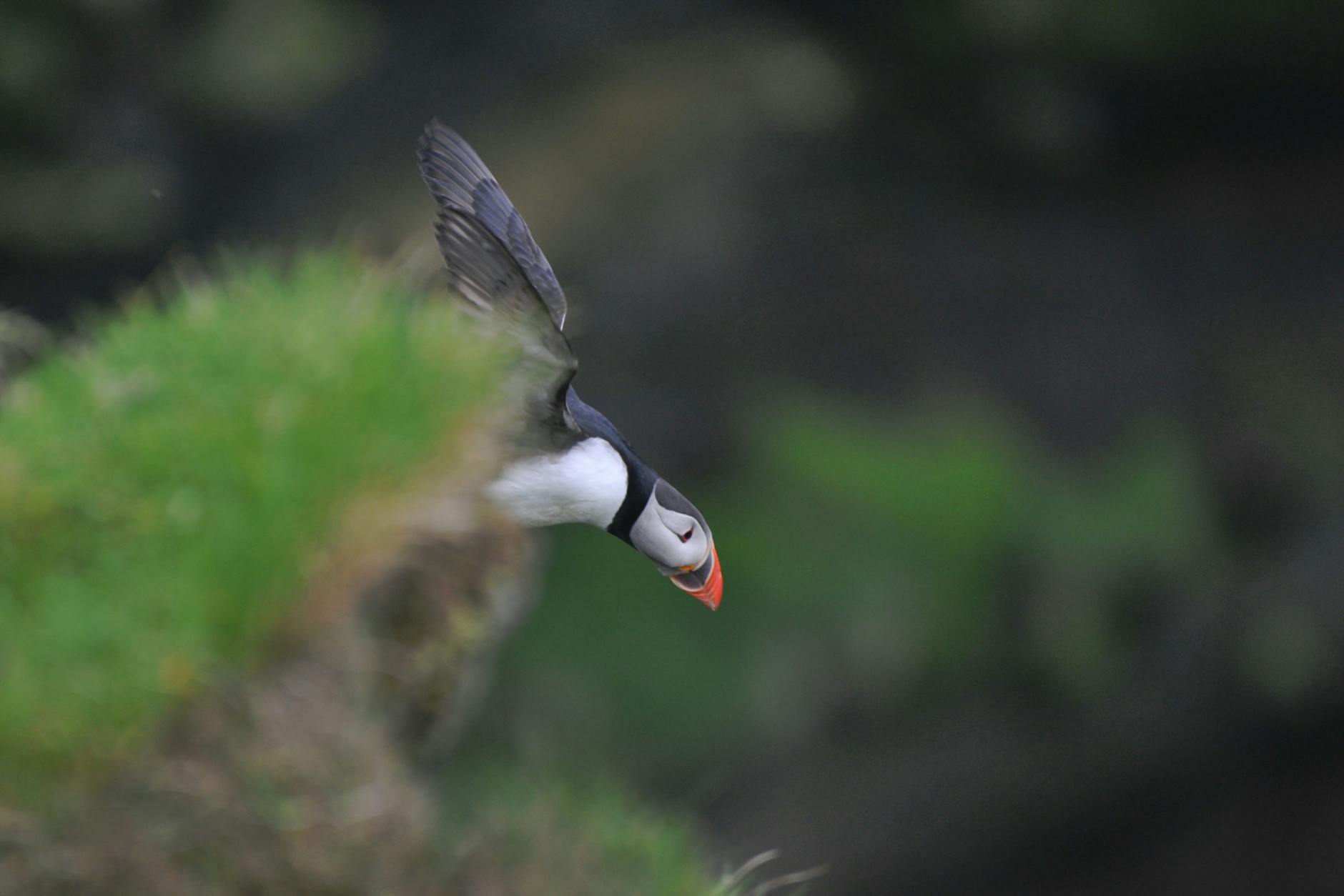
The Cornish puffin colony breeds on the offshore stacks west of Padstow (sometimes called “Puffin Island” but properly The Mouls). The colony is small — a few dozen pairs — but it’s Cornwall’s only puffin breeding location. The birds arrive in April, nest in burrows on the stacks, and leave by late July when the chicks fledge.
You can’t reach the stacks themselves but Padstow Sealife Safaris run dedicated Puffin Safari trips from April through July — fast RIB out to the stacks, about thirty minutes on station with puffins visible on the rocks and in the water. £40-50 per adult. Book ahead in school holidays.
If you can’t get on a boat, the puffins are sometimes visible (with a scope) from the cliff at Stepper Point above Padstow. Less reliable but free.
Cliff-Nesting Seabirds
The Cornish cliffs host breeding colonies of six major seabird species, with peak activity April to July. The headline sites:
Lye Rock (Bossiney, near Tintagel). The major north-coast cliff colony. Guillemots and razorbills nest on the cliff faces; fulmars nest on the ledges; kittiwakes (Cornwall’s only confirmed breeding colony) here also; shags on the lower ledges.
Bedruthan Steps clifftops. Mixed seabird viewing from the NT path.
Lizard Cliffs (multiple sites). Razorbill, guillemot, fulmar, kittiwake (visiting), gannet (offshore).
Pentire Head. Cliff-nesting seabirds with the addition of the breeding chough population.
The Cornish Iconic Species
Beyond the chough and the puffin, the species you should hope to see:
Cirl bunting — Once almost extinct in Britain, the cirl bunting population has recovered through targeted conservation work and the Cornish population is now stable. Best at Penhale Sands, the Lizard, and parts of the Roseland.
Dartford warbler — Heathland resident, particularly the Lizard heath and Goss Moor. Active year-round.
Black redstart — Winter coastal visitor on rocky coves, particularly the Lizard and St Ives.
Manx shearwater — Visible from sea-watching headlands in summer evenings, returning to their breeding colony on Skomer (Wales) at dusk.
Storm petrel — The smallest UK seabird, occasionally visible from sea-watching headlands in calm summer evenings.
Peregrine falcon — Resident on coastal cliffs. The Lizard, Bedruthan, and Pentire are reliable sites.
The Autumn Rarity Hotspots
Cornwall is the UK’s prime landing pad for Nearctic vagrants — North American birds blown across the Atlantic by autumn weather systems. The Isles of Scilly are the legendary rarity destination (a separate week-long birding trip in October if you’re a serious birder), but the Cornish mainland gets good arrivals too.
The hotspots for autumn rarities (mostly October to early November):
Porthgwarra (West Penwith). Yellow-billed cuckoo, red-eyed vireo, Hermit Thrush, Bobolink and other US passerines have been recorded here.
Cot Valley (West Penwith). The sheltered valley near St Just. Migrant traps such as the willow scrub here have produced rare warblers and chats.
Pendeen. Sea-watching plus the surrounding fields.
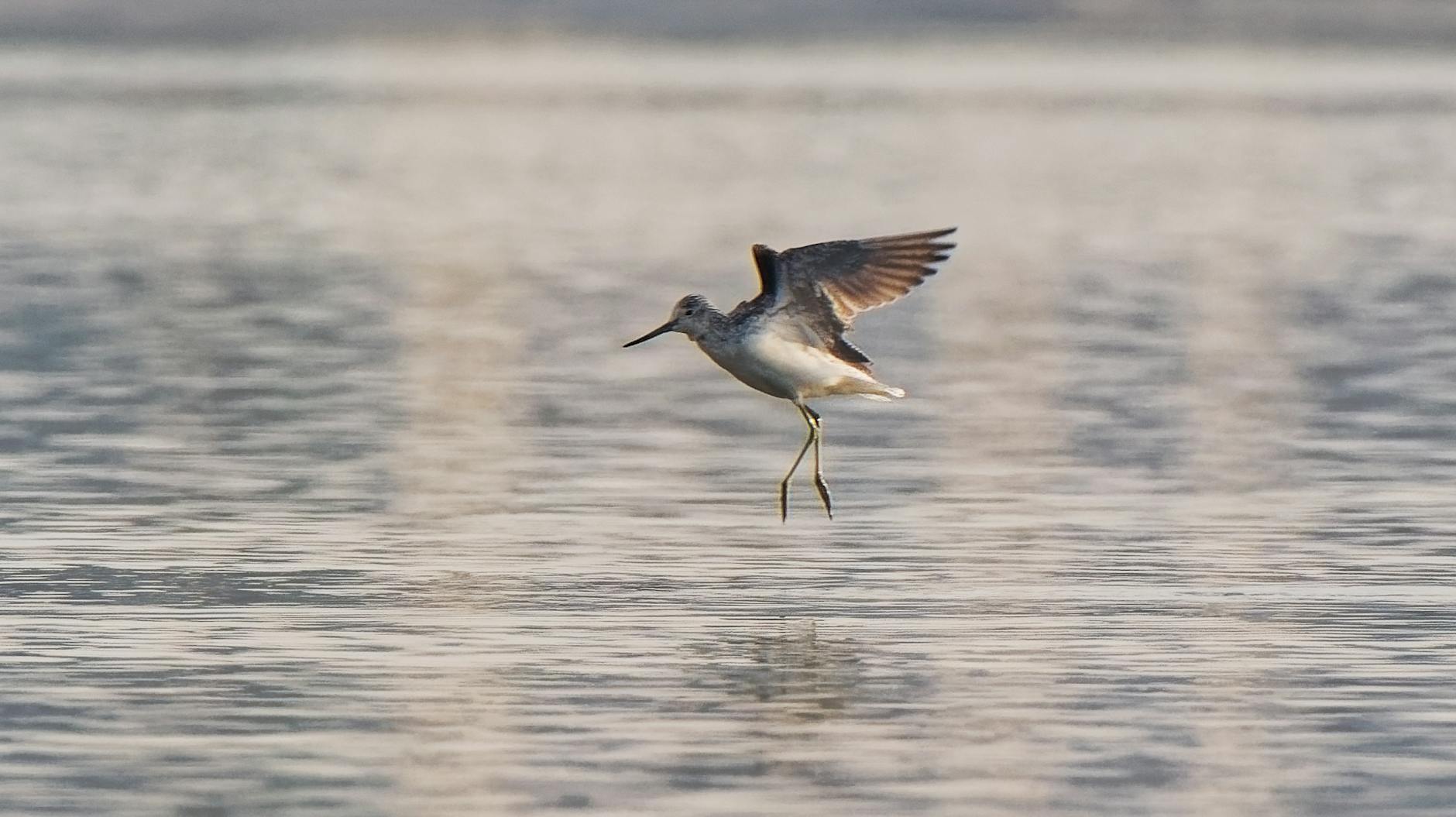
Hayle Estuary. Wader rarities in autumn — long-billed dowitcher, pectoral sandpiper, semipalmated sandpiper.
Lizard Peninsula. Anywhere on the Lizard during a westerly autumn gale.
The Cornwall Bird Watching and Preservation Society (CBWPS) maintains a rarity recording system and the website cornwall-birding.co.uk publishes daily reports during peak migration. Worth checking before a trip.
Migration Calendar
Spring (April-May). Wheatear, willow warbler, blackcap, chiffchaff arrive. Cliff-nesting seabirds returning to colonies. Bittern and other resident wetland species more active. Migrant waders pass through Hayle Estuary.
Summer (June-July). Cliff seabird colonies at peak activity. Puffins on The Mouls. Choughs feeding fledged young. Manx shearwater visible from sea-watching headlands.
Autumn (August-October). The big season. Wader passage through Hayle. Seabird sea-watching at Pendeen. Rarity arrivals from August through to early November.
Winter (November-February). Bitterns at Marazion Marsh. Wildfowl on Hayle Estuary, Stithians Reservoir, Maer Lake. Black redstart on rocky coasts. Choughs and stonechats on the heathlands.
Equipment for the Cornish Birder
The beginner-to-intermediate kit list:
Binoculars. 8×42 is the standard and works for almost every Cornish birding scenario. Budget £100-200 buys you a serviceable pair; £200-500 a properly good pair; £800-1500 a premium pair (Swarovski, Leica, Zeiss). Mid-range is the sweet spot for most birders.
Spotting scope. Needed for serious sea-watching and for wader identification on Hayle Estuary. £200-400 entry level; £600-1500 the proper option. Get a tripod too.
Field guide. Collins Bird Guide (Svensson et al.) is the canonical UK and Europe field guide. Cornwall-specific: Birds of Cornwall by Stephen Madge.
Apps. Merlin Bird ID (Cornell Lab) for sound and image identification; eBird for recording sightings and finding hotspots. Both free.
Clothing. Warm, windproof, waterproof. Cornish sea-watching headlands are properly exposed.
Local Birding Networks
The community resources worth knowing:
Cornwall Bird Watching and Preservation Society (CBWPS). The county society. Daily sightings reports, annual bird reports, indoor and outdoor meetings. cbwps.org.uk.
Cornwall Birding website. Independent daily reports site — the place to check for current rarity news.
RSPB Cornwall. Reserve management and visitor information for Hayle Estuary and Marazion Marsh.
Cornwall Wildlife Trust. Reserve management for the wider Cornwall network plus marine wildlife monitoring.
The One-Day Cornish Birding Itinerary
For a first-time Cornish birder with a single day:
Dawn at Pendeen Watch for an hour of sea-watching (bring scope and flask).
Mid-morning move to Cot Valley for a couple of hours scrub-and-valley birding.
Lunch at the Cot Valley pub.
Afternoon to the Lizard via Caerthillian for choughs and Lizard Point seabirds.
Late afternoon at RSPB Marazion Marsh for the bittern (winter) or wetland species.
Sunset back at Marazion or Hayle Estuary for late-light wader watching.
That’s six prime Cornish birding sites in a day. Add a dawn pelagic boat trip from Penzance the following day for the proper hardcore offshore experience.
Most sites link together on foot — see our Cornwall walking and trails guide for the coast path sections between them.
Frequently Asked Questions
Where is the best place to go birdwatching in Cornwall? RSPB Hayle Estuary (wetland); Pendeen Watch (sea-watching); Caerthillian/Lizard (chough); Marazion Marsh (winter bittern).
What birds can you see in Cornwall? Choughs, puffins, sea ducks, waders, breeding seabirds, autumn American rarities, wintering wildfowl.
Is the chough the symbol of Cornwall? Yes — on the Cornish coat of arms. Returned to breed in 2001 after 50-year absence.
Are there puffins in Cornwall? Yes — small breeding colony on offshore stacks west of Padstow (The Mouls). April to July. Boat trips from Padstow.
What is the best time of year for birdwatching in Cornwall? September-October for autumn migration and rarities. May for spring arrivals and breeding species.
How many RSPB reserves are in Cornwall? Three main reserves: Hayle Estuary, Marazion Marsh, and the Goldsithney area site.
Can you see kingfishers in Cornwall? Yes — particularly along the Helford River, Fal estuary, Fowey, Camel and Walmsley Sanctuary.
Where can I see choughs in Cornwall? The Lizard Peninsula (Lizard Point, Kynance Cove, Caerthillian); West Penwith (Pendeen Watch area).
Why is Cornwall good for rare birds? South-westerly position makes it the first UK landfall for Nearctic vagrants blown across the Atlantic in autumn.
What seabirds can be seen at Pendeen Watch? Manx shearwater, sooty shearwater, Cory’s shearwater, great shearwater, storm petrel, sabine’s gull, grey phalarope in autumn.
Marazion Marsh, Cornwall’s largest reedbed, is the place to look for wintering bitterns and, in some autumns, starling murmurations over the reeds. Our Marazion guide explains where to park and how to combine the reserve with the beach and St Michael’s Mount.
Cornwall is one of the UK’s most rewarding birding destinations. Plan around migration windows. Watch the wind direction. Bring proper kit. The chough is back; the puffins are still here; the autumn rarities still drop in from across the Atlantic. The county will reward serious birders and casual watchers alike.