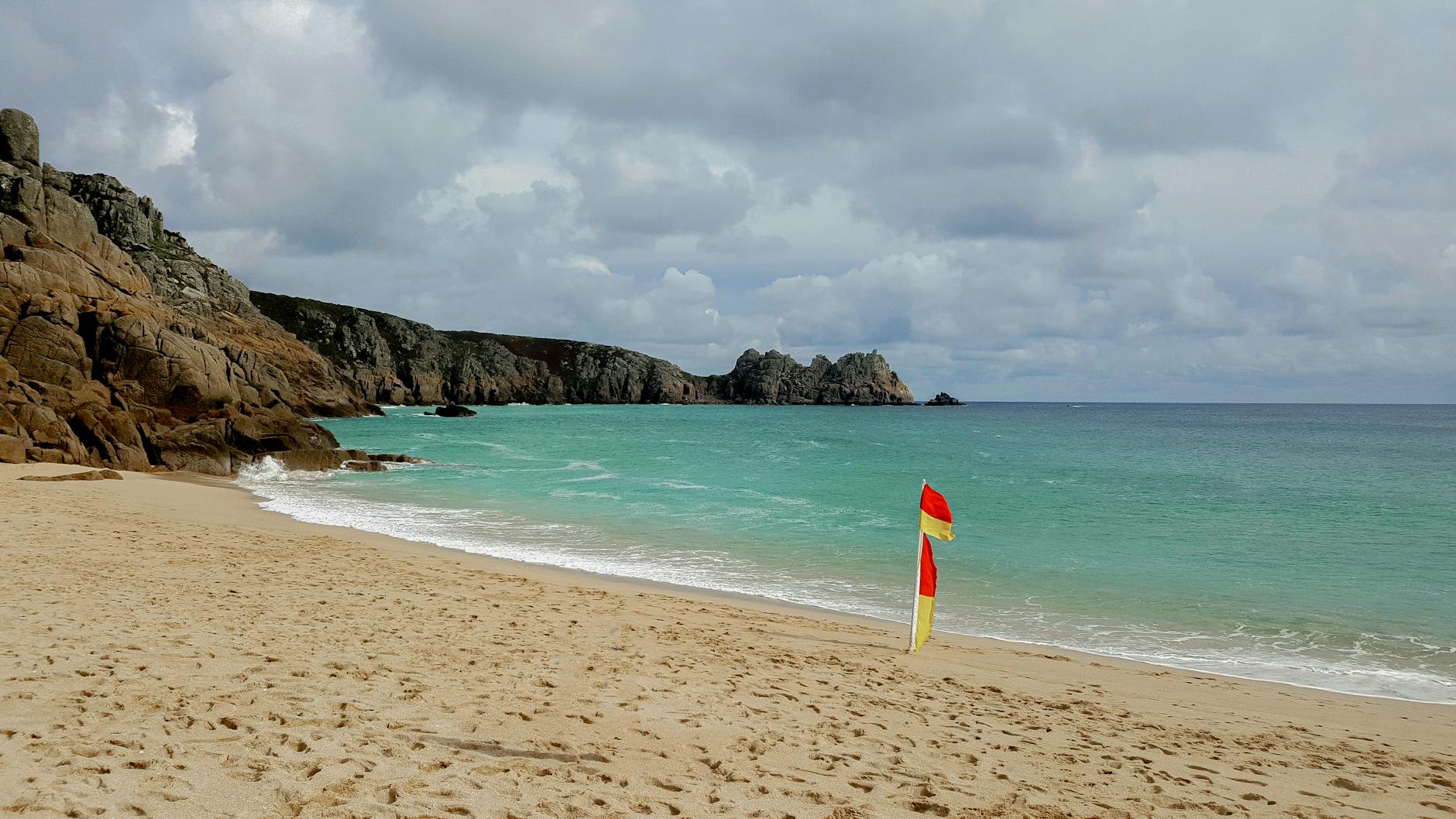
Of all the remarkable places I send guests to in Cornwall, none provokes quite the same wide-eyed wonder as the Minack. Carved into the granite cliffs above the turquoise sea at Porthcurno, it is an open-air theatre unlike any other on earth, where actors perform against a backdrop of the Atlantic, ships passing on the horizon and, if you are lucky, dolphins in the bay. This guide to the Minack Theatre Cornwall tells the astonishing story of the woman who built it largely with her own hands, explains how to see a show or visit by day, and shares the practical advice you need to make the most of one of Britain’s most magical cultural landmarks.
To sit in the Minack on a summer evening, watching a play as the sun sinks into the sea behind the stage, is to experience something that genuinely cannot be replicated anywhere else. But even a daytime visit, when no performance is on, is unforgettable for the setting and the story alone.
The Extraordinary Story of Rowena Cade
The Minack exists because of one woman’s vision and astonishing determination. Rowena Cade, born in 1893, moved to Cornwall and bought the Minack headland for around £100 in the 1920s. When a local theatre group she was involved with wanted to stage Shakespeare’s The Tempest, Rowena offered her cliff garden as the setting, and the idea of a permanent theatre on the spot took hold.
What followed is the stuff of legend. Rowena, with the help of her gardener Billy Rawlings and a few others, built the theatre by hand, working through the winters with simple tools and the occasional stick of dynamite. She mixed concrete with sand she carried up from the beach below in sacks on her back, hauling it up the steep cliff, and she decorated the seats and surfaces by hand, famously inscribing the names of productions into the wet concrete with the tip of a screwdriver. She continued this back-breaking work well into her eighties, and the theatre grew steadily over decades into the spectacular auditorium of today. Rowena Cade died in 1983, shortly before her ninetieth birthday, having created one of the wonders of Cornwall almost single-handedly. Knowing her story as you sit in those concrete terraces makes the place all the more moving.
What Makes the Minack So Special
The Minack’s magic lies in its setting. The auditorium is cut into a near-vertical cliff, with terraced seating descending towards a stage that juts out above the sea, framed by the rocky outcrop and the vast sweep of Porthcurno bay beyond. There is no roof, no proscenium, no fly tower, just the open sky, the granite and the Atlantic. The quality of light here, especially at sunset, is extraordinary, and the natural acoustics carry the actors’ voices on the sea air. Performances share the stage with whatever the natural world provides: seabirds wheeling overhead, the changing colours of sea and sky, fishing boats and occasionally basking sharks or dolphins in the bay. It is theatre and landscape fused into a single, unforgettable experience.
Seeing a Show at the Minack
The performing season runs from around Easter to the end of October, with a packed and varied programme of plays, musicals, opera, concerts and children’s shows, performed by professional touring companies and visiting amateur groups from across the country and beyond. Watching a production here is the quintessential Minack experience, and tickets for popular shows sell out well in advance, so book early through the official Minack website once the season is announced.
A few things make a Minack show different from any other night at the theatre. The seating is largely on concrete and grass terraces, so cushions or a folding seat pad are essential for comfort, and many regulars bring rugs. You sit outside whatever the weather, so dress in warm layers and bring waterproofs, as shows go ahead in light rain and the clifftop can be cool and breezy even on a summer evening. Bring a picnic and a flask, as enjoying supper in your seat before the performance with that view is part of the joy. And arrive in good time, both to find parking and to soak up the setting before the show begins.
Visiting the Minack by Day
You do not need a ticket to a show to experience the Minack. When performances are not taking place, the theatre is open for daytime visits, allowing you to explore the auditorium, wander the subtropical cliff gardens that Rowena also created, and learn her remarkable story through the visitor centre and the Rowena Cade Exhibition. A daytime visit is far cheaper than a show, gives you time to take photographs of the staggering setting, and is wonderful for families and anyone who cannot stay for an evening performance. Do check the website before visiting, though, as the theatre closes to daytime visitors when rehearsals or matinees are taking place, and times vary through the season.
Porthcurno and the Setting
The Minack sits above Porthcurno, one of the most beautiful beaches in all of Cornwall, a crescent of pale sand and impossibly clear, turquoise water that would not look out of place in the tropics. A visit to the theatre pairs perfectly with time on the beach below, and the area has another fascinating story: Porthcurno was the landing point for the international undersea telegraph cables that once connected Britain to the world, a history told at the excellent Telegraph Museum in the valley. The whole far-western tip here, with Land’s End, the cliffs and the coves, is among the most spectacular landscapes in Britain, so the Minack is the jewel in an already dazzling setting.
Getting There and Practicalities
The Minack is at Porthcurno, about four miles from Land’s End, reached by narrow lanes in the far west. There is a car park at the theatre, but it is limited and fills quickly, especially on performance days, so arrive early; on show evenings, traffic and parking can be busy, so allow plenty of time. Buses serve Porthcurno in season, including the Land’s End Coaster, making it possible to visit without a car, which is worth considering given the parking pressure; see our guide to getting around Cornwall without a car. There is a coffee shop on site for daytime visitors, and the gardens and exhibition fill a rewarding hour or two. For broader parking advice in this busy corner, see our parking in Cornwall guide.
Accessibility at the Minack
It would be dishonest not to be clear: the Minack is, by its very nature, a challenging site, with steep paths and many steps down into the cliff-cut auditorium. That said, the theatre has worked to improve access, with a limited number of accessible spaces and viewing areas available, and the visitor centre and upper areas more easily reached than the lower terraces. Anyone with mobility difficulties should contact the Minack in advance to discuss access and book suitable spaces, as arrangements need planning. Our Cornwall accessibility guide has more general advice for visitors with mobility needs.
Combining the Minack With the Far West
The Minack and Porthcurno sit at the heart of the magical far west, so they combine beautifully with the area’s other highlights. Land’s End, the wild Tin Coast mining cliffs around St Just, the fishing village of Mousehole, and St Michael’s Mount across the bay at Marazion are all within easy reach, as is the artistic town of St Ives a little further round. A classic far-western day might take in Porthcurno beach, a daytime Minack visit and a clifftop walk, rounded off with an evening performance if you have tickets, as set out in our Cornwall 7-day itinerary. The nearby St Michael’s Mount makes a natural companion heritage visit.
A Brief History of the Theatre’s Growth
The Minack did not spring up overnight; it grew slowly over more than half a century. That first production of The Tempest in 1932 was staged on a simple grassy ledge with a few rocks for seating, lit by car headlamps and batteries. Encouraged by its success, Rowena Cade kept improving and expanding the theatre year after year, adding terraced seating, a proper stage, dressing rooms and the winding paths and granite features that give the Minack its character. Each winter she and her helpers laboured on a new section, and the famous lettering recording past productions was pressed into the wet concrete with a screwdriver as they went. The Second World War interrupted the work, and the site was even used for wartime defence, but afterwards Rowena returned to her life’s project with renewed energy. By the time of her death the Minack was firmly established, and a charitable trust has continued to run, maintain and gently develop it ever since, adding modern facilities while preserving the extraordinary hand-built character. Today it welcomes well over a hundred thousand visitors a year, a testament to one woman’s vision.
Tips for the Perfect Minack Evening
A few extra pointers help a Minack show go smoothly. Check the running time and whether there is an interval, and plan your picnic accordingly, as tucking into supper in your seat as the light fades is half the magic. Bring more layers than you think you will need, because even a warm day turns cool once the sun drops behind the stage and the sea breeze picks up; a blanket is welcome. A small torch helps for the steps after dark, though the theatre is lit. Keep an eye on the sea during the performance, as dolphins, seals and seabirds regularly upstage the actors, to everyone’s delight. And do allow time afterwards to climb out slowly and look back at the floodlit auditorium against the dark sea. If you are travelling some distance, consider staying nearby in the far west so you are not facing a long drive back through the lanes late at night. Our Cornwall bed and breakfast guide can help you find a base near Penzance or St Ives.
The Minack With Children and Families
The Minack is a brilliant family outing, and children are often spellbound by both the setting and the story of the woman who built it. Daytime visits suit families well, with room to explore the terraces and gardens and an exhibition that brings Rowena Cade’s determination vividly to life, an inspiring tale for young minds. The theatre also stages a programme of children’s shows and family-friendly productions through the season, which are a wonderful introduction to live theatre in a setting no child will forget. If you are bringing little ones to a performance, the same advice applies as for adults, cushions, warm layers and a picnic, plus an eye on energetic children near the steep terraces and drops. Pairing a morning on the golden sand of Porthcurno beach below with an afternoon or evening at the Minack makes for a perfect family day in the far west, blending beach, theatre and a great story. Our Cornwall family holiday guide has more ideas for keeping all ages happy.
Porthcurno Beach and the Telegraph Museum
Directly below the Minack lies Porthcurno, regularly named among the most beautiful beaches in Britain, with its dazzling white sand and clear, jewel-bright water sheltered by towering cliffs. It is a glorious place to spend a few hours before or after the theatre, though take care as the tides and currents can be strong and check for lifeguard cover. The Porthcurno valley holds another surprising story: this quiet cove was once the hub of Britain’s global communications, where the great undersea telegraph cables came ashore to link the empire to the wider world. The fascinating Telegraph Museum Porthcurno tells this tale, with its wartime tunnels and historic equipment, and makes an excellent companion to a Minack visit, especially on a day when you want some indoor interest. Between the beach, the museum and the theatre, the Porthcurno valley easily fills a memorable day, set amid some of the most spectacular scenery in Cornwall. For more on the area’s beaches, see our best beaches in Cornwall guide.
Best Time to Visit the Minack
The Minack rewards visits throughout its season, but the experience shifts with the time of year. High summer offers the fullest programme and the warmest evenings, but also the busiest car park and the highest demand for tickets, so book and arrive early. The shoulder months of late spring and early autumn can be magical, with softer light, fewer crowds and still-plentiful performances, though evenings are cooler so pack accordingly. Sunset timing is worth considering: an evening show that runs into dusk lets you watch the sky change behind the stage, one of the Minack’s signature pleasures, while a matinee suits those who prefer not to drive home late through the far-western lanes. Even out of the performance season, the theatre opens for daytime visits much of the year, so you can experience the setting and story in winter when the far west is at its wild, empty best. Our guide to the best time to visit Cornwall can help you choose.
Why the Minack Is Unmissable
I have lost count of the guests who have come back from a Minack performance lost for words, describing it as the highlight not just of their Cornish holiday but of years of theatre-going. There is simply nowhere else like it: a theatre conjured out of a cliff by one extraordinary woman, where the drama on stage competes with the drama of the sea and sky. Whether you book a show months ahead or simply visit by day to marvel at the setting and the story, the Minack rewards every visitor. Bring a cushion, dress warm, pack a picnic, and prepare to be amazed.
Frequently Asked Questions
Who built the Minack Theatre?
Rowena Cade, who bought the headland in the 1920s and built the theatre largely by hand over decades with her gardener Billy Rawlings, mixing concrete with sand carried up from the beach and decorating the surfaces herself. She worked on it into her eighties and died in 1983.
When is the Minack Theatre performance season?
The season runs from around Easter to the end of October, with a varied programme of plays, musicals, opera, concerts and children’s shows. Popular performances sell out well ahead, so book early through the official Minack website.
Can you visit the Minack Theatre without seeing a show?
Yes. The theatre is open for daytime visits when no performance or rehearsal is taking place, letting you explore the auditorium, gardens and the Rowena Cade Exhibition. Check the website before visiting, as daytime opening varies with the performance schedule.
What should I bring to a show at the Minack?
There is another way to see the Minack, and it is from the sea. The Scillonian III passes below Porthcurno on its way from Penzance to the Isles of Scilly, and from the outside deck the theatre is a small grey terrace of stone high above the white beach. Our Scillonian ferry guide covers the crossing and the rest of the view.
Bring a cushion or seat pad for the concrete terraces, warm layers and waterproofs as you sit outside in all weathers, and a picnic and flask to enjoy in your seat with the view. Arrive early for parking and to soak up the setting.