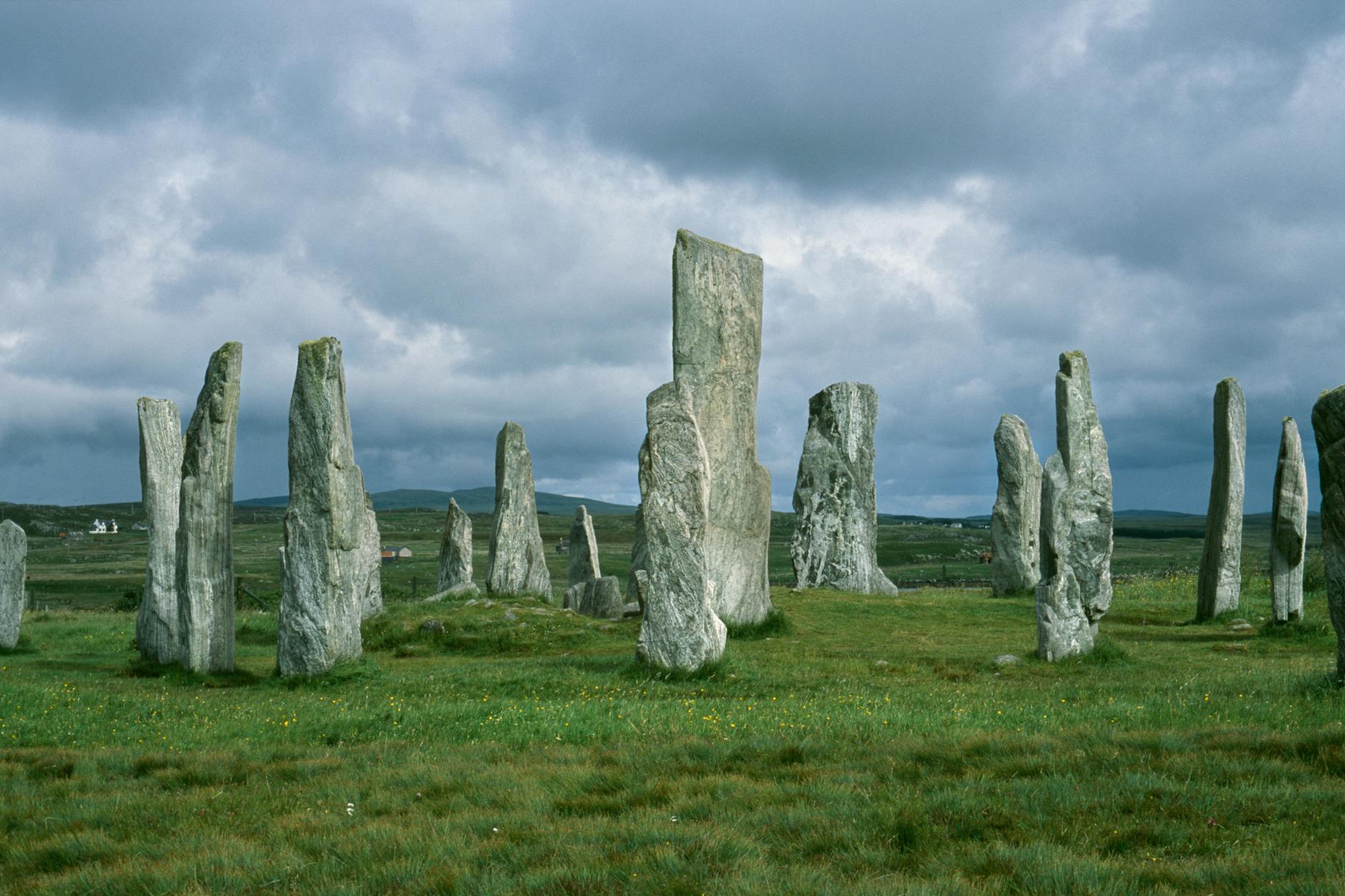
Long before castles, churches or engine houses, before the Romans, before even recorded history, people lived, worshipped and buried their dead in Cornwall, and they left behind a landscape studded with mysterious monuments of stone. Standing alone in a windswept field at the Merry Maidens stone circle, or crouching to peer through the famous holed stone of Men-an-Tol, you feel the deep, deep age of this place in a way few other experiences offer. This guide to ancient Cornwall sites introduces the county’s extraordinary wealth of stone circles, standing stones, quoits and Iron Age remains, explains what we know about them, and tells you exactly where to find the best, most atmospheric examples.
Cornwall, and the far west in particular, has one of the densest concentrations of prehistoric monuments anywhere in Britain. Best of all, most of them stand free and open in the landscape, with no tickets, no fences and often no other soul in sight, just you and several thousand years of human mystery.
Cornwall’s Deep Prehistory
The monuments scattered across Cornwall span thousands of years. The earliest, the great chambered tombs known as quoits or cromlechs, date from the Neolithic period, roughly 3,500 to 2,500 BC, when the first farming communities buried their dead beneath huge stone structures. The stone circles and many standing stones came later, in the Bronze Age, from around 2,500 BC, serving ceremonial, religious or astronomical purposes we can only partly guess at. Later still, in the Iron Age and into the Roman period, people built the fortified settlements, hill forts and the curious underground passages called fogous whose remains also dot the landscape.
What unites them is mystery. We have no written records from the people who raised these stones, so their exact purpose, whether for worship, for marking the seasons and the movements of sun and moon, for burial, or for gatherings, remains the subject of careful study and endless speculation. That uncertainty is part of the magic; standing among the stones, you are free to wonder. The greatest concentration is in West Penwith, the far-western tip beyond Penzance, where circles, stones and quoits cluster within a few miles of one another.
The Best Stone Circles in Cornwall
The Merry Maidens
Near Lamorna in the far west, the Merry Maidens is the finest and most complete stone circle in Cornwall, a near-perfect ring of nineteen evenly spaced granite stones. Unusually, it is believed to be complete and unaltered, making it a wonderful place to grasp what these monuments looked like. Local legend gives it its name: the stones are said to be nineteen maidens turned to stone for the sin of dancing on a Sunday, while two larger stones in a nearby field, the Pipers, were the musicians who played for them. It is easy to reach, right beside a lane, and utterly atmospheric.
Boscawen-Un
A more secluded circle, Boscawen-Un sits in a field reached by a short walk and rewards the effort with a beautiful, less-visited ring of stones with a distinctive leaning central pillar. Its sense of remoteness and tranquillity makes it a favourite among those who seek out ancient sites.
The Hurlers
On the edge of Bodmin Moor near Minions, the Hurlers are a striking alignment of three stone circles in a row, again the subject of a legend that they are men turned to stone for playing the game of hurling on the Sabbath. Their moorland setting, close to other monuments, makes this a rewarding area to explore. Combine them with a walk on the moor using our Bodmin Moor walking guide.
Standing Stones and Holed Stones
Men-an-Tol
Perhaps the most famous and photographed ancient monument in Cornwall, Men-an-Tol is an extraordinary arrangement in West Penwith: a circular stone with a hole large enough to climb through, flanked by two upright standing stones. Its purpose is unknown, but folklore is rich; it was long believed that passing through the hole could cure ailments such as rickets and back pain, and that a woman who climbed through seven times at a full moon would conceive. Reached by a pleasant walk across moorland, it is an unforgettable, otherworldly sight.
The Pipers and Other Menhirs
Single standing stones, or menhirs, dot the Cornish landscape, including the towering Pipers near the Merry Maidens, among the tallest in the county. These solitary stones, deliberately raised thousands of years ago, may have marked routes, boundaries or sacred places.
Ancient Tombs and Quoits
Lanyon Quoit
One of the most iconic images of ancient Cornwall, Lanyon Quoit is a giant stone “table” standing beside a lane in West Penwith, its massive capstone supported on upright stones. It is the remains of a Neolithic chambered tomb that would once have been covered by a long earthen mound and used for burials. The structure collapsed in a storm in 1815 and was re-erected a few years later, slightly altered, but it remains a breathtaking sight and an easy roadside stop.
Other Quoits
West Penwith holds several more of these dramatic chambered tombs, including Chun Quoit and Mulfra Quoit, set in wild moorland, and the impressive Trethevy Quoit near Bodmin Moor, sometimes called the Giant’s House. Each is a portal into the Neolithic world and worth seeking out for the adventurous.
Iron Age Cornwall: Villages and Fogous
Beyond the circles and tombs, Cornwall preserves remarkable Iron Age remains. Chysauster Ancient Village, in the care of English Heritage, is one of the best-preserved Iron Age settlements in Britain, with the foundations of courtyard houses you can walk among, occupied around two thousand years ago. Nearby and at sites like Carn Euny, you can also explore a fogou, a mysterious underground stone-lined passage whose purpose, whether for storage, refuge or ritual, is still debated. These sites add another, slightly later layer to Cornwall’s ancient story and are among the most evocative places to imagine daily life in the distant past.
How to Visit: Practical Tips
The joy of ancient Cornwall is that most of these monuments stand free and open in the landscape, with no admission and no opening hours, though a few, like Chysauster, are managed sites with tickets and seasonal opening. Many require a short walk across fields or moorland to reach, so wear sturdy footwear and check a good map or app, as signage can be minimal and some sites are easy to miss. Respect the sites and the surrounding farmland: close gates, keep dogs under control around livestock, take all litter home, and never move or damage the stones. Bring layers and a waterproof, as the far west and the moors are exposed, and allow time to simply sit and absorb the atmosphere rather than rushing between sites. For parking near the more remote spots, see our parking in Cornwall guide.
A Suggested Ancient West Penwith Trail
The far west rewards a dedicated day of ancient-site exploring, as so many monuments lie close together. A classic circuit might take in Lanyon Quoit as an easy roadside stop, then the walk out to Men-an-Tol and the nearby Men Scryfa inscribed stone, followed by the Merry Maidens and the Pipers, with Boscawen-Un and Chysauster Ancient Village added if time allows. The landscape between them, all moorland, ancient field systems and sea views, is part of the experience. Pack a picnic, take it slowly, and let yourself wonder at the people who shaped this land so long ago. This trail combines beautifully with the area’s other far-western highlights covered in our Cornwall 7-day itinerary.
Linking Ancient Sites With Walks and the Coast
Some of the best ways to experience ancient Cornwall combine the monuments with the landscape on foot. In West Penwith, walking routes link clusters of sites across the moors, passing quoits, circles and standing stones with the Atlantic glittering beyond, and many connect to the South West Coast Path for a circular day mixing prehistory and clifftop scenery. The Tinners Way, an ancient track across the far west, threads past several monuments. On Bodmin Moor, walks from Minions take in the Hurlers stone circles, the nearby Cheesewring rock formation and Trethevy Quoit, combining ancient sites with wild moorland and former mining country. Building a walk around the stones, rather than just driving from one to the next, deepens the experience immeasurably, letting you feel the monuments in their landscape setting as their builders intended. Our guides to the South West Coast Path and Bodmin Moor can help you plan routes that take in the ancient sites.
Where to Base Yourself for Ancient Cornwall
Because the richest concentration of monuments lies in West Penwith, the far western tip, Penzance, St Just, St Ives and the surrounding villages make the ideal base for a prehistory-focused trip, putting Men-an-Tol, the Merry Maidens, Lanyon Quoit and Chysauster within easy reach. For the Bodmin Moor sites, a base around Bodmin or the moor’s edge villages works well. Staying locally lets you visit the sites at the quiet, atmospheric ends of the day, dawn and dusk, when they are at their most magical and most photogenic. For help choosing somewhere to stay, see our Cornwall bed and breakfast guide, and pair your ancient explorations with the area’s other heritage highlights like the mining landscape and St Michael’s Mount.
The Legends and the Atmosphere
What makes Cornwall’s ancient sites so special is not just their age but the web of legend that surrounds them, and the atmosphere they hold. Again and again, the stories tell of people turned to stone for dancing or playing games on a Sunday, a folk memory perhaps of older, pre-Christian gatherings disapproved of by the later church. The holed stones promise healing and fertility; the quoits are the work of giants. Whether or not you give the legends any credence, they add a layer of enchantment, and there is no denying the genuine sense of presence at these places, especially alone at dawn or dusk with the wind in the grass and the sea on the horizon. It is one of the most profound and free experiences Cornwall offers.
Reading the Stones: What They Might Mean
Half the fascination of ancient Cornwall lies in the questions the stones refuse to answer. Archaeologists have pieced together a partial picture, but much remains genuinely unknown, and that is part of the appeal. The stone circles, raised in the Bronze Age, are widely thought to have served ceremonial and possibly astronomical purposes, with some showing alignments to the rising or setting sun at key points of the year, hinting at communities deeply attuned to the seasons and the sky. The number and spacing of stones at sites like the Merry Maidens have prompted theories linking them to lunar cycles. The Neolithic quoits were tombs, their great capstones once buried within mounds, suggesting elaborate beliefs about death and the ancestors. The holed stone of Men-an-Tol may have been part of a larger structure now lost. What seems clear is that this was a peopled, organised, spiritually rich landscape thousands of years ago, far from the empty wilderness it can appear today. Standing among the stones, it is worth remembering that they were the work of skilled communities with their own complex world, even if we can no longer read its meaning. That humbling sense of lost knowledge is exactly what makes these places so compelling.
Photographing and Experiencing the Sites
For photographers and anyone who simply wants to feel the magic, timing and weather transform a visit to Cornwall’s ancient sites. Early morning and the golden hour before sunset cast long light across the stones and the moorland, far more atmospheric than flat midday sun, and the low light reveals the texture of the lichen-covered granite. Mist, brooding cloud or dramatic skies suit these places wonderfully, lending them the mysterious mood they deserve. The far-western sites enjoy sweeping sea views as a backdrop, while the Bodmin Moor monuments sit amid wild, open country. Go quietly, expect to have many sites to yourself, and allow time to sit and absorb the surroundings rather than just snapping and moving on. Bring a good map or offline navigation, as the moorland paths are unmarked and the sites can be tricky to locate, and never rely on phone signal in these remote spots. Approached with patience and a little reverence, a day among the ancient stones becomes one of the most memorable and soulful experiences Cornwall can offer, and one that costs nothing at all.
Why Ancient Cornwall Is Worth Seeking Out
In a county famous for its beaches and harbours, the ancient monuments are an easily overlooked treasure, yet for me they offer something no other attraction can: a direct, unmediated connection to the deep human past, standing in the very places where people gathered, worshipped and buried their dead thousands of years ago. They are free, uncrowded, set in beautiful landscapes, and utterly unforgettable. Seek them out, give them time, and Cornwall reveals a story far older and stranger than its picture-postcard image suggests.
Frequently Asked Questions
What is the best stone circle in Cornwall?
The Merry Maidens near Lamorna in the far west is the finest and most complete, a near-perfect ring of nineteen Bronze Age stones, believed to be unaltered. It is easy to reach beside a lane and steeped in the legend of maidens turned to stone for dancing on a Sunday.
Where is Men-an-Tol and can you go through it?
Men-an-Tol is in West Penwith, the far west of Cornwall, reached by a short moorland walk. You can see and traditionally climb through its famous holed stone, long associated with folklore about healing and fertility, though please treat this ancient monument with care and respect.
Are Cornwall’s ancient sites free to visit?
Most are free and open in the landscape with no tickets or opening hours, including the Merry Maidens, Men-an-Tol and Lanyon Quoit. A few managed sites, such as Chysauster Ancient Village, have admission and seasonal opening.
Where are most of Cornwall’s ancient monuments?
The greatest concentration is in West Penwith, the far-western tip beyond Penzance, where stone circles, standing stones, holed stones and quoits cluster within a few miles. Bodmin Moor also has notable sites such as the Hurlers and Trethevy Quoit.
How old are Cornwall’s stone circles and quoits?
The chambered tombs known as quoits date from the Neolithic period, roughly 3,500 to 2,500 BC, while the stone circles and many standing stones were raised in the Bronze Age from around 2,500 BC. Iron Age settlements like Chysauster came later, occupied around two thousand years ago.
Do you need a guide to visit ancient Cornwall sites?
No, most sites are free and open to explore independently, though a good map or offline navigation app is essential as signage is minimal and some lie across unmarked moorland. Guided walks and tours are available for those who want expert interpretation of the monuments and their meaning.
Is West Penwith good for prehistoric sites?
West Penwith, the far-western tip beyond Penzance, has one of the densest concentrations of prehistoric monuments in Britain, with stone circles, standing stones, holed stones, quoits and Iron Age villages all within a few miles, set in beautiful moorland and coastal scenery. It is the best area in Cornwall for ancient-site exploring.