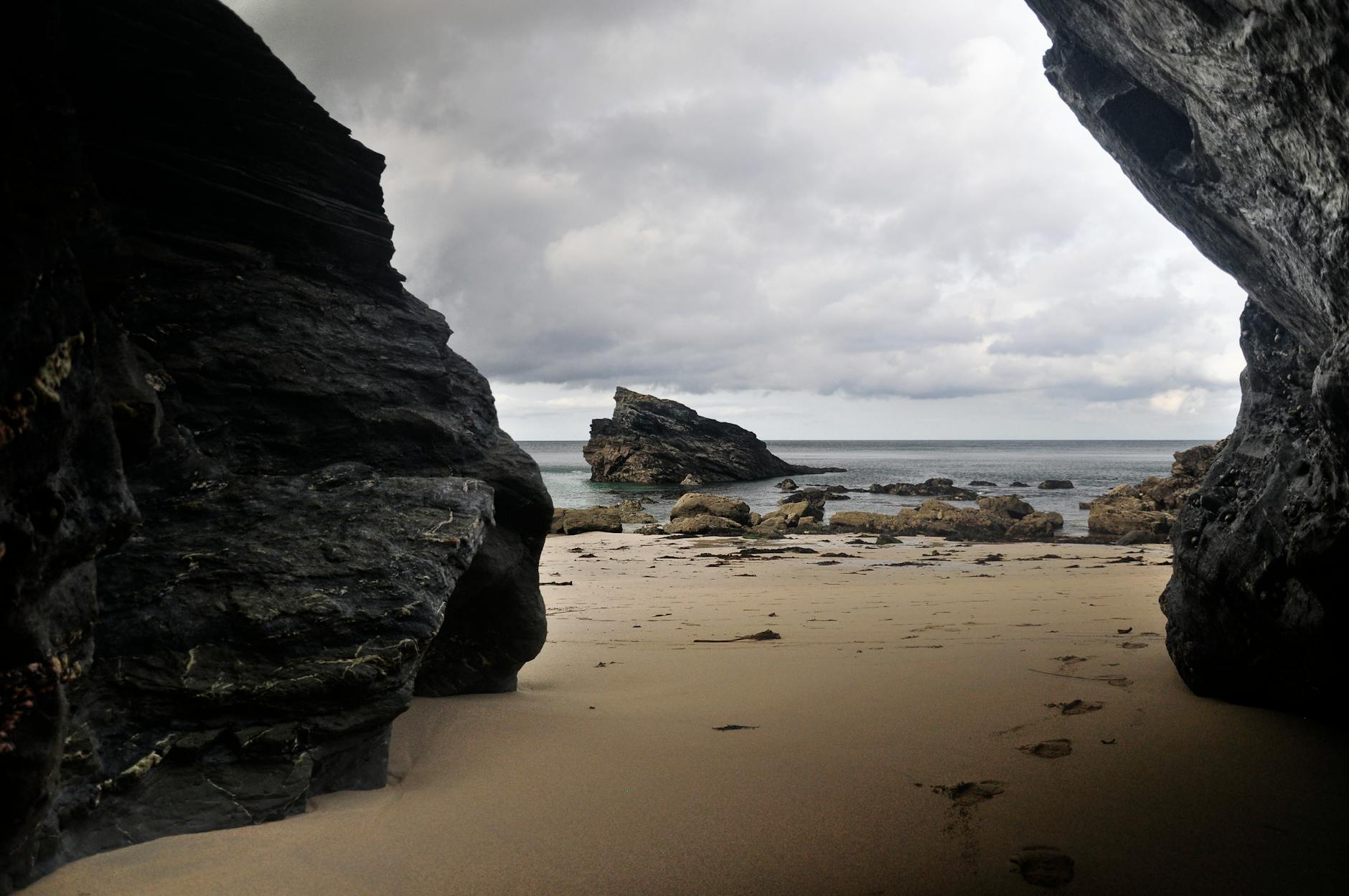
Every snug, low-beamed pub in a Cornish fishing village seems to come with a story: a hidden cellar, a tunnel to the beach, a tale of brandy and tobacco run ashore on a moonless night under the noses of the excisemen. Some of these tales are tall, but the underlying truth is real and remarkable. For the best part of two centuries, smuggling was woven into the fabric of Cornish coastal life, a shadow economy that touched nearly every community on these shores. This guide to Cornwall smuggling history separates the romance from the reality, tells the stories of the most famous “free traders”, and points you to the coves, inns and museums where you can still feel the atmosphere of those clandestine days.
Cornwall’s geography made it a smuggler’s paradise: a long, deeply indented coastline of hidden coves and sheltered bays, far from the centres of power, with poor communities, heavy taxes and a sea full of opportunity. To understand Cornwall, you have to understand its smuggling past.
Why Cornwall Became a Smuggler’s Haven
Smuggling flourished in Cornwall for a combination of reasons that all came together in the 18th century. The coastline, with its countless coves, caves and quiet beaches, was almost impossible for the authorities to police. Cornwall was remote from London and lightly governed, with sympathies often firmly on the side of the smugglers rather than the distant government. And, crucially, taxation made it hugely profitable. As the government raised duties to fund a series of foreign wars, everyday goods became extortionately expensive; tea, for instance, was taxed so heavily that it cost several times more in England than just across the Channel. The temptation to bring goods ashore without paying duty was overwhelming.
For impoverished fishing and farming communities, “free trade”, as smuggling was tellingly known, was not seen as a crime but as a legitimate way to make ends meet. Whole villages were complicit: men sailed and carried the contraband, while women and children helped to hide, transport and sell it. The goods ran the gamut, brandy, gin and rum, tea, tobacco, salt, lace and silk, all landed in secret and spirited inland through a network of trusted hands. At its height, smuggling was one of the largest economic activities on the Cornish coast.
The Truth About Wreckers
No discussion of Cornish smuggling escapes the legend of the wreckers, the supposed gangs who lured ships onto the rocks with false lights to plunder their cargoes. It is a chilling, romantic image that has fuelled novels and films, most famously Daphne du Maurier’s Jamaica Inn. The honest historical picture, however, is more nuanced. While Cornish communities certainly did salvage, and enthusiastically help themselves to, the cargoes of ships genuinely wrecked on their treacherous coast, a common and not always legal practice, there is little firm evidence that they deliberately lured ships to their doom with false lights. The deliberate-wrecking legend appears to be largely myth, an exaggeration of the real and widespread practice of plundering wrecks that fate provided. The truth, that desperate coastal communities stripped wrecks of everything usable, is dramatic enough without the embellishment.
Famous Cornish Smugglers
Cornwall’s free-trading past produced some genuinely colourful characters whose stories survive.
The Carter Family of Prussia Cove
The most famous of all were the Carters of Prussia Cove, near Marazion. John Carter styled himself the “King of Prussia”, after the cove that still bears the name, and ran a sophisticated smuggling operation for years. The Carters were renowned, remarkably, for their honesty and fair dealing; legend tells that when revenue men seized goods from John’s store, his brother broke in to retrieve only what was rightfully theirs and nothing more, so trusted was Carter’s reputation. Prussia Cove remains a beautiful, atmospheric spot to visit.
Zephaniah Job, the Smugglers’ Banker
In Polperro, a schoolmaster named Zephaniah Job became the financial brains behind the village’s smuggling trade, managing accounts, arranging finance and effectively acting as banker to the free traders. His story shows how organised and businesslike smuggling could be, far from a haphazard affair.
Others of Note
Many other names survive in local memory, from John Carter’s associates to the countless unnamed villagers whose livelihoods depended on the trade. Their exploits, daring, ingenious and often violent, are remembered in the folklore of nearly every Cornish coastal community.
Smuggling Villages and Coves to Visit
The wonderful thing for visitors is that the settings of these stories survive, often beautifully preserved. Polperro, on the south coast, was a major smuggling centre and remains an impossibly pretty village of narrow lanes tumbling down to a tiny harbour, with a small museum telling its smuggling and fishing history. Prussia Cove, near Marazion, the Carters’ base, is a quiet, rocky cove still evocative of its secretive past. Mousehole, Cawsand and Kingsand, and the coves of the Roseland and the Lizard all have rich smuggling histories. On the north coast, Boscastle, Trebarwith and the beaches around Tintagel were used to land contraband. Wandering these villages, it is easy to imagine the night-time landings and the goods vanishing inland. Many feature in our guide to Cornwall’s towns and villages.
Jamaica Inn and the Smuggling Trail
No smuggling pilgrimage is complete without Jamaica Inn, the remote coaching inn high on Bodmin Moor immortalised by Daphne du Maurier’s 1936 novel of the same name. Built in 1750, the inn was a real staging post on the lonely moorland road, and is said to have been used by smugglers moving contraband across the moor. Today it houses a Smugglers’ Museum with a collection of artefacts, plus a room dedicated to du Maurier, whose stay here inspired her tale of wreckers and villainy. Wreathed in moorland mist, it remains wonderfully atmospheric, and is also famously reputed to be one of the most haunted places in Cornwall, as covered in our guide to Cornwall’s most haunted places. Several other museums and pubs along the coast tell the smuggling story, and guided smuggling-history tours operate in some areas for those who want to delve deeper.
How Smuggling Actually Worked
The mechanics of Cornish smuggling were surprisingly sophisticated, far from the haphazard image of a few barrels rolled up a beach. Contraband was typically bought legally in France, the Channel Islands or further afield, then carried across by fast, well-crewed boats to a pre-arranged Cornish cove on a suitable tide and a dark, moonless night. Signals from the shore, a flashed lantern or a fire, told the crew the coast was clear of revenue men. The goods, brandy and gin in casks slung to be carried or even sunk offshore and retrieved later, tea and tobacco wrapped against the wet, were landed at speed and immediately spirited inland by a chain of waiting men, ponies and carts. Hiding places were everywhere: cellars with false walls, church towers, farm outbuildings, even tombs and the cottages of seemingly respectable folk. From there the goods were distributed and sold, often through trusted local contacts, with the profits rippling through the whole community. The organisation, financing and sheer scale of the operation, sometimes involving hundreds of people for a single major run, reveals smuggling as a serious business enterprise rather than mere opportunism, which is part of what makes the history so compelling.
Smuggling in Cornish Literature and Legend
The free-trading past has left a deep mark on Cornwall’s culture and storytelling. Daphne du Maurier, who made Cornwall her home and her muse, drew on the smuggling and wrecking legends for Jamaica Inn, cementing the romantic image in the popular imagination, and her wider Cornish novels are steeped in the wild, secretive atmosphere of the coast. Countless local legends, of headless smugglers, ghostly free traders and hidden tunnels, attach to the old villages and inns, blurring history and folklore in exactly the way that makes Cornwall so atmospheric. Songs, place names like Prussia Cove and Brandy Cove, and the persistent pub tales all keep the memory alive. Whether or not every story stands up to scrutiny, this living tradition of smuggling legend is part of the fun, and reading a little du Maurier before or during a Cornish holiday brings the coves and moors vividly to life. The smuggling past also feeds naturally into Cornwall’s reputation for ghost stories and the supernatural, a connection well worth exploring.
The Excisemen and the End of Smuggling
Smuggling was not a victimless game played against a faceless state; it was a running battle, often violent, with the revenue officers and, later, the coastguard, whose job was to stop it. Pitched fights, ambushes and chases were common, and smugglers who were caught faced harsh punishment, from prison to transportation or worse. The government gradually gained the upper hand through the 19th century, partly by establishing a more effective coastguard service, and partly, more decisively, by slashing the punitive import duties that had made smuggling so profitable in the first place. As the financial incentive evaporated, so did the trade. By the later 19th century, large-scale Cornish smuggling had largely faded into history and into legend, leaving behind the stories, the place names and the atmospheric coves we enjoy today.
Experiencing Cornwall’s Smuggling Heritage Today
For the visitor, Cornwall’s smuggling past adds a thrilling extra dimension to a coastal holiday. Beyond Jamaica Inn and the Polperro museum, you can soak up the atmosphere simply by exploring the old fishing villages, walking the coast path between the smuggling coves, and stopping in the ancient inns that claim their own free-trading tales, many with genuine historic features. Reading Daphne du Maurier, whose Cornish novels capture the wild, secretive spirit of the coast, makes the perfect accompaniment to a trip. And the coves themselves, hidden, beautiful and once full of midnight intrigue, are wonderful places to visit in their own right. Combine a smuggling-themed exploration with the coast path using our South West Coast Path guide.
What the Smugglers Traded
It helps to picture exactly what was being run ashore on those dark nights, because the contraband tells the story of the era. Spirits were the mainstay, brandy and gin from France and Holland, and rum, prized because their high value packed into small casks made them enormously profitable once the duty was dodged. Tea was perhaps the most surprising staple, so heavily taxed that smuggled tea undercut the legal product many times over and supplied a huge share of what the nation drank. Tobacco, salt, which was taxed and essential for preserving fish, fine lace, silk and other textiles all crossed in quantity. The goods reflected both the punitive taxes of the day and the everyday desires of ordinary people who simply could not afford the legal, duty-paid versions. In a very real sense, smuggling democratised little luxuries, putting tea, spirits and fine cloth within reach of communities that would otherwise have gone without. Understanding the cargo makes sense of why smuggling enjoyed such broad local sympathy: nearly everyone, from the poorest cottager to the local gentry and clergy, benefited from cheaper goods, which is why the trade was so hard for the authorities to stamp out.
Planning a Smuggling-Themed Cornwall Trip
If the free-trading past captures your imagination, it is easy to build a memorable themed trip around it. Base yourself near the south-coast smuggling villages around Polperro and Looe, or in the far west near Prussia Cove and Mousehole, and combine museum visits with coast-path walks between the old landing coves. A pilgrimage to Jamaica Inn on Bodmin Moor adds the wild moorland dimension and a dose of Daphne du Maurier, and can be paired with the moor’s ancient sites and dramatic scenery. Atmospheric old inns, many claiming smuggling connections, make characterful places to eat and stay along the way. Read a du Maurier novel as you go, time some of your coastal walks for dusk when the coves are at their most evocative, and you will return with a far richer sense of Cornwall’s hidden history. For somewhere to stay near the smuggling coast, our Cornwall bed and breakfast guide can help, and the 7-day itinerary shows how to weave it into a wider tour.
The Legacy in the Landscape
Smuggling has left quiet traces all along the Cornish coast for those who know how to read them. The neat rows of coastguard cottages above many a cove are a direct legacy of the campaign to suppress the trade, built to house the officers stationed to watch the shore. Old lookout points, the so-called huers’ huts and watch houses on the cliffs, recall the era of signals and surveillance. Place names like Prussia Cove and Brandy Cove preserve the memory, and the cellars, tunnels and hidden recesses of countless old buildings, some genuine, some embellished, keep the stories alive. Even the layout of the tight, secretive fishing villages, with their tangle of lanes and waterside cottages, speaks of a world where goods and people could disappear in moments. Spotting these clues turns a simple coastal walk into a treasure hunt through history, adding yet another layer to Cornwall’s endlessly rewarding coast.
Why the Smuggling Story Endures
The romance of Cornish smuggling endures because it speaks to something appealing: the image of ordinary, struggling people outwitting a distant, greedy authority, with a dash of danger and adventure thrown in. The reality was harder and often grimmer than the legend, but the essential truth, that smuggling was a huge, organised and community-wide part of Cornish coastal life for generations, is genuinely fascinating. To explore it is to understand the hidden history behind the picture-postcard harbours, and to see Cornwall’s beautiful coves and cosy inns in a new and more intriguing light.
Frequently Asked Questions
Why was smuggling so common in Cornwall?
Cornwall’s long, indented coastline of hidden coves was almost impossible to police, the county was remote and lightly governed, and high taxes on goods like tea, brandy and tobacco made smuggling hugely profitable. For poor coastal communities, “free trade” was a vital part of the local economy.
Did Cornish wreckers really lure ships onto the rocks?
Probably not deliberately, despite the famous legend. Cornish communities certainly plundered the cargoes of ships genuinely wrecked on their treacherous coast, but there is little firm evidence they used false lights to lure ships to their doom. The deliberate-wrecking story appears to be largely myth.
Where can you learn about smuggling in Cornwall?
Jamaica Inn on Bodmin Moor has a Smugglers’ Museum, Polperro has a museum covering its smuggling past, and many old fishing villages and coves, such as Prussia Cove, are steeped in the history. Guided smuggling tours also operate in some areas.
Who were the most famous Cornish smugglers?
The Carter family of Prussia Cove, led by John Carter the self-styled “King of Prussia”, were the most famous, known oddly for their honest dealing. Zephaniah Job of Polperro acted as the financial brains, or “smugglers’ banker”, behind that village’s trade.
Is Jamaica Inn worth visiting?
Yes, especially for those interested in smuggling history and Daphne du Maurier. The historic moorland coaching inn has a Smugglers’ Museum and a du Maurier room, atmospheric surroundings on Bodmin Moor, and a reputation as one of Cornwall’s most haunted buildings, making it a memorable, characterful stop.