
Stand on the cliff path at Botallack on a clear afternoon and you can watch it happen. Someone reaches the top of the steps, sees the two engine houses stacked on the ledge below with the Atlantic exploding on the rocks underneath them, and reaches for a phone without saying anything. That view was on television for five series as Wheal Leisure, and a good proportion of the people on that path are there because of it.
Cornwall has been used as a backdrop since the 1920s, and the reasons are practical rather than romantic: a coastline with no modern buildings in shot, a working Georgian harbour with resident tall ships, ruined industrial architecture that reads as ancient, and moorland that can pass for anywhere from Yorkshire to Westeros. The best Cornwall filming locations are places worth visiting on their own terms, which is the honest test — and a few of them are car parks with a view that television flattered. This guide separates the two, tells you where the crowds are, and gives you routes that string the good ones together without three hours of driving.
Poldark country
The 2015–2019 BBC adaptation did more for Cornish tourism than any campaign, and its locations are still the most-visited screen sites in the county. They are also, usefully, spread across the far west, which makes a Poldark day genuinely coherent.
Botallack
Botallack, on the coast between St Just and Pendeen, provided the exteriors of Ross Poldark’s Wheal Leisure. The Crowns engine houses sit on a shelf of rock halfway down the cliff, the shafts running out under the seabed, and the walk out from the National Trust car park at Botallack Count House is short, level and free. Go at low light — early or late — and the place does something no camera crew invented.
The surrounding Tin Coast is the real prize. Levant, Geevor and the Crowns sit within a couple of miles of each other, all part of the UNESCO Cornish mining World Heritage Site, and walking between them tells you far more about what the series was dramatising than a photograph of the engine houses will.
Charlestown
Charlestown near St Austell is the most filmed square mile in Cornwall, and once you see it the reason is obvious: a Grade II listed Georgian port with long granite quays, no visible modernity, and square-rigged ships permanently alongside. Charles Rashleigh built it between 1791 and 1801 to ship china clay, and it has barely changed.
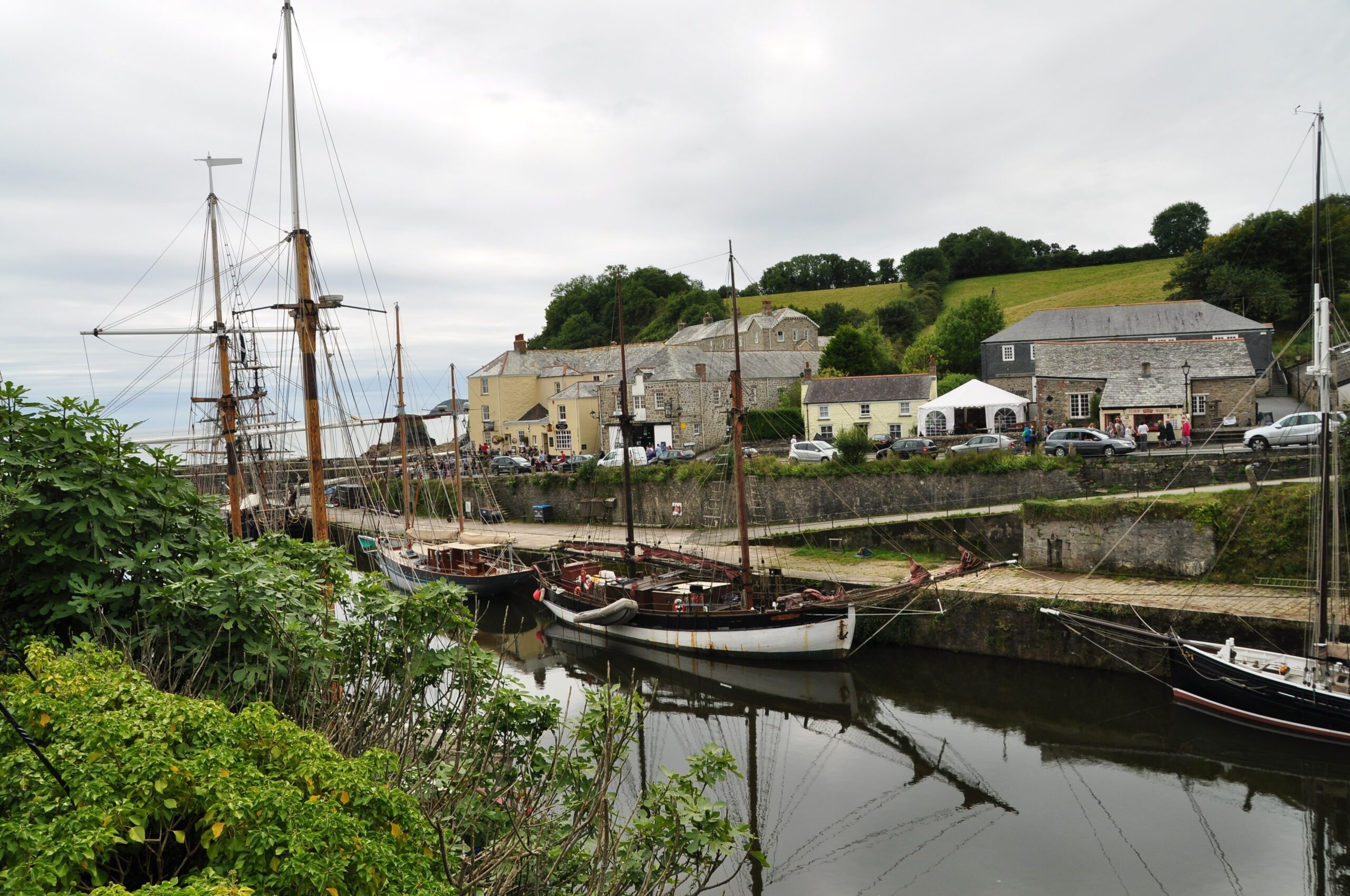
In Poldark it stands in for both Truro and Falmouth, and it is where Verity elopes with Captain Blamey. Beyond that its credits run deep — Hornblower, Mansfield Park, Tim Burton’s Alice in Wonderland, Doctor Who and The Eagle Has Landed among more than a hundred productions since 1929. There is a shipwreck museum, a couple of good places to eat and a shingle beach. Parking is paid and fills by mid-morning in summer.
Porthgwarra
The cove where Ross swims, and where a great many people have subsequently been disappointed by the water temperature. Porthgwarra is a tiny fishing cove west of Porthcurno with a hand-cut tunnel through the rock to the beach, a seasonal café and a car park that holds nowhere near the number of cars that want to be in it. It is beautiful and it is small. Arrive before ten or after five.
Church Cove and Gunwalloe
The wide beach and the church tucked into the dunes at Gunwalloe served as Nampara Cove and as the site of several wreck scenes. It is National Trust, it has a car park and a beach café, and — usefully for a filming-locations trip that risks becoming a series of viewpoints — it is a genuinely good beach in its own right. The same cove appears in the 2020 film of Rebecca.
Bodmin Moor and Nampara
The interior and exterior of Nampara was a set built near St Breward on the western edge of Bodmin Moor, and it is not there any more, which is the single most common disappointment among Poldark visitors. What is there is the moor itself: Rough Tor, Brown Willy, the stone circles and the hut circles, all used for riding shots and all far better experienced as a walk than as a photograph. Our Bodmin Moor walking guide covers the routes.
Doc Martin and Port Isaac
Port Isaac on the north coast is the fictional Portwenn, and it has been for the best part of two decades. The village is a bowl of slate-roofed cottages dropping to a working harbour, with lanes so narrow that one of them, Squeeze-ee-belly Alley, is famously about eighteen inches wide.
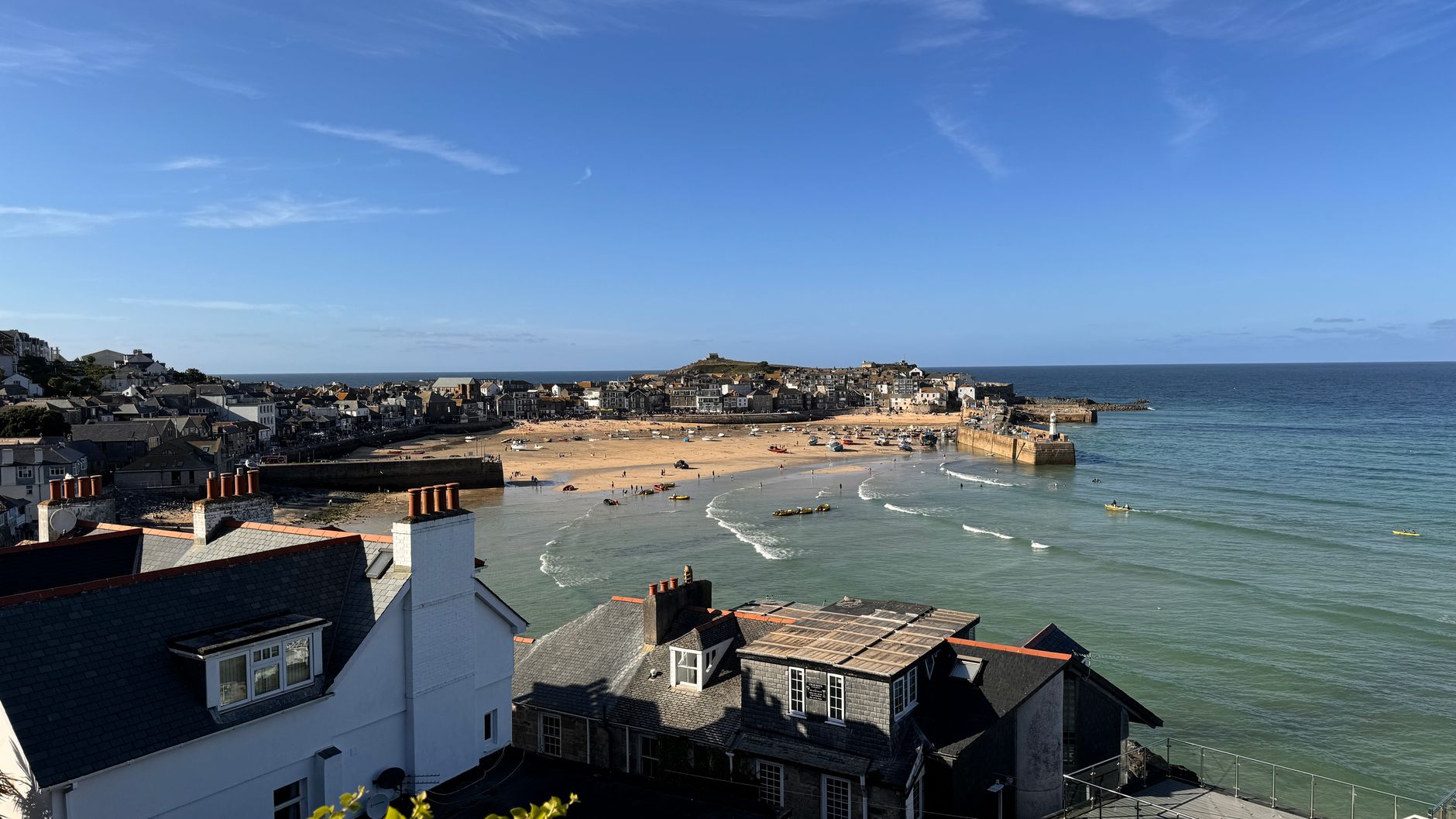
Two things worth knowing before you go. The first is that the surgery — Fern Cottage, above the harbour — is a private property let as a holiday cottage. People stay in it. Standing in its garden to take a photograph is not a thing you should do, and the series was filmed only every other year partly to give the village a break. The second is parking: the main car park is on the hill above the village, the descent is steep, and driving down into Port Isaac in July is a mistake that a surprising number of people make once.
Go in the morning, walk down, look at the harbour, buy something from a shop that is not selling Doc Martin merchandise, and walk the coast path out to Port Gaverne. The village is one of the prettiest fishing villages in Cornwall regardless of what has been filmed there, and it works far better as a place to spend three hours than as a photo stop.
Fisherman’s Friends
The same village supplied the 2019 film and its sequel. The Platt — the open slipway area at the bottom of the village — is where the sea shanty group actually perform, and it is where much of the film is set; the Golden Lion appears too. Port Gaverne, ten minutes’ walk east, provides the clifftop walks and a rescue scene, and the church at St Kew inland stands in for the village church.
Unlike most screen tourism, this one comes with a live version: the shanty singers still sing on the Platt in season, for free, standing on the same stones. It is the best filming-location experience in Cornwall and it costs nothing.
House of the Dragon
The most recent production to move the needle. HBO used three Cornish locations in the first series and all three are worth the trip anyway.
- Holywell Bay — the vast National Trust beach south of Newquay, with the two Gull Rocks offshore, became the beach below High Tide on Driftmark and the setting for the battle in the Stepstones. It is an excellent beach with a long walk in over dunes, and the rocks are the reason the shot works.
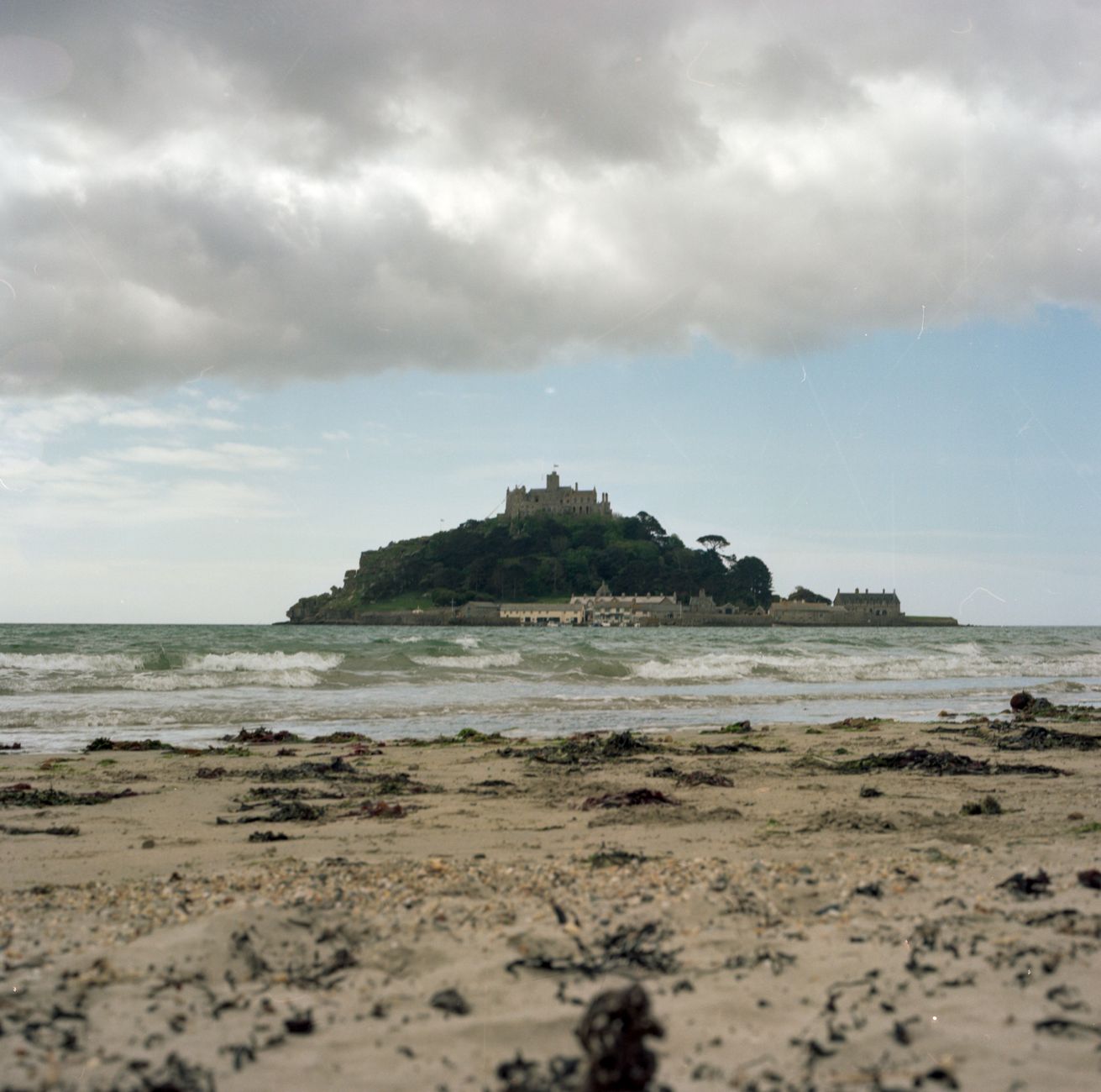
- St Michael’s Mount — used as Driftmark itself. The tidal island and castle in Mount’s Bay needs no help from television, and the causeway crossing is entirely tide-dependent, so check times.
- Kynance Cove — the Valyrian camp. Serpentine stacks, turquoise water and a beach that all but disappears at high tide, on the National Trust land at the top of the Lizard.
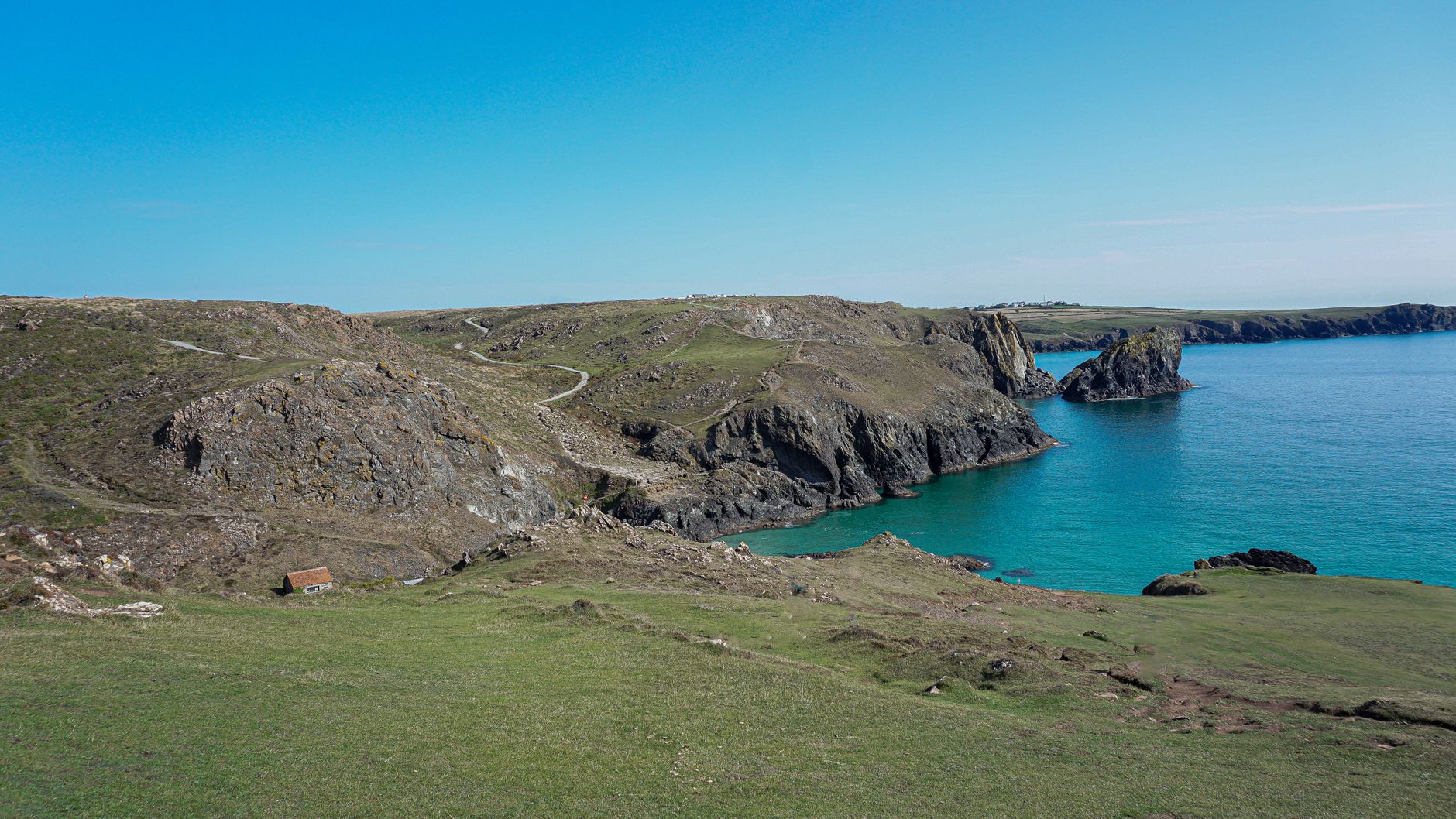
The pattern is worth noticing: production companies keep choosing places that are already among the best things in Cornwall. That is a decent filter for planning a trip.
Daphne du Maurier’s Cornwall
The oldest and deepest screen connection is not a location so much as an author. Du Maurier lived at Menabilly near Fowey, wrote most of her Cornish novels there, and the county she invented has been filmed repeatedly since Hitchcock’s Rebecca in 1940.
Here is the honest caveat, because it disappoints people every year: Manderley is not a place you can visit. Menabilly, the house that inspired it, is private and not open to the public. The 2020 Netflix adaptation built its Manderley from four National Trust houses, none of them in Cornwall. What you can do is walk the coast around Polridmouth Cove below Menabilly, which is where the wreck and the boathouse of the novel belong, and where the geography suddenly makes sense.
Fowey itself is the du Maurier town — the setting of the annual festival in her name, and the base for the Hall Walk across the water at Polruan. Jamaica Inn, high on Bodmin Moor at Bolventor, is a real coaching inn and the setting of the smuggling novel; it is also right beside the A30 with a large car park and a gift shop, and the atmosphere the book gives it takes some finding on a busy Saturday. Go in winter, in weather, or go for the moor rather than the inn. Our guides to Fowey and the Roseland and to Cornish smuggling history cover the real version behind the fiction.
Frenchman’s Creek is real, a wooded tidal inlet off the Helford River, reachable on foot from Helford village at low tide. It is one of the quietest places in Cornwall and there is nothing there at all, which is exactly the point.
Everything else that has been shot here
Cornwall’s screen credits are much longer than the famous four. A selective list of places you can actually stand in:
- Holywell Bay — beyond House of the Dragon, the dunes and beach have appeared in a string of features and adverts. It is the most filmed beach in the county after Porthcurno.
- Porthcurno and the Minack — the white sand and the cliff theatre have been used for period drama and adverts for decades. The Minack Theatre is a working open-air venue rather than a set, and seeing a play there beats photographing it.
- Charlestown — as above, everything from Napoleonic drama to Doctor Who.
- Bodmin Moor — moorland doubling for anywhere bleak, plus the Beast, which is a story rather than a location.
- The Helford and the Fal — creeks and woodland used whenever a production needs an estuary that reads as timeless.
Cornwall also has a genuine home-grown film culture that has nothing to do with London productions using it as scenery. Bait, shot on hand-cranked 16mm in monochrome around the Penwith coast, is about the collision between a fishing village and its holiday lets, and it is a far more honest portrait of contemporary Cornwall than anything with a costume department. Watch it before you come.
Why film crews keep coming back
It is not simply that Cornwall is pretty. Plenty of places are pretty and do not get used. What Cornwall has is a set of specific, boring advantages that location managers care about.
The first is the absence of modern intrusion. Long stretches of the north coast have no pylons, no wind turbines in shot, no visible A-road and no buildings later than the nineteenth century. A crew can point a camera at three hundred degrees of horizon and not have to remove anything in post-production, which saves real money.
The second is the industrial architecture. Ruined engine houses read as ancient to an audience even though most of them are Victorian, and there are hundreds of them, in landscape settings, freely accessible and largely maintained by the National Trust. Nowhere else in Britain offers ruins of that scale that are neither castles nor abbeys.
The third is that the county actively wants the work. Cornwall has a screen agency that helps productions find locations, crew and permissions, and the local authority has been consistently willing to close a harbour for a fortnight. That matters more than scenery: a beautiful location that takes six months of negotiation is not a location, it is a photograph.
The fourth is the light. The peninsula gets a quality of low, side-on light off the water in spring and autumn that cinematographers talk about the way surfers talk about swell. It is also why so many productions shoot here in the shoulder seasons rather than in July, which is good news for anyone trying to visit the locations in summer.
And the fifth, unromantically, is that the coastline can double for somewhere else. Cornish cliffs have played Cornwall, Devon, Ireland, Brittany, wartime Germany and, most recently, a fictional continent with dragons on it. A location that can be more than one place gets booked more often.
What screen tourism has done to Cornwall
This is worth saying plainly, because it changes how you should behave when you get there.
The Poldark effect was real and enormous. Visitor numbers at the Tin Coast sites rose sharply during the run of the series, and places that had previously received a steady trickle of walkers started receiving coach parties. Port Isaac has lived with the Doc Martin version of this for close to twenty years, to the point that filming had to be scheduled every other year and, on occasion, stopped altogether because crowds made it impossible.
The benefits are genuine — jobs, off-season trade, small businesses that survive the winter on autumn visitors — and so are the costs. Villages with a few hundred residents absorbing thousands of day visitors have parking problems, waste problems and a housing market distorted by holiday lets. In some Cornish coastal parishes a majority of properties are second homes or short-term rentals, which is precisely the subject of Bait, the film mentioned above, and it is the reason a resident may be less delighted than you are to see a camera pointed at their door.
None of this is a reason not to come. It is a reason to come in October rather than August, to park where you are asked to park, to spend money in the village rather than in a supermarket beforehand, and to treat inhabited houses as houses.
Practicalities: parking, tides and access
Most of the disappointment attached to filming-location trips is logistical rather than aesthetic. Four things cause almost all of it.
- Car parks fill early. Porthgwarra, Kynance, Holywell and Port Isaac all have limited parking, and in July and August they are full by half past ten. National Trust car parks are free to members, which pays for itself quickly on a trip like this.
- Some locations are tidal. The causeway to St Michael’s Mount is walkable only around low water, and Kynance’s beach effectively vanishes at high tide. Check the tide table the night before, not on the day.
- The coast path is not a pavement. Botallack sits above unfenced mine shafts, the cliffs at Porthgwarra are exposed, and the ground is uneven everywhere. Wear proper shoes.
- Mobile signal is unreliable across Penwith and Bodmin Moor. Download maps and screenshot directions before you set off.
A fifth, less obvious point: several of the best locations are at their best in weather that keeps everyone else away. Botallack in a gale, the moor in mist and Charlestown in the rain all look more like the productions that used them than they do on a bright Tuesday in August.
Where to base yourself
The county is too long to do this from one place, but two bases cover almost everything.
Penzance or St Just for the west. From here Botallack, Levant, Geevor, Porthgwarra, Porthcurno, the Minack, St Michael’s Mount and the Lizard including Kynance are all within about forty minutes. That is the highest concentration of screen locations in Cornwall and by some distance the best walking.
Wadebridge, Padstow or Bodmin for the north and the moor. Port Isaac, Port Gaverne, St Kew, Bodmin Moor, Jamaica Inn and, at a push, Charlestown are all reachable, and the roads are faster than they are in the far west.
If you only have one base and want both, take Truro: it is central, it has the main-line station, and nothing in this guide is more than about an hour and a quarter away. You will spend more time driving and less time walking, which is the trade.
Three routes that actually work
Screen locations are scattered, and the mistake is trying to see all of them. These three days each cover a coherent area.
The far west: Poldark and the Tin Coast
Start at Botallack for the Crowns engine houses, walk north along the cliff to Levant and Geevor, then drive south to Porthgwarra for the swimming cove and on to Porthcurno and the Minack. Roughly twelve miles of driving in total, most of the day on foot, and every stop is worth it independently of what was filmed there.
The north coast: Portwenn and the Platt
Port Isaac for the morning — surgery, harbour, the alley — then the coast path to Port Gaverne and lunch. Inland to St Kew for the church, or north to Tintagel if you want to set the Arthurian version of Cornish myth-making beside the television one. Park at the top and walk down.
The south coast: du Maurier and Charlestown
Fowey in the morning, the walk out to Polridmouth and the Gribbin, then east to Charlestown for the tall ships in the late afternoon light when the day visitors have gone. This is the best of the three for anyone who prefers reading to television.
Tours, and whether you need one
Guided filming-location tours run from several towns, usually by minibus, usually half a day, and they are genuinely useful in one specific case: when you cannot drive, or when the group includes someone who wants the anecdotes rather than the walk. A good guide knows which cottage is which and will keep you out of people’s gardens.
For everyone else they are unnecessary. The locations in this guide are all publicly accessible, most have National Trust or council car parks, and the walking between them is the best part. Save the money and buy the Ordnance Survey map.
Honest verdicts
Some of these places are worse for being famous. Port Isaac in August has more visitors than it has room for, and the residents did not sign up for a film set. Park at the top, spend money in the village, and do not photograph anyone’s front door.
Jamaica Inn is a disappointment in daylight. The building is genuine and old, and the setting on the moor is superb, but it sits directly off a dual carriageway with a coach park, and the smugglers’ atmosphere is a matter of what you bring to it. It is worth ten minutes on the way past, not a special trip in July.
Nampara does not exist. The house was a set and it was removed. Several tour listings are vague about this. If someone offers to show you Poldark’s house, ask what exactly you will be looking at.
And the sea in these places is genuinely dangerous. Porthgwarra, Holywell Bay and the Botallack cliffs are all places where television makes water look inviting and cliffs look like paths. Holywell has rips, Botallack has unfenced shafts, and the coast path at Porthgwarra is exposed. Look at the photography, then look where you are standing — our Cornwall photography spots guide has the same warning for the same reason.
Frequently Asked Questions
Where was Poldark filmed in Cornwall?
Botallack on the Tin Coast for the Wheal Leisure mine exteriors, Charlestown for Truro and Falmouth harbour scenes, Porthgwarra for the swimming cove, Gunwalloe’s Church Cove for Nampara Cove, and Bodmin Moor near St Breward for the riding and the Nampara set.
Can you visit the Doc Martin surgery in Port Isaac?
You can see it from the lane — it is Fern Cottage, above the harbour — but it is a private holiday let with people staying in it. Look, do not enter the garden, and keep noise down.
Which House of the Dragon locations are in Cornwall?
Holywell Bay as the beach below High Tide on Driftmark, St Michael’s Mount as Driftmark itself, and Kynance Cove as the Valyrian camp. All three are open to visitors.
Is there anything left of the Nampara set?
No. It was a temporary build near St Breward and it was taken down after filming. The moorland around it is public and well worth walking.
Can you visit Manderley from Rebecca?
No. Menabilly, the house that inspired it, is privately owned and closed to the public, and the 2020 film used National Trust houses outside Cornwall. Polridmouth Cove below the estate is accessible on foot and is where the novel’s coastline belongs.
What is the best single filming location to visit?
Charlestown, if you want the most productions in one place and somewhere that works as an afternoon out. Botallack, if you want the view that sold the county to television in the first place.
When should I go to avoid the crowds?
Outside the school summer holidays, and before ten in the morning in any month. Port Isaac, Porthgwarra and Kynance all have car parks that fill early and lanes that do not cope.
Are there guided film location tours?
Yes, mostly half-day minibus tours from the larger towns. They are worth it if you cannot drive or want the stories; everything in this guide is otherwise reachable on your own.
What should I watch before visiting Cornwall?
Poldark for the coastline, Doc Martin for the villages, House of the Dragon for the beaches — and Bait, which is about what happens to a Cornish fishing village when everybody else arrives.
Treat the locations as a route rather than a checklist and the whole thing works better: three of them properly, on foot, in one part of the county, beats nine car parks in a day. The places that have been filmed most are the ones that were already the best, and the camera did not add the weather, the walk in or the fact that the tide takes the beach away — all of which you get for nothing.
Photo credits: Charlestown harbour — Ships in Charlestown harbour by Nilfanion, CC BY-SA 4.0 (licence).