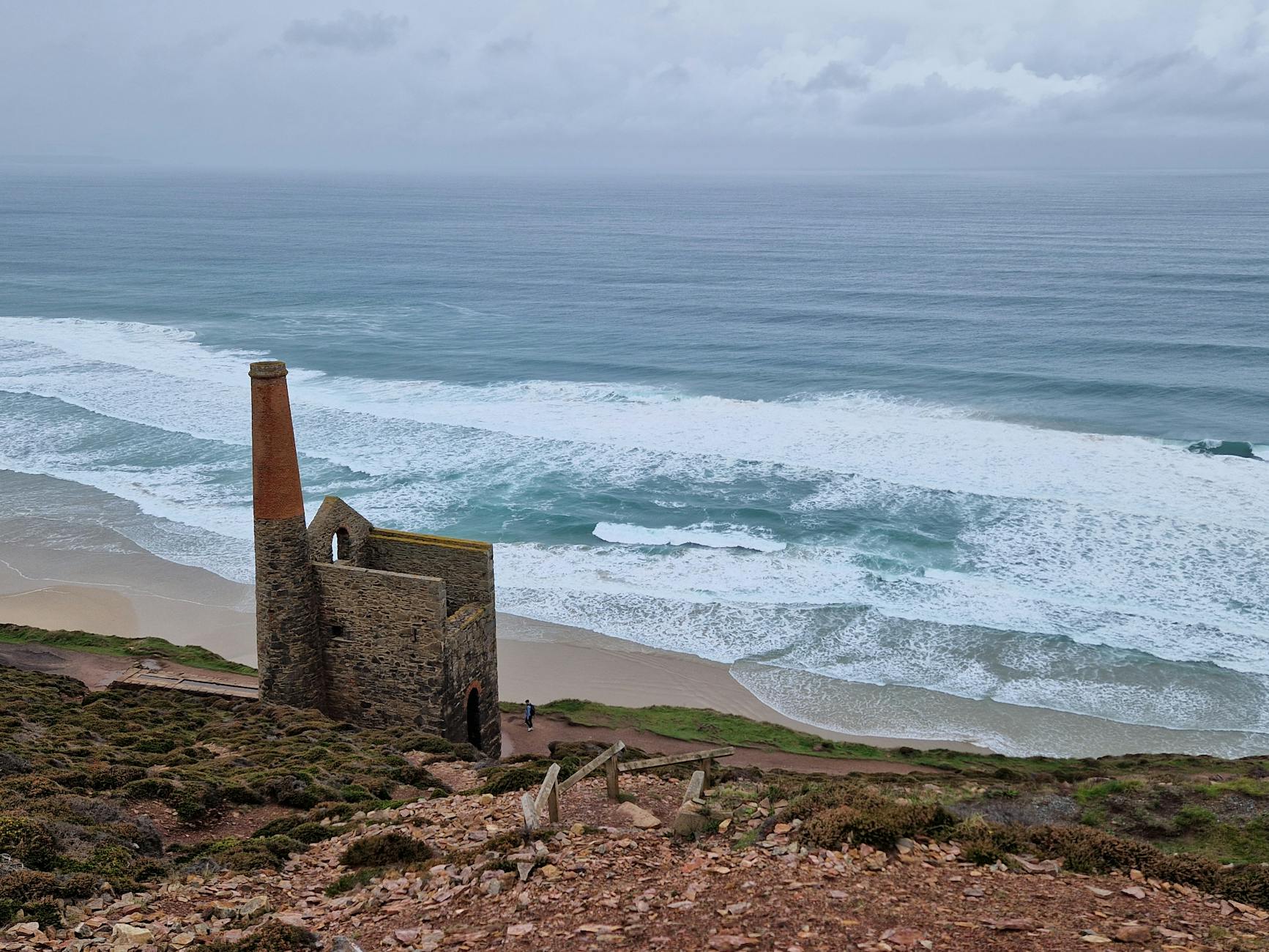
Drive almost anywhere in west Cornwall and you will see them: tall stone chimneys and roofless engine houses standing sentinel on cliff tops and hillsides, silhouetted against the sea. To visitors they look romantic, even mysterious, but to Cornish people they are the proud, poignant symbols of an industry that once made this remote county a powerhouse of the world. This guide to Cornwall mining heritage explains the story behind those engine houses, why the landscape carries a UNESCO World Heritage designation, and exactly where to go to experience it, from underground tours to clifftop ruins and the famous Poldark filming locations.
Cornwall’s mining history is not a niche interest; it is the backbone of the county’s identity. For a couple of centuries Cornwall led the world in deep hard-rock mining, exporting not just tin and copper but its people and its expertise to every corner of the globe. Understanding it unlocks a deeper appreciation of the whole county.
Why Cornwall’s Mining Landscape Is a World Heritage Site
In 2006, UNESCO inscribed the Cornwall and West Devon Mining Landscape as a World Heritage Site, placing it alongside the likes of the Taj Mahal and the Grand Canyon in global significance. The designation recognises that, between roughly 1700 and 1914, this region was the heartland of a mining boom that transformed it and influenced the wider world. Cornish mining technology, particularly the steam-powered beam engines developed to pump water from ever-deeper mines, was exported across the planet, and so were Cornish miners, whose skills were in demand everywhere from South Africa to South America to Australia.
The World Heritage Site is not a single place but a series of ten landscape areas spread across Cornwall and west Devon, encompassing engine houses, mines, ports, smallholdings, towns and the transport networks that served them. It protects the most complete surviving evidence of this extraordinary chapter of industrial history. So when you stand before a ruined engine house, you are looking at a piece of a globally important story, not just a picturesque ruin.
The Story of Cornish Tin and Copper
Cornwall has been mined since the Bronze Age, when tin was first won from the streams, but it was the 18th and 19th centuries that saw the industry reach its astonishing peak. Tin and, increasingly, copper were dug from mines that plunged hundreds of metres down and ran out under the very seabed. At its height, Cornwall supplied a huge proportion of the world’s copper and tin, and towns like Camborne and Redruth boomed. The deep mines could only function because of constant pumping to keep the water out, which drove the development of the great beam engines, with Cornish engineers like Richard Trevithick, the pioneer of high-pressure steam, at the cutting edge of the industrial revolution.
But the boom did not last. From the late 19th century, cheaper tin and copper from overseas, much of it extracted by emigrant Cornish miners, undercut the Cornish mines, and one by one they closed. The decline brought terrible hardship and triggered a vast emigration, the great Cornish diaspora, that scattered Cornish families and mining know-how across the world. It is said that wherever in the world there is a hole in the ground, you will find a Cornishman at the bottom of it. The last working tin mine, South Crofty, closed in 1998, ending thousands of years of Cornish mining, though there has been talk of reopening it as global demand for metals grows.
Underground: What a Mine Visit Is Really Like
Descending into a Cornish mine, even a short, safe museum tunnel, is the experience that stays with visitors longest. The temperature drops, the daylight vanishes, and the walls close in to a cramped, dripping passage hewn from solid rock by hand and explosive. It brings home, as no display case can, the brutal reality of a miner’s working life: long shifts in darkness and heat, the climb down and up ladders that itself exhausted men before their work even began, and the ever-present dangers of rockfall, flood and foul air. At Geevor you can walk through such a tunnel and emerge blinking into the light with a new respect for the men who spent their lives down there. The processing buildings above ground tell the other half of the story, showing how the raw ore was crushed and separated, often by women and children known as bal maidens working on the surface. Together, the underground and surface experiences paint a vivid, human picture of an industry that was as harsh as it was world-changing.
The Cornish Mining Diaspora
One of the most moving threads of Cornwall’s mining story is the great emigration it triggered. As the Cornish mines declined through the 19th and early 20th centuries, tens of thousands of miners and their families left to seek work in the mining regions of the wider world, taking their unrivalled hard-rock expertise with them. Cornish communities sprang up in the United States, Mexico, South Africa, Australia and beyond, and the influence of Cornish mining technology and culture spread with them. The saying that you will find a Cornishman at the bottom of every hole in the world captures the scale of it. Today, that diaspora keeps strong ties to Cornwall, and many descendants visit to trace their roots among the engine houses their ancestors knew. This global dimension is a key reason the landscape earned its World Heritage status, and it adds a poignant resonance to the ruins dotting the Cornish coast.
The Best Mining Heritage Sites to Visit
The far west around St Just is the richest area for mining heritage, with three superb sites within easy reach of one another, but there are rewarding places to explore right across the county.
Geevor Tin Mine
Near Pendeen on the north coast of the far west, Geevor is the largest mining museum in the country and an unmissable place to understand the industry. Operational from 1911 until 1990, it is a preserved 20th-century tin mine where you can explore the surface buildings and machinery, see how the ore was processed, and venture underground into an 18th-century tunnel to feel the cramped, dark reality of a miner’s working life. The personal stories of the men who worked here, many still alive, give it real emotional weight.
Levant Mine and Beam Engine
A short distance away, perched dramatically on the cliffs, Levant is home to a restored 1840s beam engine, the oldest of its kind in Cornwall, which the National Trust runs under steam on select days, a thrilling sight and sound. Levant was a rich copper and tin mine whose workings ran far out under the sea, and it was the scene of a terrible disaster in 1919. Seeing the great engine working is one of the highlights of Cornish heritage.
Botallack Mine
Also in the care of the National Trust, the engine houses at Botallack cling so precariously to the cliff edge above the crashing Atlantic that they have become the iconic image of Cornish mining. The Crowns engine houses here are perhaps the most photographed in Cornwall, and the whole area, known as the Tin Coast, is laced with walking trails. Botallack and the surrounding cliffs starred memorably as a filming location for the television series Poldark, which brought a new wave of visitors to the mining landscape.
More Mining Sites Across Cornwall
Beyond the St Just trio, mining heritage is everywhere. King Edward Mine near Camborne offers another excellent museum experience. The Camborne and Redruth area, once the mining capital, is full of engine houses and the legacy of figures like Trevithick. Wheal Coates, with its beautifully sited engine house near St Agnes, is one of the most photogenic spots on the entire coast. The clifftop trails of the Mineral Tramways and the wider coast path string these sites together, and many of the most evocative engine houses can simply be admired for free as you walk the coast. To plan walks linking them, see our guide to the South West Coast Path, and for inland routes our Bodmin Moor walking guide.
Poldark and the Mining Landscape on Screen
For many visitors, the modern fascination with Cornish mining began with Poldark, the hugely popular television drama whose sweeping shots of cliff-top engine houses and crashing seas were filmed largely in this World Heritage landscape. Botallack, Wheal Owles and the surrounding Tin Coast doubled for the fictional Wheal Leisure and Wheal Grace, and fans flock to walk in Ross Poldark’s footsteps. While the drama is fiction, the landscape is gloriously real, and the series did a genuine service in drawing attention to this heritage. Even if you have never seen the show, the scenery that made it so cinematic is there for everyone to enjoy.
Practical Tips for Visiting
The paid attractions like Geevor, Levant and the museums have their own opening times and admission, with National Trust members entering Levant and Botallack’s facilities free, so check current details and which days the Levant beam engine is in steam, as that is the highlight. The clifftop engine houses at Botallack, Wheal Coates and along the coast can be visited free at any time, though take great care near unfenced mine shafts and cliff edges, and keep dogs and children close, as the ground can be genuinely dangerous around old workings. Wear sturdy footwear and warm, windproof layers, as these sites are exposed. Allow a good half day for an underground museum like Geevor, and combine the St Just sites into a full, rewarding day. For parking advice in these often-remote spots, see our guide to parking in Cornwall.
Combining Mining Heritage With the Far West
The mining sites of the far west sit amid some of Cornwall’s most spectacular scenery, so they combine perfectly with the wider area. St Just is close to Land’s End, Cape Cornwall, Sennen and the Minack Theatre at Porthcurno, while the artistic town of St Ives and the harbour of Penzance are within easy reach. A day exploring the Tin Coast can take in engine houses, coast path walks, a cliff-edge picnic and a far-western beach, making it one of the most atmospheric days out in Cornwall. See our Cornwall 7-day itinerary for how it fits into a wider trip, and our Penzance guide for a nearby base.
The Mining Legacy in Cornish Culture
Mining did not just shape Cornwall’s landscape; it shaped its culture in ways visitors still encounter everywhere. The Cornish pasty, now a protected regional speciality, was the original miner’s lunch, its thick crimped edge a handle to be held by dirty hands and discarded, and its hearty filling fuel for a long shift underground. The brass and silver bands that play at Cornish events, the male voice choirs, the Methodist chapels that dot the villages, and the celebrations of St Piran, patron saint of tinners, all have roots in mining communities. Even the Cornish language revival and the strong sense of Cornish identity draw on this industrial heritage. When you tuck into a pasty or hear a brass band on a Cornish quayside, you are touching the living legacy of the mines. This cultural depth is part of what makes exploring the mining heritage so rewarding, connecting the romantic ruins to a still-vibrant way of life. Our Cornwall food and drink guide explores the pasty’s mining origins in more detail.
The Best Mining Heritage Walks
Some of the finest ways to experience the mining landscape cost nothing but a pair of walking boots. The Tin Coast around Botallack and Levant offers spectacular clifftop walking past engine house after engine house, with the Atlantic crashing below. The stretch around St Agnes Head and Wheal Coates is another classic, its perfectly placed engine house one of the most photographed scenes in Cornwall, especially at sunset. The inland Mineral Tramways trails, including the Coast to Coast route, follow former mineral railways across the old mining country and are ideal for walking and cycling. These routes let you appreciate the scale of the industry and the beauty of its ruins at your own pace, and they link many of the free-to-visit engine houses. Combine a paid museum like Geevor with a coast-path walk past the free clifftop ruins and you have a perfect, varied day out. Just remember to keep to the paths near old workings, as covered earlier.
Why Cornish Mining Heritage Matters
I always encourage guests to look beyond the postcard prettiness of the engine houses and feel the human story they represent: generations of Cornish men and women whose hard, dangerous labour powered an industrial revolution and whose descendants now span the globe. The Cornish identity, the flag of St Piran, the pasty that fed the miners underground, the chapels and the brass bands, all flow from this history. To explore Cornwall’s mining heritage is to understand the soul of the county. Stand on the Tin Coast as the Atlantic pounds the cliffs below a ruined engine house, and you feel it: pride, loss, endurance and an extraordinary chapter of world history, all written into the Cornish landscape.
Frequently Asked Questions
Why is Cornwall’s mining landscape a World Heritage Site?
UNESCO inscribed the Cornwall and West Devon Mining Landscape in 2006 because, between about 1700 and 1914, the region led the world in deep hard-rock mining. Its engine technology and miners spread across the globe, and it preserves the most complete evidence of this globally important industry.
What is the best mining attraction to visit in Cornwall?
Geevor Tin Mine near Pendeen is the largest mining museum and offers underground tours, while nearby Levant has a working beam engine and Botallack has the iconic clifftop engine houses. All three sit close together in the far west around St Just and make a superb day out.
Where were the Poldark mining scenes filmed?
Many were filmed on the Tin Coast around Botallack and Wheal Owles, in the far west near St Just, within the World Heritage mining landscape. The dramatic clifftop engine houses there are free to visit on foot.
Are Cornwall’s old mines safe to visit?
The official attractions and waymarked trails are safe, but old mine workings in the open landscape can be dangerous, with unfenced shafts and unstable ground. Stick to paths, heed warning signs, and keep children and dogs close near former mining areas and cliff edges.
Can you visit Cornish engine houses for free?
Yes. Many of the most iconic clifftop engine houses, including those at Botallack and Wheal Coates, stand on open coastal land and can be admired free at any time on foot. The paid museums like Geevor and the working beam engine at Levant charge admission and offer the fuller underground and machinery experience.
How much time should I allow for Cornwall’s mining sites?
The best way to see this landscape is not from a car park but from a saddle. The Coast to Coast Trail runs about eleven miles on the old tramroads from Portreath to Devoran, straight through the engine houses, arsenic flues and orange-running water of the copper district, and the Great Flat Lode Trail circles Carn Brea past South Wheal Frances. Both are covered in our cycling in Cornwall guide.
The engine houses have a second life as scenery. Botallack’s Crowns played Wheal Leisure through five series of Poldark, and the visitor numbers on the Tin Coast have never quite gone back to what they were before. If you want the screen version alongside the industrial one, our guide to Cornwall’s filming locations maps the sites and explains which of them are worth a special trip.
Beyond the museums and preserved engine houses, the mining landscape is also a working trail network today. Our guide to the Coast to Coast Trail and the Mineral Tramways covers the best way to see it by bike or on foot.
Allow a full day to do the far-western trio of Geevor, Levant and Botallack justice, including an underground tour and a coast-path walk. A single museum like Geevor takes around half a day on its own, while the free clifftop ruins can be enjoyed in shorter strolls.