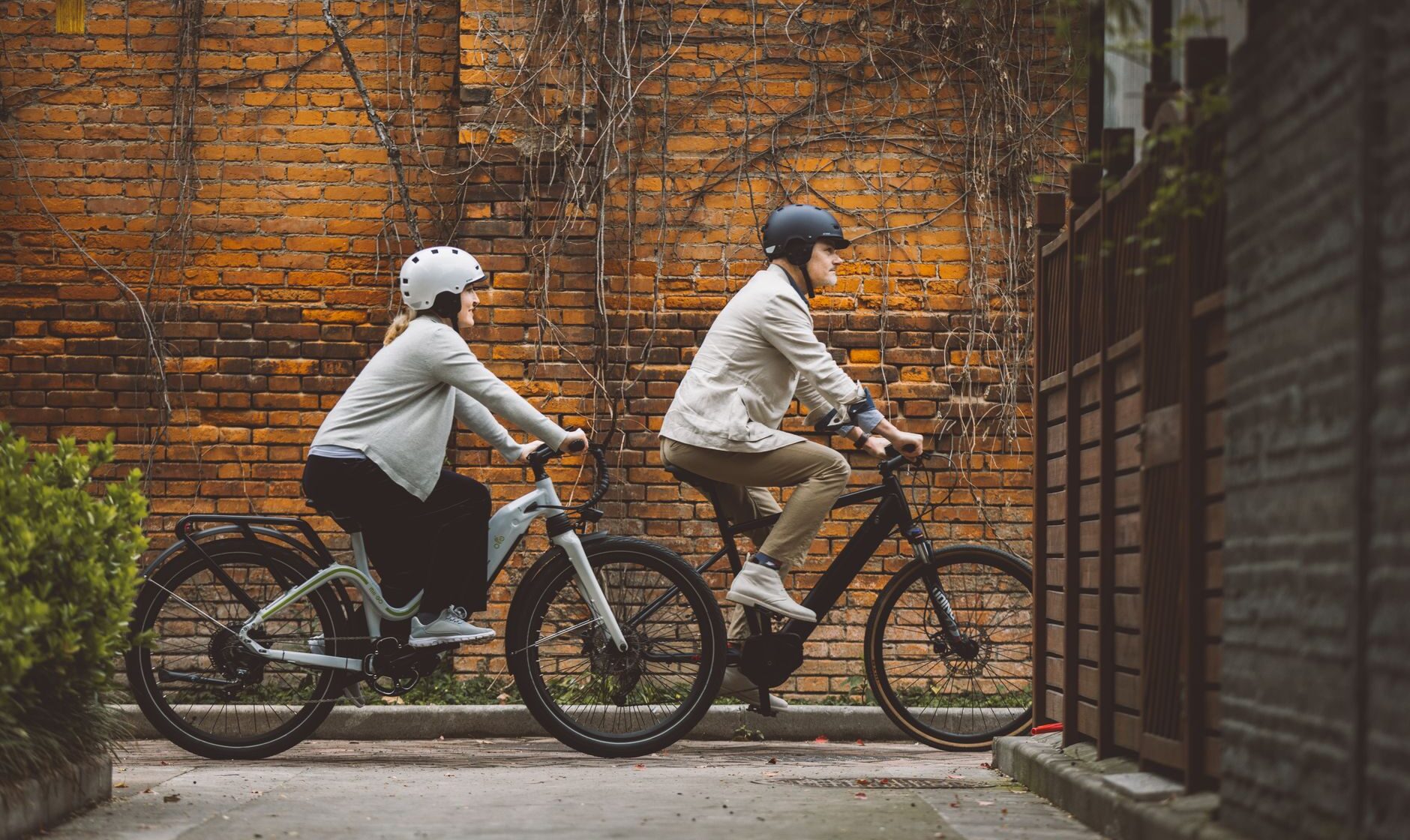
Cornwall has no mountains, and it doesn’t need any. The lanes do the damage on their own: a plunge down to a cove, a grind back out the other side that has you standing on the pedals, a blind bend, and then the same again before you’ve got your breath back. Road cyclists describe the county as a place of short, sharp climbs stacked back to back with nowhere to recover, and anyone who has pushed a hired hybrid up out of a fishing village in August knows exactly what they mean.
An electric bike doesn’t make any of that go away. What it changes is who gets to enjoy it. The motor only helps while you’re pedalling, and only up to 15.5mph, so you’re still riding the bike rather than sitting on it — but the hill that would have split a family into the fit one waiting at the top and everyone else walking becomes something you ride up together, still talking. That’s the real case for an e-bike here, and it’s a strong one. This guide covers who hires them out and for how much, how far a battery really goes on Cornish gradients, which routes suit a motor best, and the handful of places where you’d be paying for power you don’t need.
When an e-bike is worth it in Cornwall, and when it isn’t
The honest answer depends almost entirely on where you’re riding. Cornwall’s best-known bike ride, the Camel Trail, follows an old railway bed at a gradient of about 0.23 per cent. You could ride its most popular stretch, Padstow to Wadebridge and back, on a shopping bike with a soft tyre and still arrive smiling. Paying the e-bike premium for that 11-mile round trip is money you could spend on a crab sandwich in Padstow instead. The exceptions are real, though: if you’re towing a child trailer, riding the whole trail there and back, or cycling with someone who hasn’t been on a bike for twenty years, the motor starts earning its keep even on the flat.
Everywhere else, the calculation tips the other way. Leave the railway trails and you’re into a landscape shaped by granite, river valleys and coves that all seem to sit at the bottom of steep hills. Penwith, the coves of the Lizard, the creeks of the Roseland, the edge of Bodmin Moor: these are glorious places on a bike and hard work on an unassisted one, especially a heavy hire hybrid that was set up for somebody else. An e-bike is what turns them from a fitness test into a day out.
Three kinds of rider get the most out of one:
- Mixed-ability groups. The keen cyclist and the reluctant one can ride side by side, with the motor quietly levelling out the difference between them.
- Parents towing children. A trailer or tag-along adds a lot of weight, and Cornish hills find every kilo of it.
- Anyone with a distance in mind. A 30-mile loop that would be a stretch on an ordinary bike becomes a relaxed day with time left over for the pub.
For the wider picture — the traffic-free trails, the road loops and the off-road centres — our complete guide to cycling in Cornwall is the place to start. This page sticks to the motorised side of things.
The rules: what counts as an e-bike in the UK
Every reputable hire shop in Cornwall rents what the law calls an electrically assisted pedal cycle, or EAPC, and the rules would fit on a postcard:
- You must be 14 or over to ride one.
- The motor’s maximum continuous power is 250 watts, and it must stop assisting at 15.5mph (25km/h).
- It must have working pedals, and you have to use them.
- You don’t need a licence, insurance, tax or registration. A helmet isn’t a legal requirement either, but every hire shop will offer you one, and you should take it.
Anything more powerful, or that keeps pushing above 15.5mph, falls outside those rules and is treated as a motor vehicle, with the registration, insurance and licence that go with it. You won’t be handed one by a hire shop, but it’s worth knowing if you’re thinking of bringing your own machine down.
Because a legal e-bike counts as a pedal cycle, it can go anywhere an ordinary bike can: roads and lanes, cycle paths, bridleways and byways, and shared-use trails like the Camel Trail. The flip side matters more in Cornwall than almost anywhere else. Most of the South West Coast Path is a public footpath, and bikes of any kind aren’t allowed on it, apart from the short sections that double as bridleways. You’ll occasionally see a rider pushing their luck along the clifftops, and you’ll see the walkers they meet on narrow ledges above a long drop. Ride to the coast, lock the bike up, and walk the best bit.
Where to hire an e-bike in Cornwall
E-bikes are now standard stock at most Cornish bike hire shops, but a handful of operators specialise in them, and they’re spread unevenly around the county. Here’s who rents what and where, with prices wherever the operator publishes them.
Newquay
Cornish Wave, on Fore Street in the middle of town, rents e-bikes at £25 for two hours or £55 for the day, with helmets and locks included and a set of local route suggestions thrown in: Porth, Watergate Bay, Crantock and the headlands. Its fleet is the RadRunner from Rad Power Bikes, a sturdy single-speed step-through with chunky tyres that’s easy to get on and off and good fun on the seafront, and it runs guided rides as well. For a morning pottering between Newquay’s beaches it’s ideal. For a long, hilly day further afield you’d want something with gears, for reasons that come up in the battery section below.
Falmouth, Truro, Helston and the Lizard
Ebike Cornwall has the widest network, with six pick-up points: St Michael’s Resort in Falmouth, Helston, Helford, Truro, Newquay and Mullion. Its published rate is a flat £50 a day or £200 a week, and that weekly figure is the best value in the county — it’s the price of four days, so if you’re staying put for a week you’re effectively getting three free. The Mullion and Helston bases are the ones to use for the Lizard, and Truro is the jumping-off point for the Roseland.
The Camel Trail: Padstow, Wadebridge and Bodmin
All the established trail shops now carry e-bikes alongside their standard fleets. Camel Trail Cycle Hire in Wadebridge runs a premium e-bike fleet with free on-site parking, helmets, locks and breakdown support; Bridge Bike Hire, also in Wadebridge, stocks them too; and Camel Trail Electric Bike Hire rents nothing else. Prices move with the season and the model, so check each shop’s current rates online, and book ahead in the school holidays — e-bikes are always the first thing to go. Our full guide to the Camel Trail takes the route itself section by section.
St Ives and West Penwith
St Ives eBikes rents a fleet of high-end e-bikes and runs guided tours out of the town. St Ives is exactly the kind of place where a motor earns its money, because every road out of town begins with a climb, and it’s the natural base for the Penwith moor road described below.
Beryl: pay-as-you-ride in the towns
For the shortest hops, the cheapest e-bike hire Cornwall offers is the Beryl public scheme, run with Transport for Cornwall in Falmouth, Penryn, Truro, Penzance and Newquay. You unlock a bike with the app, pay a small unlock fee plus from 5p a minute (or buy a 24-hour pass for unlimited riding), and leave it in a designated bay when you’re done. It’s brilliant for getting from a Falmouth guesthouse to the beach or across Truro without moving the car, and no use at all for a day in the countryside, because the ride has to finish back in a bay.
For standard bikes, children’s bikes, trailers and the rest of the family kit, our guide to bike hire in Cornwall has the full county-wide list.
E-bike hire at a glance
| Operator | Where | Published price | Best for |
|---|---|---|---|
| Cornish Wave | Newquay | £25 for 2 hours, £55 a day | Short rides between Newquay’s beaches |
| Ebike Cornwall | Falmouth, Truro, Helston, Helford, Mullion, Newquay | £50 a day, £200 a week | A week’s hire; the Lizard and the Fal |
| Beryl | Falmouth, Penryn, Truro, Penzance, Newquay | Unlock fee plus from 5p a minute; 24-hour pass | Hops around town |
| Camel Trail shops | Padstow, Wadebridge, Bodmin | Check current rates | The whole trail, with family kit |
| St Ives eBikes | St Ives | Check current rates | Penwith and guided rides |
What you’ll actually pay
Across the operators that publish their prices, a full day on a hire e-bike runs to roughly £50 to £55. A two-hour taster is about £25, and that’s honestly enough for most rides around Newquay or Falmouth; the full day only pays off if you have a proper route in mind. Weekly rates bring the cost down sharply, which is worth thinking about if you’re based in one place — keeping a bike at your accommodation for the week costs about the same as four separate day hires, and saves the daily round trip to the shop.
A few things to ask about before you hand over a card: whether a child seat, tag-along or trailer can actually be fitted to the e-bike you’re getting (not every frame takes every attachment), whether the shop will deliver to your accommodation, what the damage deposit is, and what happens if the bike breaks down twenty miles from base. The better operators have a clear answer to all four.
Battery range on Cornish hills: the honest numbers
Every e-bike comes with a range figure, and almost all of them are optimistic for Cornwall. Manufacturers measure range in kind conditions: a flat route, low assistance, a light rider, no wind. The RadRunner that Cornish Wave rents, for instance, is quoted at around 50km, or about 30 miles, of assisted riding. On Newquay’s gentle headland roads that’s plenty for a long morning. Point the same bike at the moor road west of St Ives on its highest setting and you’d be doing sums on the way home.
What actually drains a battery here:
- Climbing. Lifting you and a bike that weighs 20kg or more up a steep lane is where most of the energy goes, and Cornish routes climb far more than their distances suggest.
- The assist level. Turbo or boost mode can use several times as much power as eco. It’s also the most tempting button on the handlebars.
- Wind. The north coast and the moors are rarely still, and a headwind across open ground behaves like a hill that never ends.
- Cold. Lithium batteries give noticeably less in low temperatures, so a winter ride on Bodmin Moor won’t match a July one.
- Weight. Rider, rucksack, child seat, trailer: every kilo counts on the climbs.
As a planning rule, assume you’ll get somewhere between half and two-thirds of the advertised range on a hilly Cornish day, and build in a margin on top of that. A typical mid-range hire bike with a 500Wh battery will usually manage something like 30 to 40 miles of mixed Cornish lanes in sensible modes. That’s comfortably enough for any of the routes below, but nowhere near enough to ride all day in turbo.
A few habits stretch it further. Ride in the lowest mode that feels comfortable on the flat and save the high settings for the climbs. Change down before a hill, not halfway up it; the motor works far more efficiently when you’re spinning the pedals than when you’re grinding them. And ask about charging when you book your room. Plenty of B&B owners will happily let you plug a battery in overnight if you ask, and a full charge from empty usually takes three to six hours, so it’s an evening job rather than a lunchtime top-up. On a multi-day hire, make sure the charger comes with the bike.
If the worst happens and you run flat, you’re left with a very heavy bicycle and whatever legs you brought with you. Most e-bikes have a walk-assist mode that helps you push up the steepest pitches, which is worth finding before you need it and worth keeping a little charge back for.
Hub motor or mid-drive?
It’s worth asking which kind of motor you’re getting. A hub motor sits in the wheel and is common on cheaper and utility e-bikes; it’s smooth on the flat and on gentle hills but can labour on a genuinely steep lane, especially on a single-speed bike. A mid-drive motor sits at the pedals and drives through the gears, so it keeps working efficiently when the road tips up. For Cornwall’s steepest country — Penwith, the Lizard’s coves, the Roseland creeks — a geared, mid-drive bike is the one to ask for.
The best e-bike routes in Cornwall
These are the e-bike routes where a motor transforms the day, plus a couple of easier rides where it’s nice to have rather than essential. Distances are approximate. Check your line on a map with a gradient profile before you set off, because two Cornish routes of the same length can feel like completely different days.
The Penwith moor road: St Ives to St Just
The B3306 from St Ives to St Just is one of the great roads in Britain to ride, and one of the hardest to enjoy without help. For about 13 miles it rolls along a shelf between the moors and the Atlantic, past tiny stone-walled fields laid out in prehistoric times, through Zennor — where the church has a mermaid carved on a bench-end and the Tinners Arms is the obvious lunch stop — and on through Morvah and Pendeen to the old mining coast around Geevor and Botallack. Every village sits in a dip, and every dip means a climb out.
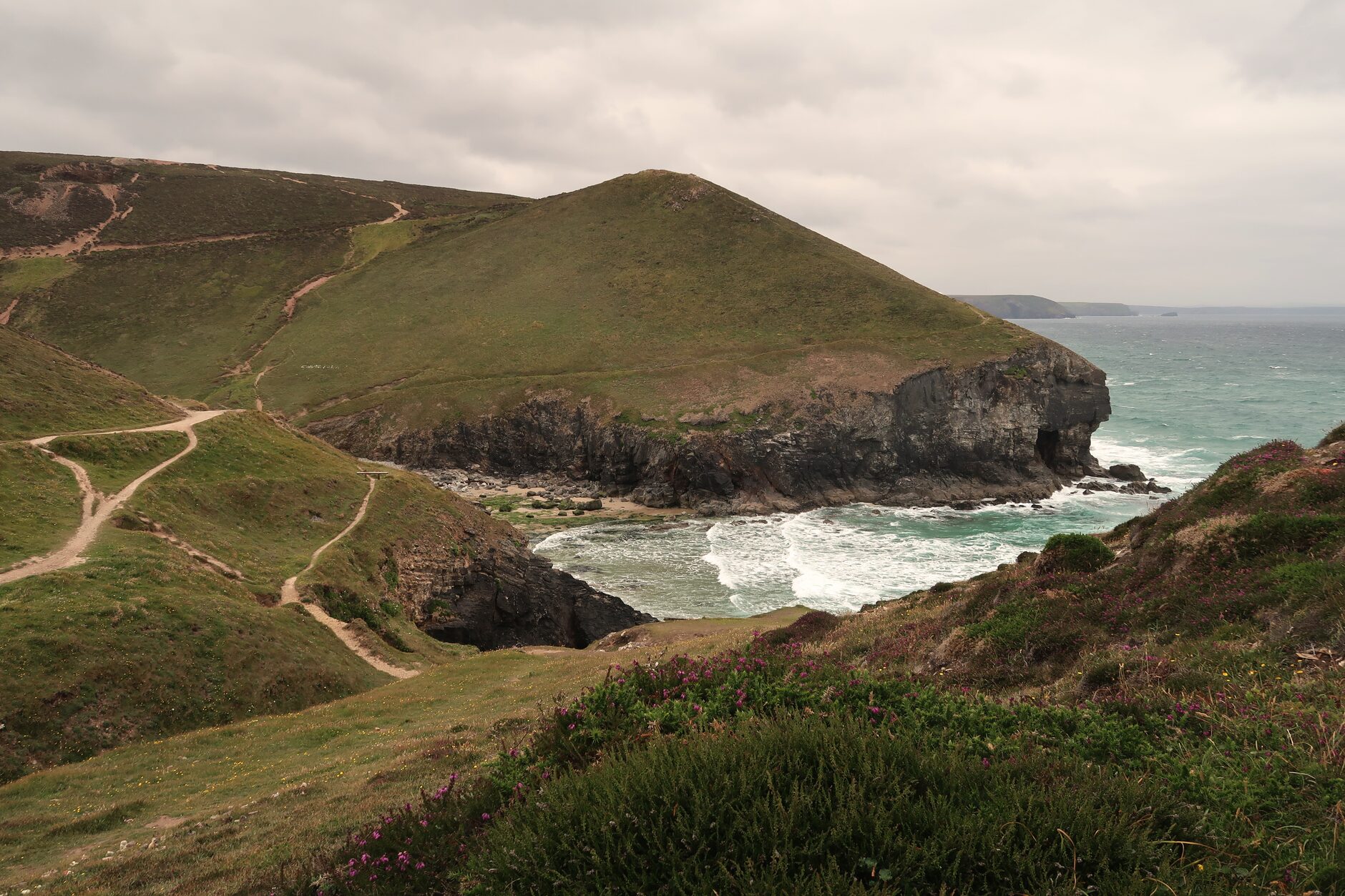
On an e-bike it’s a superb half-day, and a full loop — back via Land’s End and Penzance, or over the spine of the moor to the south coast — is within reach of a decent battery. The honest caveat is traffic. The road is narrow with few places to pass, and in July and August it carries coaches and campervans that take up all of it. Ride it in May, June or September, or set off early, and you’ll have long stretches to yourself.
The Lizard: easy plateau, steep coves
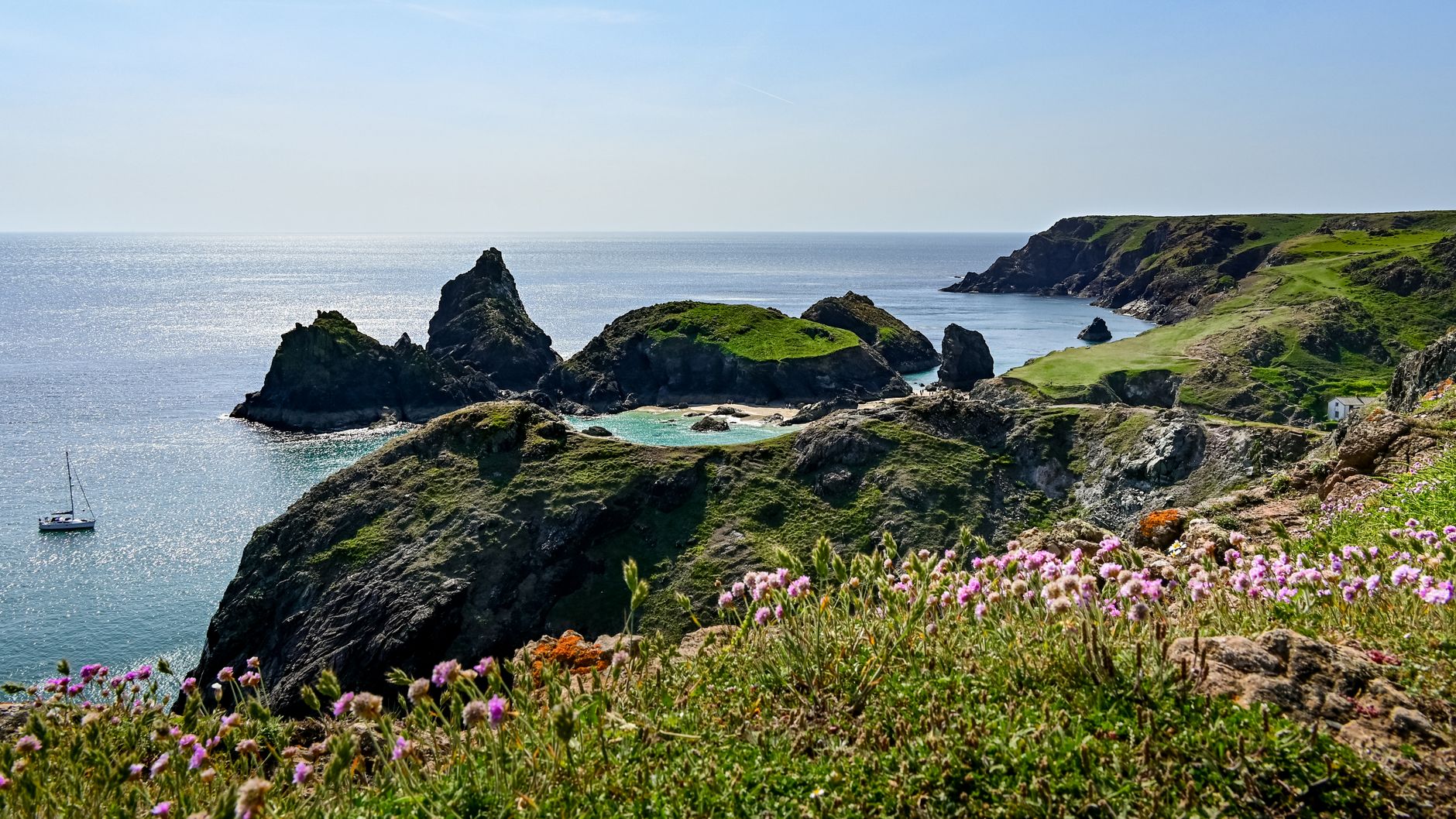
The Lizard rides differently from the rest of Cornwall. Its heart is a broad, flat-topped plateau of heath and serpentine rock, with the great dishes of Goonhilly Earth Station standing on it, so the lanes across the middle are easy going. The work comes at the edges, where every road drops steeply to a cove: Cadgwith, Coverack, Mullion Cove. Pick up a bike from Ebike Cornwall’s Mullion or Helston base, ride out to Lizard Point, the most southerly tip of mainland Britain, and drop down to a cove or two for lunch, and you’ll be using the motor exactly where it matters.
Kynance Cove is on this route, but not by bike to the sand. Lock up at the National Trust car park and walk down, and time it for low tide, when there’s actually a beach to walk on.
The Roseland and the King Harry Ferry
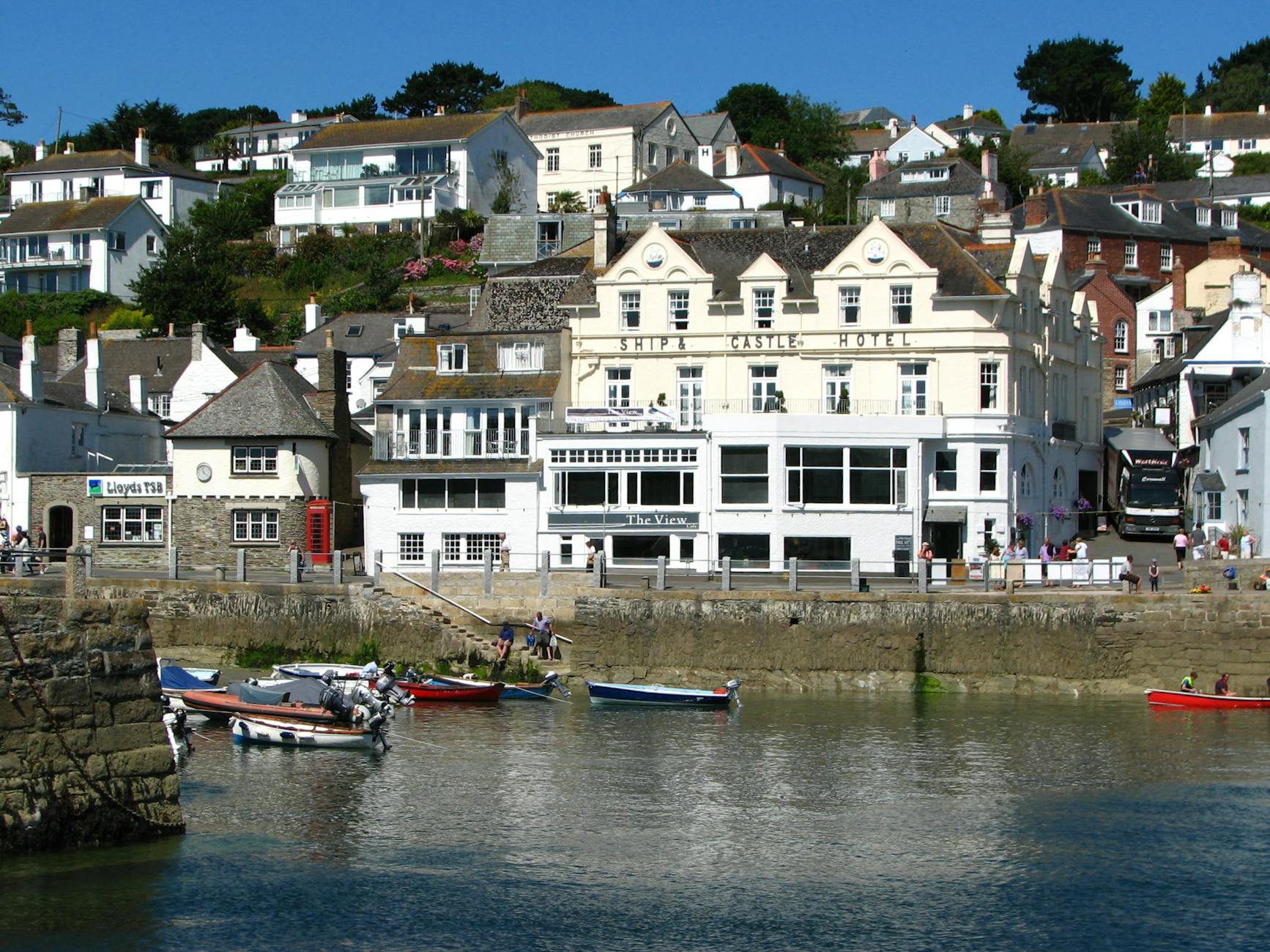
East of Falmouth, the Roseland Peninsula is all creeks, church towers and lanes that switchback down to the water and straight back up again. It’s lovely, and it’s relentless. The classic e-bike day runs from Truro to the King Harry Ferry, the chain ferry that clanks across the Fal below Trelissick, then over to Philleigh and on to St Mawes, roughly 13 to 14 miles each way depending on the lanes you pick. Stop at St Just in Roseland, where the church sits in a subtropical garden on the edge of a creek, and finish with a look at Henry VIII’s clover-leaf castle at St Mawes. The ferry takes bikes, but it closes for maintenance from time to time, so check it’s running before you commit to the loop.
Bodmin Moor: Minions, the Hurlers and the Cheesewring
Bodmin Moor is Cornwall at its most open and exposed, and it’s where an e-bike makes the biggest difference on the road. The ascent to Minions, the highest village on the moor, climbs for around 10km — the longest sustained climb on any of the county’s classic road routes — and delivers you onto a plateau of old engine houses, the three Bronze Age stone circles of the Hurlers, and the stacked granite of the Cheesewring on Stowe’s Hill above. Ride the lanes and walk the last bit; the tracks up to the tor are rough and busy with walkers. Our guide to road cycling in Cornwall has the bigger moor loops for anyone who wants more.
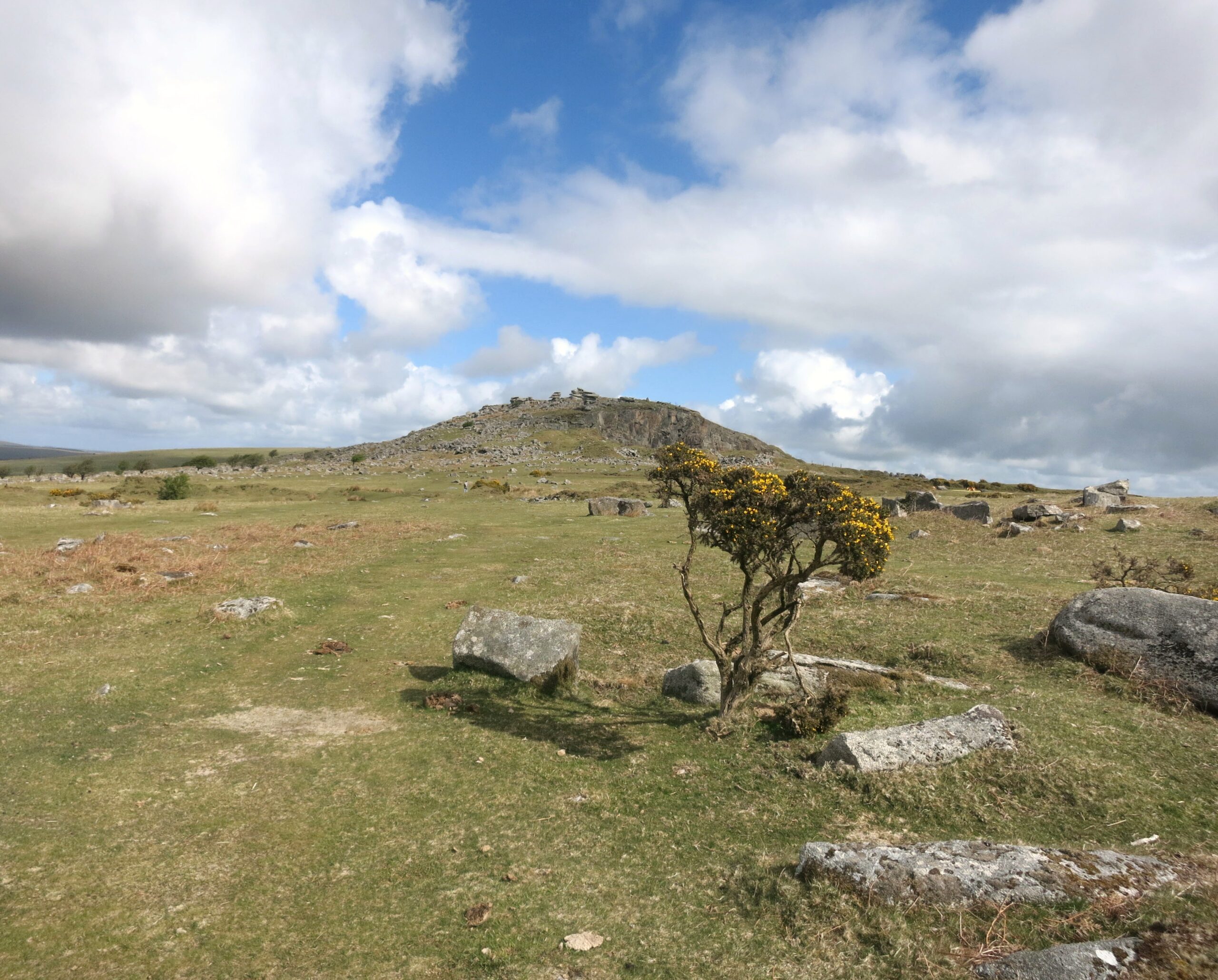
Two moor-specific warnings. The weather changes fast up here, and wind and cold both drain batteries quicker than anywhere else in the county, so start with a full charge and keep something back for the ride home. And sheep, cattle and ponies wander the unfenced roads as they please, so come round every bend slowly.
The Coast to Coast Trail and the Wheal Busy loop
The Coast to Coast Trail crosses Cornwall’s old mining heartland from Portreath on the north coast to Devoran on Restronguet Creek: about 11 miles, mostly off-road and mostly gentle, but bumpier and hillier than the Camel Trail. Add the Wheal Busy loop and ride back and it becomes a 29-mile round trip, which sits right in the sweet spot for an e-bike battery — long enough to use it, short enough not to worry about it. Our guide to the Coast to Coast Trail and the Mineral Tramways has the full route and the mine sites along the way.
The Clay Trails to the Eden Project
Mid-Cornwall’s Clay Trails link old china clay villages to the Eden Project on traffic-free paths. Most are easy, but the section from Wheal Martyn to Eden has some properly steep slopes, with views over St Austell Bay and the pale spoil heaps locals call the Cornish Alps. That’s exactly where a motor helps, especially with children in tow, and riding in is a far calmer way to arrive at Eden in summer than queueing for the car park. See our Eden Project visitor guide for tickets and timings, and our round-up of family cycle routes in Cornwall for the gentler Clay Trails that don’t need a battery at all.
The Camel Trail, end to end
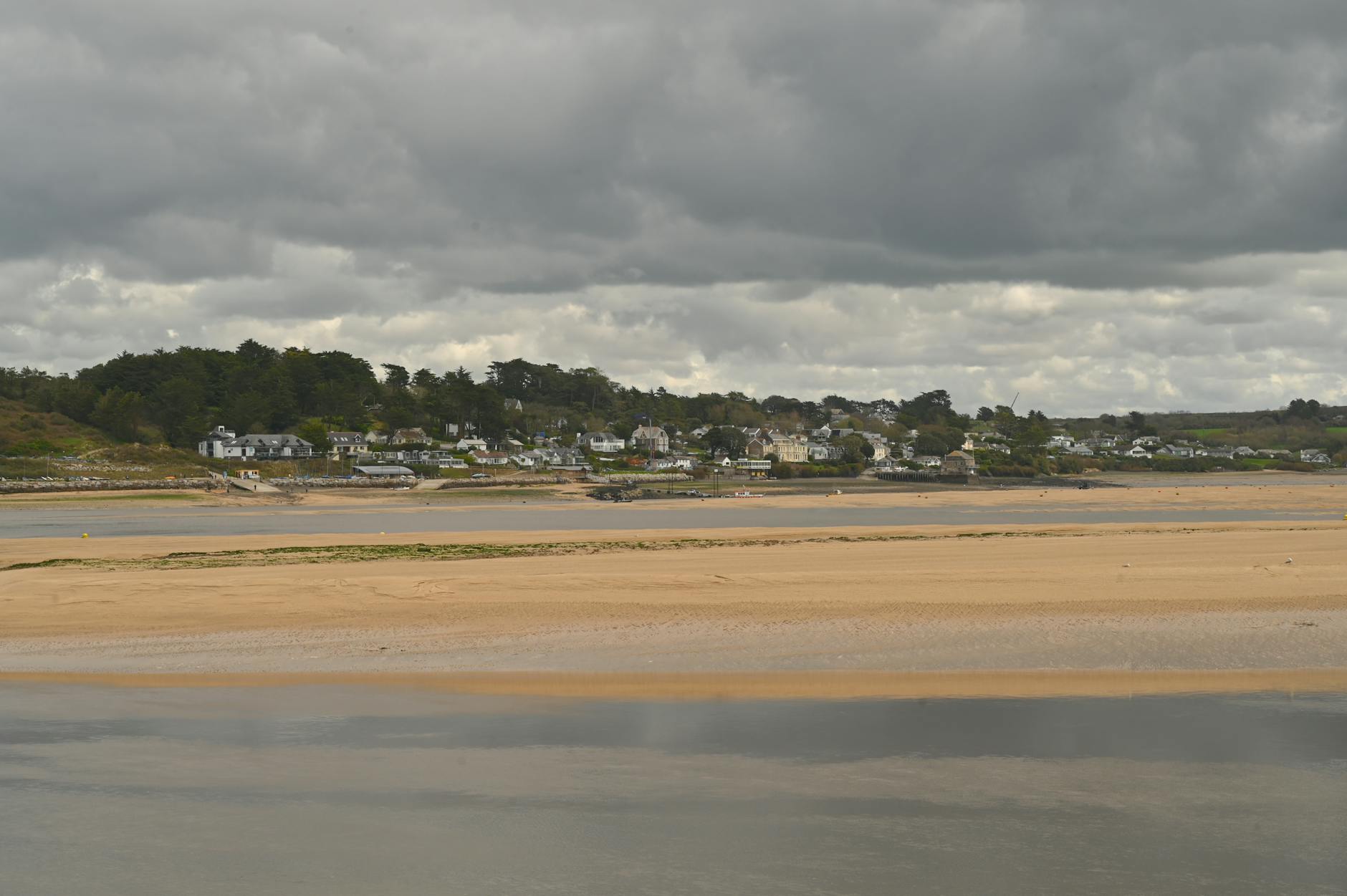
You don’t need an e-bike for Padstow to Wadebridge, and that still stands. But the whole trail runs 18 miles from Padstow to Wenfordbridge on the edge of the moor, and there and back is 36 — a big ask for a child on a trailer-bike, or for anyone out of practice. With a motor it becomes a relaxed full day: the estuary in the morning, the wooded Camel valley beyond Bodmin in the afternoon, and enough left in the legs to enjoy Padstow at the end of it.
Off-road: Lanhydrock and Cardinham Woods
Legally, an e-mountain bike is just a bicycle, so it can ride the same bridleways and trails as everyone else. The two trail centres near Bodmin suit them well: Lanhydrock, the National Trust’s cycle hub with around 10km of green and blue trails, and Forestry England’s Cardinham Woods, home of the 12km blue-graded Bodmin Beast. Lanhydrock has hire on site, but check whether e-mountain bikes are in the fleet before you travel rather than assuming. Our guide to mountain biking in Cornwall covers the trail grades and the rougher moorland bridleways.
Guided e-bike tours and e-bike holidays
If you’d rather someone else did the navigating, there’s a growing choice of e-bike tours in Cornwall, from a couple of hours with a local to a full week’s holiday:
- Cornish Wave in Newquay and St Ives eBikes both run guided rides from town — short, sociable, and a good way to learn the local lanes before heading out alone.
- Good Morning Captain runs guided electric bike tours in north Cornwall and over the border into Devon.
- Wilderness England runs guided multi-day e-bike holidays in Cornwall, with the bikes included.
- Cornish Cycle Tours packages multi-day cycling holidays; at the time of writing its Visit Cornwall listing quotes from £394 per person for three days, with an e-bike an extra £40 a day. Check the current brochure before you budget.
Is a guided tour worth it? On the Camel Trail, no: you can’t get lost on a railway line. In Penwith or on the Roseland, where the lanes are a maze of identical high hedges and phone signal comes and goes, a guide who knows the quiet back roads can genuinely make the day, and saves you from the classic mistake of following a sat-nav down a lane that ends in a farmyard.
Riding Cornish lanes on an e-bike
Most of the best e-bike riding in Cornwall happens on lanes rather than trails, and they come with their own etiquette.
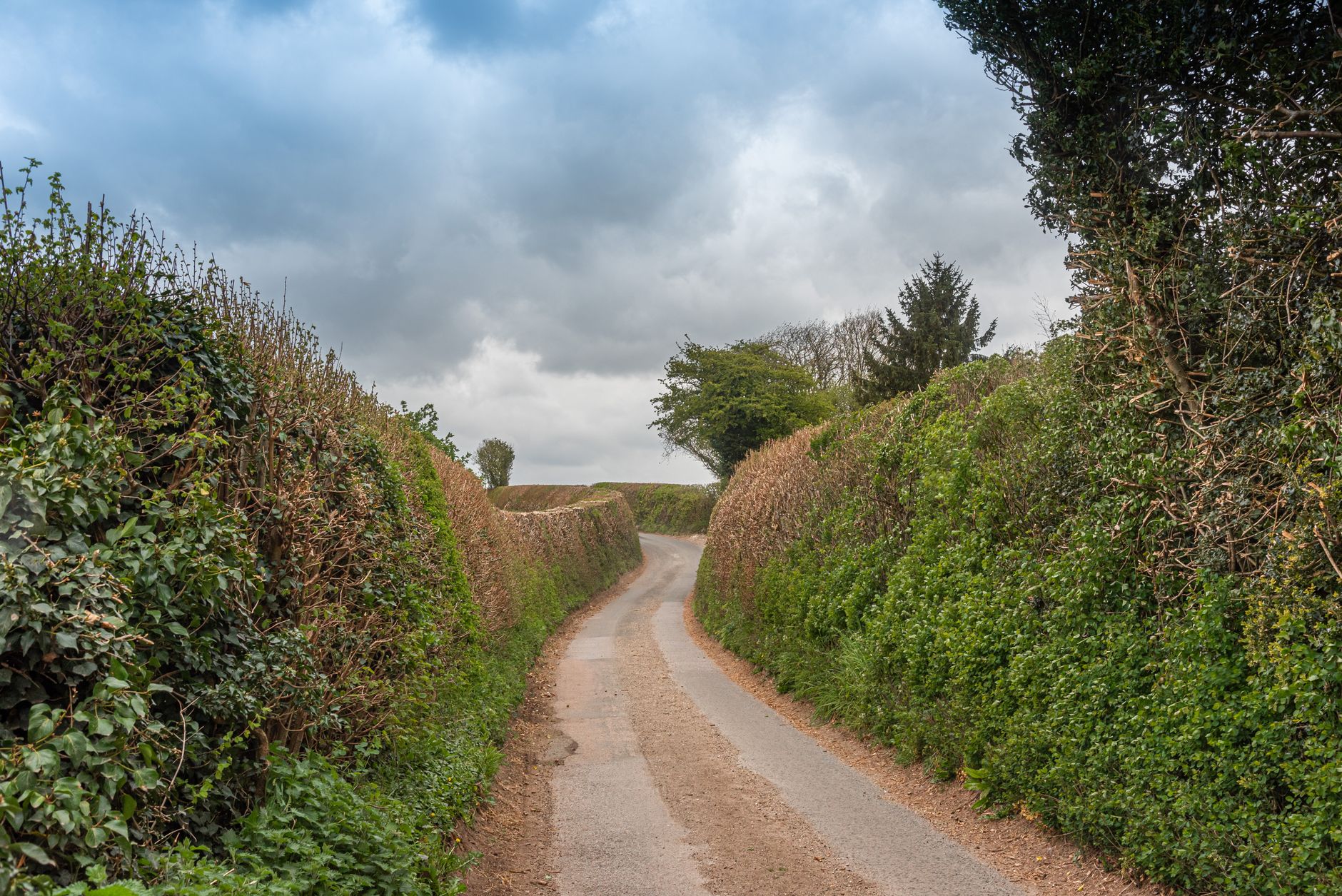
- The hedges are walls. A Cornish hedge is a stone-faced earth bank, often head-high and topped with shrubs, so you can’t see round bends and there’s no verge to escape onto. Keep left, slow down for blind corners and listen for engines.
- Tractors win. On single-track lanes, whoever is nearest a gateway or passing place pulls in. On a bike that’s usually you, and a wave goes a long way.
- Descents need respect. E-bikes are heavy, and a steep lane with gravel down the middle and wet leaves in the corners is no place to test the brakes. Scrub your speed off before the bend, not in it.
- Be seen. Lights front and rear make sense even in daytime, in the dappled shade of a sunken lane.
- Don’t trust a car sat-nav. The shortest line on the map is often the steepest lane in the parish. A route-planning app with a cycling profile and a gradient view is far more use here.
E-bikes and Cornwall’s branch lines
The branch lines to St Ives, Falmouth, Looe, Newquay and Gunnislake open up some brilliant one-way rides: pedal out, train back. GWR carries bikes free — on local trains on a first-come basis when there’s space, and on its long-distance Intercity Express trains only with a free reservation. Spaces are limited, and a heavy e-bike can be awkward to lift into the racks, so check GWR’s current cycle policy before you plan a day around the train home, and have a plan B if the rack is already full.
Frequently Asked Questions
How much does it cost to hire an e-bike in Cornwall?
Expect around £50 to £55 for a full day with a dedicated operator: Ebike Cornwall charges £50 a day and Cornish Wave in Newquay £55. Shorter hires start at about £25 for two hours, and weekly rates bring the daily cost down considerably — Ebike Cornwall’s week is £200. For quick trips around town, the Beryl scheme charges an unlock fee plus from 5p a minute.
Do you need a licence to ride an e-bike in Cornwall?
No. A standard hire e-bike is an electrically assisted pedal cycle under UK law, so you don’t need a licence, insurance or registration. You must be at least 14 to ride one, and the motor stops assisting at 15.5mph.
Can you ride an e-bike on the South West Coast Path?
Mostly not. The majority of the coast path is a public footpath, where cycling of any kind isn’t permitted; only the short sections that are also bridleways are open to bikes. Ride to the coast on lanes and trails, then walk the clifftop stretches.
How far will an e-bike go on one charge in Cornwall?
Plan on roughly half to two-thirds of the advertised range. Hills, wind and the higher assist modes use far more power than the flat test routes that manufacturers quote. A mid-range hire bike will usually manage 30 to 40 miles of hilly riding in sensible modes — more on the flat trails, a good deal less in turbo.
Are e-bikes allowed on the Camel Trail?
Yes. Legal e-bikes are treated as ordinary bicycles and are welcome on the trail, and all the main hire shops rent them. Keep your speed down around walkers, dogs and children on the busy Padstow to Wadebridge section.
What’s the best e-bike route in Cornwall?
For scenery, the moor road from St Ives to St Just through Zennor is hard to beat, ideally outside the summer holidays. For an easy family day, the Camel Trail end to end. For something in between, the Coast to Coast Trail with the Wheal Busy loop.
Can children ride e-bikes in Cornwall?
Only from 14, the legal minimum age for riding an electric bike. Younger children can come along on a child seat, a tag-along or in a trailer behind an adult’s e-bike — ask the hire shop what can be fitted, because not every e-bike takes every attachment.
An e-bike won’t make Cornwall flat, and nobody who loves the place would want it to. What it does is let you ride the county as it actually is — down to the cove, up the other side, out to the headland and home in time for supper — without anyone being left at the bottom of the hill.
If a single day isn’t enough, the long-distance routes are the next step. Our guide to the West Kernow Way and Cornish Way covers both multi-day rides, including what to think about if you’re doing them on an e-bike.
Photo credits: The Cheesewring from Minions: Approaching The Cheesewring – geograph.org.uk – 4562940.jpg by Des Blenkinsopp, CC BY-SA 2.0 (licence).