Ride out of Wadebridge on a Tuesday in June and you will pass a four-year-old on a balance bike, a couple in their seventies on hired hybrids, a family with a trailer full of picnic and a man in full team kit doing intervals, all on the same stretch of gravel within about ninety seconds of each other. That is the Camel Trail, and it is the reason most people’s mental picture of cycling in Cornwall is a flat, level, wooded path beside an estuary.
It is also completely unrepresentative. Cycling Cornwall away from the old railway lines means high-sided lanes with gradients that would embarrass an Alpine col, granite hedges that block every view, blind bends, tractors, and the discovery that a county thirty miles wide can contain seven thousand feet of climbing in an afternoon. Both versions are real. This guide covers the traffic-free trails that make Cornwall one of the best family cycling destinations in Britain, the road riding that quietly breaks strong cyclists, the mountain bike centres, where to hire a bike and what nobody tells you about riding here in August.
What cycling in Cornwall is actually like
Three things shape every ride you will do here.
The first is that Cornwall’s traffic-free network is built almost entirely on dead railways and dead mine tramways. That is why it is level: the Victorians who built the routes were moving ore and china clay, not going for a nice ride, and they surveyed accordingly. It is also why the network is patchy rather than continuous — the trails exist where the industry was, which means the Camel estuary, the mining district between Portreath and Devoran, and the clay country behind St Austell.
The second is that everything off those trails is hilly, and not gently. Cornish valleys are short, steep and repeated. A lane can drop 60 metres to a river and climb straight back out at 16 per cent within half a mile, then do it again. Riders arriving from flatter counties consistently underestimate the total ascent for the mileage; twenty miles of Cornish lane is not twenty miles of anywhere else.
The third is the wind. There is nothing between the north coast and Newfoundland, and a west or south-westerly is the prevailing default. Plan a long out-and-back so that the return leg is downwind if you possibly can, and treat any coastal ride as roughly two different rides depending on direction.
The Camel Trail
If you only ride one thing in Cornwall, it is this. The Camel Trail runs 18 miles from Wenfordbridge through Bodmin and Wadebridge to Padstow, on the trackbed of the old Bodmin and Wadebridge Railway. It is entirely traffic-free, surfaced the whole way, and virtually level, which makes it usable by wheelchairs, mobility scooters, trailer bikes, tag-alongs and anybody who has not ridden since school.
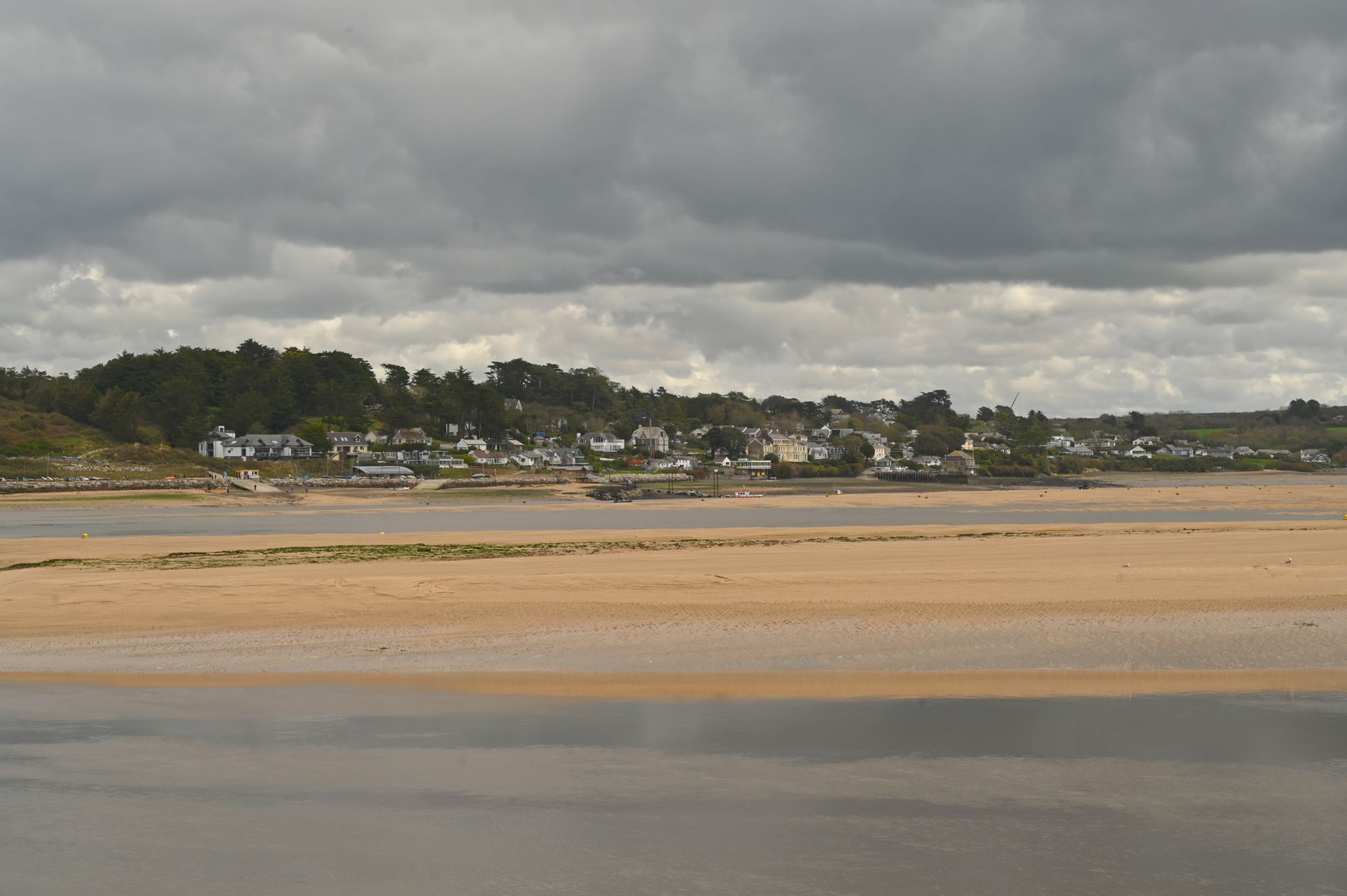
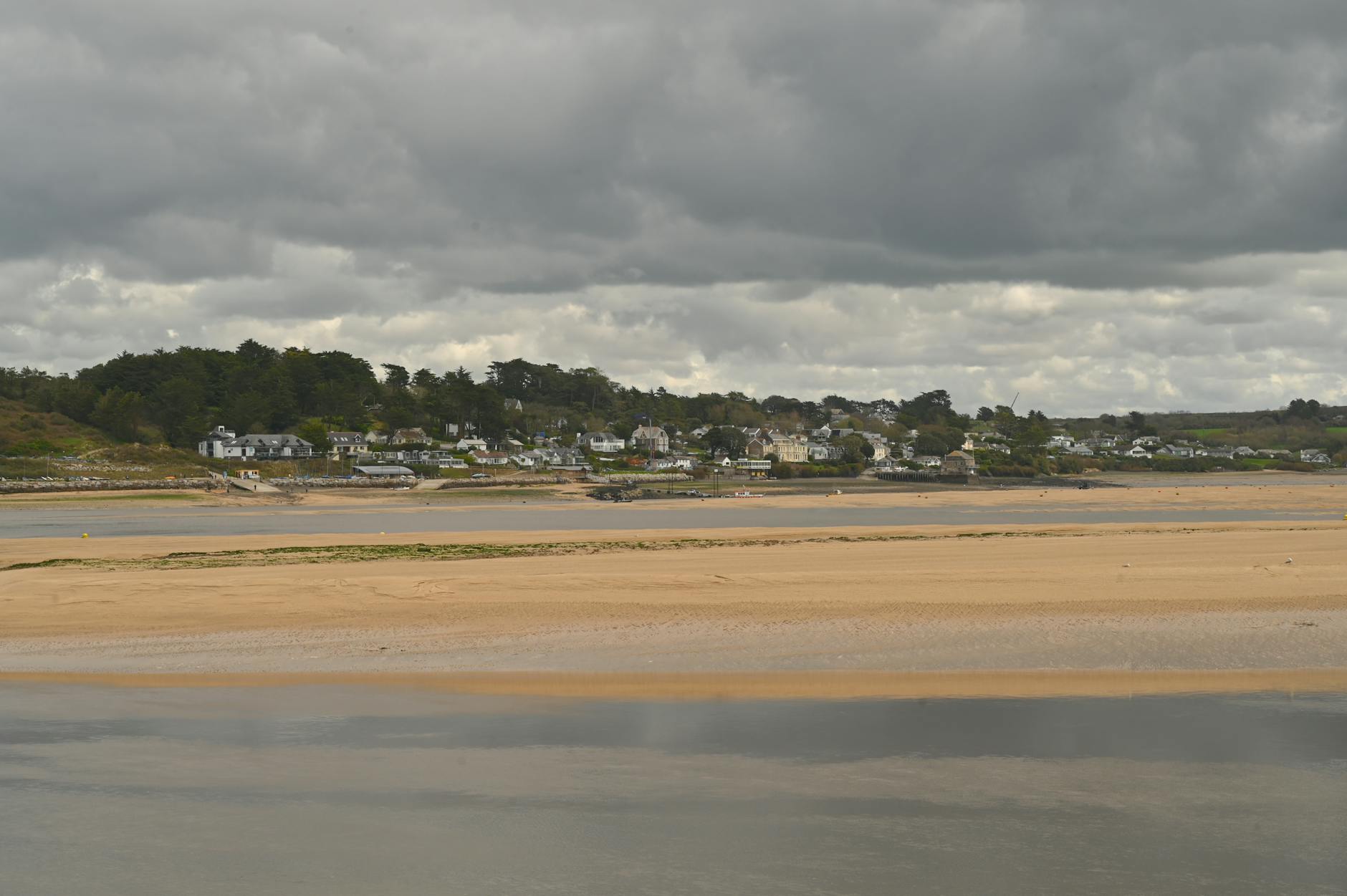
The section everyone rides is Padstow to Wadebridge: 5.5 miles each way, about 45 minutes at an easy pace, running the whole length of the Camel estuary with wading birds on the mud on one side and oak woods on the other. It is genuinely beautiful and it is genuinely rammed. In August, on a fine day, this is one of the busiest pieces of cycling infrastructure in the country and the etiquette collapses — expect wobbling children, groups riding four abreast and a lot of ringing of bells.
The two quieter sections deserve more attention than they get. Wadebridge to Bodmin is 5.75 miles up the wooded Camel valley proper, with the river beside you, far fewer people and better wildlife. Bodmin to Wenfordbridge is another 6.5 miles into the fringe of Bodmin Moor, and on a weekday you may see nobody at all. If you have half a day and you want the trail rather than the crowd, start at Bodmin and ride inland.
Hiring a bike for the Camel Trail
Hire operators cluster at Padstow, Wadebridge, Bodmin and Wenfordbridge, and there are a lot of them. Only operators licensed by Cornwall Council are permitted to hire onto the trail, which is worth checking before you book — a licensed operator has agreed standards for maintenance, insurance and where they may drop off. Most offer hybrids, kids’ bikes, trailers, tag-alongs, tandems and electric bikes, and the good ones will fit you properly rather than handing over the nearest frame.
Two practical notes. Book ahead in the school holidays, because the Padstow shops run out of child seats and tag-alongs by mid-morning. And consider starting at Wadebridge rather than Padstow: parking is cheaper, the queues are shorter, and you ride to Padstow for lunch instead of fighting for a space in it. Our Padstow guide covers what to do at the far end, and if you want to be able to walk to the trailhead from breakfast, the best bed and breakfasts in Padstow put you a few minutes from it.
The Coast to Coast and the Mineral Tramways
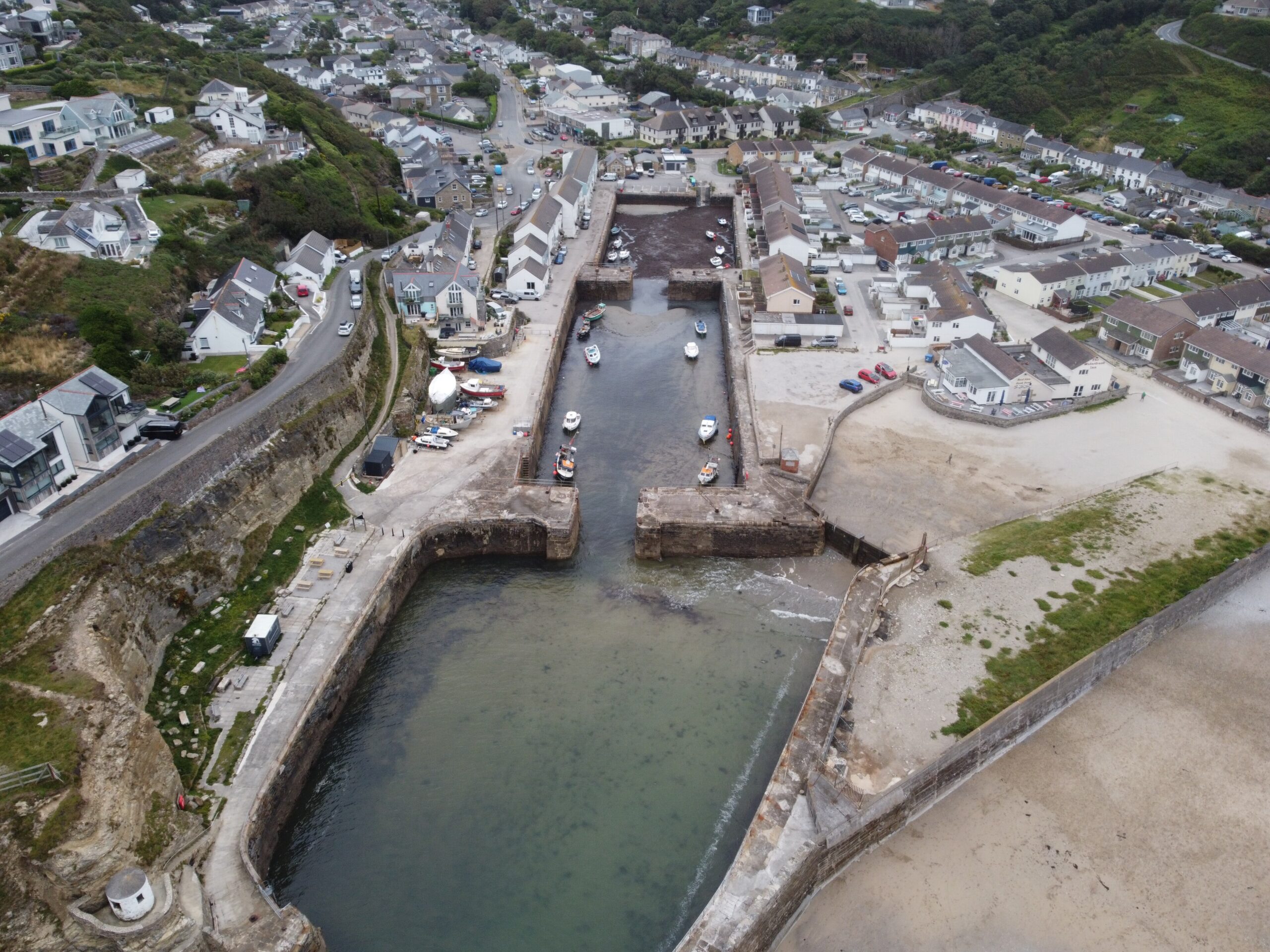
Cornwall’s other great traffic-free ride crosses the county at its narrowest point, from the Atlantic to a tidal creek off the Fal. The Coast to Coast Trail runs about 11 miles from Portreath on the north coast, through Wheal Rose, Todpool and Bissoe, to Devoran on Restronguet Creek. It follows the old Portreath tramroad and the Redruth and Chasewater Railway, both built to haul copper ore down to the sea, and it climbs steadily to the high ground around Wheal Busy before dropping to the water.
Call it eleven miles rather than the fourteen some guides claim, allow two to three hours with stops, and know that it is not level in the way the Camel Trail is level — there is real, if gentle, climbing in the middle. It is also not entirely off-road: a few short road links join the sections, and one or two of them carry proper traffic, so it is a poorer choice for very small children than the Camel.
What it does offer is the best ride in Britain through an industrial landscape. You pass roofless engine houses, arsenic flues, spoil heaps colonised by heather and, at the Bissoe end, water still running orange with iron. The whole area is part of the UNESCO World Heritage Site, and the Cornish mining heritage makes far more sense from a saddle than from a car park.
The wider Mineral Tramways network branches off it. The best of the branches is the Great Flat Lode Trail, a 7.5-mile circular around the south side of Carn Brea, past South Wheal Frances and the engine houses of the richest tin lode in the district. It is rougher underfoot, quieter, and has the archaeology at a higher density than anywhere else on the network.
Traffic-free routes for families
Cornwall is unusually good for riding with children, provided you stay on the old lines. These are the routes that work.
- Camel Trail, Padstow–Wadebridge — 5.5 miles each way, flat, surfaced, cafés at both ends. The default first family ride, and the busiest.
- Camel Trail, Bodmin–Wadebridge — same surface, wooded river valley, a fraction of the traffic. Better with nervous riders.
- Bodmin to the Eden Project — a purpose-built link on old rail and forest track from Bodmin down to the Eden Project, which gives discounted entry to arrivals on foot or by bike. It is not flat: expect a proper climb back.
- Cardinham Woods — Forestry England woodland east of Bodmin with waymarked family loops, a café, and mountain bike trails for anyone who wants to graduate.
- Lanhydrock Lodge trail — a wide, well-surfaced green route with no technical features at all, built to take trailers, tag-alongs and adapted bikes.
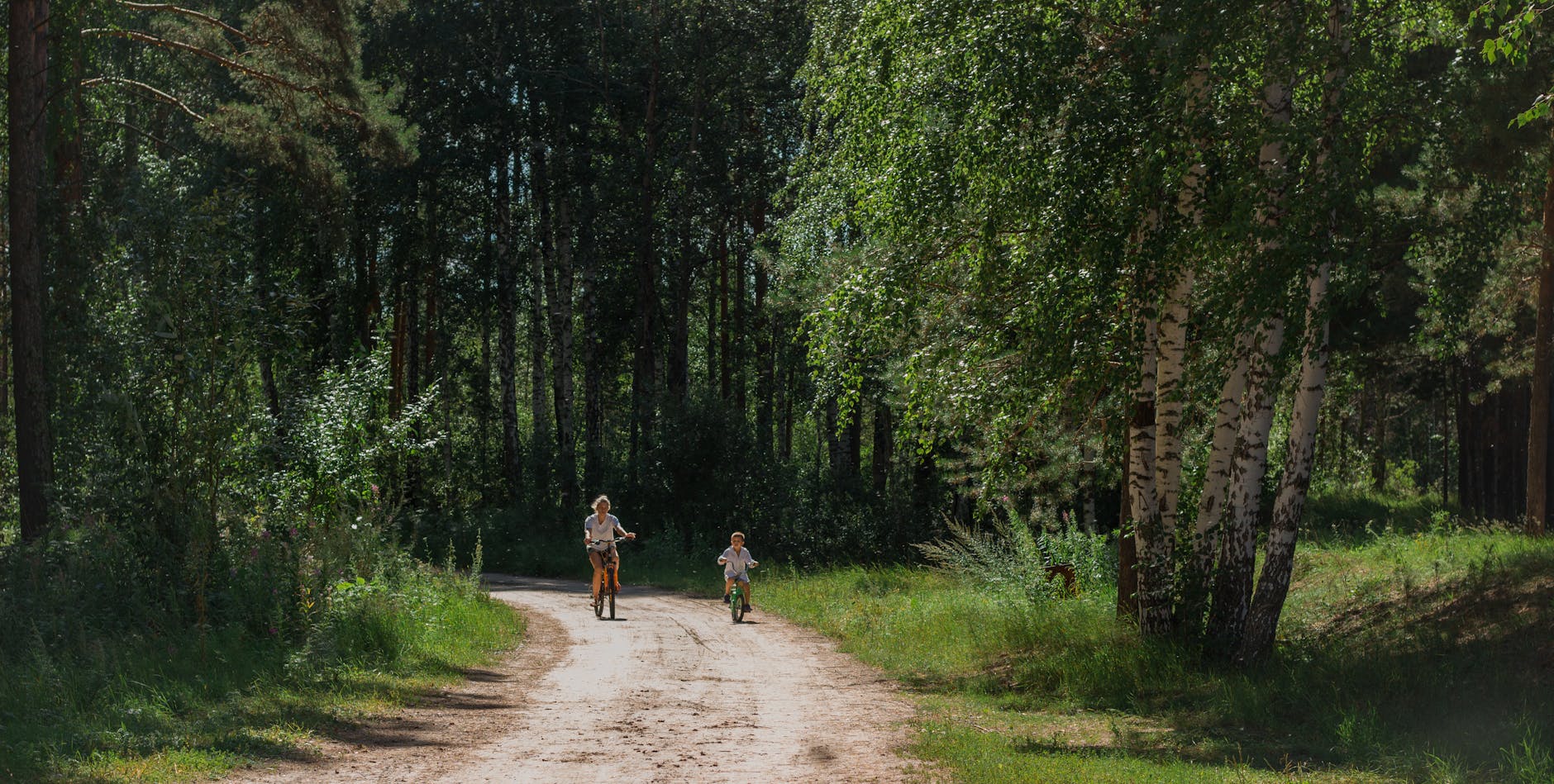
One honest warning. The map will show you quiet lanes linking these trails, and on paper they look like the obvious way to join a longer loop. Do not do it with children. Cornish lanes have no verge, no sightlines and hedges taller than a van, and drivers who live there take them at a speed that assumes nobody is walking a bike round the corner. Stick to the trail, drive between them if you must, and see our Cornwall family holiday guide for what else fills the day.
Mountain biking and trail centres
Cornwall has no mountains and, until fairly recently, had no purpose-built trails either. That changed with two centres, both near Bodmin, and both now good enough to be the reason for a trip.
Lanhydrock Cycle Hub
Lanhydrock is the National Trust’s mountain bike centre, opened in 2014 in the grounds of the estate. It holds around 10 km of waymarked green and blue trails, a skills area, a balance track, a café, parking and on-site hire. The blue network is made of Bazley’s (3 km), Walter’s (1 km), Hart (1.5 km) and Timber (1.5 km, with optional red-graded sections), and the skills area includes a red-grade dual-slalom track that is unusual anywhere in the south-west.
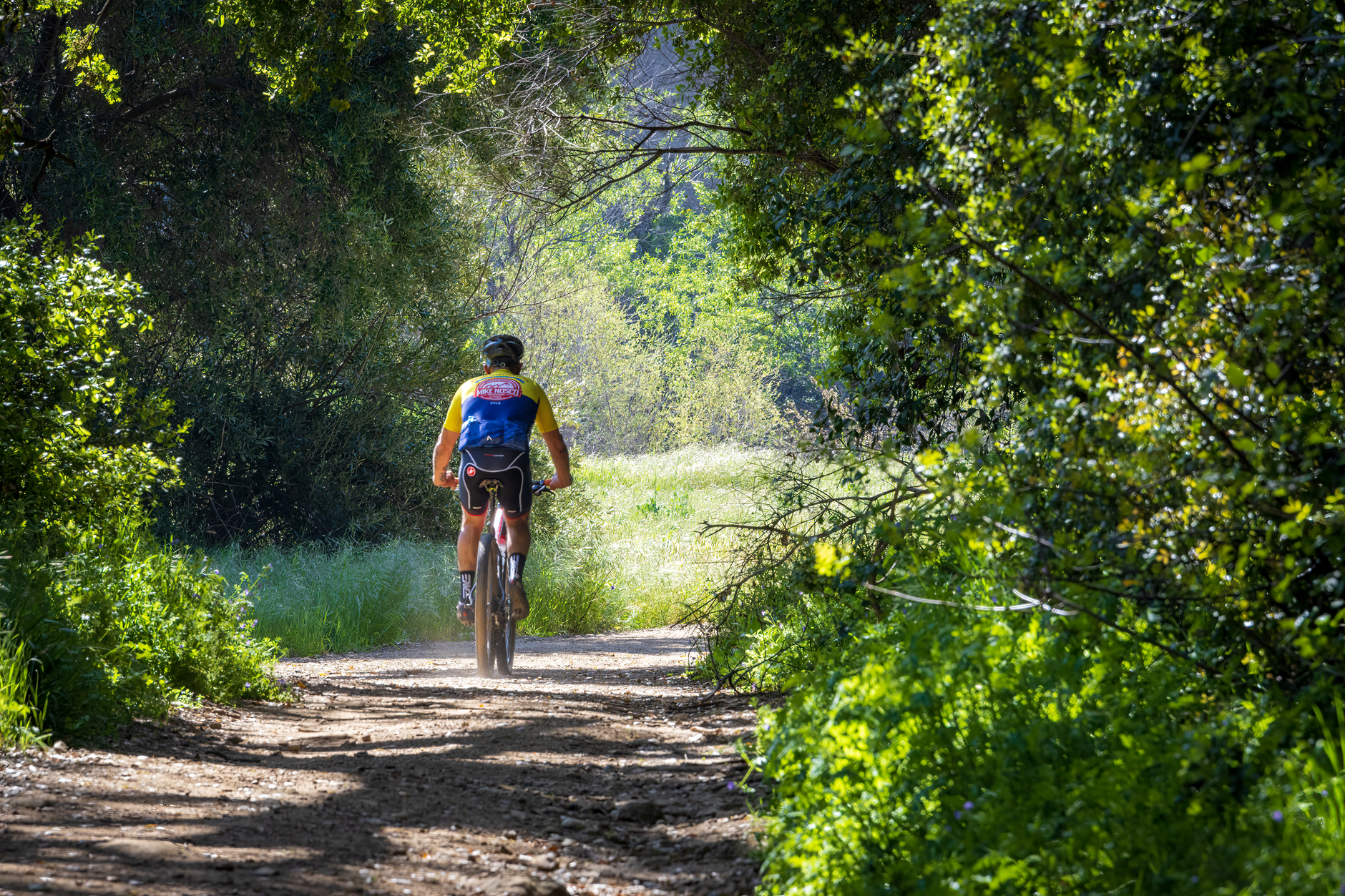
The honest verdict on Lanhydrock: it is superb for families, beginners and anyone building confidence, and it is not enough for an experienced rider to spend a full day on. If you ride red and black trails elsewhere, you will have covered everything here inside two hours. Come for the progression, the café and the fact that you can put a nervous eight-year-old on a real trail — not for the technical challenge.
Cardinham Woods
Cardinham Woods, on the other side of Bodmin, is the rougher, older, freer alternative: Forestry England land with waymarked mountain bike routes, natural woodland singletrack and a well-regarded café at the trailhead. Nothing here is as manicured as Lanhydrock. That is the point.
The unofficial stuff
Cornwall’s other off-road riding is bridleways, byways and the fringes of Bodmin Moor, which are excellent and largely unsignposted. Two rules. Cycling is permitted on bridleways, byways and restricted byways but not on footpaths, and that includes almost all of the South West Coast Path — riding it is both illegal and, given the drops, genuinely stupid. And moorland tracks turn into rivers between October and April; take mudguards and low expectations.
Road riding
Serious road cyclists come to Cornwall for the climbs, which are short, savage and endlessly repeated. This is not a county for big steady efforts; it is a county for two hundred small ones.
- The Lizard peninsula — the flattest riding in Cornwall, on a plateau of serpentine with big skies and long straight lanes. Good for a first long ride here.
- The Roseland — narrow, wooded, creek-side lanes and the King Harry Ferry across the Fal, which is the most enjoyable £3-ish a bike can buy.
- West Penwith — the far end past St Just and Zennor, where the coast road gives the best views and the worst gradients in the county.
- Bodmin Moor — the only sustained climbs, and the only place where you can ride for half an hour without a junction.
- The Cornish Way — the long-distance route running the length of the county as part of the National Cycle Network, mixing traffic-free sections with lanes and the occasional stretch of A-road you will not enjoy.
The hazard nobody mentions is not the climbing, it is the descending. Cornish descents are steep, blind, often wet under trees, frequently gravelled by tractor tyres, and end in a gate or a junction. Cover the brakes, ride within your sightlines, and accept that you cannot see round a granite hedge.
Electric bikes
Cornwall is the strongest argument for e-bikes in Britain, and the hire fleets have expanded accordingly. On the flat trails they are unnecessary. On everything else they turn an unrideable holiday into a rideable one: a mixed-ability group can actually stay together, a coastal round trip stops depending on the wind, and a 16 per cent lane out of a fishing village becomes a thing you notice rather than a thing you dread.
Two caveats worth knowing before you book. Range claims assume flat ground and a light rider, so on Cornish terrain assume noticeably less than the number on the box and carry the charger if you are stopping for lunch somewhere with a socket. And an e-bike is heavy: getting one onto a car rack, or up the steps at a station, is a two-person job.
Getting here, and getting about, with a bike
Bikes travel free on Great Western Railway services to Cornwall, but spaces are limited and must be reserved — on the London to Penzance route in summer they go quickly, and turning up with a bike and no reservation does not work. The Atlantic Coast Line to Newquay, the St Ives Bay Line and the Looe Valley Line are more relaxed branch lines where you can usually just get on. The getting around Cornwall without a car guide has the detail on connections.
Driving with bikes is straightforward until you park. Cornish car parks are small, height barriers are common enough to catch out anyone with a roof rack, and the popular trailheads at Padstow and Portreath fill early. Rear-mounted racks obscure number plates and lights, which matters if you are unlucky.
When to ride
| Period | Conditions |
|---|---|
| March–May | The best road riding of the year. Lanes lined with primroses and campion, quiet trails, dry surfaces, cold mornings. Book hire ahead of Easter. |
| June | Long days, warm evenings, trails busy but not yet impossible. Arguably the peak month. |
| July–August | The Camel Trail is at capacity, hire shops sell out, lanes are full of caravans and hire cars. Ride early or ride inland. |
| September–October | Excellent. Warm sea, quiet trails, good light, hire available on the day. The wind picks up. |
| November–February | Trails are muddy and the moor tracks are waterlogged. Fine for hardy road riders; several hire operators close or reduce hours. |
For anything from March onwards the single best time of day is before ten in the morning, when the trails are empty, the lanes have no traffic and the light on the estuary is at its best. Cornwall’s cycling is not busy so much as busy between eleven and four.
What to take
- A rain jacket, always. Weather here changes in twenty minutes and the trails have no shelter.
- Gearing lower than you think you need. A compact chainset and a wide cassette are not an admission of defeat here, they are the price of entry.
- Spares and a pump. Bike shops are in the towns, not on the trails, and mobile signal on Bodmin Moor is unreliable.
- Lights. The lanes are dark under the hedges even in daylight, and any wrong turn adds miles.
- A lock. Trailhead car parks and Padstow harbour are exactly where a bike goes missing.
- Cash or a card and a plan for lunch. Village shops close early and the Wenfordbridge end has almost nothing.
Our Cornwall packing list covers the rest of it by season, and much of the advice for walkers applies unchanged to riders.
Where to base a cycling holiday
Cornwall is long and thin and the roads down its spine are slow, so where you sleep determines what you can realistically ride. Nobody has a good week driving forty minutes each way to a trailhead.
Wadebridge and Padstow
The obvious choice, and the right one for a first cycling holiday or a family trip. You are on the Camel Trail, which means a genuinely traffic-free ride is available every single day regardless of weather, wind or how tired everybody is. Wadebridge is the more practical of the two — a working town with supermarkets, several hire operators, cheaper parking and the trail running through the middle of it. Padstow is prettier, pricier, and a nightmare to park in from July onwards. From either you can reach Bodmin Moor, the north coast lanes towards Port Isaac and, on a long day, the clay country.
Bodmin
Underrated. Bodmin sits at the junction of the quiet inland half of the Camel Trail, the link down to the Eden Project, Cardinham Woods and Lanhydrock, which makes it the only town in Cornwall where four separate off-road networks are within a few miles of the door. It is not a holiday town and it does not pretend to be, which keeps prices sensible. The moor starts on the eastern edge for anyone who wants sustained climbing.
Portreath, Redruth and the mining district
The base for the Mineral Tramways. It puts the Coast to Coast and the Great Flat Lode on your doorstep, gives you the north coast beaches for the afternoons, and sits close enough to the middle of the county that Truro, the Roseland and even the Lizard are within an hour’s ride. This is the least touristed part of Cornwall and it is noticeably cheaper than the coast in either direction.
Truro and the Roseland
For road riders who want lanes rather than trails. The creeks of the Fal give some of the prettiest riding in the county, the King Harry Ferry makes circular routes possible where the map says dead end, and the terrain is rolling rather than brutal. Truro has bike shops, a station on the main line and enough restaurants to make an evening work.
Penzance and West Penwith
For strong riders only, and worth it. The far west has the best coastal road in Cornwall, the most dramatic scenery and the steepest lanes, and there is essentially no traffic-free option to fall back on when legs give out. Base here if the point of the holiday is the riding rather than a compromise between riders.
Long-distance riding
Cornwall carries the western end of two things that people plan whole trips around, plus a growing amount of unofficial gravel riding.
The Cornish Way is the county’s long-distance route, part of the National Cycle Network, running from Land’s End up through the middle and along the north coast to the Devon border. It is a genuine end-to-end and it is honest about being a mix — some superb traffic-free sections on the old railways, a great deal of quiet lane, and a handful of stretches on roads busy enough that you will want them behind you. Signage varies and sections get re-routed, so check the current alignment before you commit to a day’s mileage rather than relying on an old map.
Land’s End to John o’ Groats starts, obviously, at the far end of Cornwall, and the county supplies the first two hard days of it. Most riders take the A30 corridor as far as Bodmin because it is quick, and most of them regret it; the parallel lanes are slower, hillier and enormously better. Whichever you choose, the traditional first-day target of Okehampton is a long way for a first day on loaded bikes.
Off-road long-distance riding is the growth area. Cycling UK has developed a waymarked bikepacking loop out of Penzance through West Penwith, linking byways, tracks and quiet lanes across the far west, and the Mineral Tramways network can be strung together into a multi-day figure of eight through the mining country. Both need proper tyres and both are considerably harder than the mileage suggests, because Cornish off-road climbs come at gradients no railway engineer would have accepted.
Riding with children
The trails make Cornwall workable with children of almost any age, but the age changes the plan completely.
- Under three — a child seat or a trailer, and an adult who is happy with the extra weight on the one flat trail available. Trailers are wide; the Camel Trail in August is not.
- Three to six — balance bikes and first pedal bikes work well on the Padstow–Wadebridge section, but expect to cover two or three miles, not eleven. Start at Wadebridge, ride until the enthusiasm runs out and turn round.
- Six to ten — the full Camel Trail becomes possible, and this is the age at which the green trails at Lanhydrock and the family loops at Cardinham Woods turn a bike ride into an adventure. Tag-alongs and trailer bikes let a tired child be towed home.
- Ten and up — the Coast to Coast Trail, the blue trails at Lanhydrock, and cautiously chosen lane sections with an adult in front and an adult behind.
Two things buy more goodwill than anything else: a café at the halfway point, and a hire shop that fits the bike properly. A child on a bike two sizes too big will hate the whole holiday, and the busy shops in high season are not always careful about it. Take five minutes at the counter and insist.
Honest verdicts
Some things in Cornish cycling are oversold, and it is worth saying which.
The Camel Trail in August is not a nice ride. It is a queue with bicycles in it. Ride it in May, ride it at eight in the morning, or ride the Bodmin end instead — but do not take a first-time cyclist onto the Padstow section at midday in the school holidays and expect them to enjoy cycling afterwards.
Land’s End to John o’ Groats does not really start with good riding. The first thirty miles out of Land’s End are the hardest of the whole route, on lanes and A-roads that are busy with visitor traffic, and a lot of riders start their trip exhausted and disillusioned. If you are doing it, ride the first day short.
You do not need a mountain bike. A hybrid or a gravel bike handles every trail in this guide including the Mineral Tramways. Full suspension is for Lanhydrock and Cardinham and nowhere else.
And the county is smaller than it rides. Twenty-five miles on Cornish lanes with 900 metres of climbing takes as long as forty flat miles at home. Plan by hours and metres of ascent, not by distance, and you will have a much better week. For everything else the county throws at active visitors, our adventure activities guide covers what to do on the days you cannot face another hill.
Frequently Asked Questions
How long is the Camel Trail and is it flat?
Eighteen miles in total, from Wenfordbridge through Bodmin and Wadebridge to Padstow, and effectively level throughout because it follows a disused railway. The popular Padstow to Wadebridge section is 5.5 miles each way.
Do I need to book a hire bike in advance?
In July and August, yes — especially for children’s bikes, trailers and tag-alongs, which sell out by mid-morning. Outside the school holidays you can usually walk up. Use a Cornwall Council-licensed operator.
Is Cornwall good for beginner cyclists?
On the traffic-free trails, extremely. Off them, no. The lanes are steep, narrow, hedged and busier than they look, and they are not a sensible place to build confidence.
Can I cycle the South West Coast Path?
No. It is a footpath for almost its entire length, where cycling is not permitted, and much of it is unrideable anyway. Bridleways and byways are open to bikes; footpaths are not.
What is the best traffic-free ride apart from the Camel Trail?
The Coast to Coast Trail, about 11 miles from Portreath to Devoran through the mining landscape. It has more climbing and a few road links, but far fewer people and better scenery.
Are electric bikes worth hiring?
Away from the flat trails, yes. They are what makes a mixed-ability group able to ride together in a county where every route involves repeated short, steep climbs.
Can I take a bike on the train to Cornwall?
Yes, free of charge, but main-line spaces are limited and must be reserved in advance. The Newquay, St Ives and Looe branch lines are much more relaxed.
When is the quietest time to ride the popular trails?
Before ten in the morning, any month. Failing that, May, June, September and October are all far quieter than the school summer holidays.
Is Lanhydrock worth the trip for an experienced mountain biker?
Not on its own. It is green and blue graded with a red skills area, brilliant for families and progression, and covered in about two hours by anyone who rides red trails elsewhere. Pair it with Cardinham Woods to make a day of it.
Pick the trail that matches the weakest rider in your group, start early, and treat the hills as the main event rather than an inconvenience between places. Cornwall gives up its best riding to people who plan around wind direction and tide-flat railway lines rather than around distance — and to anyone willing to be on the Camel estuary at eight in the morning, when the birds are on the mud and there is nobody else there at all.
Wherever you end up riding, you’ll need a bike first. Our guide to bike hire in Cornwall covers where to rent standard bikes, e-bikes and family equipment across the county.
For something with more history and a bit more challenge than the county’s flatter trails, our guide to the Coast to Coast Trail and Mineral Tramways covers eleven miles of former mining tramroad between Portreath and Devoran.
For anyone who wants a genuine physical challenge rather than a gentle trail, our guide to road cycling in Cornwall covers the county’s toughest climbs, its quiet lanes and the best routes across Bodmin Moor and the Penwith peninsula.
For riders who want technical singletrack rather than a flat trail, our guide to mountain biking in Cornwall covers Cardinham Woods, Lanhydrock and the wilder bridleways of Bodmin Moor.
Photo credits: Portreath harbour — Portreath Harbour by Kernow Skies, CC BY-SA 3.0 (licence).