Of all the questions guests ask before booking, “which part of Cornwall should we stay in?” is the one that matters most, and the one people most often get wrong. Cornwall is far bigger and more varied than its place on the map suggests, and choosing the wrong base can mean spending your holiday in the car rather than on the beach. The right base, by contrast, puts the Cornwall you came for right on your doorstep. This guide to where to stay in Cornwall breaks the county down area by area and town by town, matching each to the kind of traveller it suits best, so you can pick a base that fits the holiday you actually want.
My single most important piece of advice is this: do not try to see all of Cornwall from one base, and do not hop around every two nights either. Pick one or two well-chosen bases for a week, accept that you cannot do everything, and you will have a far better time than the visitor who spends every morning driving somewhere new through the lanes.
First, Understand Cornwall’s Geography
Cornwall is a long, thin peninsula with two very different coastlines and a wild interior, and understanding this shapes everything. The north coast faces the Atlantic head-on: dramatic cliffs, big surf, long sandy beaches and lively resort towns. The south coast, sometimes called the Cornish Riviera, is gentler, with wooded estuaries, sheltered coves, sailing harbours and a softer feel. The far west around Penzance and Land’s End is the most remote and arguably the most magical, while the centre and Bodmin Moor offer wild walking away from the sea. East Cornwall, just over the Tamar, is the quickest to reach but feels less classically Cornish. Where you stay should reflect which of these draws you most.
North Coast Versus South Coast
This is the fundamental choice. The north coast is for you if your heart is set on classic surf beaches, big skies and dramatic Atlantic scenery, and you do not mind busier towns and more wind. Think Newquay, Padstow, Bude and the beaches around them. The south coast suits those who prefer calmer water, pretty harbours, estuary sailing, gardens and a quieter, gentler pace; think Falmouth, Fowey, the Roseland and the Helford. Many first-timers are surprised to learn that the two coasts can have completely different weather on the same day, so if flexibility matters, a central base lets you chase the sun across the county.
The Best Towns to Stay In
St Ives: The All-Round Favourite
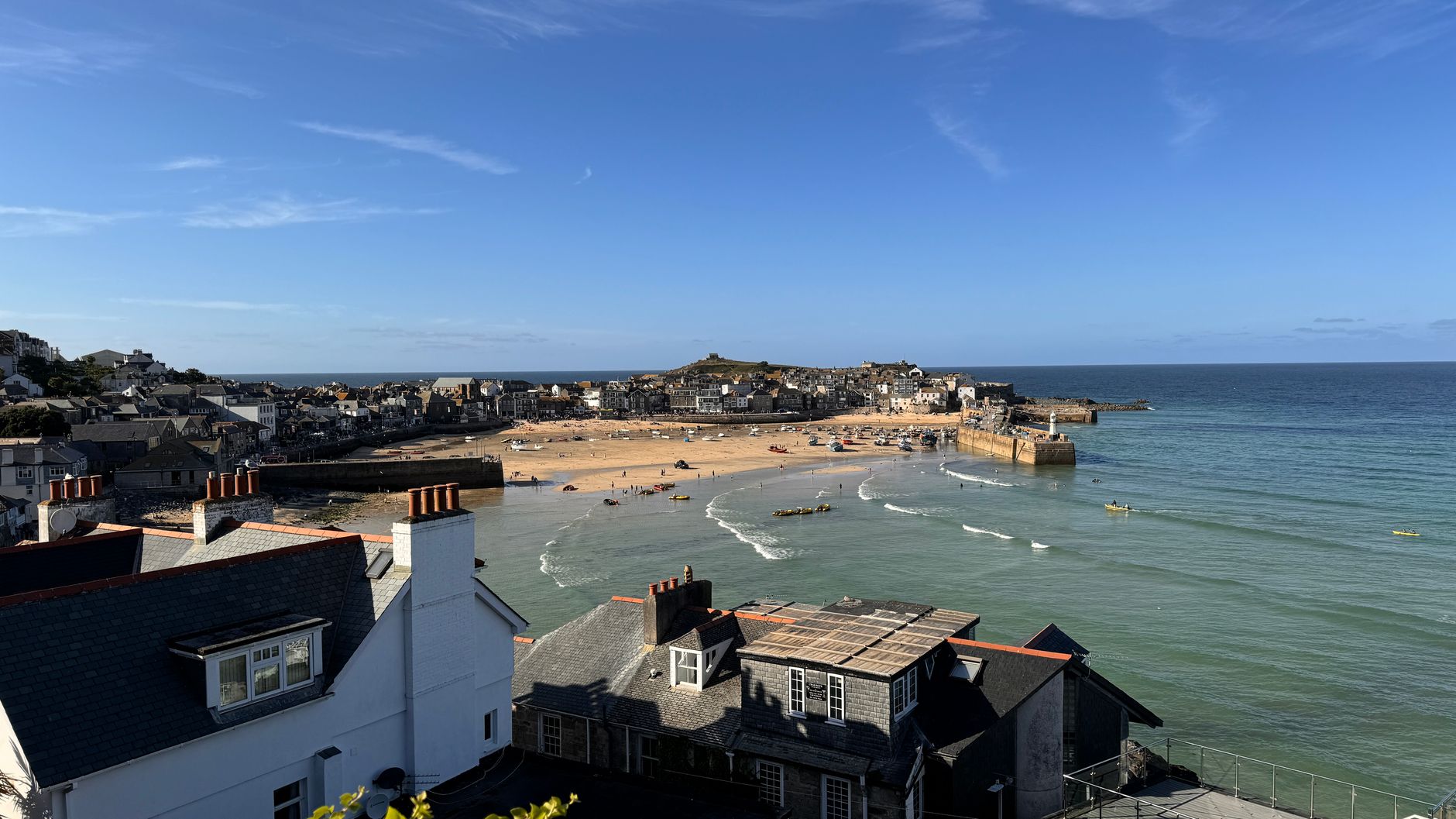
If I had to recommend one base for a first-time visitor, it would often be St Ives. This dazzling little town on the north coast has four beaches within walking distance, a maze of cobbled streets, superb galleries including Tate St Ives, excellent restaurants, and its own scenic branch-line train. It is beautiful, walkable and well placed for exploring the far west. The catches are that it is busy and pricey in summer and parking is genuinely difficult, so it suits those happy to arrive by train or use park-and-ride. Read more in our St Ives B&B guide.
Falmouth: The Best All-Rounder for First-Timers
Falmouth is my top pick for visitors who want a bit of everything. A lively university and sailing town on the south coast, it has its own string of beaches, the National Maritime Museum, a buzzing independent food and pub scene, ferries to the Roseland, and a train line to Truro. It is less frantic and less expensive than St Ives, walkable, and well positioned for the south coast and the Lizard. For a first Cornish holiday that balances beach, town and culture, it is hard to beat.
Newquay: For Surf and Families
Newquay is the north coast’s biggest resort and the UK’s surf capital, with a clutch of superb beaches including Fistral, plenty of family attractions, a vibrant nightlife and its own branch line. It suits surfers, families wanting facilities on tap, and anyone who likes a lively base. It is busier and more commercial than the smaller villages, which some love and others avoid, so it comes down to taste.
Padstow: Foodie Harbour Town
Pretty Padstow, on the Camel Estuary, is synonymous with Rick Stein and a thriving food scene, with a lovely harbour, the traffic-free Camel Trail on the doorstep, and easy ferry access to Rock and the beaches beyond. It is on the smaller and pricier side, ideal for couples and food lovers who want charm over bustle.
Penzance and Marazion: Gateway to the Far West
Penzance is the end of the main railway line and the practical base for exploring the magical far west: Land’s End, the Minack Theatre, St Michael’s Mount across the bay at Marazion, the Lizard and the Isles of Scilly ferry. It is a working town with character rather than a chocolate-box resort, which means better value and a more authentic feel. Marazion next door offers the iconic St Michael’s Mount view.
Truro: The Connected Hub
Cornwall’s only city sits at the centre of the road and rail network, making it the best base for car-free visitors and anyone who wants to range widely across the county. It has good shops, restaurants and a cathedral, though it is not on the coast itself, so it suits explorers more than beach-on-the-doorstep holidaymakers.
Fowey and the Roseland: South Coast Serenity
For a quieter, more genteel south-coast base, Fowey and the Roseland Peninsula are hard to beat. Wooded estuaries, sailing, the Daphne du Maurier connection, gentle coves and a slower pace define this area. It suits couples, walkers and those seeking peace over nightlife.
Bude: North Cornwall’s Relaxed Surf Town
Up in the far north, Bude offers big sandy beaches, a famous sea pool, a relaxed surf-town atmosphere and easier parking than the honeypots further south. It is well placed for the dramatic north coast and the Devon border, though further from the far-west sights.
Looe and Polperro: South-East Charm
In the south-east corner, the twin fishing towns of Looe and Polperro are postcard-pretty, quick to reach over the Tamar, and good value. They suit those wanting classic Cornish fishing-village charm with the shortest journey from up-country.
Matching the Base to the Traveller
For First-Time Visitors
St Ives or Falmouth give the best all-round introduction, balancing beaches, town life, culture and easy access to the famous sights.
For Families
Newquay for facilities and surf, or a quieter base near a gently shelving beach such as the south coast or Bude. Look for ground-floor rooms and beaches with lifeguards and parking. Our Cornwall family holiday guide goes deeper.
For Couples
Padstow, Fowey, the Roseland or a romantic St Ives bolthole. Choose charm, good food and quiet over bustle and nightlife.
For Surfers
Newquay, Bude or the beaches around Hayle and Perranporth, all on the swell-catching north coast.
For Walkers
Anywhere on the coast path, but the far west, the Lizard and the north coast offer the most dramatic walking. A base with bus links lets you walk one way and ride back.
For Car-Free Visitors
Truro for connectivity, or St Ives, Falmouth, Penzance and Newquay for their own branch lines. See our guide to getting around Cornwall without a car.
Types of Accommodation in Cornwall
Where you stay is not only about location but about the kind of roof over your head. Cornwall offers the full range:
- Bed and breakfasts and guesthouses are my obvious favourite, offering local knowledge, a proper Cornish breakfast and excellent value, especially for couples and small families.
- Hotels range from grand clifftop institutions to boutique town stays, with the most luxury on the north coast and in the resort towns.
- Self-catering cottages suit families and longer stays, with the freedom to cook and spread out, though Saturday changeover means peak traffic.
- Holiday parks and camping offer the most affordable family stays, from full-facility parks to wild-feeling campsites and glamping.
- Pubs with rooms combine characterful lodging with food and a local welcome, often in lovely villages.
For the full picture on choosing and booking, our Cornwall bed and breakfast guide is the place to start.
The Lesser-Known Areas Worth Considering
The famous towns deserve their reputations, but some of the most rewarding bases are the ones first-timers overlook. The Lizard Peninsula, Britain’s most southerly point, offers wild cliffs, the jewel-like Kynance Cove, fishing hamlets like Cadgwith and Coverack, and a real sense of getting away from it all, all within reach of Helston and Falmouth. The far-west villages beyond Penzance, including Mousehole, Newlyn, St Just and Sennen, combine artistic heritage, working harbours and the most dramatic coast in Cornwall. The Hayle and St Agnes stretch gives miles of sand and a proper surf-and-mining heritage feel at gentler prices than St Ives next door. And the Camel Estuary beyond Padstow, around Rock, Polzeath and Wadebridge, suits those wanting beaches, the Camel Trail and watersports with a slightly more upmarket flavour. Choosing one of these can mean a more authentic, better-value stay than the busiest honeypots.
Best Bases for Beach Lovers
If beaches are the whole point of your trip, base yourself where the best sand is within walking distance, because that changes a holiday. St Ives wins for sheer choice with four beaches in town. Newquay and Bude offer huge surf-friendly stretches on the north coast. Hayle’s Towans give three miles of dunes and sand. Perranporth has a vast golden beach right by the town. On the south coast, Falmouth’s gentler beaches are walkable from the centre, while the Roseland hides quiet coves. The key is to confirm exactly how far your accommodation is from the sand, as “near the beach” can mean a five-minute stroll or a twenty-minute drive and a parking battle. Our guide to the best beaches in Cornwall helps you match a base to the sand you want.
Splurge Versus Save: How Areas Compare on Cost
Location drives price as much as the property itself. The premium areas, where you pay most for the privilege, are St Ives, Padstow, Rock and the smartest parts of the south coast, especially in peak summer. You get charm and prime location, but at a cost. For better value with little compromise, look to Penzance and the far west, the Hayle and St Agnes coast, Bude and the north Cornwall villages, the Lizard, and the south-east around Looe, all of which offer wonderful Cornwall at gentler rates. A clever strategy is to base yourself a town or a few miles back from the honeypot and travel in, paying far less for an almost identical holiday. This pairs naturally with the advice in our guide to Cornwall on a budget.
Staying With Dogs, and Accessible Options
Cornwall is one of the most dog-friendly destinations in Britain, and many B&Bs, pubs with rooms, cottages and even some hotels welcome dogs, particularly outside the towns. If you travel with a dog, check seasonal beach dog bans, which apply to many popular beaches between Easter and the start of October, and base yourself near a year-round dog-friendly beach. For visitors with accessibility needs, the choice of base matters even more: some historic towns are steep and cobbled, while flatter resort towns and purpose-built accommodation are far easier to navigate. Our Cornwall accessibility guide covers step-free options, accessible beaches and the practicalities in detail, and it is well worth reading before you book.
Managing Your Expectations
A little honesty saves disappointment. The prettiest, most famous towns are also the busiest, so if you crave solitude in August, the chocolate-box harbours may frustrate you and a quieter village or the far west will serve you better. Sea views and beachfront positions command real premiums and book up first. Cornwall’s narrow lanes mean that “twenty minutes away” on a map can be forty in summer traffic, so judge distances generously. And the county is genuinely large; from a base in the far west, the north Cornwall sights are a long day trip, not a quick hop. Set your expectations to the real geography and you will choose a base that delights rather than disappoints.
How Many Bases for a Week?
A question I am asked constantly. For a week, I usually recommend one base if you want to relax and explore a region in depth, or at most two bases of three to four nights each if you want to experience both coasts. Resist the temptation to move every couple of nights; packing, checking in and out, and driving between bases eats into your holiday and the lanes are slow. A better strategy is to pick a central-ish base and accept day trips, or split a longer holiday between a north-coast and a south-coast base to feel the contrast. Our 7-day Cornwall itinerary shows exactly how to structure this.
Booking Tips for the Best Base
Once you have chosen your area, a few habits secure the best stay. Book early for summer and school holidays, when the best B&Bs and cottages fill months ahead. Book directly with B&Bs and small hotels where you can, as owners often offer better rates and flexibility than big platforms. Be honest about what matters: a sea view costs a premium, parking is gold dust in the honeypot towns, and a short walk to the beach can transform a family holiday. And read recent reviews with an eye for the things that matter to you, whether that is breakfast quality, parking, dog-friendliness or quiet.
Where I Send My Own Guests
When friends and returning guests ask me to simply choose for them, my answer depends on one question: what do you most want to wake up to? If it is the buzz of a beach town with galleries and good food, I send them to St Ives or Falmouth. If it is calm water, sailing and pretty harbours, the south coast around Fowey and the Roseland. If it is surf and space for the family, Newquay or Bude. If it is wild, end-of-the-world drama and the best value, the far west around Penzance and Mousehole. And if they want to roam the whole county without a car, Truro every time. There is no single best place to stay in Cornwall, only the best place for the holiday you are dreaming of, and matching the two is the most important booking decision you will make.
Frequently Asked Questions
Where is the best place to stay in Cornwall for first-time visitors?
St Ives and Falmouth are the best all-round bases for first-timers, combining beaches, town life, good food and easy access to Cornwall’s famous sights. St Ives is more scenic but busier and harder to park; Falmouth is lively, walkable and better value.
Should I stay on the north or south coast of Cornwall?
The north coast suits surfers and lovers of dramatic beaches and lively towns; the south coast suits those wanting calmer water, pretty harbours, sailing and a gentler pace. A central base lets you sample both.
How many places should I stay in during a week in Cornwall?
One base for a relaxed, in-depth holiday, or at most two bases of three to four nights to experience both coasts. Avoid moving every couple of nights, as the driving eats into your time.
Where should I stay in Cornwall without a car?
Truro is the best-connected hub, while St Ives, Falmouth, Penzance and Newquay all have their own scenic branch lines and good bus links, making them excellent car-free bases.