Cornwall has some genuinely excellent beaches, and anyone who’s spent a week driving between Fistral, Kynance and Porthcurno knows it — the wider round-up of the best beaches in Cornwall covers all of them. Then you take the boat out to Scilly and the bar moves. The sand is whiter, the water clearer, the sense of having a beach entirely to yourself more or less guaranteed outside the height of August — and that’s before you consider that some of these beaches sit on islands with fewer than a hundred residents.
This is a round-up of the best beaches on the Isles of Scilly, organised by island, with enough detail on access, shelter and crowds to help you pick the right one for the day you’ve got rather than just the prettiest photo. Getting to any of them starts with getting to Scilly itself, whether that’s the Scillonian ferry from Penzance or a Skybus flight, and once you’re on St Mary’s the off-island beaches are a short tripper-boat ride away — see our guide to island hopping the Isles of Scilly for how the boats run.
Why Scilly beaches look different
The water around Scilly is genuinely clearer than most of mainland Cornwall, largely down to the fine, pale granite sand and the shallow, sheltered nature of many of the bays between the islands. Combine that with the far lower visitor numbers — even St Mary’s, the busiest island, has a fraction of the summer footfall of somewhere like St Ives — and you get long stretches of sand that would be a five-star attraction anywhere else in Britain and are, here, simply the beach nearest the campsite.
Geography does a lot of the work too. Scilly is really a cluster of low granite islands sitting close together around a shallow, sheltered sea — nothing like the single exposed coastline of mainland Cornwall facing the open Atlantic. That means most of the archipelago’s best beaches face inward, into the calm channels between islands, rather than outward into swell. It’s a large part of why a Tuesday in late July can still produce a beach with nobody on it: the sheltered, swimmable sand isn’t concentrated in one obvious place the way it is at, say, Newquay, but scattered across half a dozen islands that most visitors never get round to all in one trip.
The trade-off is that the crossing itself takes planning. Every off-island beach on this list is reachable only by boat, on a schedule set by the Isles of Scilly‘s tripper-boat operators rather than by your own car, so a beach day here needs slightly more forethought than driving to the coast at home. It’s a small price for what you get in return.
St Mary’s beaches
As the island with the town on it, St Mary’s has the most convenient beaches and the fullest range of character. Porthcressa, right below Hugh Town, is the default choice: south-facing, sandy, shallow enough for children, and lined with enough cafes that you can turn a swim into a full afternoon without moving the car — not that you’ll have brought one. Porthmellon, on the north side, faces the opposite way and is where the island’s water sports centre operates; better for paddleboarding and dinghy sailing than for a quiet swim.
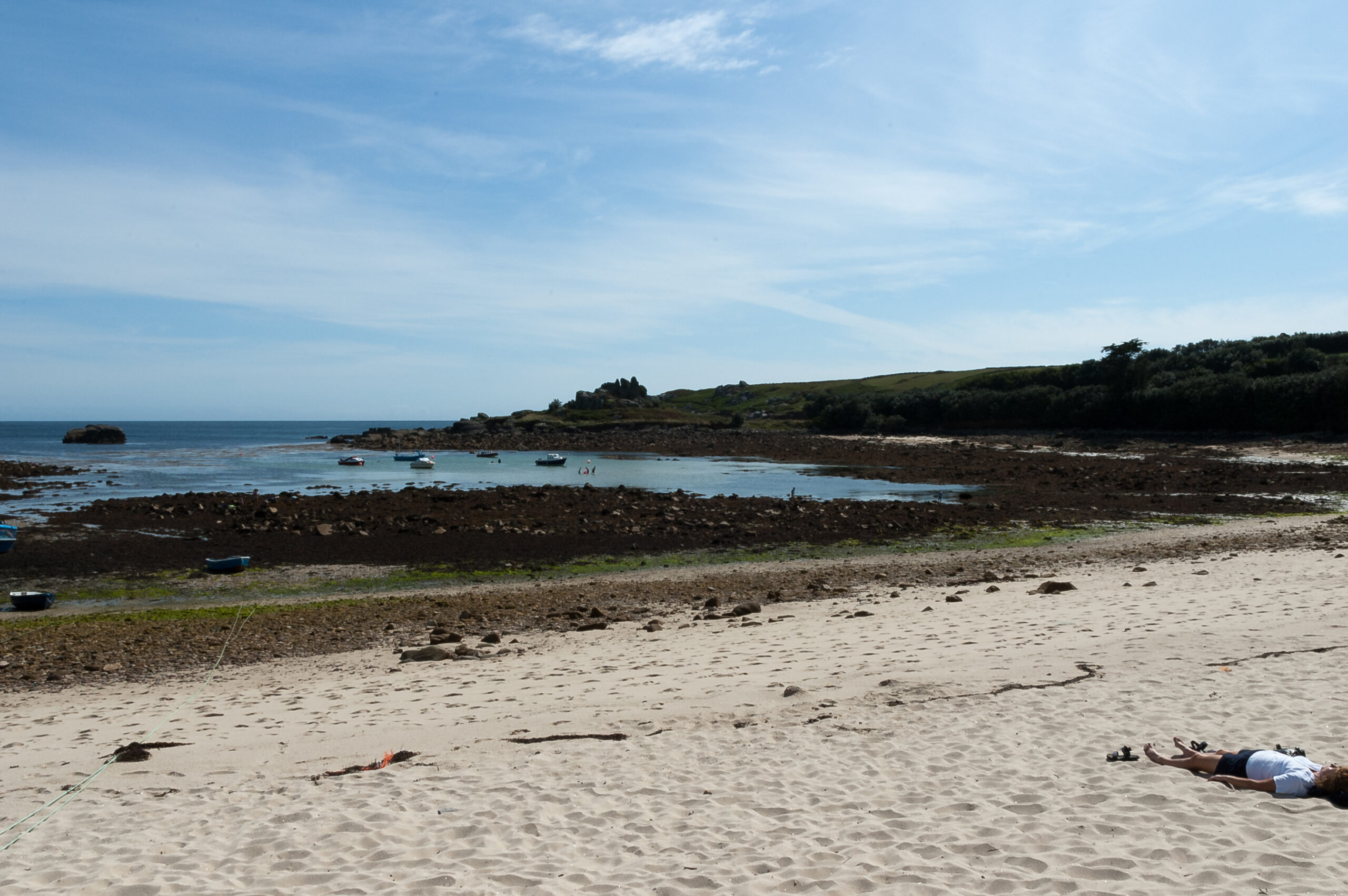
Further round the coast, Old Town Bay is a genuinely sheltered crescent tucked between Tolman Point and Peninnis Head — one of the calmer swimming spots on the island even when there’s a swell running elsewhere, and quieter than the beaches closer to Hugh Town simply because it’s a short walk further. Pelistry Bay, on the east coast, is sandy and open, with a low-tide sandbar out to Toll’s Island that’s worth timing a visit around. Porthloo, north of the harbour, is the one to head for if rockpooling rather than swimming is the plan — better rocks than sand.
None of St Mary’s beaches are more than a twenty-minute walk from Hugh Town, which makes the island the easiest base for a beach-hopping day without touching a boat at all — start at Porthcressa in the morning, walk the coast path round to Old Town Bay for lunch, and finish at Pelistry if the tide’s right for Toll’s Island. It’s a genuinely good day out on foot, and worth doing even if the plan for the rest of the trip is off-island beaches every other day.
Tresco’s beaches
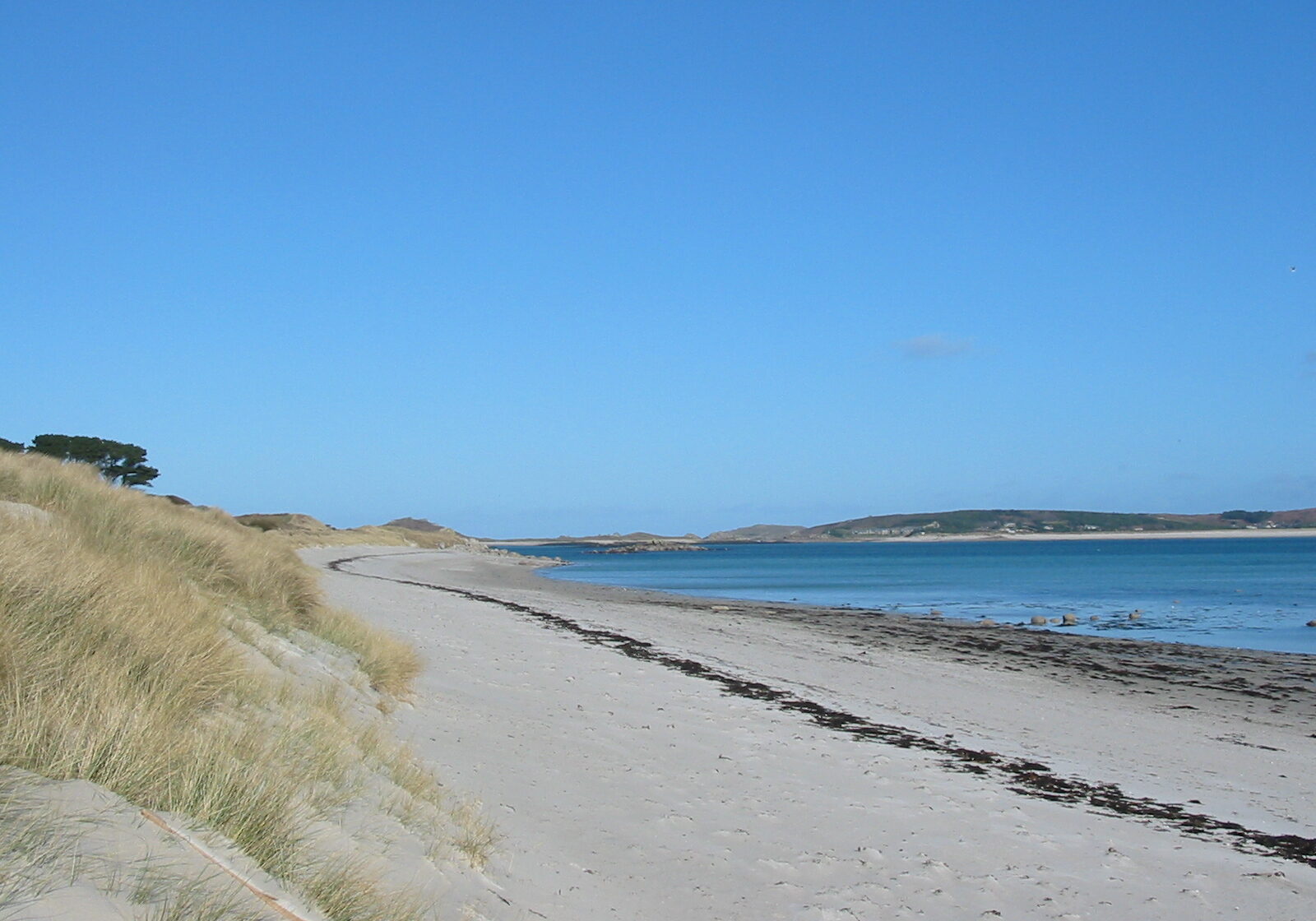
Tresco’s visitors mostly come for the Abbey Garden, but the island’s beaches are reason enough on their own. Pentle Bay, on the sheltered east coast, is a half-mile crescent of white sand backed by low dunes, facing calm, shallow water — a serious contender for the best beach in the whole archipelago, and a favourite for shell collecting. It sits on the opposite shore from where the boats land and from the Abbey Garden itself, which keeps it quieter than the numbers visiting Tresco each day would suggest; a ten- to twenty-minute walk is all that separates the crowds from the calm.
Appletree Bay, also on the sheltered side, offers a similar combination of white sand and still water, and between the two beaches most visitors find at least one stretch of sand with room to spread out even on a warm August afternoon. The exposed western and northern shores of Tresco are wilder and less suited to swimming, but worth walking for the scenery alone.
Most visitors reach Tresco’s beaches as a half-day add-on to the Abbey Garden, and that pairing works well — the garden takes a couple of hours to do properly, and either Pentle Bay or Appletree Bay is close enough to fold in afterwards without rushing either one. Bring a picnic if you can; Tresco’s food options are limited outside the garden’s own cafe, and there’s something to be said for eating lunch on a beach that good rather than under a roof.
Bryher’s beaches
Rushy Bay, on Bryher’s sheltered south side, is the beach most people mean when they talk about Bryher’s beaches — calm, white sand, looking directly across to the uninhabited island of Samson. It’s an easy, flat walk from the quay and a reliable choice regardless of what the Atlantic is doing on the other side of the island. Green Bay, nearby, is shallow and placid enough for kayaking over the sand at low tide, with hire available close by.
Turn to the northwest and the character flips entirely. Hell Bay takes the full force of the Atlantic, and while it’s not a beach for swimming in anything but the calmest conditions, it’s one of the most dramatic stretches of coast in Scilly to simply stand and watch — genuinely wild in a way that nowhere on mainland Cornwall quite manages, storm surf included.
Bryher rewards splitting a day between its two faces rather than settling on one beach for the whole visit — half an hour at Rushy Bay in the morning, a walk up to Watch Hill for the view, then down to watch the Atlantic doing whatever it’s doing at Hell Bay before catching the boat back. The island is small enough that this whole loop takes an easy couple of hours on foot.
St Martin’s beaches
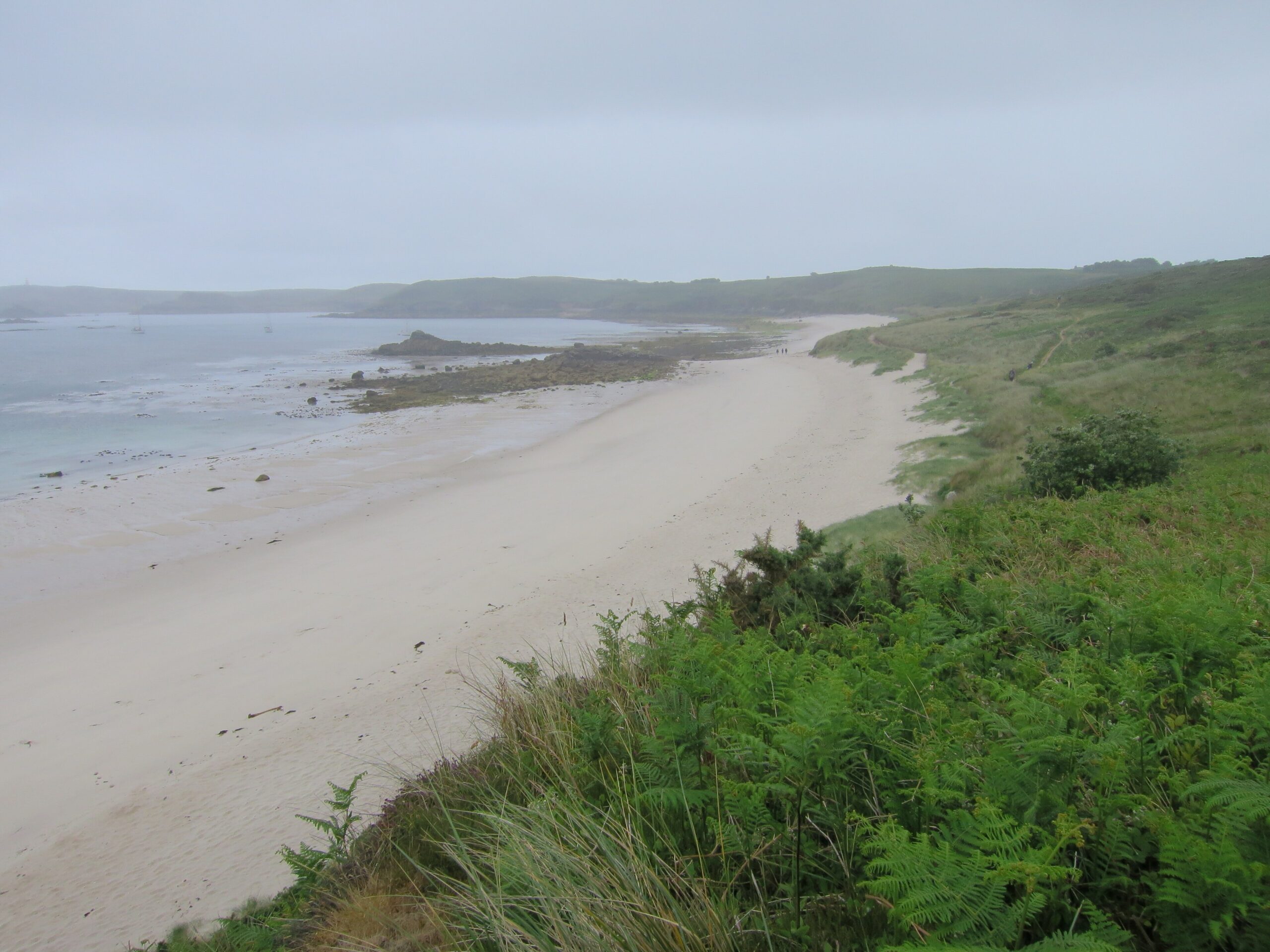
If beaches are the entire reason for the trip, St Martin’s is the island to prioritise. Great Bay, on the north coast, has been ranked among the best beaches in the whole of the UK — an enormous stretch of pale sand backed by dunes that stays close to empty even during the school summer holidays, purely because so few visitors make it this far out. Lawrence’s Bay runs almost the entire length of the island between Lower Town and Higher Town, giving a genuine choice of where to set up for the day rather than a single fixed spot. Par Beach, the crescent visible as the boat comes into Higher Town quay, is the first sand most visitors reach and a convenient choice if you don’t want to walk far.
Because St Martin’s has so much sand relative to its size, it’s rarely worth debating which specific beach to head for — pick a direction from wherever the boat lands and you’ll be on sand within minutes. The bigger decision is how far to walk before you stop, and on a quiet day it’s entirely reasonable to keep walking past three or four perfectly good spots simply because the next one looked even emptier.
St Agnes and Gugh beaches
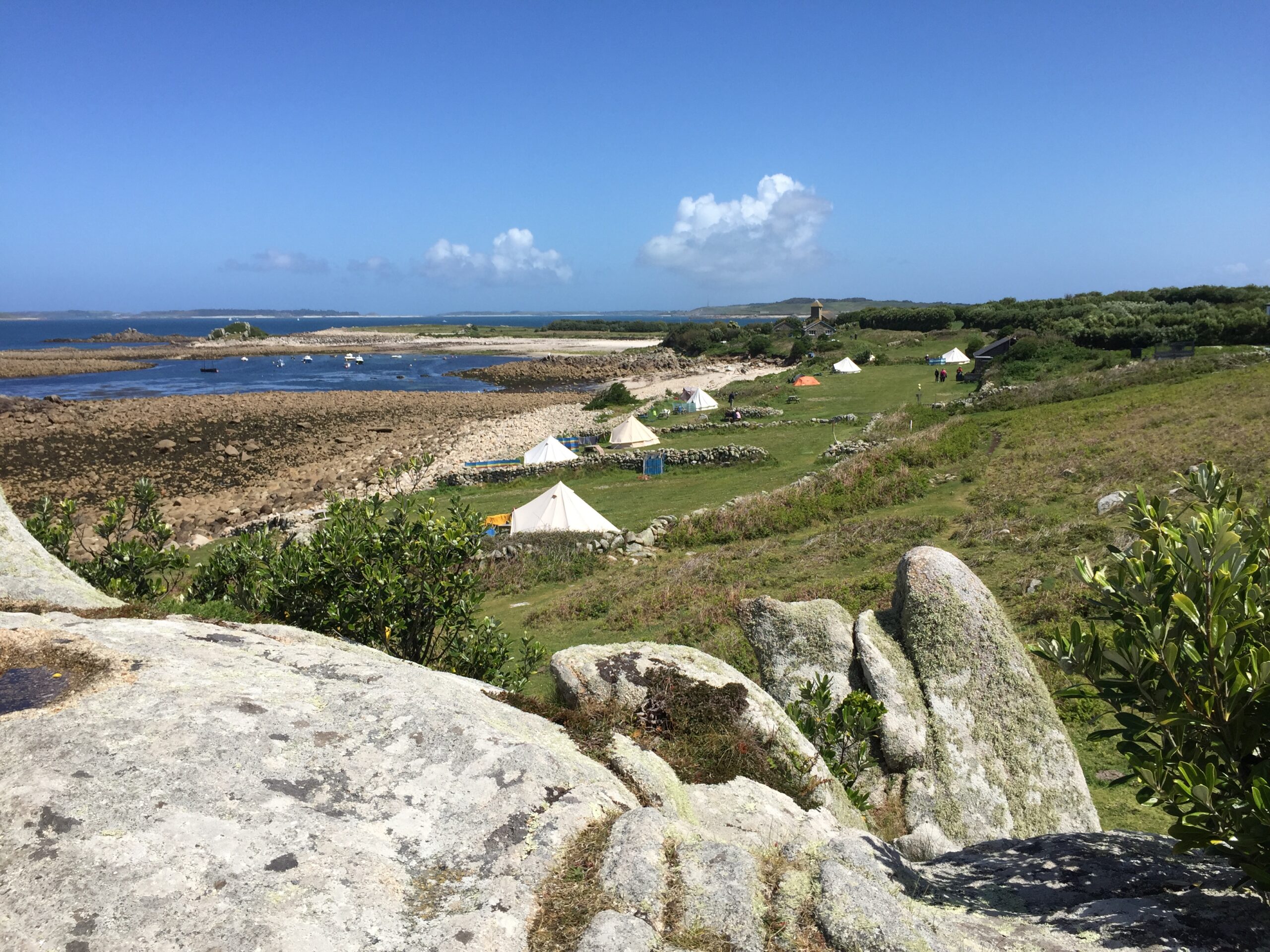
St Agnes is more rugged than the sand-focused islands, with granite outcrops breaking up the coastline rather than long open beaches. What sand there is tends to be tucked into small coves rather than sweeping bays, and the payoff is a sense of having found somewhere genuinely few other visitors bother with. The sand bar connecting St Agnes to the tiny island of Gugh is a beach in its own right at low tide — walk across, explore Gugh’s quiet coastline, and walk back before the tide claims the crossing again.
What St Agnes lacks in headline sand it makes up for in atmosphere — this is the most southwesterly inhabited point in England, and the small coves here feel genuinely remote rather than merely quiet. It’s the island to choose on a day when you’d rather explore than simply lie on a towel, with Troytown Farm’s well-regarded ice cream as a fair reward for the walking.
When to go for the best beach weather
Scilly’s climate is milder than mainland Cornwall’s, thanks to its position further out into the Gulf Stream, but the same broad seasonal pattern applies: late May, June and early September tend to bring the most reliable combination of settled weather and manageable crowds, while the sea itself is actually warmest in September rather than at the height of summer — a lag that catches a lot of first-time visitors out. July and August bring the most reliable sunshine and the busiest islands, though “busy” on Scilly still means a beach with a handful of other people on it rather than a packed mainland car park. For a fuller month-by-month breakdown of what to expect, the Cornwall weather guide covers the wider seasonal picture that Scilly broadly follows, a few degrees milder throughout.
Safety and sensible planning
Scilly’s beaches are, on the whole, gentler than mainland Cornwall’s Atlantic-facing surf beaches — most of the best swimming spots sit in sheltered channels between islands rather than facing open ocean directly. That doesn’t mean no currents: tidal streams between the islands can run surprisingly fast, particularly around headlands and the narrower channels, and there are no lifeguards on any Scilly beach. Swim within your ability, keep half an eye on the tide if you’re anywhere near a sandbar or causeway, and treat the calm appearance of a place like Pentle Bay or Rushy Bay as an invitation rather than a guarantee.
Facilities are minimal by mainland standards — expect a car park at best on St Mary’s, and often nothing at all on the off-islands beyond a footpath from the quay. Pack what you need for the day; the nearest shop may be a boat ride away. Sun cream and a hat matter more than most visitors expect too — the lack of shade on most of these beaches, combined with reflected light off pale sand and water, catches out people used to the more sheltered coves of the mainland.
Frequently Asked Questions
What is the best beach on the Isles of Scilly?
Pentle Bay on Tresco and Great Bay on St Martin’s are the two most consistently recommended, both for the quality of the sand and the reliability of calm, swimmable water. Which suits you better depends on whether you’d rather pair a beach day with the Abbey Garden (Tresco) or a full off-island beach trip (St Martin’s).
Are Scilly beaches safe for swimming?
Most are gentler than mainland Cornwall’s surf beaches, sitting in sheltered inter-island channels, but none are lifeguarded. Check tides, particularly near sandbars and causeways, and swim within your ability.
Which Scilly beach is best for young children?
Porthcressa on St Mary’s is the most convenient, being a short walk from Hugh Town with cafes close by. Rushy Bay on Bryher and Pentle Bay on Tresco are both very sheltered and shallow, though further from amenities.
Do you need to pay to park at Scilly beaches?
Only on St Mary’s, where a small number of car parks serve the more popular beaches; most off-island beaches are reached on foot from the quay and have no parking to worry about.
Are dogs allowed on Isles of Scilly beaches?
Rules vary by beach and season, and are generally more relaxed than the mainland’s summer restrictions — check local signage on arrival, since the off-islands set their own local guidance rather than following a single blanket policy.
Whichever island you end up on, the pattern repeats: walk a little further than the first beach you see, and the crowd thins to nothing. That’s the real difference between Scilly and the mainland — not that the sand is better, though it often is, but that there’s enough of it, and few enough people, that you can usually have a stretch of it entirely to yourself.
Photo credits: Pentle Bay, Tresco: Pentle Bay, Tresco 2003.jpg by Tom Corser, CC BY-SA 3.0 (licence). Old Town Bay, St Mary’s: Isles of Scilly, St Mary’s – Old Town beach and bay – geograph.org.uk – 8033998.jpg by Chris Gorringe, CC BY-SA 2.0 (licence). Great Bay, St Martin’s: Beach at Great Bay – geograph.org.uk – 5446282.jpg by Oast House Archive, CC BY-SA 2.0 (licence). Troytown Farm, St Agnes: Troytown Farm campsite – geograph.org.uk – 5391517.jpg by Andrew Abbott, CC BY-SA 2.0 (licence).