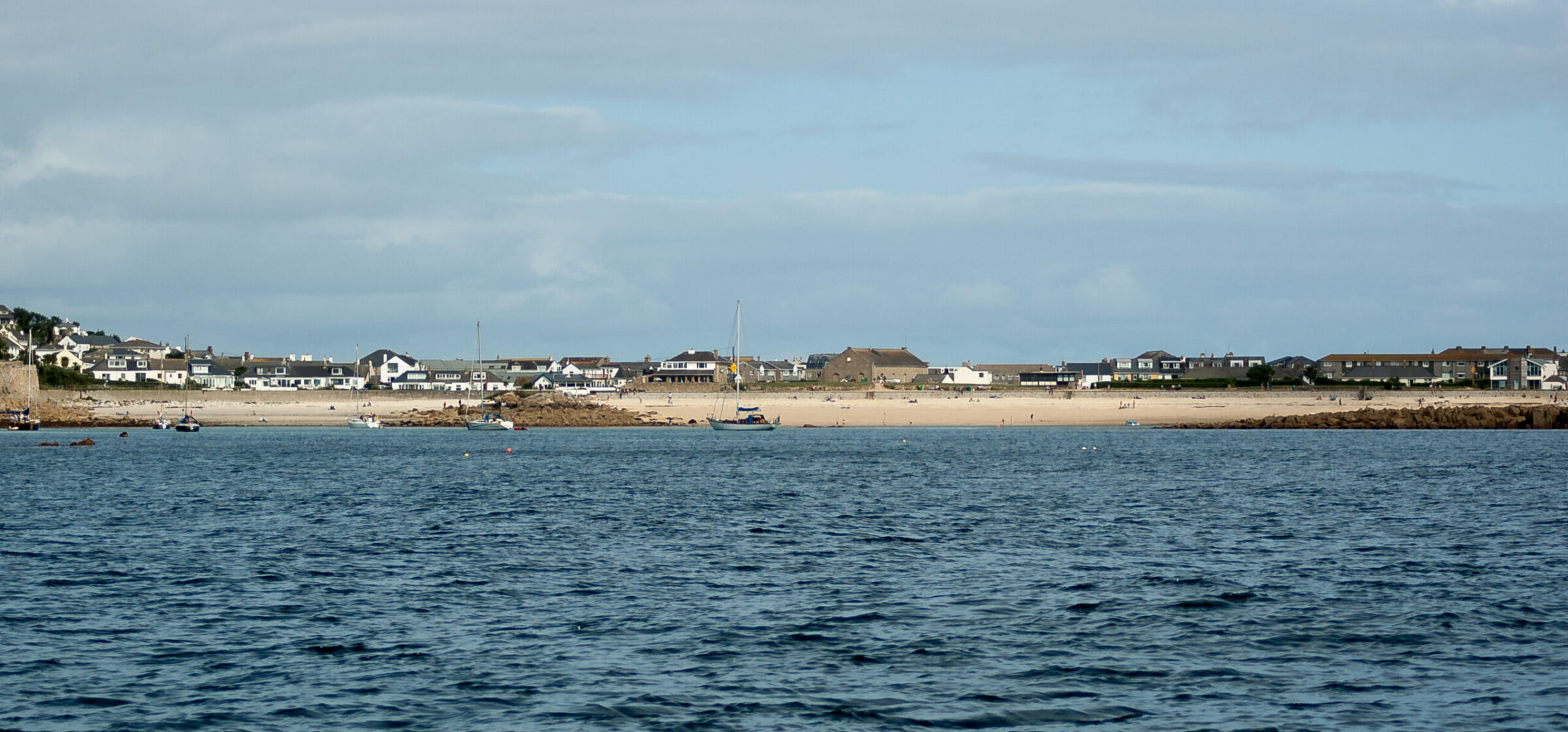
Step off the Scillonian III at the quay in Hugh Town and the first thing you notice is the scale of it: St Mary’s is the largest of the Isles of Scilly, and it is still small enough to walk around in an afternoon if you keep your head down and don’t stop for the beaches. Most people don’t keep their head down. That’s rather the point of coming.
St Mary’s is where nearly everyone starts a trip to the Isles of Scilly, whether they’re staying for a week or landing on a day return. It has the only sizeable town in the archipelago, the only bank, the widest choice of places to eat, and the quay that every off-island boat and every inbound ferry uses. If you’re only visiting St Mary’s and nowhere else in Scilly, you’ll still see a fair cross-section of what the islands do well: granite headlands, prehistoric burial chambers older than Stonehenge, a beach practically at the door of every pub, and a pace of life that makes mainland Cornwall look frantic by comparison.
Getting to St Mary’s
Two ways in: sea and air. The Scillonian III sails from Penzance, roughly March to November, six days a week (seven at the height of summer). It leaves Penzance at 09:15, takes two hours forty-five minutes, and gets you to St Mary’s quay around midday having passed the Minack, Land’s End and St Michael’s Mount on the way. Day-trip fares run from £35 for an adult, £17.50 for a child, £10.50 for an infant and £15 for a dog — though anyone doing the round trip in a single day is better served by reading up on day-tripping to Scilly before they book, since the timings only leave a few hours ashore. If you’d rather not think about the crossing — it can get lively where currents meet off the Western Rocks — Skybus flies into St Mary’s Airport year-round from Land’s End (20 minutes), Newquay (30 minutes) and Exeter (an hour), on 19-seat Twin Otters. Fog is the one thing that grounds flights with any regularity; build a buffer day into a short trip if you can, and check the current luggage allowance before you pack, since both the ferry and the plane cap it well below what you’d get flying long-haul.
However you arrive, you land within walking distance of everything in Hugh Town. There’s no need to hire a car, and nowhere much to hire one anyway — most visitors get around on foot, by bike, or on the small open-top tour bus that loops the island in summer.
Hugh Town: the island’s only real town
Hugh Town sits on a narrow isthmus, with a beach on each side — Town Beach facing the harbour and Porthcressa facing south — which means you’re never more than a couple of minutes from sand whichever direction you walk. The town itself is compact: a bank, a post office, a Co-op, a handful of independent shops selling flowers, art and Scilly-made gifts, a scatter of pubs, and enough cafes and restaurants that you won’t eat the same meal twice in a week. It’s not a place you’d call polished. It’s a working island town with a ferry to run and a fishing fleet to maintain, and the informality is most of the charm.
Porthcressa is the beach most people gravitate to first: sand, shallow water for children, a cafe-lined promenade behind it, and views out towards the Garrison headland. It’s sheltered enough for swimming most of the year and busy enough in August that you’ll want to arrive before mid-morning for a decent spot. Porthmellon, on the north side near the football pitch, faces the other way and is where the island’s water sports centre operates — paddleboard and dinghy hire, windsurfing lessons, and calmer water when the wind is in the south.
The Garrison and Star Castle
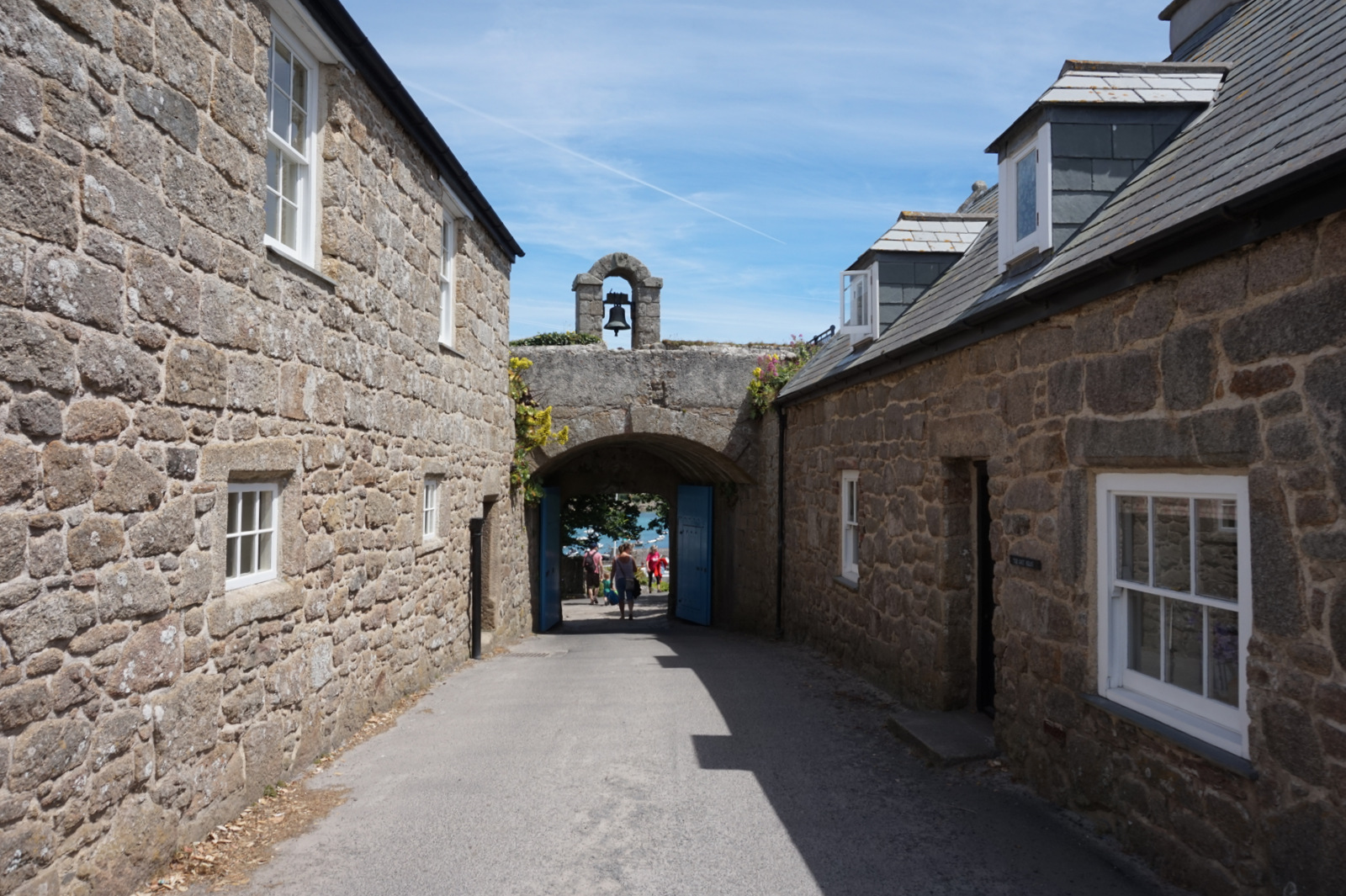
Above Hugh Town, filling the whole of the headland, is the Garrison — a ring of 17th- and 18th-century defensive walls, gun batteries and tunnels built to protect the harbour from a French or Spanish landing that, in the end, never came. It’s now a walking trail rather than a military site, and one of the best short walks on the island: allow forty-five minutes to an hour to circuit the walls, with views back over Hugh Town, out to the Western Rocks, and across to Tresco and the other off-islands on a clear day. At its heart is Star Castle, an eight-pointed fort built in 1593 for Elizabeth I, converted long ago into a hotel and restaurant — you don’t need to be a guest to walk the walls around it, though a drink on the terrace afterwards is a fair reward for the climb.
Walking the coast path
The St Mary’s coast path runs the full 16 kilometres (just under 10 miles) around the island’s perimeter, and it’s the longest circular walk anywhere in Scilly. Done in one go it’s a full day with stops; most visitors split it into two or three shorter sections instead, using the island’s few roads to cut back to Hugh Town when they’ve had enough. The eastern stretch, past Porth Hellick and Pelistry Bay, is the quietest and the most rewarding for birdwatching — Porth Hellick’s freshwater pool draws waders that don’t bother with the beaches. Pelistry itself is a proper sandy bay with a low-tide sandbar out to Toll’s Island, walkable for an hour either side of low water and cut off completely the rest of the time; check the tide before you commit to the crossing.
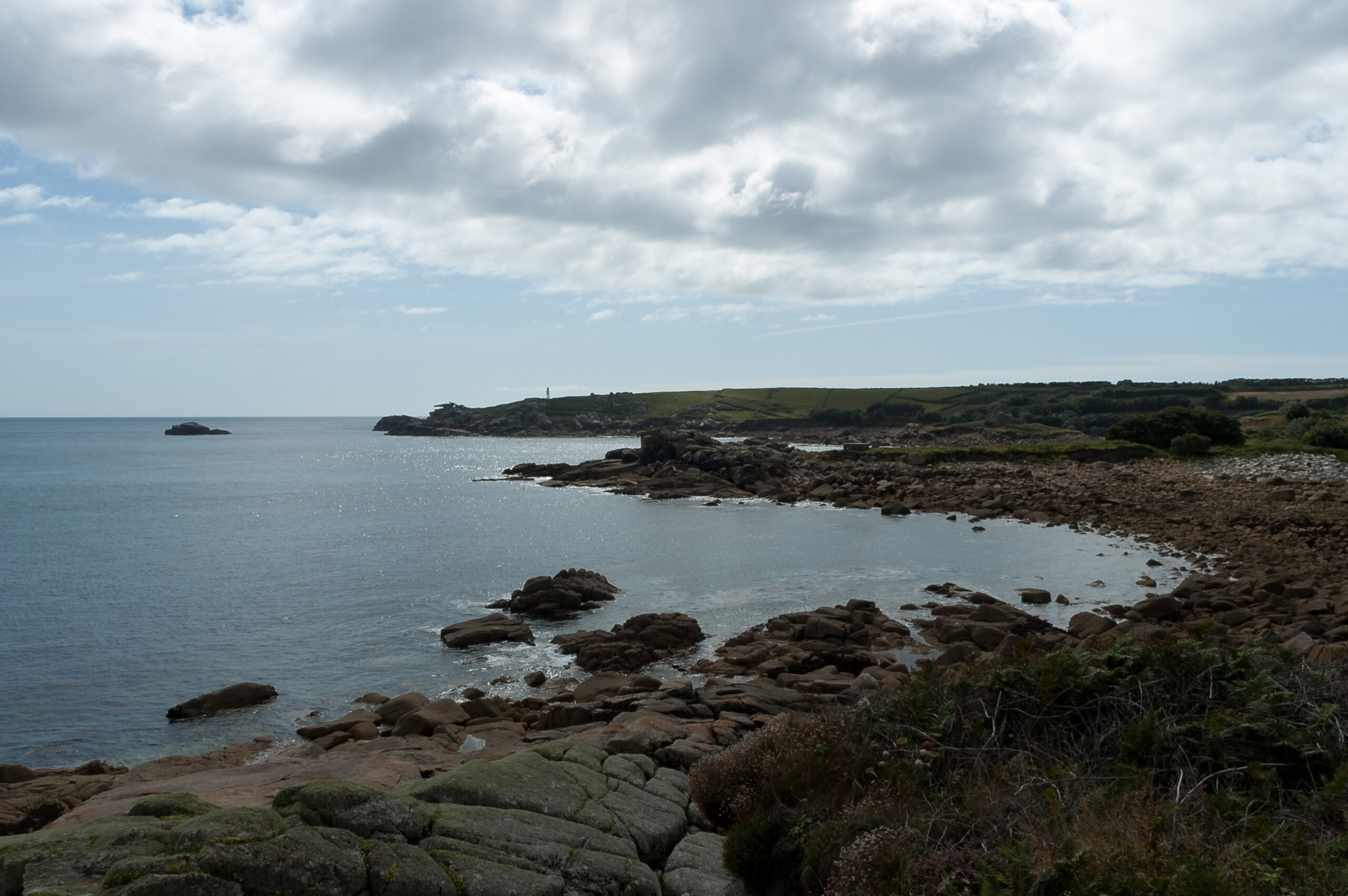
The southern tip, around Peninnis Head — the rocky, lighthouse-topped headland below — is where the granite gets genuinely strange — wind-carved boulders balanced and stacked in shapes that look deliberate until you remember nobody built them. There’s a lighthouse out here too, automated now, marking the southernmost point of the island. It’s a good sunset spot if you don’t mind walking back in the dark with a torch, and it rewards the kind of unhurried looking that most of Scilly does: there’s no interpretation board explaining the rock shapes, just weather and geology left to get on with it over several million years.
Wildlife along the path is part of the draw rather than an afterthought. Porth Hellick’s pool and the quieter eastern shore attract migrant waders that the county’s birdwatching regulars travel out specifically to see, and grey seals haul out on the rocks off the more sheltered coves most mornings if you’re walking early and quietly enough not to disturb them.
Old Town and the ancient sites
Old Town, on the south side of the island, was Scilly’s capital long before Hugh Town existed, and it still has the feel of an older, quieter settlement — a scatter of houses, a beach, and St Mary’s Old Church, where the former prime minister Harold Wilson is buried in the churchyard, having asked to be laid to rest on the islands he loved.
Further round the coast, near the airport, St Mary’s has one of the densest concentrations of prehistoric remains in the country. Halangy Down Ancient Village is a cluster of interconnecting Iron Age and Romano-British stone houses, still legible as rooms and doorways after two thousand years, spread across a hillside looking out over the sea towards the off-islands.
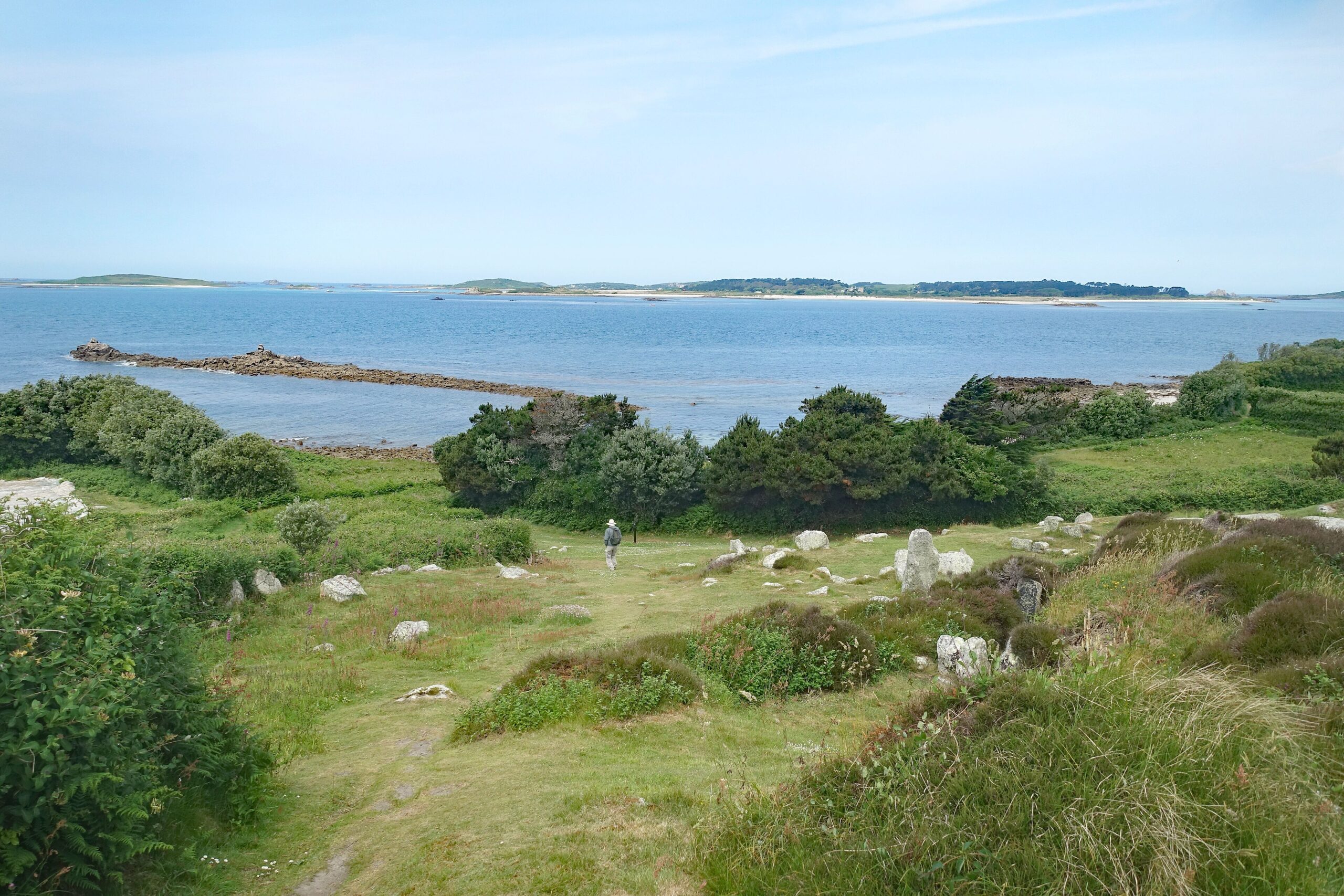
Immediately above it, Bant’s Carn is a Bronze Age entrance grave with its massive capstones still in place — you can duck inside. Further north at Innisidgen, two more Bronze Age burial chambers sit above the coast path with a view out to the other islands that their builders presumably thought worth dying for. None of these sites charge admission and none are fenced off; treat them with the same care you’d want your own history treated with.
Beyond the beaches: what else there is to do
St Mary’s rewards a slower pace better than a checklist, but a few things are worth building a day around. Carreg Dhu Garden, a subtropical community garden planted into an old quarry, is free to visit and a genuinely lovely half hour, especially if you’ve come from a part of the mainland where nothing this exotic survives a Cornish winter. Scilly Spirit Gin School in Old Town runs distillery tours and gin-making sessions if the weather turns. Holy Vale Wines has a cellar door worth the walk out. For something more active, Kernow Coasteering and Sailing Scilly both run trips from St Mary’s — coasteering along the granite coves, or sea kayaking out towards the uninhabited islands where the seals haul out.
Rockpooling is close to a religion here, and Scilly Rockpool Safari runs guided sessions for families that go well beyond what you’d find turning over stones on your own — worth booking if you have children who’ve exhausted the beach after an hour.
Eating in Hugh Town
You won’t go hungry. Hugh Town has enough cafes, pubs and restaurants clustered around the harbour and along the Porthcressa front that most visitors eat well without needing to book far ahead outside peak summer weeks — though a table at the better places on a Saturday in August is still worth securing in advance. Expect fresh Scilly crab and lobster on most menus in season, a strong showing of pasties and cream teas for anyone who hasn’t had enough of those on the mainland, and at least one proper pub where the evening’s entertainment is simply watching the boats come in. Juliet’s Garden Restaurant, up by Porthloo with views over the harbour, is popular enough to need planning for at busy times, and Star Castle‘s dining room is the obvious choice for anyone after a proper occasion after a day on the coast path.
Self-caterers are well looked after too: the Co-op in Hugh Town covers essentials, and a couple of smaller shops sell local fish, crab and bread that’s usually better than anything you’d have packed. Prices across the island run a little higher than the mainland, which is only sensible given everything arrives by boat or plane — factor that in rather than being caught out by it.
Where to stay and when to go
Accommodation on St Mary’s ranges from Star Castle’s period rooms down to simple guesthouses and a couple of well-placed campsites, and nearly all of it sits within walking distance of Hugh Town given how small the island is. The trade-off for staying on St Mary’s rather than one of the quieter off-islands is exactly the one you’d expect: more choice and easier logistics, less silence. Book well ahead for the school summer holidays — accommodation on Scilly is limited by definition, and it sells out earlier than equivalent mainland Cornwall stays.
Late May, June and early September tend to bring the best combination of settled weather and manageable crowds; the sea is at its warmest in September, several degrees up on June despite the air temperature suggesting otherwise. Winter on St Mary’s is a genuinely different trip — many businesses close or reduce hours, the Scillonian doesn’t run at all, and Skybus becomes the only way in, weather permitting. It suits a particular kind of visitor rather than a first-timer.
Island hopping from St Mary’s
Because St Mary’s is the transport hub of the archipelago, it’s also the easiest base for exploring the off-islands. Tripper boats run by the St Mary’s Boatmen’s Association — ten independently owned launches working out of the quay — leave for Tresco, Bryher, St Martin’s and St Agnes from around 10am most days between Easter and the end of October, with fares posted on the board at the quay rather than online. A day trip to Tresco to see the sub-tropical Abbey Garden is the single most popular add-on; St Agnes and Bryher suit anyone who wants a beach with nobody else on it.
Frequently Asked Questions
Is St Mary’s Isles of Scilly the best island to stay on?
For a first visit, yes, in the sense that it’s the most practical: the widest choice of accommodation, the most restaurants, and the easiest onward travel to everywhere else. If you want total quiet and don’t mind fewer amenities, Bryher or St Agnes are usually preferred by repeat visitors.
How long do you need on St Mary’s?
Two to three nights lets you walk most of the coast path in sections and still have a day free for at least one off-island trip. A single day-trip visitor can comfortably see Hugh Town, the Garrison and one or two beaches before the last boat back.
Do you need a car on St Mary’s?
No — there’s very little to hire, and the island is small enough to cover on foot or by bike. A few taxis operate for luggage and for anyone who can’t manage the walk from the quay.
Can you swim at the beaches on St Mary’s?
Yes, and most people do. Porthcressa and Porthmellon are the most sheltered and the easiest to reach from Hugh Town; Pelistry Bay is quieter and better for a full day out, but check the tide if you plan to walk out to Toll’s Island.
Is St Mary’s Airport the same as the Scillonian ferry terminal?
No — the airport is a separate site a short taxi ride from Hugh Town, while the Scillonian docks directly at the town quay. If you’re flying in and sailing out (or vice versa), factor in the transfer between the two.
St Mary’s isn’t trying to be dramatic, and that’s what makes it work as an introduction to Scilly: a proper town, a full day’s walking, five thousand years of continuous history within a couple of miles, and a boat to somewhere quieter waiting at the quay whenever you’re ready for it.
St Mary’s is also the hub for exploring the rest of the archipelago. Tripper boats leave the quay most mornings for the off-islands — see our guide to island hopping the Isles of Scilly for how the boats work and how to plan a day out to Bryher, St Martin’s or St Agnes.
Deciding where to base yourself matters as much as what you plan to see. Our guide to where to stay on the Isles of Scilly covers hotels, B&Bs, self-catering and camping on St Mary’s and every off-island, plus how far ahead to book.
Photo credits: Hugh Town seen from the sea: Isles of Scilly, St Mary’s – Porthcressa Beach by Chris Gorringe, CC BY-SA 2.0 (licence). Gateway through the Garrison walls: Garrison Hill, Hugh Town, St Mary’s by Ian S, CC BY-SA 2.0 (licence). Halangy Down ancient village: Halangy Down Ancient Village by Des Blenkinsopp, CC BY-SA 2.0 (licence). Peninnis Head: Isles of Scilly, St Mary’s – Looking across Tolman Point towards Peninnis Head by Chris Gorringe, CC BY-SA 2.0 (licence).