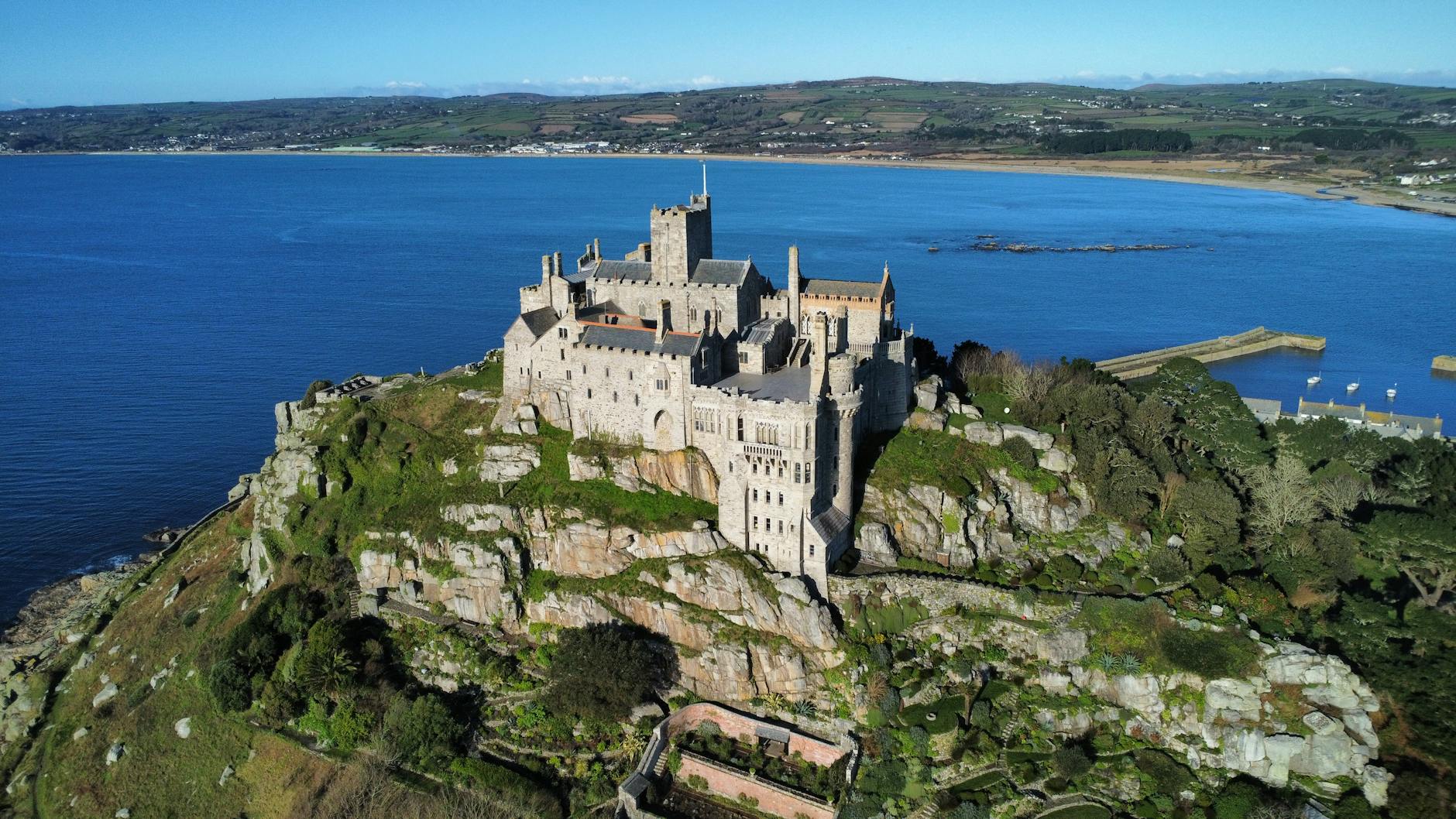
If Cornwall has a single image that stops first-time visitors in their tracks, it is the sight of St Michael’s Mount rising from the waters of Mount’s Bay, a fairytale castle crowning a rocky island, reached by a cobbled causeway that appears and vanishes with the tide. I never tire of directing guests to Marazion to see it, and the reaction is always the same: disbelief that somewhere so storybook-perfect is real. This guide to St Michael’s Mount Cornwall covers everything you need for a smooth visit, from the all-important tide times and causeway crossing to the castle, the subtropical gardens, tickets, boats and the long, layered history that makes the Mount so much more than a pretty view.
The single most important thing to understand before you go is that the Mount is governed by the tide. Get your timing right and the visit is magical; get it wrong and you may find yourself stranded on the wrong side of the water. So let us start there.
Tides and the Causeway: The Key to Your Visit
St Michael’s Mount is a tidal island, joined to the mainland at Marazion by an ancient granite causeway that is only walkable for around four hours a day, roughly the hours either side of low tide. At low water you can stroll across the cobbles in about fifteen minutes, treading the same path used by pilgrims, traders and villagers for centuries. As the tide rises, the causeway disappears beneath the sea and the island can only be reached by a short boat trip.
This rhythm shapes every visit, so checking the tide times before you travel is absolutely essential, and they are published on the official St Michael’s Mount website along with the causeway opening hours, which vary day by day. My standard advice to guests is to plan to walk across the causeway near low tide and either return the same way or, if the tide has come in, take the boat back, which is a small adventure in itself. Do not assume the causeway will be open when you arrive; build your day around the tide, not the other way around.
Getting There: Causeway and Boats
The Mount sits just off Marazion, a small town a few miles east of Penzance on the south coast. You park in Marazion (the car parks can fill in summer, so arrive early) and cross either on foot via the causeway at low tide or by the small passenger ferry when the tide is high enough to cover it. The boats run only when the causeway is submerged, take about six minutes, and carry a small charge for everyone, including National Trust members. The boat season runs through the main visitor months and stops for the winter, so check in advance if visiting out of season.
Marazion itself is easily reached by car, by bus from Penzance, and Penzance is the end of the main railway line, so the Mount is very doable as a car-free day out. For more on exploring this corner without a car, see our guide to getting around Cornwall without a car, and our Penzance guide for the wider area.
A Layered History: Monastery, Fortress and Family Home
St Michael’s Mount has been a sacred and strategic site for well over a thousand years, and its story is one of the richest in Cornwall. In legend it is linked to the giant Cormoran, said to have built the Mount and terrorised the countryside until slain by a local boy, Jack, in the tale of Jack the Giant Killer. In recorded history, the Mount was given to the Benedictine monks of Mont-Saint-Michel in Normandy, its near-twin across the Channel, in the 11th century, and a priory was established here, drawing pilgrims who came to worship at this dramatic holy place.
Over the centuries the Mount evolved from monastery to fortress, playing a part in the Wars of the Roses, the Cornish rebellions and the Civil War, its commanding position over Mount’s Bay making it militarily important. In 1659 it was bought by the St Aubyn family, whose descendants live there still, and it was they who transformed the medieval and military buildings into the remarkable castle home you can visit today. The Mount is now cared for by the National Trust in partnership with the family, a living house as well as a historic monument, which gives it a warmth that pure ruins lack.
Exploring the Castle
The climb up to the castle is steep and the path cobbled and uneven, but the reward is a series of atmospheric rooms layered with the history of monks, soldiers and the St Aubyn family. Highlights include the medieval church at the summit, still in use, with its breathtaking views over the bay; the armoury, with its displays of weapons and armour; the elegant Blue Drawing Rooms created in the rococo Gothic style; and the various halls and chambers that tell the story of the island’s many lives. Throughout, windows frame astonishing views out over the sea and back to the Cornish coast.
It is worth knowing that the castle interior involves a fair number of steps and steep sections, reflecting its island-fortress nature, so it is not suitable for everyone; the gardens and the harbour village, however, are more accessible. The church at the top is a particularly special place to pause, with a sense of centuries of worship in one of the most spectacular settings imaginable.
The Subtropical Gardens
Clinging impossibly to the rocky slopes of the island, the gardens of St Michael’s Mount are a wonder in their own right. Sheltered by the Mount and warmed by the mild Cornish climate, they support an astonishing range of subtropical and Mediterranean plants that cling to the granite in terraces seemingly defying gravity. Succulents, aeoniums, agapanthus and a riot of colourful planting tumble down towards the sea, and the gardeners famously abseil down the rock faces to tend the steepest beds.
The gardens are open on selected days and have their own admission, separate from the castle, so check which days they are open when planning, as they are not accessible every day of the week. For garden lovers they are unmissable, and they connect beautifully to Cornwall’s wider reputation for spectacular gardens, explored in our guide to the best gardens to visit in Cornwall.
The Island Village and Harbour
At the foot of the Mount sits a tiny harbour village, still home to a small community, with a handful of cottages, a shop and cafes where you can pause for a Cornish cream tea with an unbeatable view. The harbour itself, where the boats dock at high tide, is a charming spot to explore, and wandering the village gives a sense of what life on this extraordinary island is actually like. It is one of the few inhabited tidal islands of its kind in the world, and that living quality is part of its magic.
Tickets, Booking and Practical Tips
Entry to the castle and gardens must be pre-booked online with a timed slot, and crucially this applies even to National Trust members, who enter free but still need to reserve a slot in advance, as tickets are not sold at the entrance. The boat fare and the Marazion parking charges are separate and apply to everyone regardless of membership. The castle is generally open from spring to autumn, with the gardens open on more limited days, so always check current opening days and book ahead, particularly in summer when slots go quickly.
To experience everything, the walk across, the village, the castle and the gardens, allow around four hours. Wear sturdy, flat footwear for the cobbled causeway and the steep, uneven castle paths, bring layers as the island is exposed, and time your crossing with the tide. If anyone in your party has mobility difficulties, read the accessibility information carefully in advance, as the cobbled causeway and steep climbs are genuinely challenging; our Cornwall accessibility guide has more. For help with the Marazion car parks, see our parking in Cornwall guide.
Best Time to Visit St Michael’s Mount
The Mount is at its best from late spring to early autumn, when the castle and gardens are open, the boats are running and the weather is kindest, with the gardens at their colourful peak in late spring and summer. Early and late in the day, and the shoulder months of May, June and September, offer the best balance of good conditions and smaller crowds. Even in winter, when the castle is closed, the view of the Mount from Marazion is spectacular and the causeway can sometimes be walked at low tide, so a trip to admire it from the shore is rewarding year-round. Match your visit to the tide and the season and you will not be disappointed; our guide to the best time to visit Cornwall can help.
Combining the Mount With the Far West
St Michael’s Mount sits at the heart of one of Cornwall’s most rewarding areas, and it pairs naturally with the rest of the far west. Penzance and its art and harbour life are a few minutes away, the fishing village of Mousehole and the working port of Newlyn are close by, and Land’s End, the Minack Theatre and Porthcurno’s turquoise beaches are a short drive on. Many visitors combine the Mount with these far-western highlights into a memorable day or two, as set out in our Cornwall 7-day itinerary. The Mount also makes a fine companion to a visit to the Minack, just along the coast, which shares the same dramatic far-western setting.
Legends and Living Traditions
Part of the Mount’s enduring appeal is the seam of legend that runs through it. The most famous tale is that of Cormoran, the giant said to have lived on the Mount and waded ashore to steal cattle, until a brave local lad named Jack dug a pit, lured the giant in and despatched him, earning his place in the story of Jack the Giant Killer. Visitors today can still spot the heart-shaped stone set into the path, said to be the giant’s heart, and children love hunting for it on the climb up. There are older legends too, of the Mount as the trading port the ancient world knew as Ictis, where Cornish tin was sold to Mediterranean merchants, a tradition that chimes intriguingly with the real archaeology of early Cornish trade. The Mount also retains genuine living traditions as the home of the St Aubyn family and a working community, with its own church services, and these layers of myth, history and ongoing life give the island a depth that few attractions can match.
Photographing St Michael’s Mount
The Mount is one of the most photographed sights in Cornwall, and for good reason. The classic shot is from the Marazion shore with the causeway leading the eye out to the island, best captured as the tide is part-way out and the cobbled path emerges glistening from the sea. Early morning light from the east lights the castle beautifully, while sunset can silhouette the Mount dramatically against the sky. Photographers also love the view from the South West Coast Path on either side of Marazion, which gives a higher angle over the bay. If you want that perfect causeway picture, check the tide so the path is visible, and arrive early to beat both the crowds and the harshest midday light. Even a simple phone snapshot from the beach tends to look like a postcard, such is the natural drama of the setting.
Where to Stay and Eat Nearby
Marazion and nearby Penzance offer a good range of places to stay, from seafront guesthouses with a view of the Mount itself to characterful inns and bed and breakfasts in the surrounding villages. Waking up to that island view across the bay is a treat, and staying locally lets you time your visit perfectly with the tide and beat the day-trippers. For food, the island village has cafes serving cream teas and light lunches with unbeatable views, while Marazion and Penzance have a strong selection of restaurants, harbourside pubs and cafes making the most of the local seafood. For more on choosing a base in this corner of Cornwall, see our Cornwall bed and breakfast guide.
Why St Michael’s Mount Is Unmissable
Of all the heritage sites in Cornwall, St Michael’s Mount is the one I most often urge guests not to miss, because it brings so much together in one place: jaw-dropping natural drama, a thousand years of history, a living castle and community, world-class gardens, and the simple magic of crossing the sea on foot to reach an island. Plan around the tide, book your tickets, allow plenty of time, and let the Mount cast its spell. It is, quite simply, one of the most extraordinary places in Britain, and a visit here is something most people remember for the rest of their lives.
Tips for a Stress-Free Visit
A handful of simple habits turn a potentially tricky tidal visit into a smooth one. Check the tide times and the castle and garden opening days together before you set off, and book your timed entry slot online in advance, members included. Arrive at Marazion early, both to secure parking and to enjoy the Mount before the crowds build. Decide your crossing plan in advance: walk over near low tide and either walk back or budget for the boat fare if the tide turns while you are on the island. Wear flat, sturdy shoes for the cobbles and the steep castle climb, pack a waterproof and a warm layer for the exposed island, and carry water and a snack. Allow more time than you think, as the climb, the gardens and the village all deserve unhurried attention. With the tide respected and the tickets booked, all that is left is to enjoy one of Cornwall’s true wonders.
Frequently Asked Questions
How do the tides affect visiting St Michael’s Mount?
The causeway from Marazion is only walkable for around four hours a day, near low tide. When the tide is high, the causeway is underwater and you must take a short boat. Always check the tide times and causeway hours on the official website before you go and plan your day around them.
Do National Trust members need to book St Michael’s Mount?
Yes. Members enter the castle and gardens free but must still reserve a timed slot online in advance, as no tickets are sold at the entrance. Boat fares and Marazion parking are separate charges that apply to everyone.
How long do you need to visit St Michael’s Mount?
Allow around four hours to walk across, explore the village, climb to the castle and see the gardens. The castle and gardens have separate admission and the gardens open on more limited days, so check before you go.
Can you walk to St Michael’s Mount?
Yes, across the cobbled causeway from Marazion at low tide, which takes about fifteen minutes. When the tide covers the causeway, a small passenger boat runs instead during the main season.