
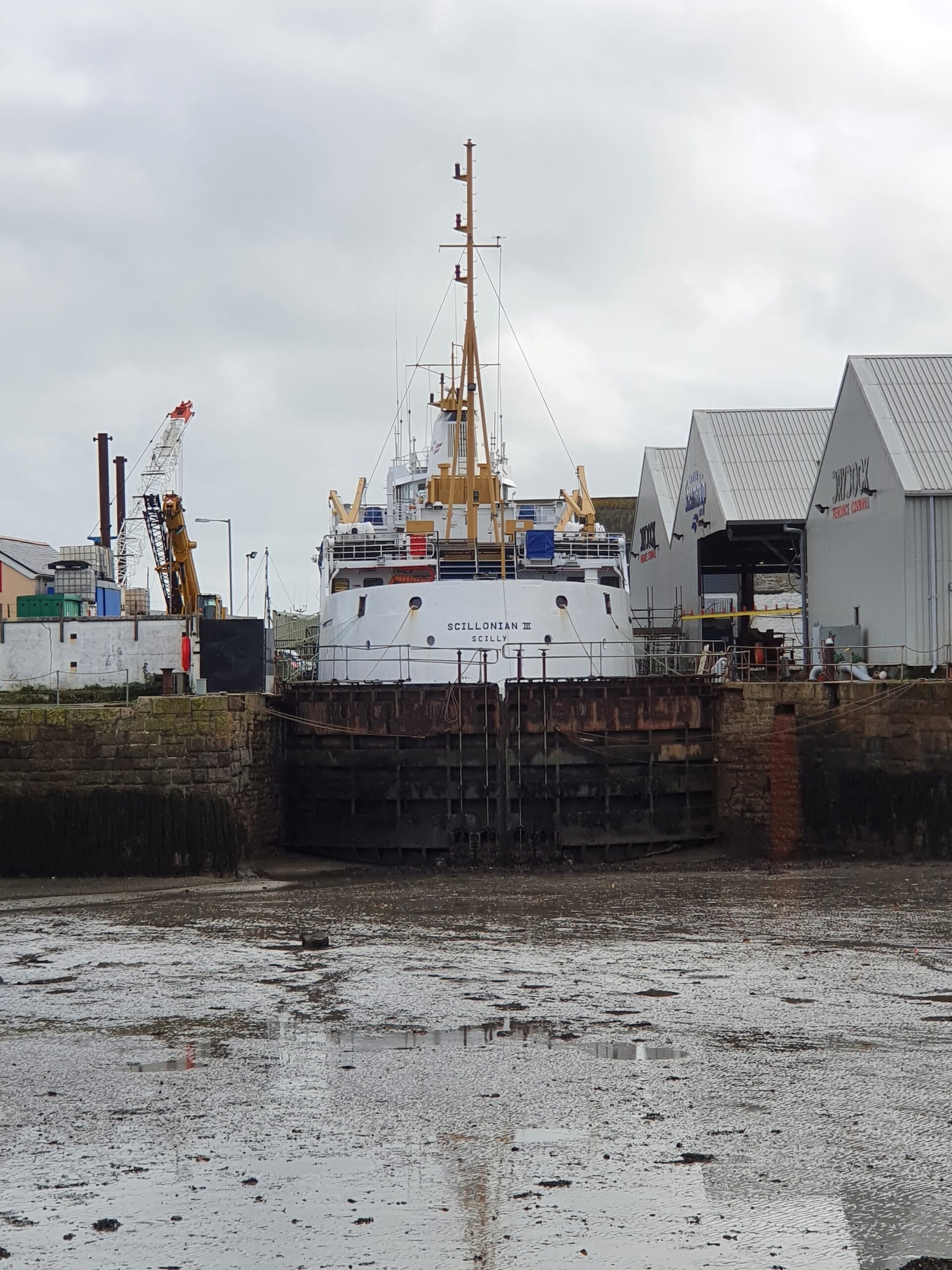
At a quarter to nine on Penzance quay the queue is already long, and it is an unusual queue. There are walkers with poles strapped to their rucksacks, a family arguing gently about whether St Martin’s is the red label or the blue one, a man with a crate of plants, a woman with a spaniel in a lifejacket, and a small cluster of people who have clearly done this many times and are quietly eating ginger biscuits. Behind them, white against the grey granite of the harbour wall, the Scillonian III is taking on its last pallets of supplies for the islands.
The ship is the lifeline of the Isles of Scilly as much as it is a way for visitors to get there — everything from groceries to building materials to holidaymakers’ suitcases goes out on it — and for most people it is the first real part of a Scilly trip. Locals and regulars just call it the Scillonian ferry, or the boat. This guide covers the timetable, the tickets, the luggage system, what it is like on board, the view on the way out, and the question everyone asks sooner or later: how rough does it get?
The Scillonian III at a glance
| Route | Penzance Quay to St Mary’s, Isles of Scilly |
|---|---|
| Season | Roughly March to November |
| Frequency | Six days a week, seven in high season |
| Outbound | Departs Penzance 09:15, arrives St Mary’s around 12:00 |
| Return | Departs St Mary’s 16:30, arrives Penzance around 19:10 |
| Crossing time | About 2 hours 45 minutes |
| Day-trip fares from | £35 adult, £17.50 child, £10.50 infant, £15 dog |
| Luggage | 15 kg per passenger |
| Check-in | Opens 1 hour before sailing, closes 15 minutes before |
Times and fares can change with the season and the tide, so check the current timetable before you plan anything around them. The rhythm, though, has been the same for years: out in the morning, back in the evening.
How the timetable works
The Scillonian does one round trip a day. She leaves Penzance at 09:15, reaches St Mary’s at about midday, lies alongside the quay in Hugh Town through the afternoon while she unloads and reloads, and sails back at 16:30, reaching Penzance at around ten past seven in the evening.
That shape makes her useful in two quite different ways. For people staying on the islands, it means arriving at lunchtime with the afternoon to settle in, and leaving after a last morning. For day-trippers, it gives about four and a half hours ashore on St Mary’s — enough to walk into Hugh Town, eat lunch, walk a stretch of coast path or the Garrison walls, and get back to the quay in good time.
The season runs from roughly March to November. Outside it, there is no passenger ferry at all, and the only way to reach the islands is by air. Within the season the ship sails six days a week, adding the seventh in the busiest weeks, and the exact pattern of sailing days varies — check which days she runs in the week you want before booking anything else.
Tickets and fares
Day-trip fares start from about £35 for an adult, £17.50 for a child, £10.50 for an infant and £15 for a dog. Return tickets for people staying on the islands for longer are priced differently from day trips and vary with the season, so look up the fare for your actual dates rather than assuming the day-trip price applies.
Book online in advance, particularly for Saturdays in summer, bank holidays and the school holidays, when the ship fills up. Many island accommodation providers run Saturday-to-Saturday weeks to match the ferry, which makes Saturday sailings in July and August the busiest of the year. Midweek sailings outside the holidays are much easier.
Dogs travel on the Scillonian and use the outside deck areas. There is no car deck — the ship carries passengers, luggage and freight, not vehicles — so if you are driving to Penzance, the car stays on the mainland.
Getting to Penzance quay
The quay sits at the eastern end of the harbour, a short walk from Penzance station, which is the end of the main railway line from London Paddington. If you arrive by train the evening before, you can walk to your bed, walk to the quay in the morning and never touch a car. Our guide to getting to Cornwall covers the train and coach options.
If you are driving, there are three sensible options. Cornwall Council’s Harbour car park and St Anthony’s Gardens car park are both under 800 metres from the quay, and there is a park-and-ride facility about 1.7 miles out of town. For a day trip, the harbour car parks are the obvious choice. For a week on the islands, weigh the cost of long-stay parking against the park-and-ride; our parking in Cornwall guide has the general picture.
Given a 09:15 sailing and check-in from an hour before, the night before in Penzance is close to essential for anyone coming from further away than Truro. It turns a stressful dawn drive into a gentle walk along the harbour, and it means the day starts on the quay rather than on the A30. The Penzance town guide covers what to do with the evening, and our pick of the best bed and breakfasts in Penzance includes several within walking distance of the harbour.
Check-in and luggage
Check-in on Penzance quay opens an hour before the scheduled sailing and closes fifteen minutes before departure. Online check-in is available, which saves some queuing, but you still need to be on the quay in time to board. Arriving at five past nine is a good way to spend the day in Penzance instead.
The luggage system is one of the nicest parts of the whole operation. Each passenger can take 15 kg of luggage, and hold luggage goes into the ship’s hold rather than into the cabin with you. If you are staying on one of the off-islands, pick up a coloured luggage label on the quay for your island:
- Bryher — green
- St Agnes — yellow
- St Martin’s — red
- Tresco — blue
Labelled luggage loaded at Penzance is taken on to its destination, so you can step off the Scillonian, straight onto an inter-island boat and find your bag waiting at the other end. Unlabelled luggage — which usually means people staying on St Mary’s — is collected on arrival near the check-in office on the quay. Many accommodation providers also arrange luggage collection or delivery, so it is worth asking yours before you travel. Check the current drop-off arrangements when you book, particularly if you are arriving the evening before.
Keep with you everything you need for the crossing and the first few hours: a warm layer, a waterproof, any medication, seasickness tablets, water, a snack, a book and the phone charger. The hold is not accessible during the voyage.
On board
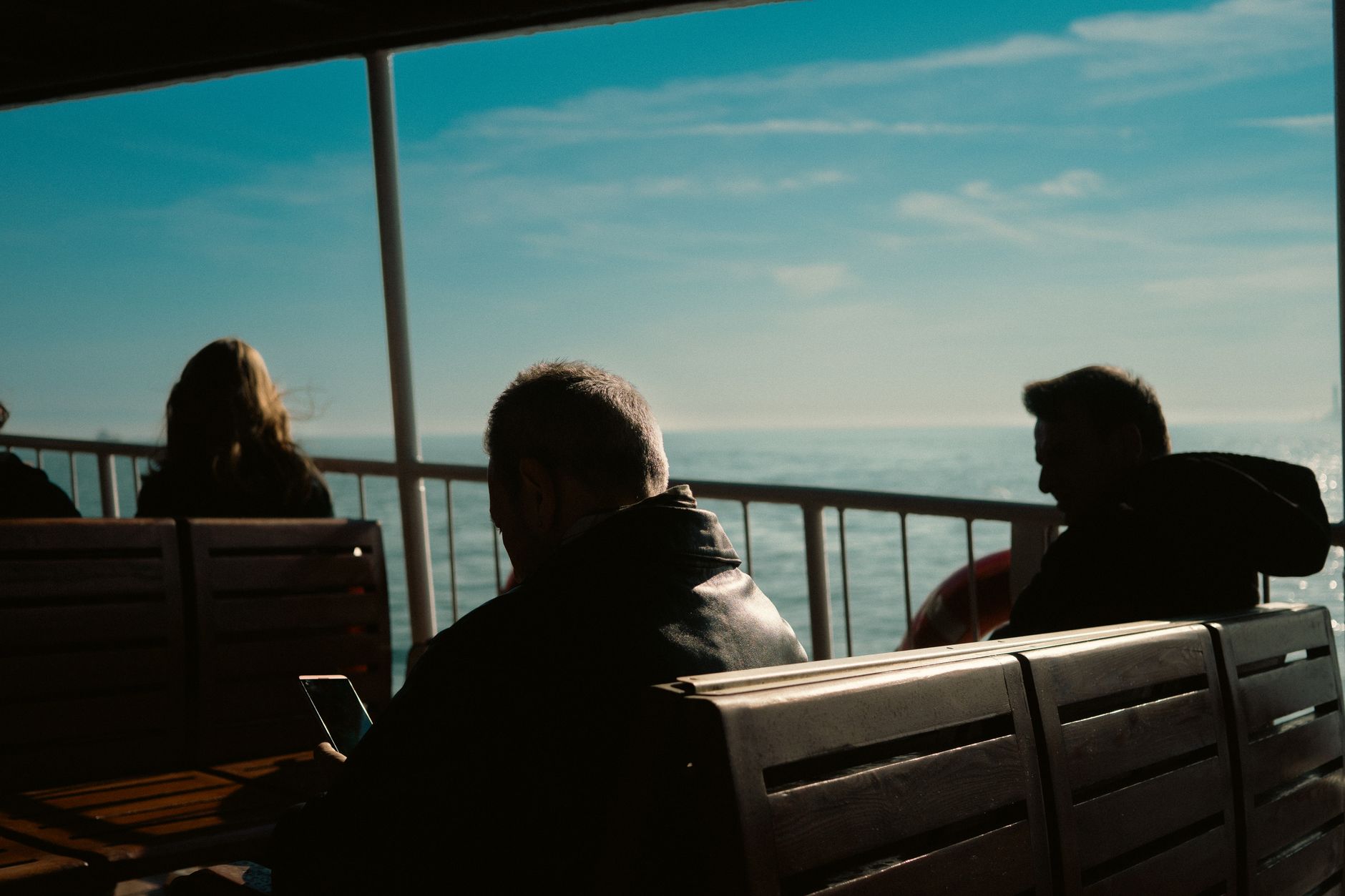
The Scillonian III is a working ship rather than a cruise ferry, and it is comfortable in a straightforward way. Inside there are lounges with rows of seating, and there are two Western Rocks Coffee Co cafés serving drinks and snacks. Outside there is an upper deck and open deck areas for passengers and for dogs, which is where most people who know the crossing spend it.
Bring a warm layer even on a hot day. The wind at sea on an open deck is cold, and two and three-quarter hours is a long time to be chilly.
The route: what you will see
The first hour of the crossing is one of the finest coastal voyages in Britain, and it is worth being on deck for.
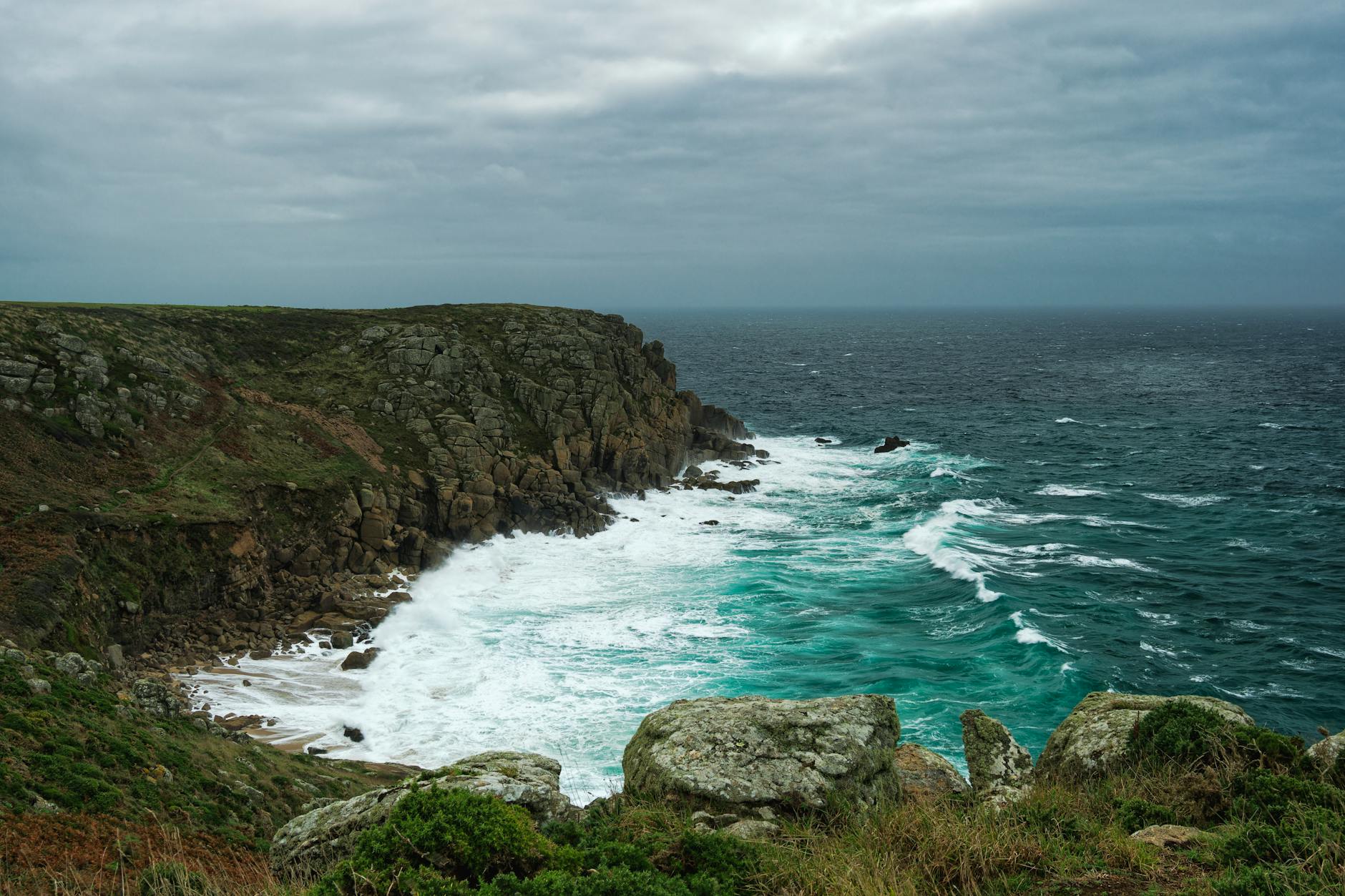
Leaving Penzance, the ship passes across Mount’s Bay with St Michael’s Mount behind you to the east. She runs past Newlyn, then the harbour at Mousehole and the wooded cove at Lamorna, then along the granite cliffs of the Penwith south coast.

Look out for the white sand at Porthcurno and, above it, the terraces of the Minack Theatre cut into the cliff. Then the ship rounds Land’s End, with the Longships lighthouse offshore, and heads out past the Wolf Rock lighthouse into open water. After that, for an hour or so, there is nothing but sea — until the low grey shapes of the islands appear on the horizon, and the water starts to change colour.
Wildlife
The crossing is known for its wildlife, and dolphins and seabirds are often seen along the way. Common dolphins sometimes come in to ride the bow wave, gannets dive in the open water, and in summer there is a chance of seeing basking sharks or sunfish. Nothing is guaranteed, and a lot depends on the sea state — a calm day makes fins far easier to spot. Stand at the front on the outside deck and keep watching the water rather than the horizon. Our guide to dolphins and marine life in Cornwall covers what lives off this coast.
Seasickness: the honest version
This is the part people ask about most, and it deserves a straight answer. On a calm day the Scillonian is a pleasant boat trip. On a lumpy one she moves a good deal, and some passengers will be sick. The operator itself says that the crossing can be uncomfortable where the currents meet, and the stretch past Land’s End is where that happens.
The ship is built with a shallow draught so that she can use the harbour at St Mary’s, which also means she rolls more than a large deep-water ferry in a swell. People who have never been seasick on a cross-Channel ferry are sometimes surprised.
What helps, based on the experience of regular passengers:
- Take medication before you board, not once you feel ill. Travel sickness tablets need time to work.
- Sit low and central, where the movement is least, or go outside and watch the horizon.
- Avoid reading or looking at a phone once the ship starts moving.
- Eat something light beforehand, and avoid a big breakfast, alcohol or rich food.
- Stay warm — being cold makes nausea worse.
- Check the forecast. A strong westerly or a big swell means a lively crossing. If you are prone to seasickness and the forecast is poor, consider changing your plans or flying instead.
Most people who feel ill recover quickly once they are ashore. For people who know they suffer badly, flying from Land’s End or Newquay is quicker and avoids the swell, though it has its own weather problems in fog.
Arrival at St Mary’s
The ship comes in past the Garrison and berths at the quay in Hugh Town, the main settlement on St Mary’s. From the quay it is a couple of minutes’ walk into the town, with its shops, cafés, pubs and beaches on either side of the narrow sandbar.
If you are staying on St Mary’s, collect unlabelled bags near the check-in office and walk or take a taxi to your accommodation. If you are staying on an off-island, your labelled luggage will follow you, and the inter-island boats from the quay will take you across. On a day trip, you have until about 16:15 to be back on board — do not cut it fine, because the ship will not wait.
Ferry or fly?
The ferry is cheaper, carries more luggage, takes dogs from Penzance, gives you the view of the Cornish coast and is the only practical way to do a day trip. The flight from Land’s End takes about twenty minutes and avoids the swell, but it is more expensive and more vulnerable to fog.
Many people use both: sail out to see the coast and the wildlife, and fly back, or the reverse depending on which direction the forecast favours. If you are prone to seasickness and your trip is short, flying at least one way makes a lot of sense.
When the weather intervenes
Like any small ship on an open Atlantic crossing, the Scillonian can be delayed or cancelled by bad weather, especially in spring and autumn. Check the operator’s service status on the day before you travel and again on the morning, and give yourself a buffer on the mainland if you have a train, a flight or work to get back to. Travel insurance that covers disruption is worth having for any Scilly trip.
The honest verdict
The Scillonian III is not a luxury ship, and on a rough day it is not a comfortable one. But on a clear morning, with the Mount behind you, the Minack high on its cliff and dolphins in the bow wave, it is one of the great short sea journeys in Britain, and it is part of what makes Scilly feel like somewhere far away rather than an extension of Cornwall. If you are a reasonable sailor, sail at least one way. If you are not, respect the swell, take the tablets early, and fly back.
Frequently Asked Questions
How long is the Scillonian ferry crossing?
About two hours and forty-five minutes each way between Penzance and St Mary’s.
What time does the Scillonian leave Penzance?
She usually departs at 09:15, arriving at St Mary’s around midday, and returns at 16:30, reaching Penzance at about 19:10. Check the timetable for your date.
How much does the Scillonian cost?
Day-trip fares start from around £35 for adults, £17.50 for children, £10.50 for infants and £15 for dogs. Longer-stay returns vary by season.
How much luggage can I take?
The allowance is 15 kg per passenger. Label bags for off-islands with the right colour — Bryher green, St Agnes yellow, St Martin’s red, Tresco blue — and they will be taken on for you.
When should I arrive at the quay?
Check-in opens an hour before sailing and closes fifteen minutes before departure. Aim to arrive near the start of the check-in window.
Is the Scillonian crossing rough?
It can be. The ship has a shallow draught and the crossing is exposed, especially around Land’s End. On a calm day it is smooth and pleasant; on a lumpy day many passengers feel seasick.
Can I take my car or my dog?
Dogs, yes — they travel on the outside decks for a fare. Cars, no; there is no car deck.
Does the Scillonian run in winter?
No. The season runs roughly from March to November. In winter, the only way to reach the islands is by plane.
Book early for summer Saturdays, stay the night before in Penzance, label the bags, and get on deck for the first hour. The Scillonian is the slow way to the islands, and for the first time at least, the slow way is the right one: you see Cornwall shrink behind you, you watch the water change colour, and you arrive in Hugh Town at midday knowing exactly how far you have come.
Planning to go out and back on the same day? The timetable gives about four and a half hours on St Mary’s, which is enough for the Garrison walk and lunch in Hugh Town but rarely enough to reach an off-island. Our Isles of Scilly day trip guide explains how flying one way changes that, and what each option costs.
If the thought of two and three-quarter hours on a rolling ship is too much, the alternative is twenty minutes in the air. Skybus flies from Land’s End, Newquay and Exeter to St Mary’s all year, though with a 15 kg hold allowance and a 3 kg hand-luggage limit that surprise most first-timers. Our Skybus flights guide compares the two ways across.
Photo credits: Scillonian III in dry dock — Penzance – Scillonian III in dry dock (November 2020) by Jowaninpensans, CC BY-SA 4.0 (licence).