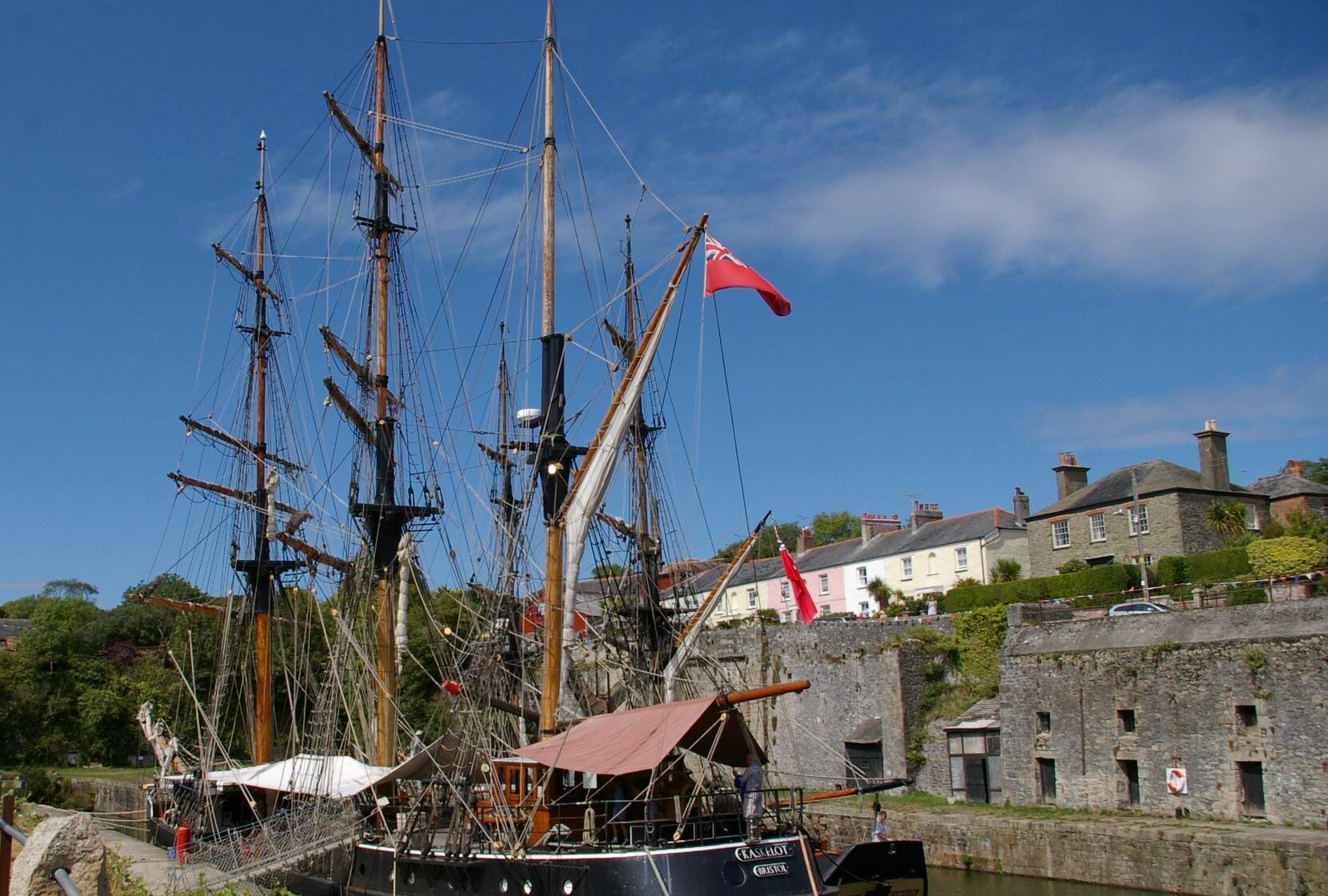
Walk down the hill into Charlestown on a quiet morning and you can be forgiven for checking your phone to see what century it is. A square-rigged ship sits in a stone dock below a terrace of Georgian cottages, its yards cocked against the sky. Cobbles run along the quay to a pair of old cannon. There are no amusement arcades, no neon, no modern harbour clutter at all, and on some days there’s a film crew’s catering van tucked behind the old clay cellars, because a set this convincing doesn’t stay empty for long.
That’s the magic of Charlestown, a perfectly preserved late-eighteenth-century port on the edge of St Austell, and the reason it has stood in for Truro, Falmouth and a good many other harbours of Georgian England on screen. It’s also the reason it’s worth being honest about what it isn’t. Charlestown is small: you can walk round the whole harbour in ten minutes, there are only a handful of places to eat, and the number of tall ships in the dock on any given day varies from several to none. Come knowing that, give it a morning rather than a whole day, and it’s one of the most atmospheric places on the south coast. It’s not hard to see why so many productions have made Charlestown Cornwall’s most filmed harbour.
This guide covers the history of the port, the tall ships, Poldark and the village’s screen career, the Shipwreck Treasure Museum, the beaches and coast path either side, where to eat, parking, and how Charlestown fits into a day with the Eden Project or Heligan nearby. For more of the county’s villages, see our guide to Cornwall’s towns and villages.
Charlestown at a glance
- Where: on St Austell Bay, about a mile and a half south-east of St Austell town centre.
- What it is: a Georgian port built between 1791 and 1801 to ship china clay, with a tidal outer harbour and an inner dock held behind lock gates.
- Famous for: its tall ships, more than a hundred film and TV productions since 1929, and Poldark.
- Status: Grade II listed, and part of the Cornwall and West Devon Mining Landscape World Heritage Site.
- Time needed: an hour or two for the harbour and museum; half a day with a walk along the coast.
- Nearby: the Eden Project about fifteen minutes’ drive away, the Lost Gardens of Heligan and Mevagissey about twenty.
A port built for china clay
Before the 1790s there was nothing much here but a few fishermen’s cottages at a place called West Polmear. Then came Charles Rashleigh, a local landowner and businessman who could see what the mines and clay pits in the hills behind St Austell needed: a harbour to ship their output from. Between 1791 and 1801 he built one, cutting a deep dock into the shore, walling it with granite and fitting it with lock gates so ships could stay afloat at their berths whatever the tide was doing outside. The village that grew up around it took his name.
China clay was the making of Charlestown. The fine white kaolin dug from the pits north of St Austell, the “Cornish Alps” you can still see on the skyline, was carted down to the harbour, dried and stored in cellars along the quay and then tipped down chutes straight into the holds of waiting ships, to be carried off to the potteries and paper mills. Copper ore went out too in the early years, and coal came in. As ships grew bigger through the twentieth century, the trade moved to larger ports, and Charlestown slipped quietly into retirement, which is precisely why so little about it changed.
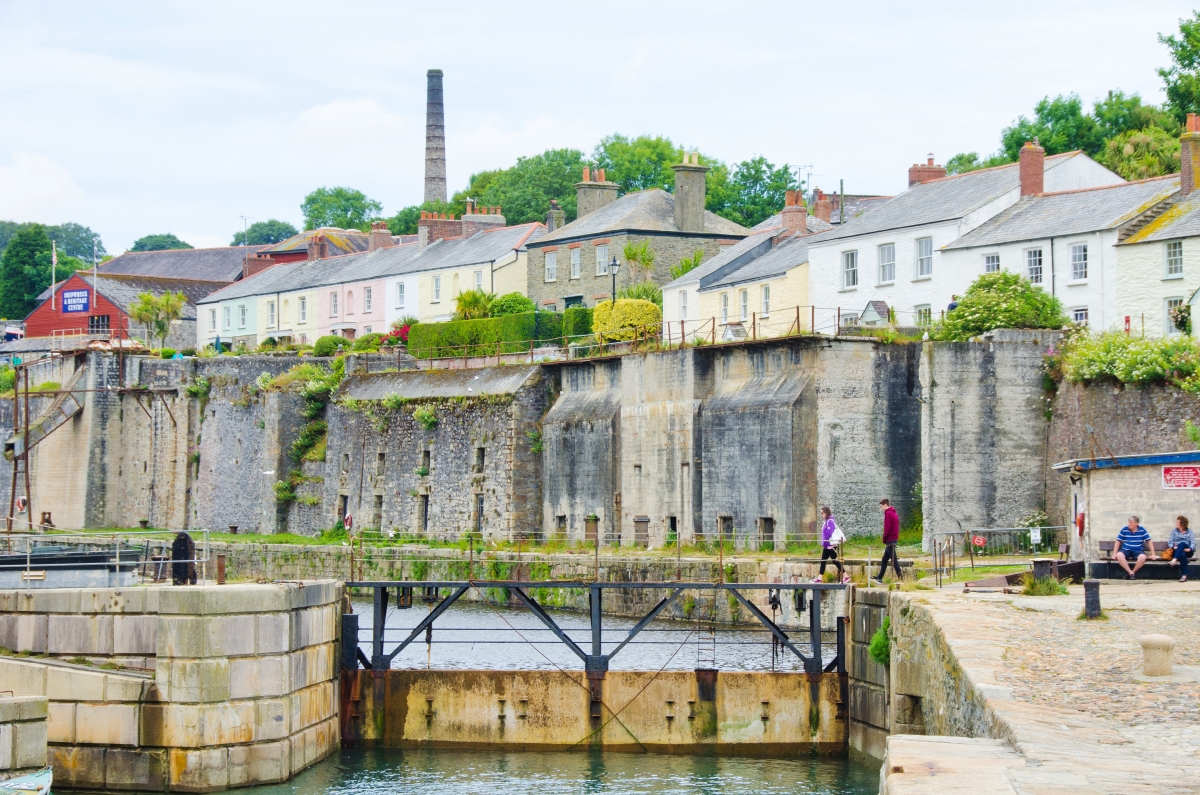
Look closely as you walk the quays and the evidence is everywhere: the old chutes on the dock wall, the stone clay cellars, the capstans and bollards, the lock gates themselves. The harbour is Grade II listed and part of the Cornish mining World Heritage Site, recognised for the part it played in carrying the county’s mineral wealth out to the world.
The tall ships
For decades, Charlestown’s trademark has been its tall ships: square-riggers, brigantines and wooden barques that use the inner dock as a home port between charters, festivals and film work. Seeing one at close quarters, all rigging and tarred timber and carved trailboards, a few feet from the quayside, is the thing most people come for, and it’s genuinely impressive.
The honest caveat is that the ships come and go. They sail away for summer festivals, go off to film on location, head for refits and are occasionally sold, so the dock can be full of masts one month and almost empty the next. If seeing a tall ship is the main point of your trip, ring the harbour office on 01726 70241 before you set out. If there’s nothing in, the harbour itself, the museum and the coast path either side still make the visit worthwhile.
Charlestown on screen: Poldark and more
Charlestown has been a film set since 1929 and has now appeared in well over a hundred productions. The reason is simple: there’s almost nowhere else in Britain where a director can point a camera at a working Georgian harbour, with period ships at the quay, and need to digitally remove so little.
For most visitors the big one is Poldark. In the BBC’s 2015 series, Charlestown stood in for the waterfronts of both Truro and Falmouth, and it’s where Verity and Captain Blamey made their escape together. Stand on the quay by the dock and you’re on the set of some of the series’ busiest street scenes. Before that, the harbour and its ships appeared in Hornblower, Mansfield Park, Tim Burton’s Alice in Wonderland, Doctor Who and the wartime thriller The Eagle Has Landed, among many others.
Filming still happens, and when it does, parts of the harbour can be closed off for a day or two. It’s rarely a problem for visitors and occasionally a bonus. Our guide to Cornwall filming locations covers the rest of the Poldark trail, from the mine ruins at Botallack to the beaches of the Lizard.
The Shipwreck Treasure Museum
Housed in old buildings just above the harbour, the Shipwreck Treasure Museum holds a remarkable collection of around 8,000 objects recovered from more than a hundred wrecks: coins, cannon, ships’ fittings, navigational instruments, bottles, personal belongings and, its proudest exhibit, what it describes as the only intact barrel of coins ever recovered from a wreck. Cornwall’s coast has claimed thousands of ships over the centuries, and this is the place to get a sense of the scale of it, and of the divers and salvors who brought the finds back up.
It’s open seven days a week, all year, from 10am to 5pm, and you can pre-book timed tickets online; check current prices before you go. It’s an hour well spent, especially on a wet day or with children who like their history to come with gold coins and cannonballs.
Exploring the village
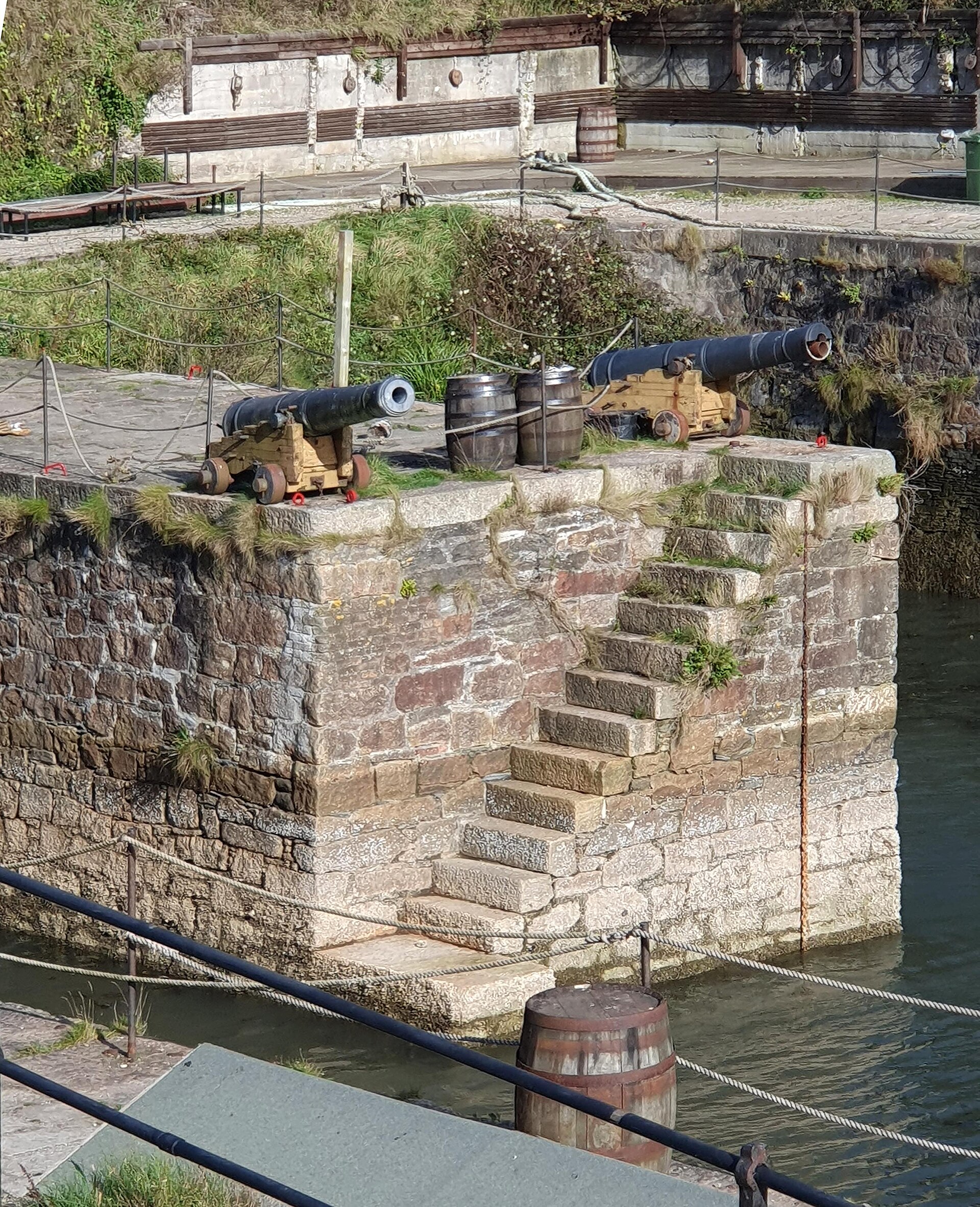
Beyond the harbour, Charlestown is essentially one long, gently sloping street, Charlestown Road, running down to the dock past terraces of colour-washed Georgian cottages and the church. Wander down one side and up the other, then walk out along the harbour walls to the pierheads, where the view opens up across St Austell Bay. The cannon on the quay, the cellars, the cobbles and the lock gates make the whole place feel like an open-air museum, except that people still live here.
A twenty-minute harbour walk
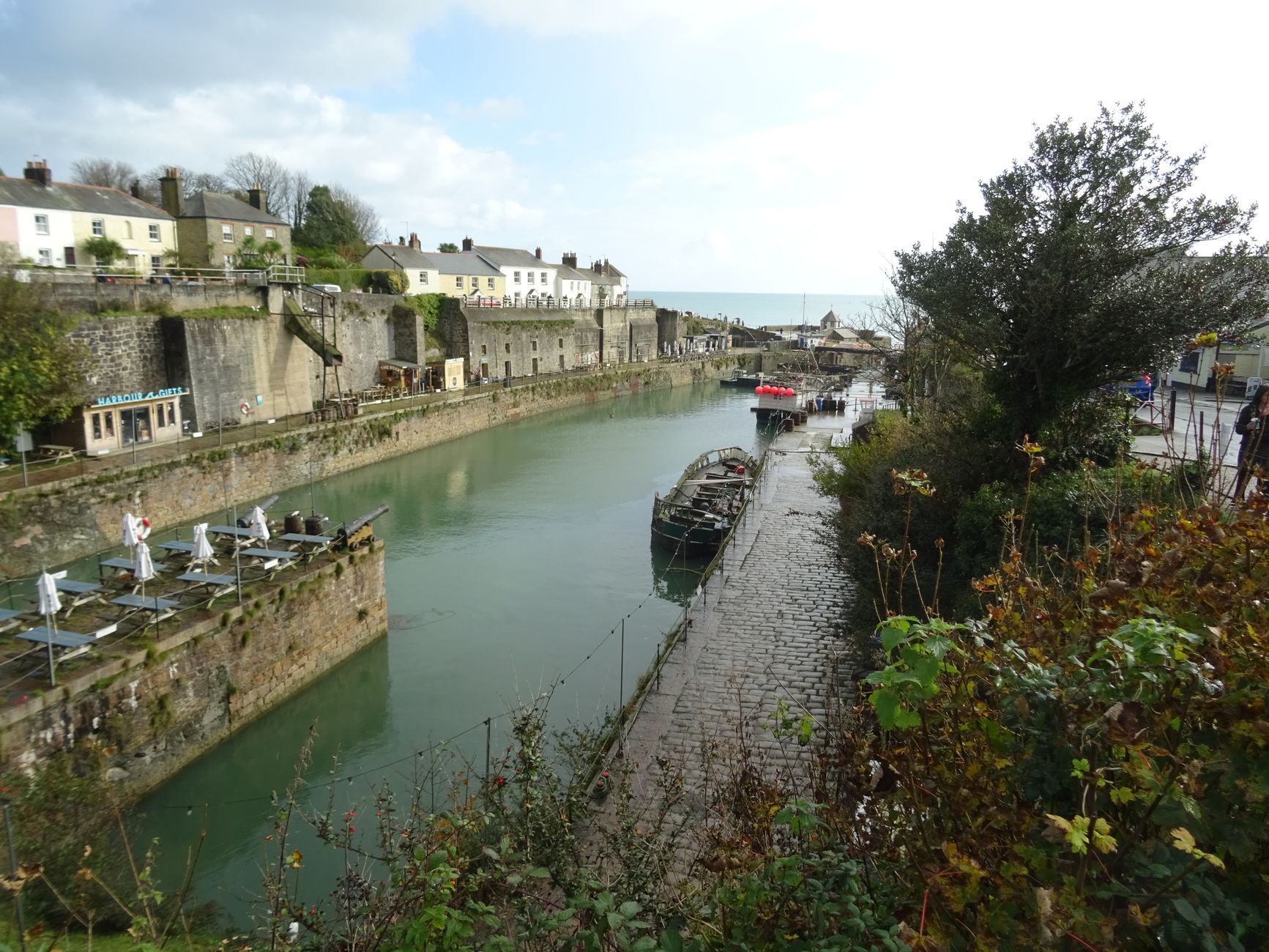
The harbour rewards a slow, deliberate circuit rather than a quick look from the top of the street. Start at the head of the dock, where the road meets the water, and look down the length of the inner basin: this is the view the film crews love, with the ships’ masts lined up against the terraces. Walk down the quay on the side with the old cellars first, past the stores where the clay was stored and the chutes that dropped it into the holds, and look at how the stone of the quay has been worn smooth by two centuries of carts and boots.
At the far end you reach the lock gates, the single most important piece of engineering in the village, which hold the water in the dock when the tide drops outside. Cross over and carry on out along the outer harbour wall to the pierheads, where the shelter of the dock gives way to the open bay and, on a clear day, you can see right along the coast towards Gribbin Head. Come back along the other side, past the cannon on the quay, and finish with a look down onto the little beaches either side of the harbour mouth. Twenty minutes if you keep moving, an hour if you stop to read the place properly, which is the better way to do it.
The beaches either side of the harbour
Small beaches sit on either side of the harbour entrance, mostly shingle and rock with sand at lower tides. They’re good for a paddle, a swim on a calm day or launching a kayak or paddleboard, and the rocks below the cliffs are fun to explore at low water. Keep well clear of the harbour mouth itself when boats are moving, and remember there are no lifeguards.
Walking and beaches nearby
Charlestown sits on the South West Coast Path, and short walks in either direction show off the best of St Austell Bay. Heading west, it’s about a mile to Porthpean, a sheltered sandy beach with a sailing club and café that’s popular with local families; dogs are banned there between 10am and 6pm in July and August. Beyond, the path continues past Black Head to Pentewan and on to Mevagissey, a strenuous but rewarding walk of several hours.
Heading east, the path runs above Carlyon Bay, a long sandy beach that has spent years at the centre of arguments about development, and on past Par Sands to Polkerris, a tiny, sheltered cove with a beach, a watersports centre and the Rashleigh Inn, named after the same family that built Charlestown. It’s one of the best-placed pubs on the south coast for a sunset pint. From Polkerris, the path continues round Gribbin Head towards Fowey. For more sandy options, our guide to the best beaches on the south Cornwall coast covers the whole of this shore, and our South West Coast Path guide has the bigger walking picture.
Where to eat and drink
Charlestown’s choice is small but decent. The Pier House Hotel, right on the harbour, has a bar and restaurant with tables looking straight out over the dock, and it’s the obvious place for a pint after a walk. At the top of the village, the Rashleigh Arms is a big, traditional pub with a garden, popular with families. Around the harbour you’ll also find cafés, ice cream and a few small restaurants, though names and opening hours change more often than the ships do, so check what’s open out of season. For more choice, St Austell is five minutes away by car, and Fowey and Mevagissey both have excellent seafood.
Parking and getting there
Charlestown is easy to reach compared with many Cornish harbour villages. If you’re driving, follow the signs from the A390 at St Austell and use the large pay-and-display car park at the top of the village, a few minutes’ walk from the harbour; don’t try to park on the quay or in the narrow lanes around the dock. In summer and during school holidays the car park can fill around the middle of the day, so arrive early or late.
- By train: St Austell station is on the main line from London Paddington to Penzance, about a mile and a half from the harbour. It’s a 30-minute walk, mostly downhill on the way there, or a short taxi ride.
- By bus: local buses run between St Austell and Charlestown; check the current Transport for Cornwall timetable.
- On foot: the coast path links Charlestown with Porthpean to the west and Carlyon Bay and Par to the east.
Days out from Charlestown
Charlestown’s location makes it a natural add-on to the big attractions of mid-Cornwall, and a good base for them. The Eden Project, with its giant biomes in a former clay pit, is about fifteen minutes’ drive away; our Eden Project visitor guide has the tickets and the timings. Pairing the two tells the whole clay story: the pit where the raw material came out, and the port where it left.
The Lost Gardens of Heligan, near Mevagissey, are about twenty minutes away and among the finest of the gardens to visit in Cornwall. Wheal Martyn, just north of St Austell, is a museum set in an old clay works, with waterwheels, settling tanks and a viewing platform over a working pit. And Fowey, with its estuary, ferries and narrow streets, is about twenty-five minutes’ drive east; see our Fowey and Roseland guide.
Charlestown with children
Charlestown works well for a family morning out because everything is close together and there’s plenty to look at. Children tend to love the tall ships (and the cannon, which get climbed on more than the signs would like), the treasure in the Shipwreck Treasure Museum and the rock pools on the beaches either side of the harbour at low tide. Keep a close eye on small ones around the dock edges and the outer harbour walls, which are high, unfenced in places and drop straight into deep water. Push on to Porthpean for sand and an easy swim, or to the Eden Project for a full afternoon, and you’ve got a very complete day.
When to visit
Charlestown is at its best on a calm, bright morning, when the water in the dock is still enough to reflect the masts. Summer brings more people and more chance of the ships being away at festivals; spring and autumn are quieter and often find more of the fleet in port. Because it’s small and largely outdoors, a wet day is better spent at the museum and then Eden than lingering on the quay. Winter is very quiet, with some cafés closed, but the harbour itself is open and atmospheric all year.
Where to stay
Staying in Charlestown gives you the harbour to yourself in the evening, when the day visitors have gone and the light goes gold on the cottages. The Pier House Hotel overlooks the dock, there are B&Bs and holiday cottages in and around the village, and St Austell, a mile and a half away, has more choice and the railway station. As a base, Charlestown puts the Eden Project, Heligan, Mevagissey and Fowey all within half an hour, which makes it a better-placed spot for a few days in mid-Cornwall than its size suggests.
Frequently Asked Questions
Is Charlestown worth visiting?
Yes, especially if you like history, film locations or tall ships, but plan for a morning rather than a full day. It’s small, and best combined with the Shipwreck Treasure Museum, a walk along the coast path or a visit to the Eden Project nearby.
Was Poldark filmed in Charlestown?
Yes. In the BBC’s 2015 series of Poldark, Charlestown stood in for the waterfronts of Truro and Falmouth, including Verity’s elopement with Captain Blamey. It has also appeared in Hornblower, Mansfield Park, Alice in Wonderland, Doctor Who and more than a hundred other productions.
Are there always tall ships in Charlestown harbour?
No. The ships leave for festivals, charters, filming and maintenance, so some days there are several and some days none. Call the harbour office on 01726 70241 if seeing one is the main reason for your visit.
Can you swim at Charlestown?
Yes, from the small beaches either side of the harbour entrance on a calm day, though they’re mostly shingle and there are no lifeguards. For a sandy beach, Porthpean is about a mile west along the coast path.
Where do you park in Charlestown?
Use the pay-and-display car park at the top of the village, a few minutes’ walk from the harbour. Don’t try to drive down to the quay.
How far is Charlestown from the Eden Project?
About fifteen minutes by car. The two make a natural pair, because Eden sits in an old clay pit and Charlestown is the port that shipped the clay.
Charlestown is one of those rare places that looks exactly like the pictures and then turns out to have a better story behind them. Come for the tall ships and the Poldark connection by all means, but stay long enough to read the harbour walls, the clay chutes and the lock gates, because they tell the tale of how a few fishermen’s cottages became one of the busiest little ports in Georgian England, and then, luckily for the rest of us, stopped changing.
Photo credits: Charlestown lock gate: Charlestown Harbour Lock Gate – geograph.org.uk – 4670022.jpg by Mr Eugene Birchall, CC BY-SA 2.0 (licence). Cannon on the quay: Cannons, Charlestown Harbour, Cornwall – October 2024.jpg by Mutney, CC BY 4.0 (licence).