Cornwall has two coasts, and they behave like two different counties. The north is the famous one: Atlantic surf, big-name beaches, dramatic cliffs. The south, which locals sometimes call the “smiling coast” because so much of it faces the morning sun, is gentler, warmer and more sheltered, and it stays quietly overlooked by visitors who never get further than Newquay and St Ives. The run of beaches from Penzance round to the Tamar holds Cornwall’s best calm-water swimming, its prettiest harbour villages, and a network of small bays that suits families, year-round walkers and anyone who would rather paddle and swim than battle the surf.
This guide works through the south coast’s best beaches region by region: Falmouth and its coves, the Helford and the Roseland, the quieter side of the Lizard, the Looe and Polperro stretch, and the Penzance and Marazion area around Mount’s Bay. Each entry carries notes on water conditions, parking, lifeguard cover and what gives that beach its particular character. Every place named here is real and reachable, and the practical advice further down, on tides, driving times and where to swim when the surf is up, applies across the whole coast.
Falmouth and around
Falmouth sits on one of the world’s great natural harbours, and the town beaches strung along its southern edge are among the easiest swims in Cornwall: sheltered, gently shelving, and warmer than anything of the same kind on the north coast. You can walk between the first three in an afternoon.
Gyllyngvase Beach
Falmouth’s main town beach, and a Blue Flag one: a gently shelving stretch of sand, lifeguarded in season, with the Gylly Beach Cafe right on the front. It is barely ten minutes’ walk from the town centre, and the water sits noticeably calmer and warmer than its north-coast equivalents. For a first swim of the trip with the family, it is hard to better.
Maenporth Beach
Two miles south of Falmouth, an east-facing sandy cove with shallow water and rock pools along the edges. The gentle gradient and the shelter make it a favourite for families and less confident swimmers, and there is a beach cafe and straightforward parking behind.
Swanpool Beach
A sheltered sand-and-shingle beach with a watersports centre on site. Conditions are gentle enough that it is a popular place to try kayaking or stand-up paddleboarding for the first time, with a nature reserve and lagoon just behind.
Castle Beach
A small beach beneath Pendennis Point, with excellent rock pools exposed at low tide and a cafe on the front above. It is calmer than Gyllyngvase and the better choice of the two if rock pooling is the plan. For more of the same across the county, our guide to the best rock pooling beaches in Cornwall for families maps the richest low-tide spots.

The Helford River and the Roseland
East of Falmouth the coast folds into wooded creeks and tucked-away coves, some reachable only on foot or by ferry. This is the quiet heart of the south coast, and it rewards a bit of effort with beaches you may have largely to yourself.
Polgwidden Cove
One of the small sheltered beaches near the mouth of the Helford, managed by the National Trust and reached by footpath. The water is calm and clean, and Trebah Garden runs down to it, which makes for an easy combined day of garden and beach.
Porth Saxon
A little further along the Helford’s south side: small, sheltered and dog-friendly year-round, reached by a short walk. It rarely feels busy.
Helford Passage
The waterside hamlet across the river from Helford village, with a small beach and the Ferryboat Inn for lunch. A seasonal pedestrian ferry crosses to Helford, which opens up walks on both banks.
Pendower Beach
A long, south-facing sandy stretch on the Roseland, and one of the longest beaches on this coast. It stays quiet, has a lifeguarded zone in season, and joins Carne Beach next door at low tide to form nearly a mile of sand.
Carne Beach
Adjoining Pendower and walkable to it across the sand as the tide drops. Sandy, sheltered and well suited to families, with parking behind and gentle water for paddling.
Porthcurnick Beach
A sandy, sheltered Roseland beach with the celebrated Hidden Hut cafe just above it. The swimming is excellent, the setting quietly beautiful, and the Hidden Hut’s seasonal feast nights have a following that books out fast. Come for a swim and stay for lunch.
Porthbeor Beach
A genuinely secluded Roseland beach reached only by a steep cliff path, which keeps it quiet even in August. The golden sand is lovely, but the descent and the tide both need respect; our guide to hidden and secret beaches in Cornwall has more on beaches like this and how to reach them safely. For walkers, the whole Roseland shoreline links up beautifully, and our overview of Fowey and the Roseland Peninsula sets out the villages and viewpoints along the way.
The Lizard’s south coast beaches
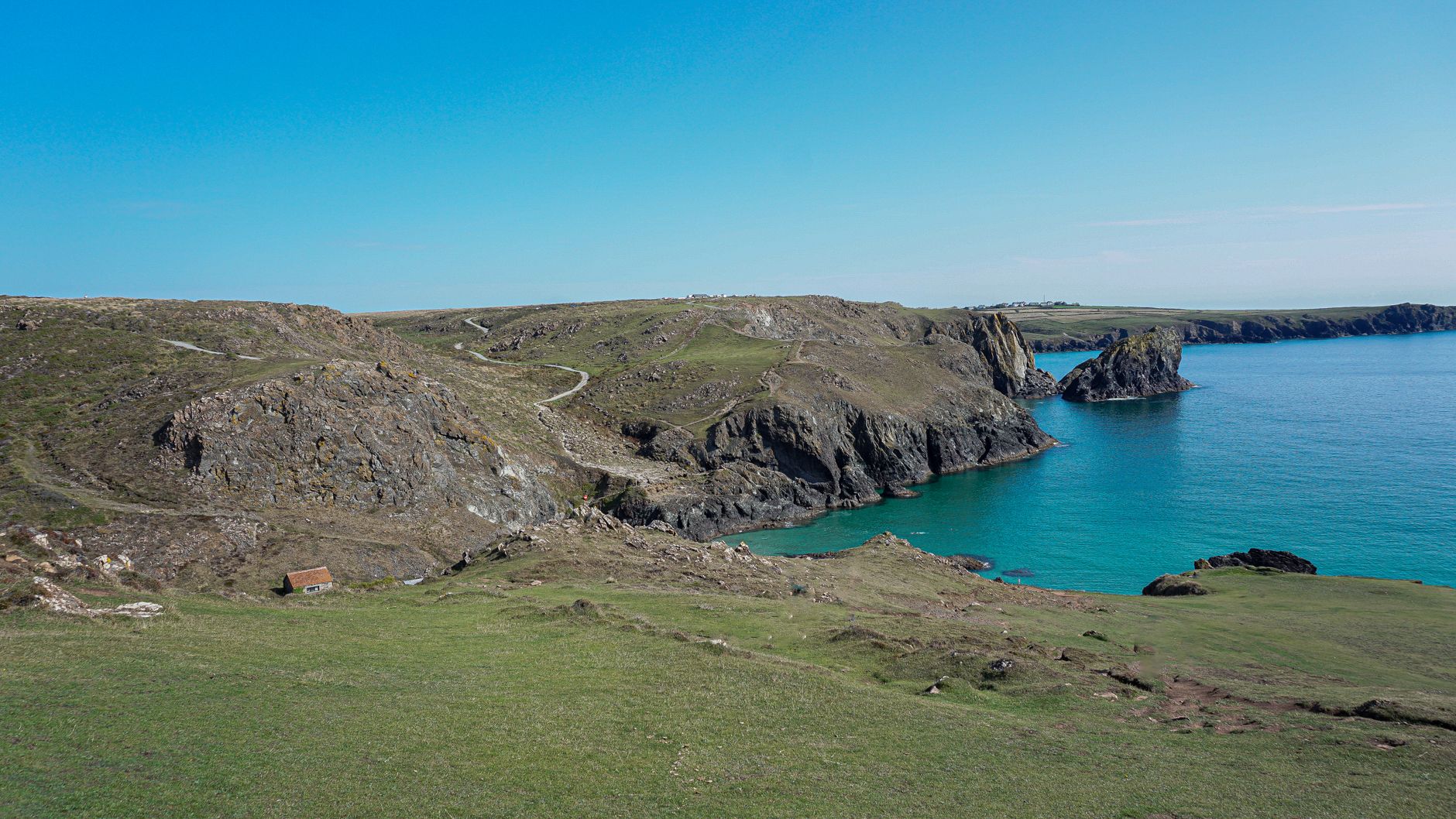
The Lizard is the most southerly point in mainland Britain, and its serpentine cliffs and turquoise coves give this stretch a character all of its own. The famous beach here is Kynance, but the peninsula is full of quieter alternatives, and the walking that links them is some of the best in Cornwall.
Kynance Cove
The most photographed beach in Cornwall and, on its day, one of the most striking in the country: turquoise water, white sand and dark serpentine stacks rising out of the sea. It is a steep walk down from the National Trust car park, and in peak summer it fills quickly, so arrive early or come late in the day. The beach shrinks as the tide rises, so check the tide before you commit to the descent. Our guide to walking the Lizard Peninsula covers the clifftop routes that link Kynance with the point and the coves beyond.
Kennack Sands
Twin sandy beaches split by a rocky outcrop, with calm conditions and a lifeguarded zone in season. The eastern beach stays dog-friendly year-round, and the central rocks are good for rock pooling at low tide.
Coverack
A working fishing village with a beach that turns sandy as the tide drops. The walk along the harbour wall is lovely, there is a pub and a cafe in the village, and the whole place keeps an unhurried, lived-in feel.
Cadgwith Cove
A steep path leads down to a working fishermen’s beach, with boats hauled up on the shingle and lobster pots stacked along the slipway. It is small and characterful rather than a place for a long swim, and it is rarely crowded.
Polurrian and Poldhu Coves
Two sandy bays on the western Lizard. Polurrian is the quieter of the pair; Poldhu has a beach cafe and gentle water. Both suit families, and the clifftop walk between them is short and easy.
Gunwalloe Church Cove
A sandy, sheltered cove with a tiny medieval church set into the cliff beside it, managed by the National Trust and dog-friendly year-round. The walking here is excellent and the setting unusual enough to be worth the visit on its own.
Penzance, Mount’s Bay and Marazion
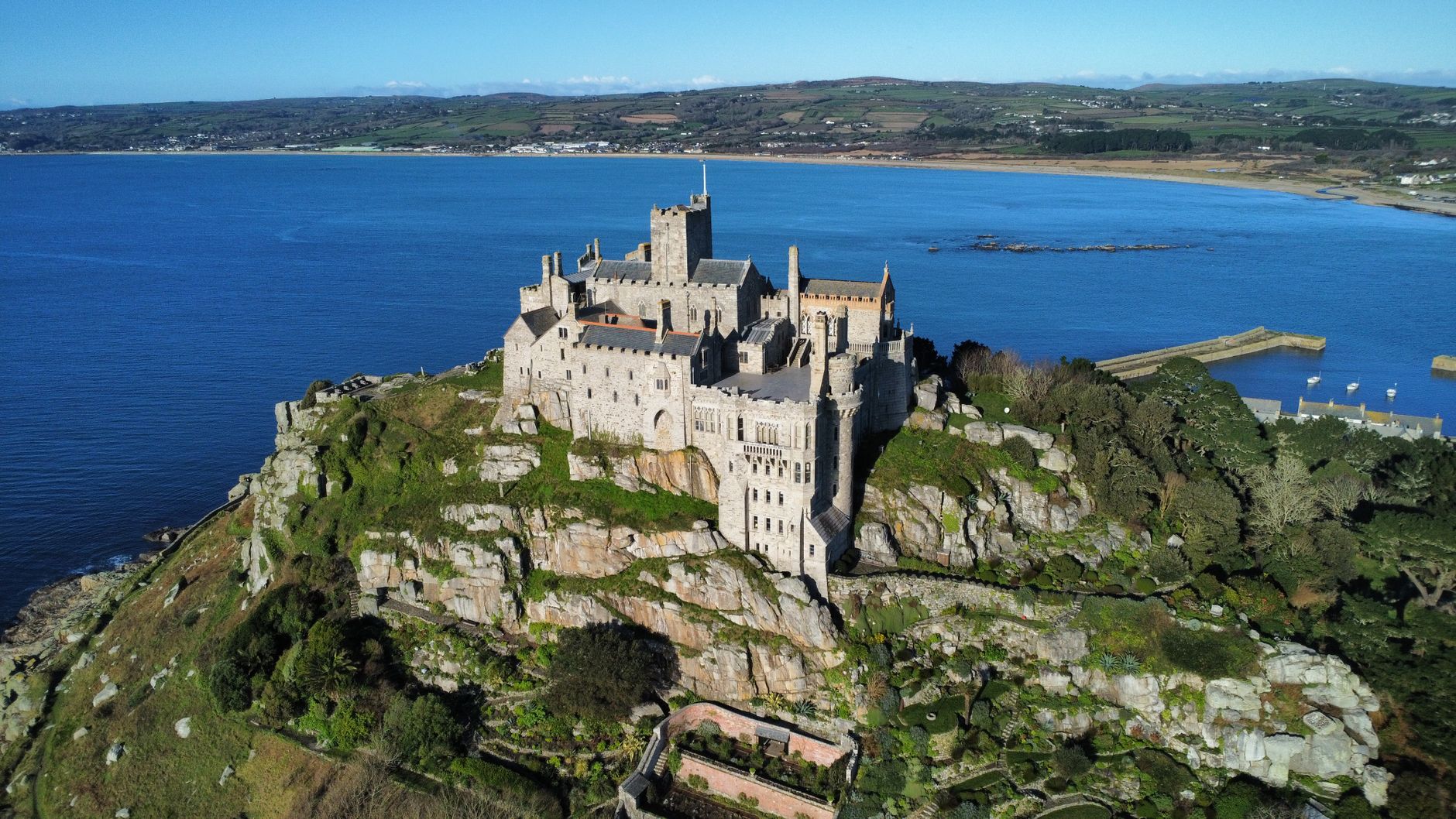
Round the far west, Mount’s Bay curves in a long shallow arc that shelters some of the warmest water in mainland Cornwall, with St Michael’s Mount rising offshore to give it one of the county’s signature views.
Marazion Beach
The great curving beach that faces St Michael’s Mount, sheltered by the bay and sandy at low tide, with stretches that stay dog-friendly year-round. The swimming and paddleboarding are excellent, the water is among the warmest around, and the causeway to the Mount is walkable for a few hours either side of low tide.
Praa Sands
The south coast’s main surf beach: lifeguarded in season, with gentler waves than the north coast and warmer water, plus cafes and a pub-restaurant behind the sand. When the north-coast beaches are blown out, Praa often still works.
Long Rock
The eastern end of Mount’s Bay, a long sandy beach that is usually quieter than Marazion and dog-friendly along most of its length. Good for a walk and a paddle with the Mount in view the whole way.
Porthcurno
Technically out at the far west rather than strictly on the south coast, but so beautiful it belongs on any list: turquoise water, white sand, and the Minack Theatre carved into the cliffs above. The sand narrows sharply at high tide, so aim for the lower half of the tide, and pair it with a Minack performance if you can.
South-east Cornwall and Looe
The far south-east, from Looe round toward the Tamar, is the least-visited corner of the Cornish coast and all the better for it: long empty beaches, twin-harbour villages, and coves you reach across fields.
Looe East and West Beaches
Twin sandy beaches on either side of Looe’s harbour, family-friendly and lifeguarded in season, with the town’s shops, cafes and chippies right behind. Easy, sheltered and well set up for a day with children.
Polperro Beach
A tiny shingle beach in one of Cornwall’s prettiest harbour villages. It is not the place for a serious swim, but it is lovely for a paddle, and the village around it, all steep lanes and whitewashed cottages, is reason enough to come. Our guide to Looe and Polperro covers both villages and the coast path that links them.
Talland Bay
A quiet sandy beach between Looe and Polperro, dog-friendly year-round, with two seafront cafes and a lovely stretch of the coast path running through. A good choice when the busier beaches are full.
Lansallos Cove
A National Trust beach reached by a 20-minute walk down through fields and a wooded valley. Sandy, secluded and almost always quiet, it is the reward at the end of a lovely short walk rather than a drive-up beach.
Polridmouth
Near Fowey, reached on foot across the Menabilly estate. A sheltered, sandy cove with a small ornamental lake behind it, and famously the inspiration for the beach in Daphne du Maurier’s Rebecca. Atmospheric, literary and usually peaceful.
Whitsand Bay
A vast three-mile beach east of Looe, backed by dramatic cliffs with several steep access points. It is much quieter than the beaches of west Cornwall, but the paths down are steep and the tides and currents need care, so it rewards confident visitors rather than a casual paddle.
Getting there and parking
The south coast is more spread out and, in places, harder to reach than the north, which is part of why it stays quieter. Many of the best beaches, particularly on the Helford and the Roseland, are reached only on foot or by seasonal ferry, so check before you set off and allow time for the walk in. Where there is a car park it is often a small National Trust one that fills early in summer; Kynance is the classic example, so arrive before mid-morning or leave it until late afternoon.
The roads themselves are narrow and slow. Sat-nav times are optimistic on the single-track lanes of the Lizard and the Roseland, so add a margin, especially in July and August when you may meet a tractor or a queue at a passing place. Falmouth and Truro both run park-and-ride services in summer that are worth using if you are heading into town. If you would rather leave the car behind altogether, some of this coast links up on foot along the South West Coast Path, which threads past nearly every beach on this list.
Tides, timing and when to swim
Two habits make the south coast easy. The first is checking the tide. Several of these beaches change completely with the water: Marazion’s causeway only opens for a few hours around low tide, Carne and Pendower join up at low water, Polridmouth and the cliff-foot coves are best on a dropping tide, and Porthcurno all but disappears at high water. A free tide table, from a phone app or the BBC coast pages, sorts all of this out in seconds, and tables are posted at most beach car parks too.
The second is knowing that the south coast is your friend when the north is rough. The prevailing south-westerly swell that fires up Fistral and Watergate Bay often leaves Falmouth Bay, the Helford and Mount’s Bay calm and swimmable. If you arrive to find the north coast wild and wind-blown, switch south and you will usually find gentle water somewhere along this shore. It is the single most useful thing to understand about a Cornish beach holiday.
As for temperature, Mount’s Bay and Falmouth Bay record the warmest summer water in mainland Cornwall, climbing to around 17 to 18 degrees by late August, which is why these are also some of the best beaches for swimming in Cornwall. It is still the Atlantic, so most swimmers wear a wetsuit outside high summer, but by south-coast standards this is as warm as British sea gets.
Lifeguards and staying safe
The larger south-coast beaches, among them Gyllyngvase, Praa Sands, Pendower, Kennack Sands and the Looe beaches, carry RNLI lifeguard cover through the main summer season, and where flags are flying you should swim between the red and yellow ones. The south coast is gentler than the north, but it is not without hazards: there are rip currents on the surf beaches, strong tidal pulls near the estuary mouths and harbours, and coves that cut off as the tide rises. Treat inflatables with caution, since an offshore breeze can carry a lilo out to sea alarmingly fast. Our full Cornwall beach safety guide explains rip currents, tide tables and cold-water swimming properly, and it is worth reading before your first swim of the trip.
Families, dogs and facilities
For families, the reliable choices are Gyllyngvase, Maenporth, Marazion, Poldhu, Polurrian, Pendower, Carne and the Looe beaches: sheltered, sandy, gently shelving, with cafes and facilities close by. The town beaches at Falmouth and Looe are the easiest of all, with toilets, food and parking a few steps from the sand.
The catch is that the further-flung coves have little or nothing in the way of facilities. Porthbeor, Lansallos and Polridmouth are walk-in beaches with no cafe and no toilets, so pack water, snacks and everything you will need for the day.
Dogs do better on the south coast than the north in summer, because several beaches stay dog-friendly all year: Marazion along most of its length, Talland Bay, Coverack, Cadgwith, the eastern beach at Kennack Sands, Gunwalloe Church Cove, Polridmouth, Porth Saxon and Lansallos. Others enforce the usual seasonal ban from around mid-May to the end of September. Our guide to the best dog-friendly beaches in Cornwall keeps track of which is which, and it is always worth a glance at the signs on arrival, as the dates can change.
Common mistakes to avoid
The first is treating the south coast like the north and expecting to drive right up to every beach. Many of the best ones here are earned on foot, and turning up at a Helford or Roseland cove hoping for a car park by the sand leads to disappointment. Check how you reach each beach before you go.
The second is ignoring the tide, which on this coast changes a beach more than anywhere. A high-tide arrival at Porthcurno, a missed causeway window at Marazion, or a rising tide creeping up on you at Whitsand Bay all turn a good plan sour. Ten seconds with a tide table prevents it.
The third is underestimating the drive. The lanes of the Lizard and the Roseland are slow, and hopping between three beaches in a day takes longer than the map suggests. Pick a region and explore it properly rather than criss-crossing the coast.
The fourth is overlooking the south coast entirely. Plenty of first-time visitors spend a week on the north coast and never discover that the warmest, calmest, quietest beaches were an hour to the south the whole time.
Where to stay on the south Cornwall coast
For Falmouth and the Helford, base yourself in Falmouth, Mawnan Smith or Mylor. For the Roseland, St Mawes or Veryan put you close to Pendower, Carne and Porthcurnick. For the Lizard, Helston, Mullion or Lizard village work well. For Penzance and Mount’s Bay, stay in Penzance or Marazion, and for the south-east, Looe, Polperro or Fowey. Our roundup of the best B&Bs in Falmouth covers one of the most convenient bases, and the wider complete guide to the best beaches in Cornwall sets the south coast alongside the rest of the county if you want to compare.
Frequently asked questions
Are the south Cornwall beaches better than the north?
Different rather than better. The south is calmer, warmer, more sheltered and generally quieter; the north has bigger surf and the bigger-name beaches. For families with young children and for swimmers, the south usually comes out ahead, which is exactly why it is worth seeking out.
Which is the warmest beach on the south Cornwall coast?
The beaches of Mount’s Bay, such as Marazion and Long Rock, and Falmouth Bay, such as Gyllyngvase and Maenporth, record the warmest summer water temperatures in mainland Cornwall, reaching around 18 degrees in late August.
Are the south Cornwall beaches good for surfing?
Praa Sands is the main south-coast surf beach. The water here is calmer overall, so south-coast surf tends to come into its own when the north-coast beaches are blown out by the prevailing swell.
What is the prettiest beach on the south Cornwall coast?
Kynance Cove for sheer drama, Pendower for its length, Porthcurnick for the Hidden Hut combination, and Polridmouth for atmosphere and its Rebecca connection. Which one wins depends on the kind of day you are after.
Which south Cornwall beaches are dog-friendly year-round?
Marazion along most of its length, Talland Bay, Coverack, Cadgwith, the eastern beach at Kennack Sands, Gunwalloe Church Cove, Polridmouth, Porth Saxon and Lansallos all welcome dogs all year. Others apply a seasonal summer ban, so check the signs when you arrive.
How long does it take to drive between south Cornwall beaches?
As a rough guide, Falmouth to Helston is about half an hour, Helston to the Lizard around 25 minutes, and Helston to Penzance about half an hour, though the lanes slow you down in summer. The south coast is more compact than the north, so with a bit of planning you can sample several beaches in a day.
For the other side of the county, our guide to the best beaches on the north Cornwall coast covers the big Atlantic surf beaches from Bude to Sennen, taking in Polzeath, Padstow’s Seven Bays, Godrevy and St Ives, with the same practical detail on tides, lifeguards, dogs and parking.
The south Cornwall coast is the version of Cornwall regulars keep to themselves: gentler, warmer, quieter, and full of Blue Flag swimming bays and tucked-away coves. For visitors willing to look beyond the famous north-coast names, this is where the county quietly delivers some of its best days by the sea.