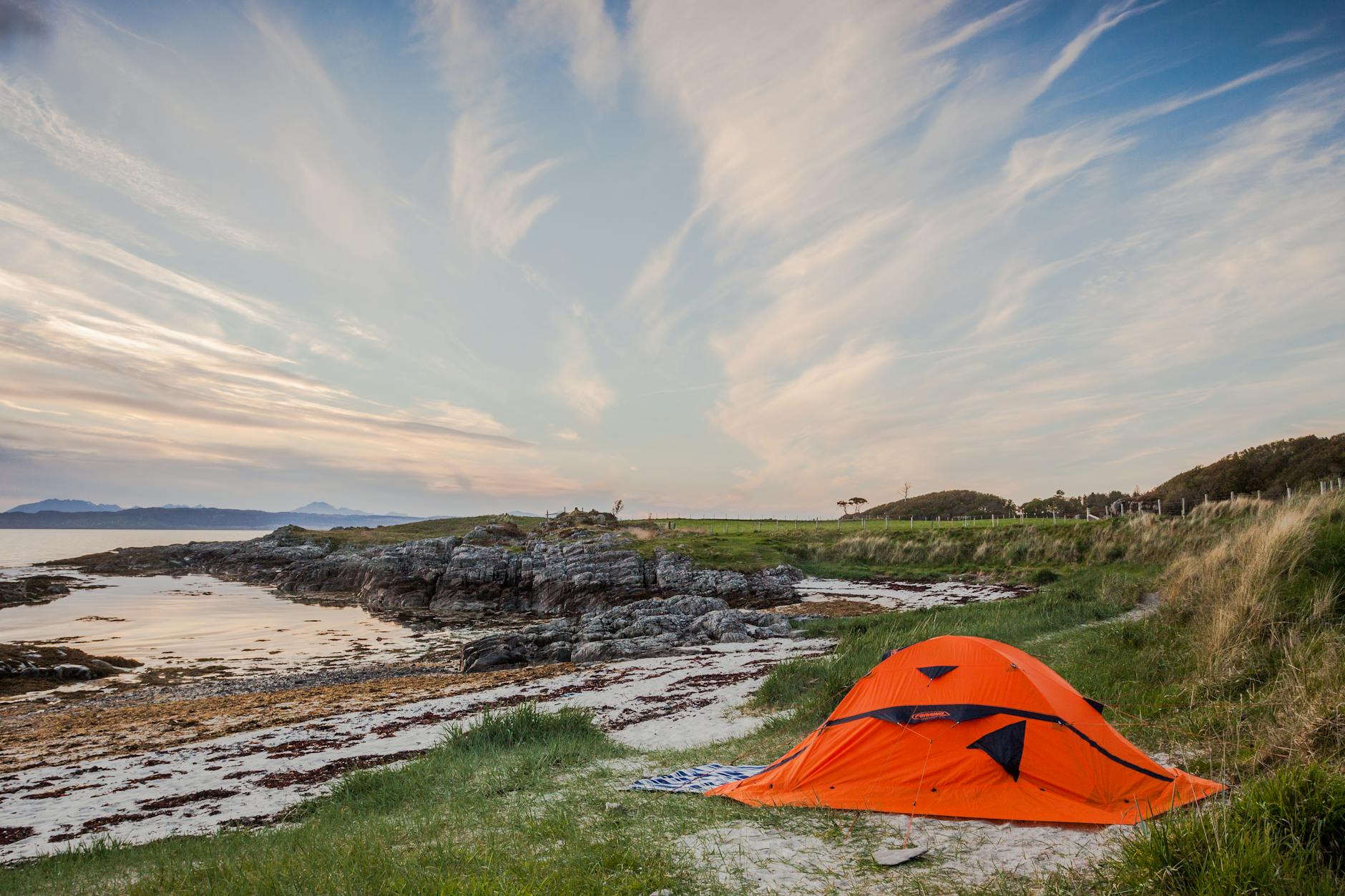
At about three in the morning on a clifftop campsite in West Penwith, the wind swings round to the west and the tent finds out what it is made of. Some tents cope. Some fold flat over their occupants like a closing book, and some leave altogether, and in the grey light at six you can tell who bought their tent for a Cornish coast and who bought it for a festival. Then the sun comes up over Mount’s Bay and everyone forgives the night completely.
That is the deal with camping Cornwall’s coast: some of the most beautiful pitches in Britain, an Atlantic that does not care about your guy ropes, and a booking season so compressed that the best sites are full a year ahead for August. This guide covers the full range — tents, touring caravans, campervans, pods, yurts, shepherd’s huts, holiday parks and self-catering cottages — with honest notes on where to go, what the law says about wild camping, what the lanes do to a motorhome, and when a cottage is simply the better answer.
Is camping in Cornwall a good idea?
It is a brilliant idea for some people and a miserable one for others, and it helps to know which you are before booking.
The case for: the campsites are frequently in better locations than the hotels, perched on the coast path with the sea at the bottom of the field. Camping puts you outside at the two times of day Cornwall is at its best, early morning and late evening. It is by some distance the cheapest way to stay near the coast in high season. And for families it is the holiday children remember — the rock pools at the bottom of the field, the campfire, the shop that sells pasties and fishing nets.
The case against: the weather. Cornwall’s summer average is 19°C and it comes with a lot of wind. A week under canvas in a wet, blustery August is a test of character, and the county has a lot of wet, blustery Augusts. The ground on many coastal sites is thin soil over rock, which bends pegs. And the popular sites charge high-season rates, with minimum stays, for a patch of grass in a field — so if it rains all week, you have paid good money to be damp.
There is a middle path too. Plenty of families split the week — four nights under canvas while the forecast is settled, then a B&B or a cottage for the end of the trip when the weather turns or everybody simply wants a proper bed and a hot shower that does not involve a token and a queue.
The rule of thumb: if you camp regularly and own kit that has been through a windy night, Cornwall is one of the best places in Britain to do it. If you are buying a tent specifically for this trip, consider glamping or a cottage for your first visit and camp next time.
The types of stay, and who each one suits
Tent camping
The classic, the cheapest and the most exposed. Cornish campsites range from a farmer’s field with a tap and a toilet block to full-service parks with pools, bars and entertainment. The single most important question when booking a tent pitch is how sheltered it is. Sites on the open clifftop give the views and take the wind; sites in a valley or behind a Cornish hedge give you a quieter night and a walk to the sea.
Touring caravans and motorhomes
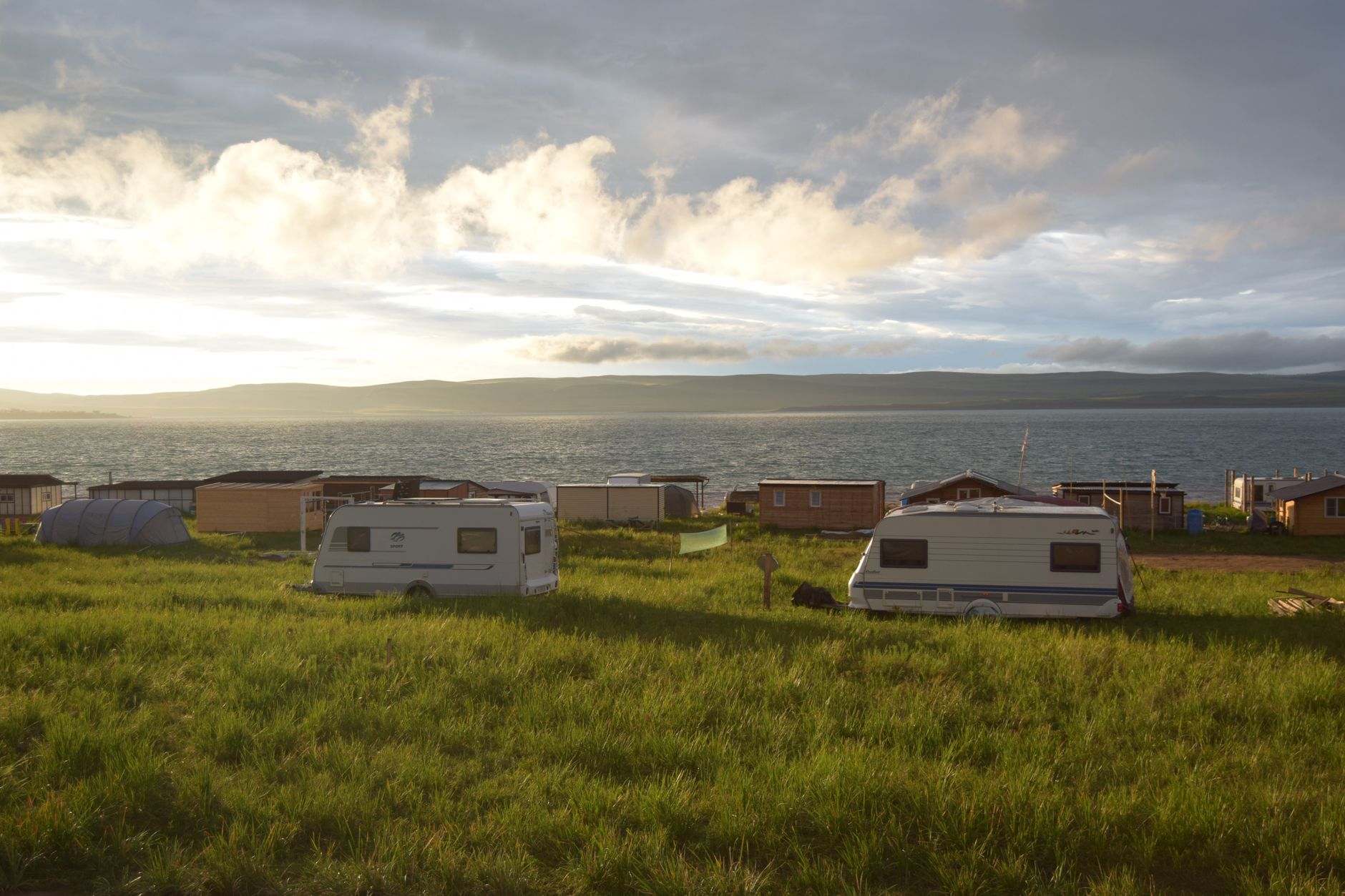
Well catered for, with electric hook-up pitches, hardstandings, waste disposal and all the rest at most established sites. Hook-up and hardstanding pitches book out earliest of all, for the school holidays and the bank holidays especially. The limitation is the road network, which is covered in its own section below and deserves to be taken seriously.
Glamping
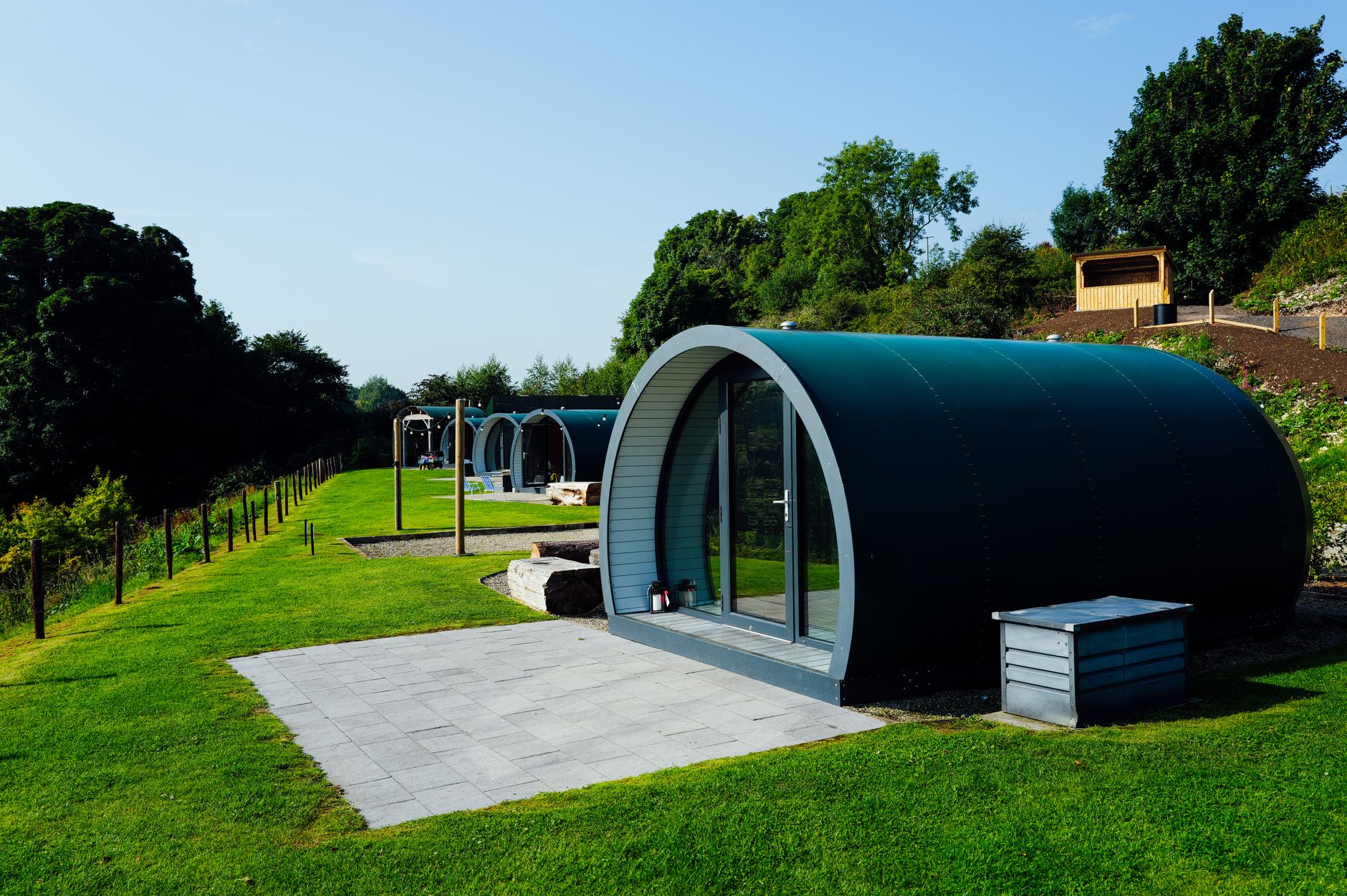
Pods, bell tents, yurts, shepherd’s huts, safari tents, cabins and converted horseboxes, all of which exist in quantity across Cornwall. Glamping solves the practical problems of camping — the wind, the rain, the kit, the sleeping on the ground — while keeping what people actually came for, which is the field, the view and the evening outside. It is not cheap, and at the top end it costs as much as a good B&B. More on what you get for the money below.
Holiday parks and static caravans
The large parks around Newquay, Hayle, St Ives Bay and Looe are a different kind of holiday — pools, clubhouses, kids’ clubs and a static caravan with proper beds and a kitchen. They are good value for families, reliable in bad weather and busy. Our guide to Cornwall holiday parks for families covers the parks in detail.
Self-catering cottages
The alternative that many campers eventually graduate to, and covered briefly further down. The honest comparison between self-catering and a bed and breakfast has its own guide: bed and breakfast vs self-catering in Cornwall.
Where to camp, region by region
Cornwall is long, and where you pitch determines what you do. Driving from a campsite near Bude to the Minack is a two-hour round trip you will not want to make twice.
West Penwith
The far west, from St Ives round Land’s End to Penzance. The most dramatic campsites in Cornwall are here — clifftop fields above Porthcurno, Sennen and the Tin Coast — along with the Minack, the best beaches in the south-west and the mining landscape. It is exposed, and the pitches with the best views are the ones that take the weather. It is also a long drive from anything else.
The Lizard
Britain’s most southerly point is quieter than Penwith, gentler in terrain, and full of campsites on working farms. It suits walkers, families who want Kynance and the coves without the Penwith crowds, and anyone who likes a sense of being at the end of something.
St Ives Bay and Hayle
Three miles of dunes and sand from Hayle round to Godrevy, with holiday parks and campsites behind them, and a branch railway into St Ives. Good for families, good for surfers, and less windswept than the clifftops because the dunes take the edge off.
The north coast: Newquay to Padstow
The busiest stretch, with the biggest parks, the surf beaches and the Camel Trail. Everything is open, everything is busy, and in August the roads are the defining feature of the holiday. Choose here for convenience and activities.
North Cornwall and Bude
Taller cliffs, fewer people, and the big beaches around Bude and Widemouth. Closer to the rest of England, which cuts the drive, and to the quieter end of the county.
The south coast: Fowey, the Roseland and Looe
Sheltered from the prevailing wind by the bulk of the county, which on a camping holiday is worth a great deal. Creeks, woodland, estuaries, small coves and harbour villages; better for walking, sailing and eating than surfing. Campsites here are smaller and often more peaceful.
Bodmin Moor
Inland, high and dark. Moorland campsites are cheaper, quieter and considerably colder than the coast, with the best night skies in Cornwall. The moor is an International Dark Sky Landscape, and a clear night there is one of the county’s under-sold experiences — our stargazing guide covers where to look.
Clifftop campsites worth knowing
A handful of sites are consistently named by people who camp here often. None is a secret, all book up early, and all are exposed in exactly the way that makes them spectacular.
- Treen Farm, near Porthcurno — a working farm campsite above Pedn Vounder, with a view that runs from the Lizard to the Isles of Scilly on a clear day. Walk to the Minack and Porthcurno along the coast path.
- Trevedra Farm, near Sennen — over the Atlantic near Land’s End, with beach and coast-path access and the surf at Sennen within reach.
- Beacon Cottage Farm, St Agnes — family-run, uncommercial and set right on the coast path, high enough to give one of the widest sea views on the north coast.
- Henry’s Campsite, the Lizard — quirky, relaxed and a short walk from the most southerly point in Britain, with Atlantic horizons in every direction.
- Ayr Holiday Park, St Ives — on the hill above Porthmeor, looking across St Ives Bay, and about ten minutes’ walk into town. The rare Cornish site where you can leave the car for a week.
Two general notes. Clifftop sites are mostly the simpler end of the market — good showers and a view, not pools and a bar. And the pitches nearest the edge are the most in demand and the most wind-battered; if the forecast is lively, a pitch fifty metres back behind a hedge is worth more than the view.
Wild camping: the law
This one causes more confusion than anything else on the subject, so to be completely clear: wild camping is not legal in most of England, and that includes Cornwall. You need the landowner’s permission to camp, and that applies to beaches, clifftops, the coast path, moorland and car parks alike. The Scottish right to roam and camp does not extend south of the border.
In practice, a single discreet night with a small tent, pitched late and gone early, leaving no trace, is often tolerated on remote ground. But it is tolerated, not permitted; landowners and the National Trust can and do ask people to move on, and the popular spots have been hammered by large groups, fires and litter to the point where tolerance is wearing thin. Fires on clifftops and beaches are a genuine hazard in a dry summer and are banned on most National Trust land.
If you want the wild-camping experience legally, look for farm sites offering basic pitches with minimal facilities, or small certificated sites that take only a handful of units. Several farms along the South West Coast Path offer exactly this to walkers.
Campervans and motorhomes
Cornwall is one of the most popular campervan destinations in Britain and one of the least suited to large vehicles. The two facts are in constant tension.
The lanes
Minor roads in Cornwall are single-track, bounded by high stone-and-earth hedges, with passing places at irregular intervals and gradients that do not appear on a satnav. A compact campervan copes. A seven-metre motorhome on the lane down to a cove will, sooner or later, meet a tractor coming the other way, and one of you will be reversing uphill for a quarter of a mile. Satnavs route large vehicles down lanes they have no business in. Plan on A and B roads, walk or take the bus the last mile, and do not follow the phone into anything with grass growing down the middle.
Parking and height barriers
Many beach and town car parks have height barriers, and those that do not often have bays too short for a motorhome. Some councils and the National Trust have dedicated larger-vehicle spaces or overflow areas; many do not. Our guide to parking in Cornwall covers the costs and the traps, and van users should read it twice.
Overnight stops
Sleeping in a van in a lay-by, beach car park or clifftop pull-in is not a legal right in Cornwall, and many car parks carry explicit no-overnight-parking signs enforced with fines. The overnight stop has to be planned: a campsite, a certificated site, a pub or farm that offers stopovers, or a dedicated aire-style motorhome stop where one exists. In school holidays that means booking.
The case for a small van
If you are hiring, choose the smallest vehicle that sleeps your group. A converted panel van fits into ordinary car parks, handles the lanes, and gets you to the places that make a Cornish van trip worth it. A large coachbuilt motorhome confines you to the main roads and the big sites.
Glamping: what you are paying for
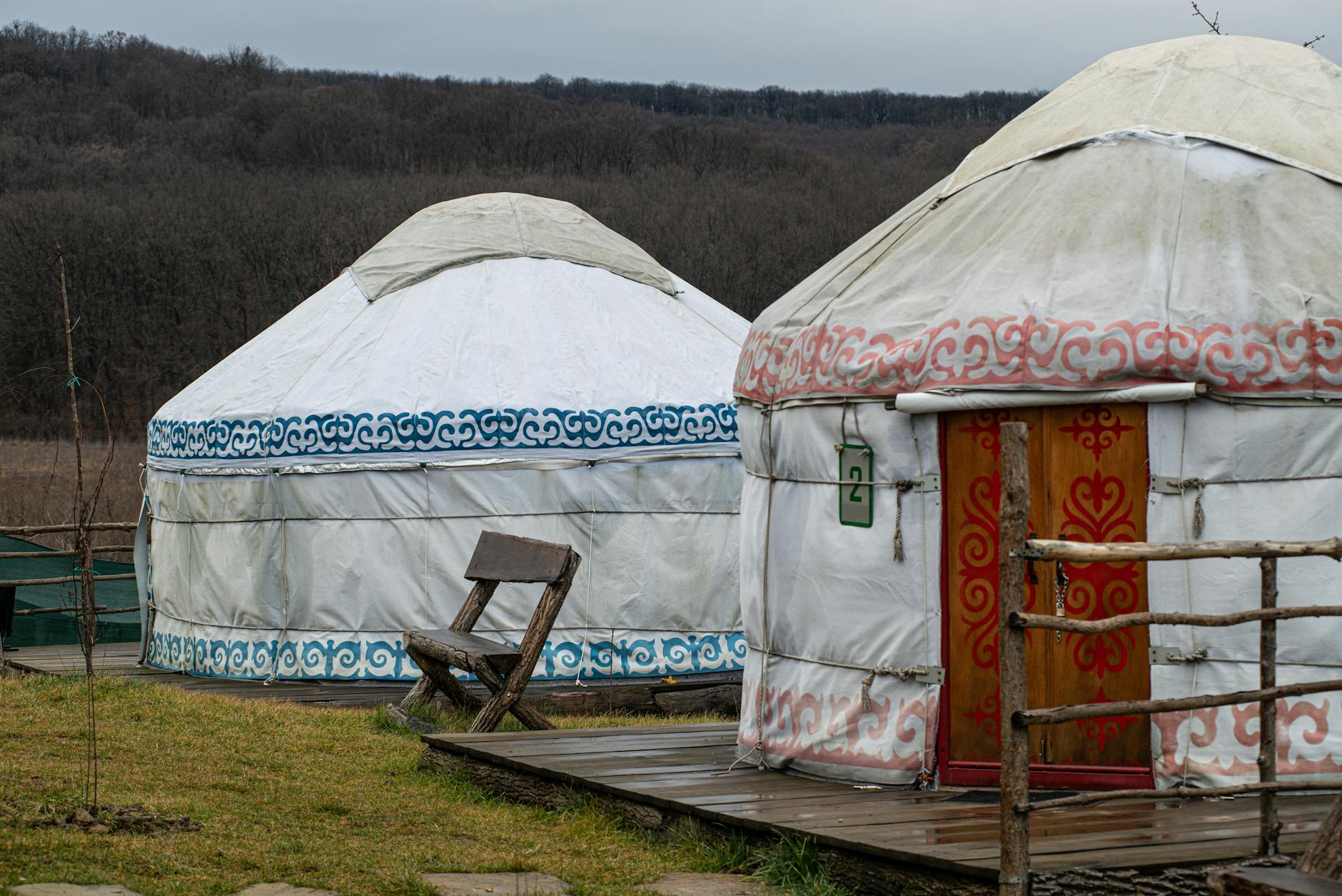
Glamping covers everything from a bell tent on a platform with a real bed in it, to a heated timber cabin with its own bathroom and hot tub. The price range is equally wide, and at the top end it overlaps with a luxury B&B or a cottage. What the money actually buys is worth separating out.
- Beds. The single biggest improvement over camping. A real mattress transforms a week.
- Wind and rain protection. A hard-sided pod or a heavy canvas yurt is untroubled by weather that would flatten a tent.
- Heat. Wood burners and electric heaters extend the season into spring and autumn, when the sites are quieter and the prices lower.
- No kit. Nothing to buy, pack, pitch, dry or repair.
- Privacy, sometimes. The better sites space units generously; the cheaper ones pack pods in rows.
What it does not buy is a bathroom in most cases. The majority of pods and huts share a toilet and shower block with the rest of the site, and the price does not always make that clear. Check before you book if a walk across a wet field at midnight matters to you.
Self-catering cottages
Many people who camp in Cornwall in their twenties end up renting cottages in their forties, and the reasons are straightforward: rain stops mattering, children sleep, and you can cook properly. The stock is huge, from fishermen’s cottages in harbour villages to converted barns on farms to modern houses with sea views.
Three things to know. Saturday-to-Saturday weeks with a strict changeover day are standard in high season, with short breaks more common from autumn to spring. Prices in harbour villages in August are very high, and a large share of village housing is now holiday lets, which is a sore point with residents. And a cottage in a village is not the same as a cottage near a beach: check the actual walk before booking. Our guide to where to stay in Cornwall sets out the areas.
Booking: when, how and what to ask
- Book early for school holidays. Popular coastal sites and glamping units for August go the previous autumn or winter. Electric hook-up pitches go first.
- Expect minimum stays of a week or several nights in the peak weeks and over bank holidays.
- Ask about pitch position. Sheltered or exposed, flat or sloping, near or far from the facilities. On a clifftop site these are the differences between a good and a bad week.
- Ask about ground. Coastal soil over rock means rock pegs or a mallet and patience.
- Check dogs, fires and noise rules. They vary widely, and many sites ban open fires but allow raised fire pits or barbecues.
- Read the cancellation policy. Weather is not usually grounds for a refund, and in Cornwall that matters.
Outside the school holidays almost everything changes: pitches can often be booked a few days out, minimum stays relax, and prices drop considerably. The cheapest, quietest and often best camping in Cornwall is in June and September, which is also when the budget savings are largest.
Camping through the seasons
| Period | What it is like under canvas |
|---|---|
| April–May | Cold nights, bright days, empty sites and cheap pitches. The best camping weather of the year if you have a warm sleeping bag. |
| June | Long evenings, warm days, sites filling at weekends. Watch for sea fret on coastal sites. |
| July–August | Warmest nights, highest prices, sites full, roads jammed. The noise level on big sites rises accordingly. |
| September | The best month. Warm sea, quiet sites, lower prices, the first autumn gales towards the end. |
| October onwards | Many sites close. Glamping with heat becomes the only sensible option until spring. |
Kit that matters here
- A tent rated for wind, pitched with the narrow end to the prevailing wind and every guy line used. Tunnel tents need orienting carefully; geodesic designs cope best.
- Rock pegs and a proper mallet. The cheap pegs that come with most tents fold on Cornish ground.
- A windbreak, for the beach and for cooking.
- A warm sleeping bag. Nights on the coast drop to single figures even in summer, and Bodmin Moor is colder again.
- A tarp or a porch, so wet boots and coats have somewhere to go.
- A plan B for wet days that does not involve sitting in the car.
Campsites near the beach
Most people choose a Cornish campsite by the beach it serves, and that is the right instinct — being able to walk to the sand in the morning, and back up for lunch, is the difference between a camping holiday and a driving holiday. It is also worth being clear-eyed about what “near the beach” means in each part of the county.
On the north coast the big beaches — the long surf strands around Newquay, Perranporth, Hayle and Bude — tend to have campsites set back behind the dunes or up on the headland, with a walk of ten to twenty minutes down to the sand. The walk back up is the part nobody mentions in the listing, and after a day of surfing with two children and a cool box it is the most important fact on the page.
On the south coast the beaches are smaller and more sheltered, and campsites sit further inland on the ridges between the creeks. You drive or walk to a cove rather than stepping out onto one, but the cove is calmer and the walk usually goes through woodland.
In West Penwith and the Lizard, sites sit on the clifftop above small coves reached by steep paths. The beaches are spectacular and often tidal — Pedn Vounder below Treen, for instance, is reached by a scramble and effectively disappears at high water. Check a tide table before promising anyone a beach day.
The best beaches in Cornwall guide is a good way to choose the beach first and the campsite second, which is usually the better order.
Camping with children
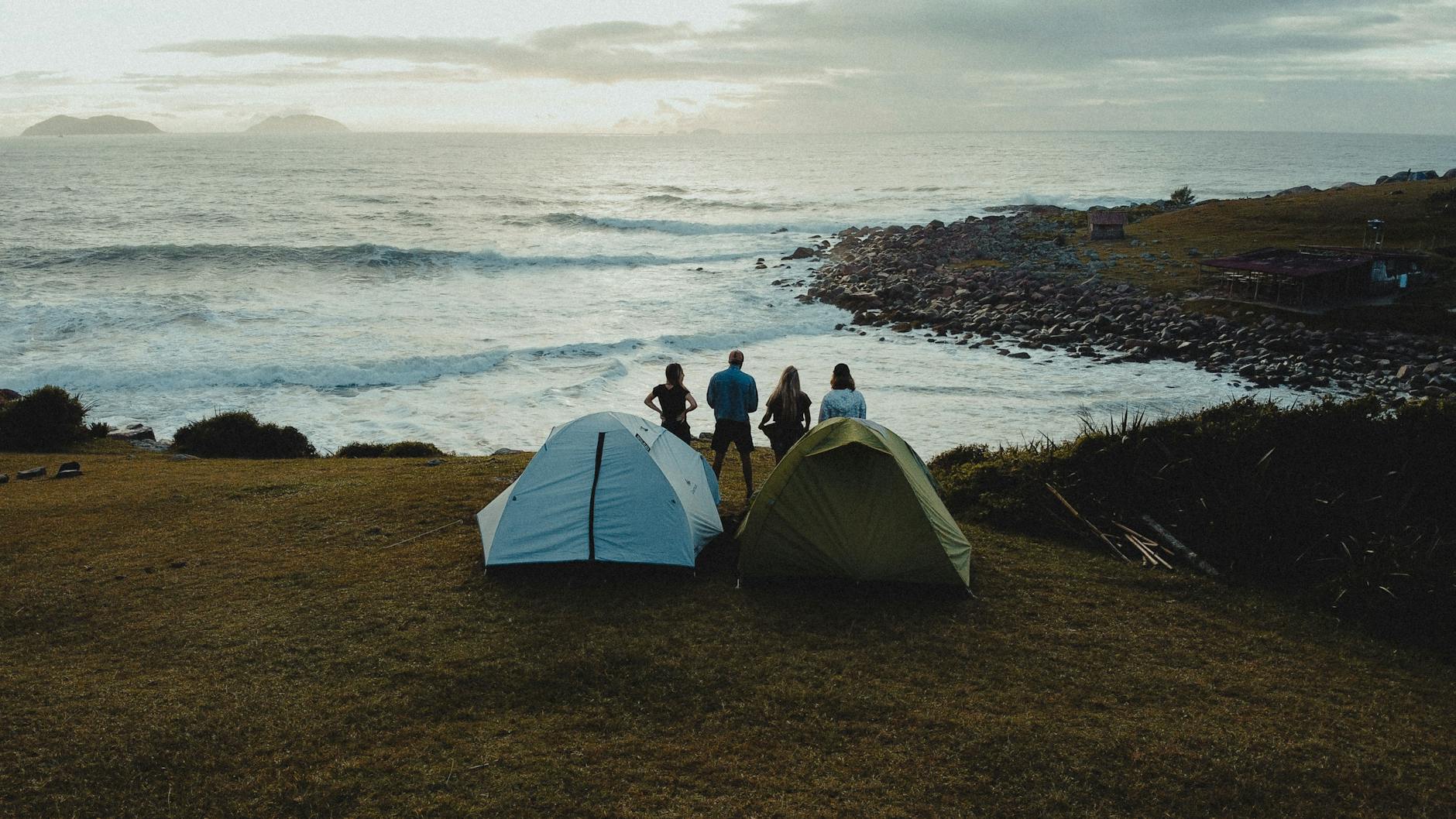
Camping is the classic Cornish family holiday for good reason, and a few choices make it far more likely to go well.
- Pick a site with a playground or a field for games and within walking distance of a beach. Children on a campsite organise themselves, and that is half the point.
- Choose a sheltered pitch over a view. A tent that flaps all night means nobody sleeps, and the children do not care about Mount’s Bay.
- Book near the facilities with toddlers, and away from them with teenagers.
- Take more warm clothing than seems reasonable. Evenings on the coast get cold fast, and damp children get colder.
- Have a genuine wet-day plan — an aquarium, the Eden Project, a cinema in Truro or Falmouth — and set off early before everybody else has the same idea.
If the family is new to camping, a two- or three-night trial in June is far wiser than a fortnight in August. Glamping pods are also a very good first step for families: all the field-and-campfire fun, none of the midnight tent repairs.
Camping with a dog
Most Cornish campsites accept dogs, many make a small charge per night, and nearly all require them on a lead on site. The practical issue is not the campsite but the beaches, a number of which ban dogs during the summer season, usually from Easter or May through to the end of September. A site with a year-round dog-friendly beach within walking distance makes the week far easier. Check whether glamping units allow dogs, because many do not, or allow them only in specific units.
Food, supplies and cooking on site
Cornwall is a good county to cook in, which is one of the underrated pleasures of a camping or self-catering holiday here.
Most larger sites have a shop selling basics, bread, milk and gas, and in season a van or a site café selling breakfast and pasties. Smaller farm sites often sell their own eggs, vegetables and meat, sometimes from an honesty box by the gate. For a proper shop, the supermarkets are in the towns — Penzance, Hayle, Truro, Newquay, Bodmin, Wadebridge, Bude — and the Saturday changeover afternoon is the worst time to visit any of them.
The better option is local. Farm shops across the county sell Cornish meat, cheese, vegetables and cider; harbours such as Newlyn, Padstow, Looe and Mevagissey sell fish straight off the boats; and a camping stove, a pan and a mackerel caught that morning is one of the best meals the county offers. Remember the gas: Cornish campsite shops stock common bottle types but not every brand, so pack a spare.
Honest verdicts
Clifftop sites are better in the brochure than in a gale. They are glorious in settled weather and genuinely hard work in a blow. Families with young children should weigh a sheltered pitch against the view.
The biggest holiday parks are a completely different holiday. Good at what they do, but if you want Cornwall you may find you spend the week in the complex rather than the county.
Wild camping in Cornwall is not a free alternative to a campsite. It is illegal without permission, increasingly unwelcome on the popular stretches, and a night in a car park in a van is a fine waiting to happen.
A large motorhome is the wrong vehicle for Cornwall. Many people bring one anyway and have a fine holiday on the main roads and big sites. They just do not see much of the Cornwall that is down the lanes.
And glamping is worth it in the shoulder seasons, less so in August. In April or October a heated pod turns a marginal camping trip into a good one. In a hot August you are paying cottage prices for a small wooden room in a field.
Frequently Asked Questions
Is wild camping allowed in Cornwall?
No. Wild camping is not legal in most of England, Cornwall included, without the landowner’s permission. That covers beaches, clifftops, the coast path, moorland and car parks.
When should I book a campsite for August?
For the popular coastal sites, the previous autumn or early winter. Electric hook-up pitches and glamping units go first. Outside school holidays you can often book with only a few days’ notice.
Can I sleep in my campervan in a car park?
Generally not. Many Cornish car parks prohibit overnight parking and enforce it with fines. Book a campsite, a certificated site or a designated motorhome stopover instead.
What is the best area of Cornwall for camping?
West Penwith for the most dramatic clifftop pitches, the Lizard for quiet, St Ives Bay for families and surfers, and the south coast if you want shelter from the wind.
Is glamping in Cornwall worth the money?
In spring and autumn, very much so — heat and hard walls make the difference. In high summer the premium over a tent is harder to justify, and some units still share toilet blocks.
Are motorhomes suitable for Cornish roads?
Compact vans are fine. Large motorhomes should stay on A and B roads, as many lanes are single-track with high hedges, few passing places and steep gradients, and many car parks have height barriers.
Do I need special tent pegs?
On coastal sites, often yes. Thin soil over rock bends standard pegs, so rock pegs and a proper mallet are worth packing.
Can I have a campfire?
Check with the site. Many ban open fires but allow raised fire pits or barbecues, and fires on beaches and National Trust clifftops are generally not permitted.
When is the best time to camp in Cornwall?
June and September. Warm enough, much quieter, cheaper, and September has the warmest sea of the year.
Choose the pitch as carefully as the site, pack for wind rather than warmth, and book the summer early or go in the shoulder months instead. Camping here at its best means stepping out at six in the morning onto a clifftop with the sea flat and silver below and nobody else awake — which is worth one bad night with the tent, and usually several.