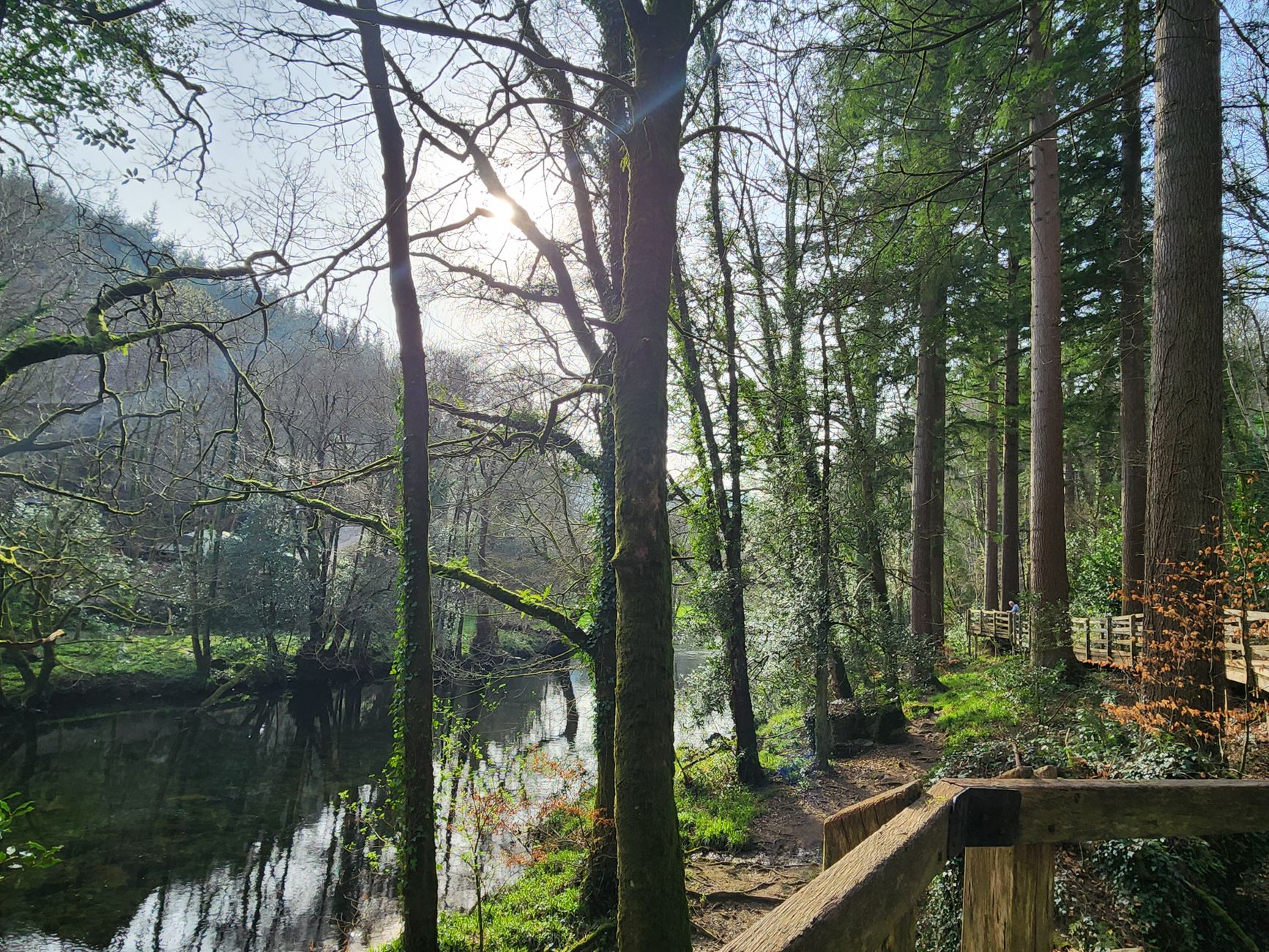
Cornwall’s woodlands and river valleys are the secret half of the county. Visitors come for the famous coast and walk straight past the network of ancient oak woods, wooded estuaries, fern-choked gorges, and stream-cut valleys that run inland from the cliffs. It is a shame, because these are among the loveliest walks in Cornwall, and they come into their own precisely when the coast does not. When the cliff path is fogged in, the surf is too big for comfort, or the children are too tired for another stile, the county’s woodland and river walks are right there as the perfect alternative: sheltered, quiet, full of wildlife, and reliably beautiful in almost any weather.
This guide covers the best inland river and woodland walks in Cornwall — the Helford creeks, the Fowey valley, the Tamar woods, the wooded edges of Bodmin Moor, and a handful of finds most people never reach. Each entry has the practical detail you actually need: rough distance, the kind of terrain to expect, where to park, and the pub or cafe at the end. Together they let you plan a relaxed half-day or build a whole week of inland walking, and they make a natural companion to the coastal routes in our complete guide to walking and hiking in Cornwall.
Helford River and Creeks
The Helford is Cornwall’s most atmospheric estuary, a maze of wooded creeks reaching inland from the sea, sheltered by oak woods that come right down to the waterline. The walking here is gentle, dappled, and almost always quiet.
Frenchman’s Creek
Distance: around 6 km (4 miles) circular. Terrain: wooded riverside, undulating. Time: about 2 hours.
This is the wooded creek that inspired Daphne du Maurier’s novel of the same name, and it is still, dappled, and fern-edged in a way that matches the book almost line for line. Park at Helford village, where there are cafes and a pub, and follow the creek out and back through the oaks. On a still afternoon it is one of the most beautiful short walks in the county, and you may well have it to yourself.
Glendurgan to Trebah
Distance: around 3 km (2 miles). Terrain: wooded, with some garden paths. Time: about 1.5 hours plus garden time.
This walk threads through the sub-tropical valley garden at Glendurgan, down to the little beach at Durgan, and along the Helford towards Trebah. Both gardens charge for entry, but the river-edge path itself is free, and the combination of tree ferns, giant rhubarb, and estuary views is unlike anywhere on the open coast.
Helford Passage to Polgwidden Cove
Distance: around 4 km (2.5 miles). Terrain: shaded estuary path. Time: about 1.5 hours.
From the Ferryboat Inn at Helford Passage, this gentle route follows the river to Polgwidden Cove, quiet and sheltered and dappled by oak the whole way. It is an easy, restful walk that suits a lazy afternoon or a warm-up on the first day of a trip.
Fowey Valley and South Cornwall
The Fowey rises on Bodmin Moor and runs south through some of Cornwall’s finest woodland to the sea at Fowey town. The valley combines ancient oak woods, National Trust estates, and a working ferry or two into some of the best inland walking in the south of the county.
Golitha Falls
Distance: around 3 km (2 miles). Terrain: easy woodland path. Time: about an hour.
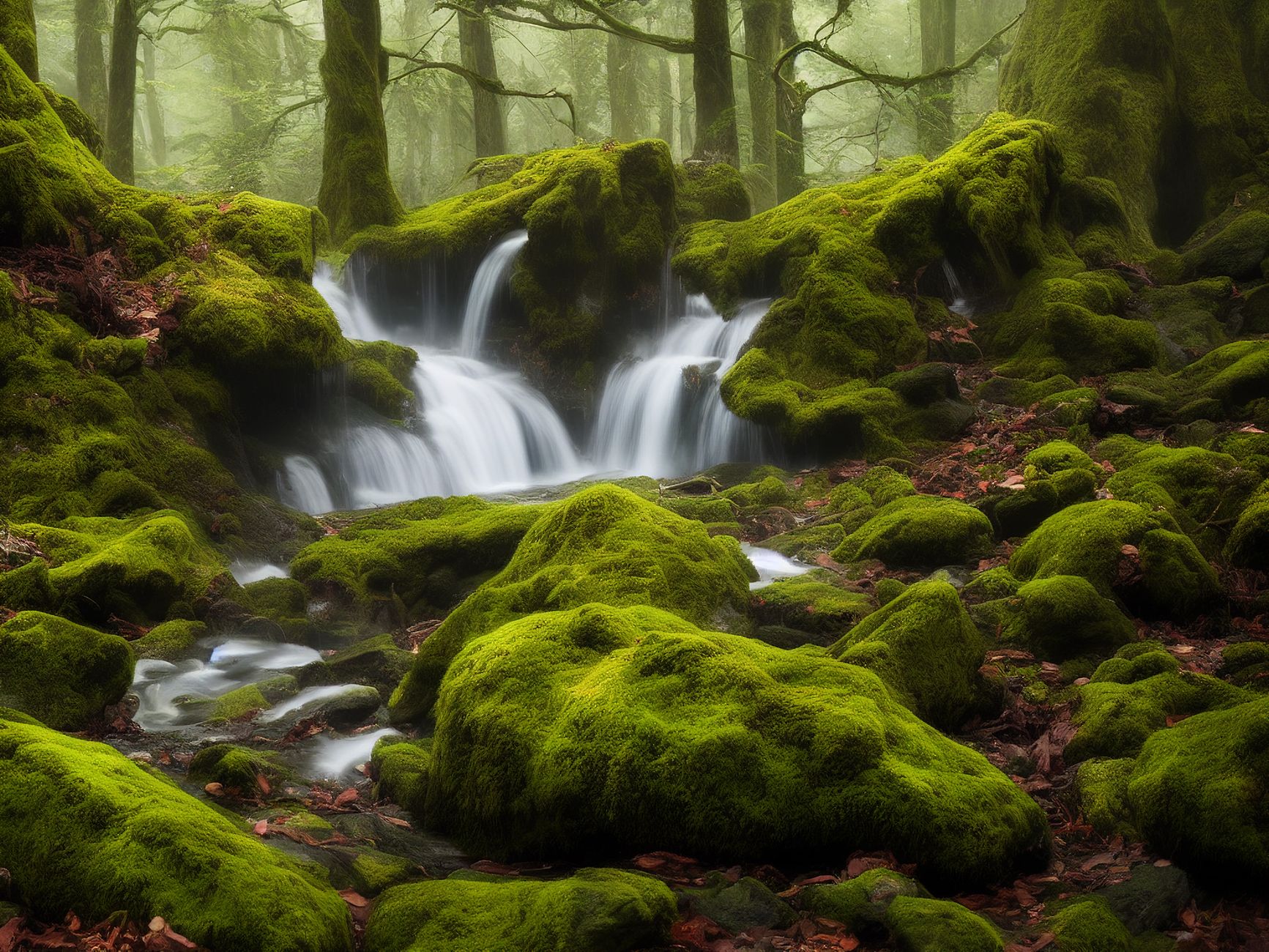
Here the River Fowey cascades through ancient oak woodland on the southern edge of Bodmin Moor, over mossy boulders and between fern-hung banks in a series of small waterfalls. It is brilliant on a rainy day, when the wood is at its greenest and the falls at their fullest, and parking is free at the roadside. The higher, wilder ground just above is covered in our Bodmin Moor walking guide, if you want to combine woodland shelter with a spell on the open moor.
Lanhydrock Estate Riverside Loop
Distance: around 5 km (3 miles). Terrain: gentle estate paths. Time: about 1.5 hours.
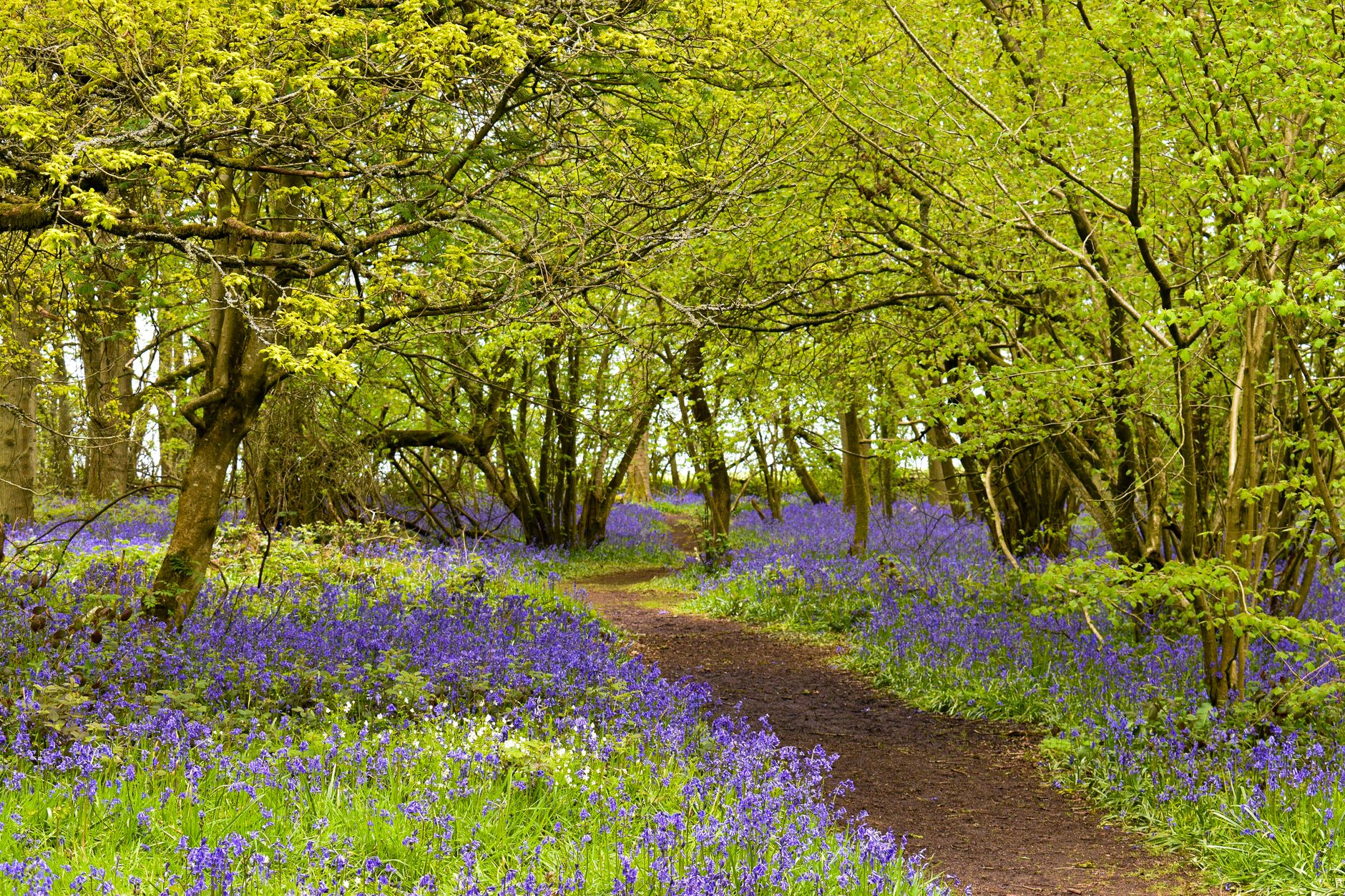
The National Trust estate at Lanhydrock has paths along the Fowey and through bluebell woods that are particularly spectacular in May. The going is easy, the surfaces good, and there is a cafe and a grand house to round off the day. It is one of the most reliable family walks in central Cornwall.
Fowey to Bodinnick and the Hall Walk
Distance: around 6 km (4 miles). Terrain: riverside and woodland. Time: about 2 hours.
Cross the Fowey by the small car ferry to Bodinnick — Daphne du Maurier’s old home — and follow the Hall Walk above Polruan, a wooded path with fine views back over the estuary. The ferries run year-round, which makes this a dependable walk in any season. Fowey and the quieter Roseland coast beyond it reward a longer stay; our guide to Fowey and the Roseland Peninsula covers the best of this stretch of the south coast.
Tamar Valley and East Cornwall
The Tamar marks the border with Devon and runs through a wooded, historic valley of old quarries, orchards, and river quays. It is walking with a strong sense of the past, and it sees far fewer visitors than the coast.
Cotehele Estate Walks
Distance: one to six miles of trails. Terrain: woodland and riverside. Time: choose your length.
This National Trust estate on the Tamar has miles of woodland trails. From Cotehele Quay you can walk along the river towards Calstock or climb up through the woods to the medieval manor house, and the Edgcumbe tearoom serves walkers through the day. There is enough here for anything from a gentle hour to a full day out.
Calstock and the Tamar Trail
Distance: around 8 km (5 miles). Terrain: riverside with gentle climbs. Time: about 2.5 hours.
From Calstock village, this route follows the Tamar through old quarry woodland and orchard country, rich in industrial archaeology and birdlife. The great railway viaduct over the river is a landmark for much of the walk, and the whole valley has a quiet, half-forgotten feel.
Gunnislake Woods
Distance: around 4 km (2.5 miles). Terrain: woodland. Time: about 1.5 hours.
Tucked away above the Tamar, Gunnislake Woods hide old mining ruins slowly being reclaimed by the trees. It is quiet, atmospheric walking, and rarely busy even at weekends.
Bodmin Moor’s Woodland Edges
Where the open moor drops into its river valleys, Cornwall’s best all-weather woodland walking begins. These are the routes to keep for a foggy day when the tors are out of the question.
Cardinham Woods
Distance: half a mile to six miles of marked trails. Terrain: forest tracks, mostly easy. Time: choose your length.
Run by Forestry England, Cardinham has several waymarked loops — the Lady Vale walk of about a mile and a half is the easiest, with the Wheal Glyn trail longer — along with streams, picnic spots, and a dog-friendly cafe. It is one of Cornwall’s most rewarding all-weather walks, and a reliable choice with children or dogs. Speaking of which, our guide to the best dog-friendly walks in Cornwall has more woodland routes where dogs run off-lead.
Draynes Wood
Distance: around 2 km (1.5 miles). Terrain: woodland, some uneven ground. Time: about 45 minutes.
This is the ancient oak wood around Golitha Falls, atmospheric and quiet, and best paired with the falls walk itself for a longer, greener morning.
Lesser-Known Inland Woodland Walks
Beyond the well-known estates and valleys lies a scattering of quieter woods that reward the walker willing to seek them out. None are far from a town, yet most see only a handful of people on any given day.
Idless Wood, near Truro
Distance: one to three miles. Terrain: woodland. Time: 30 minutes to an hour.
A quiet Forestry England wood just five minutes from Truro, Idless has streamside paths and a fine bluebell display in spring. It is the sort of everyday walk that locals return to and visitors rarely find.
Tehidy Country Park
Distance: half a mile to nine miles of trails. Terrain: woodland and lakeside. Time: choose your length.
Bigger than most visitors realise, Tehidy packs 250 acres of woodland and two lakes into an easy network of paths near Camborne. The going is gentle, the cafe welcome, and the variety of loops means you can make it as short or as long as you like.
Kennall Vale, near Ponsanooth
Distance: around 2 km (1.5 miles). Terrain: woodland, undulating. Time: about 45 minutes.
This Cornwall Wildlife Trust reserve occupies a former gunpowder works, where ruined buildings are being reclaimed by moss and the river tumbles over boulders through the trees. It is one of the most atmospheric short walks in the county, and unlike anywhere else on this list.
Tregellas Woods, near St Kew
Distance: around 4 km (2.5 miles). Terrain: woodland. Time: about 1.5 hours.
Quiet ancient oak woodland in the north of the county, rarely visited and all the better for it. A good choice when you want woods entirely to yourself.
Best Inland Walks by Region
Wherever you are based, there is good inland walking nearby. In the south, the Helford gives you Frenchman’s Creek, Glendurgan to Trebah, and the walk from Helford Passage to Polgwidden, while the Fowey side adds the Hall Walk from Polruan. Around Bodmin Moor and the Fowey valley, Golitha Falls, Cardinham Woods, the Lanhydrock estate, and the Fowey-to-Bodinnick crossing cover everything from short and gentle to a proper day out. In the Tamar Valley, the Cotehele estate, the Calstock Tamar Trail, and Gunnislake Woods make a quiet, history-rich cluster. Around Truro, Idless Wood, the woodland sections of Trelissick, Tehidy Country Park, and Kennall Vale are all within easy reach, and further west you will find Tregellas Woods and other lesser-known valleys for those who like their walks empty.
What Makes Cornish Inland Walking Special
Several things set Cornwall’s inland walking apart from anywhere else in the south of England. The sub-tropical valleys of the Helford and Fowey enjoy a mild microclimate that supports tree ferns, gunnera, and rhododendrons rarely seen growing so freely elsewhere in Britain. The county also holds remnants of ancient Atlantic oak woodland, the moss-hung, fern-floored forest that once covered much of the south west and now survives only in fragments. Layered through all of it is Cornwall’s industrial past: many woodland walks pass ruined engine houses, gunpowder mills, lime kilns, and quarry workings, all being slowly reclaimed by the trees. The wildlife is a draw in its own right, with kingfishers, otters, and dippers along the rivers, and tawny owls, woodpeckers, and spring bluebells in the woods. And above all these woods are a weather refuge — when the cliff path is misty or storm-lashed, the inland valleys stay sheltered and calm.
Getting There and Parking
Inland Cornwall is firmly car country. Public transport reaches the towns but rarely the trailheads, and the woodland car parks are almost never near a bus stop, so most walkers drive. The bigger sites make this easy: Cardinham Woods, Tehidy, Lanhydrock, and Cotehele all have proper car parks, most with cafes and toilets, though the National Trust estates charge non-members for parking. Golitha Falls has a free roadside car park that fills quickly on fine weekends and in the school holidays, so an early start pays off.
For the quieter woods — Idless, Kennall Vale, Gunnislake, Tregellas — you are relying on small lay-bys and forestry car parks reached down narrow lanes. Park considerately, keep gates and passing places clear, and give yourself extra time, because the approach roads are often single-track. A good OS map earns its place here, as several of these smaller car parks are easy to drive straight past.
Best Time of Year for Inland Cornwall Walks
The inland walking year has two clear high points. The first is bluebell season, from mid-April to mid-May, when the ancient oak woods at Lanhydrock, Cotehele, Glendurgan, Idless, and Trelissick fill with sheets of blue and the fresh green of new leaf overhead. These are arguably the finest weeks of the year for walking inland in Cornwall. The second is autumn, from September into November, when the same woods turn to gold and copper and the woodland floor comes alive with fungi.
The rest of the year has its own appeal. Summer brings deep shade and cool river air on hot days, though the wetter woods can attract midges and mosquitoes at dusk, so cover up in the evenings. And winter, so hard on the exposed coast, treats the sheltered valleys kindly: this is when a woodland walk really earns its keep as a calm, dry alternative to a storm-lashed cliff.
Terrain, Navigation and What to Bring
Inland walking is gentler than the coast path, but it is less waymarked, so a map matters more than you might expect. Many woodland routes have several unmarked junctions, and it is easy to take the wrong fork and add a mile you did not intend, so carry an OS Explorer sheet and download an offline map, because phone signal drops away in the deeper valleys. Wet ground is the norm rather than the exception; river paths and shaded woodland stay damp long after the coast has dried, so waterproof boots are worth wearing even in summer.
Beyond that, the kit is straightforward. A light waterproof, water, a snack, and something to sit on for a riverside pause will see you through most half-day walks, with midge repellent a sensible addition on still summer evenings. For a full rundown of what the county’s walking demands across the seasons, our guide to what to pack for walking in Cornwall covers everything from footwear to first aid.
Dogs and Families on Inland Walks
Cornwall’s woods are some of the best dog walking in the county, and most permit dogs off-lead in the main areas — Cardinham, Tehidy, Lanhydrock, Trelissick, Idless, and Cotehele all do. The usual courtesies apply near the cafes, car parks, and any grazing land, and a towel in the car is wise given how muddy a woodland walk can get. For families, the estate walks and forestry sites are the safe choice, with cafes, toilets, and gentle surfaces. Some routes take a robust pushchair, including Cardinham’s Lady Vale walk, the Tehidy lakeside loops, and parts of Lanhydrock and Cotehele, while others have rougher woodland tracks that do not; our guide to family-friendly walks in Cornwall with pushchairs and young children sorts out which is which.
Wet-Weather Walks When the Coast Is Impossible
When the coast is a write-off, a handful of inland walks stay sheltered enough to be genuinely enjoyable in serious rain. Cardinham Woods leads the list, with several loops and a dog-friendly cafe to dry out in; the Lanhydrock and Cotehele estate woodlands are close behind, along with Tehidy Country Park, Idless Wood, and the woodland sections of Trelissick. The trees take the sting out of the wind and rain, the rivers look their best in spate, and a warm cafe at the end turns a washout into a good day. Pair a wet-weather woodland walk with a long lunch at a nearby pub or a seafood supper afterwards — our guide to the best seafood restaurants in Cornwall has plenty of options within reach of these valleys.
Combining Inland and Coastal Days
The real trick with Cornwall’s inland walking is to use it alongside the coast rather than instead of it. A woodland or river walk in the morning and a beach in the afternoon makes a superbly varied day, and the sheltered valleys give you a fallback that keeps a walking holiday on track when the weather turns. Many of these inland routes sit within a short drive of the south-coast beaches, so it is easy to combine the two; our guide to the best beaches on the south Cornwall coast pairs naturally with the Helford and Fowey walks above. Alternate salt water and slow rivers, granite and oak, and you come away with a fuller sense of the county than the cliff-top alone can give.
Frequently Asked Questions About Woodland and River Walks in Cornwall
What is the best inland walk in Cornwall?
For sheer drama, Golitha Falls is hard to beat; for atmosphere, Frenchman’s Creek; for a longer day, the Cotehele estate trails; and for families, Cardinham Woods. The best choice depends on the weather and who you are walking with, but any of these makes a memorable half-day.
Are Cornwall’s woodland walks dog-friendly?
Most are. Cardinham, Tehidy, Lanhydrock, Trelissick, Idless, and Cotehele all allow dogs off-lead in their main areas, subject to the usual care near cafes and grazing land. Our dedicated dog-walking guide has the full picture across coast, woodland, and moor.
When is the best time for inland Cornwall walks?
Mid-April to mid-May for bluebells, and September to November for autumn colour and fungi, are the two standout windows. Beyond those, the sheltered valleys are a reliable year-round alternative to the exposed coast, and never more so than in winter.
Can I see otters or kingfishers on Cornwall’s river walks?
Yes, with patience and an early start. The Helford, the Fowey, the Tamar, and the Camel all have established otter populations, and kingfishers, though common, are elusive. Dawn on a still morning gives you the best chance of both.
Where can I find bluebell woods in Cornwall?
Lanhydrock, Cotehele, Glendurgan, Idless Wood, and Trelissick all put on spectacular bluebell displays from mid-April to mid-May. Time a visit for a dry, still day in late April and the ancient oak woods are at their absolute best.
Are inland Cornwall walks suitable for pushchairs?
Some are. Cardinham’s Lady Vale walk, the Tehidy lakeside loops, and parts of Lanhydrock and Cotehele take a robust pushchair, while rougher woodland tracks elsewhere do not. Our family-friendly walks guide flags the buggy-suitable routes across the county.
Cornwall’s woodlands and rivers are the underestimated half of the county’s walking. Pair a coastal day with an inland one and you have a holiday that delivers the full range of Cornish landscape — surf and shelter, granite and oak, salt water and slow rivers, all within a few miles of one another.