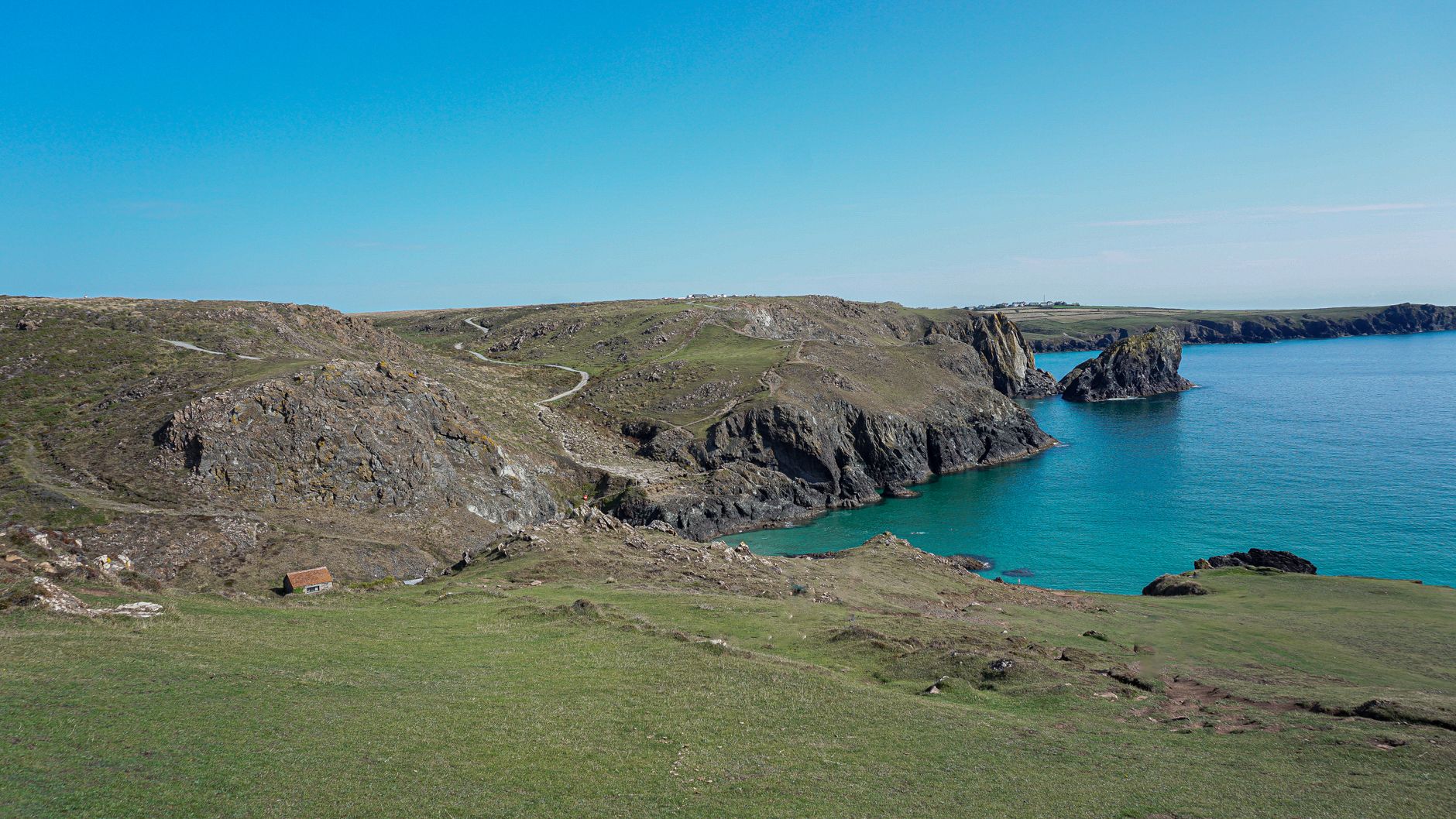
The Lizard Peninsula is the most southerly point of mainland Britain – a fist of serpentine rock thrust into the Atlantic that feels markedly wilder than the rest of Cornwall. The walking here is the whole point: a 30-mile stretch of cliffs, coves and tiny fishing villages, wrapped in a microclimate that supports plants growing nowhere else in the country. The Cornish heath on the cliffs, the red-billed chough overhead, the rare wildflowers, and the improbable colour of the water at Kynance Cove combine to make the walking on the Lizard some of the most rewarding day-walking anywhere in Cornwall.
This guide covers the best walking routes on the Lizard, from short strolls to demanding full-day circulars, plus a handful of quieter paths that locals tend to keep to themselves. Each entry gives the distance, time, terrain and a pub or cafe stop, grouped by difficulty so you can match the walk to the day you have. For the county-wide context, our complete Cornwall walking and hiking guide is the place to begin.
Easy Walks on the Lizard Peninsula
Lizard Point to Kynance Cove and Back
Distance: 6 km (3.7 miles) round trip.
Time: 2 hours.
Difficulty: Easy to moderate, mostly clifftop with one descent.
Facilities: Cafe at Lizard Point; cafe at Kynance.
The most popular Lizard walk, and rightly so. Park at Lizard Point, walk west along the cliff path past the lighthouse, the wildflower meadows and the rugged serpentine cliffs to Kynance Cove. Pause for tea at the cafe above the beach and turn back. The wildflowers are spectacular in May and June; the sea and the cliffs are dramatic all year.
Kynance Cove from the National Trust Car Park
Distance: 1 km (0.6 miles) round trip.
Time: 30 minutes.
Difficulty: Easy descent, steeper return.
Facilities: Cafe at Kynance.
The shortest way to reach Kynance Cove. Park at the National Trust car park and walk down the steep but well-made path to the beach. There are two routes down – a high-tide path and a low-tide path – so use the high-tide line when the swell is up and the lower sands are covered.
Cadgwith to Devil’s Frying Pan
Distance: 3 km (2 miles) round trip.
Time: 1 hour.
Difficulty: Easy clifftop.
Facilities: Cadgwith Cove Inn.
Walk south from the working fishing village of Cadgwith along the cliff path to the Devil’s Frying Pan, an enormous collapsed sea cave where the roof fell in and left a natural arch. Return the same way. It is an excellent, gentle introduction to the Lizard’s strange geology.
Coverack to Lowland Point
Distance: 4 km (2.5 miles) round trip.
Time: 1.5 hours.
Difficulty: Easy.
Facilities: Coverack pub and cafe.
From Coverack along the south coast path to Lowland Point, a remote and rocky stretch with rare plants and good seal-spotting offshore. Return the same way. Quiet even in high summer.
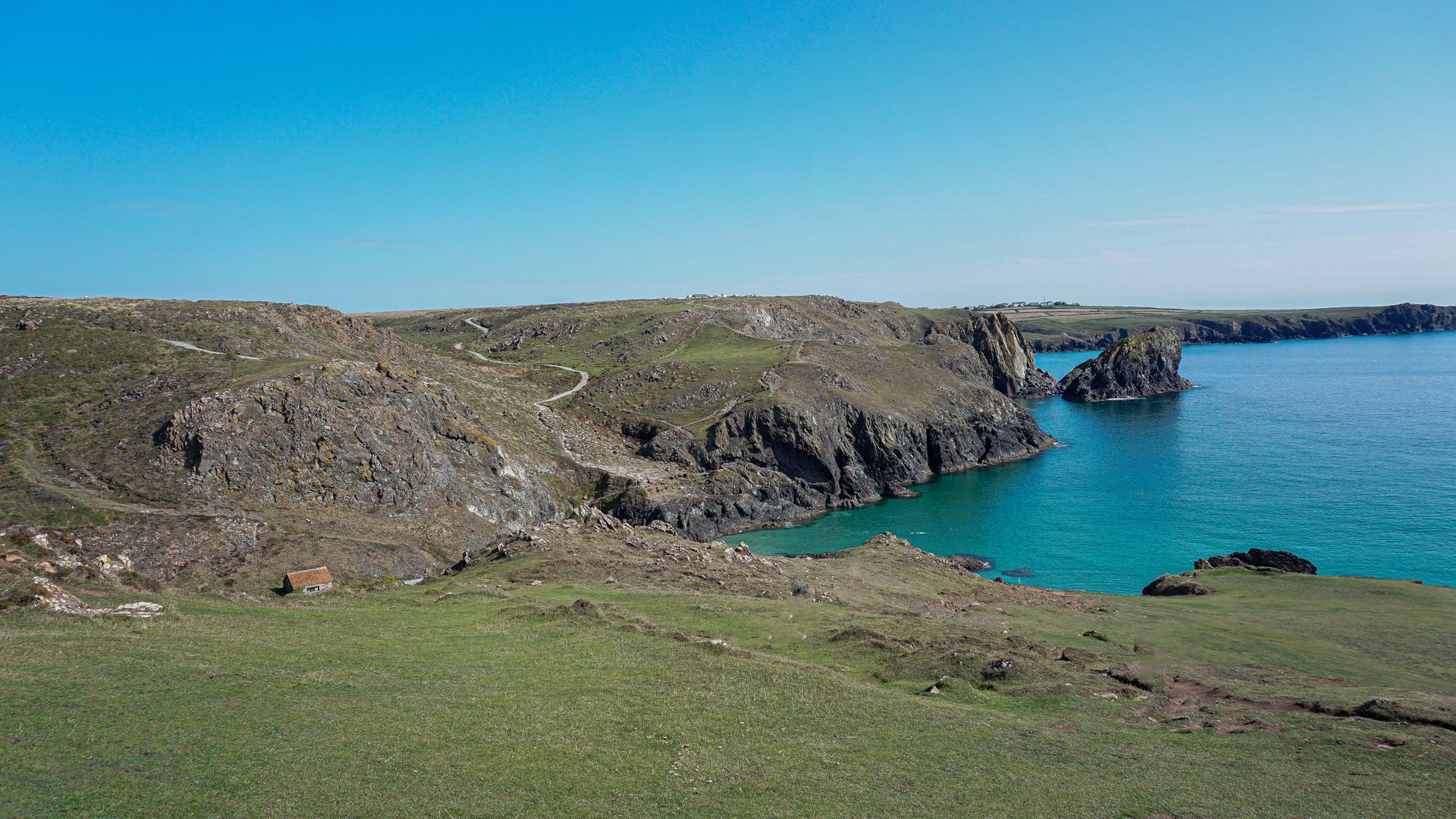
Moderate Lizard Walks
Lizard Village Circular via Lizard Point and Kynance
Distance: 11 km (7 miles).
Time: 4 hours.
Difficulty: Moderate.
Facilities: Pub at Lizard village; cafes at Lizard Point and Kynance.
The classic Lizard circular. From Lizard village, walk south to the Most Southerly Point, then west along the cliffs to Kynance Cove, and return inland through farmland and lanes to the village. It is the best single walk for getting the measure of the peninsula in a half-day.
Cadgwith to Church Cove
Distance: 10 km (6.5 miles).
Time: 3 hours.
Difficulty: Moderate.
Facilities: Cadgwith Cove Inn.
Along the south coast from Cadgwith past Kennack Sands to the postcard-pretty Church Cove, returning inland past Grade Church, a tiny medieval church still lit by oil lamps. This is Cornish coastal walking at its quietest and most timeless.
Mullion Cove to Poldhu Circular
Distance: 7 km (4.5 miles).
Time: 2.5 hours.
Difficulty: Moderate.
Facilities: Cafes at both ends.
From Mullion harbour along the cliff path to Polurrian Cove and Poldhu, returning inland. A fine stretch of west-Lizard cliffs, with the Marconi Centre at Poldhu marking the spot where the first transatlantic radio signal was sent in 1901.
Coverack to Black Head
Distance: 9 km (5.5 miles).
Time: 3 hours.
Difficulty: Moderate.
Facilities: Coverack only.
From Coverack south along the rugged east-Lizard coast to Black Head, one of the wildest and quietest stretches of the whole peninsula. The choice for solitude on a busy weekend.
Challenging Lizard Walks
Full Lizard Circular (Lizard Village to Kynance to Mullion and Back)
Distance: 21 km (13 miles).
Time: 6-7 hours.
Difficulty: Demanding, with significant ascent.
Facilities: Several pubs and cafes en route.
A serious full day. From Lizard village south to Lizard Point, west along the coast to Kynance, on to Mullion, and back inland. The variety of cliff scenery is extraordinary, but the total ascent adds up – not a walk to undertake lightly or late in the day.
Helford to Manaccan and the Lizard’s Northern Edge
Distance: 14 km (9 miles).
Time: 5 hours.
Difficulty: Demanding.
Facilities: New Inn at Manaccan.
From Helford on the river side, up onto the high heathland of the Lizard’s northern edge, and back via Manaccan village. A completely different Lizard – wooded creeks and sheltered water rather than open cliff. The villages along the Helford are covered in our guide to Cornwall’s quieter south coast.
Quieter Lizard Walks
Mutton Cove Seal Walk
Distance: 4 km (2.5 miles) round trip from Lizard Point.
Time: 1.5 hours.
Difficulty: Easy.
Grey seals haul out at Mutton Cove year-round. Walk west from Lizard Point along the coast path and watch from the clifftop; do not descend to the beach, as the cliff is unstable and the seals are protected. Bring binoculars, and give the colony the peace it needs.
Caerthillian Cove and Pen Olver
Distance: 5 km (3 miles).
Time: 2 hours.
Difficulty: Moderate.
A cluster of secluded coves between Lizard Point and Kynance, usually missed by visitors who march straight from one honeypot to the other. Caerthillian is a wildflower paradise in spring, with rarities that draw botanists from across the country.
Housel Bay Loop
Distance: 3 km (2 miles).
Time: 1 hour.
Difficulty: Easy.
From Lizard Point east to Housel Bay, a small sandy cove with a hotel above it, returning inland past the old Lloyd’s Signal Station. Quieter than the Kynance side and a lovely short walk before dinner.
What Makes the Lizard Special
Wildflowers
The Lizard cliffs hold one of the richest botanical communities in Britain. Spring squill, sea campion, thrift and the rare Cornish heath – which grows nowhere else in the country – cover the cliffs from May into July. The serpentine geology underneath supports plants found in only a handful of places in Europe, which is why a walk here in late spring is one of Cornwall’s great days out.
Wildlife
Cornish choughs, the red-billed crows that vanished from the county and returned to breed on these cliffs in 2001, are the Lizard’s emblem for good reason. Grey seals haul out at Mutton Cove, peregrines nest on the headlands, and common dolphins, porpoises and the occasional basking shark pass offshore in summer. Our Cornwall wildlife and nature guide covers what to look for and when.
Geology
The Lizard’s serpentine rock is unique in mainland Britain, formed deep in the earth’s mantle and forced to the surface. Look for the distinctive deep-red and green stone at Kynance Cove and along the cliffs west of Lizard Point; the local craftsmen have turned it on lathes for generations.
Heritage
The Marconi Centre at Poldhu, Lizard Lighthouse, the National Coastwatch station, the working fishing cove at Cadgwith and the medieval Church Cove all reward a slower walk. This is a coast that has earned its living from the sea for centuries, and it shows.
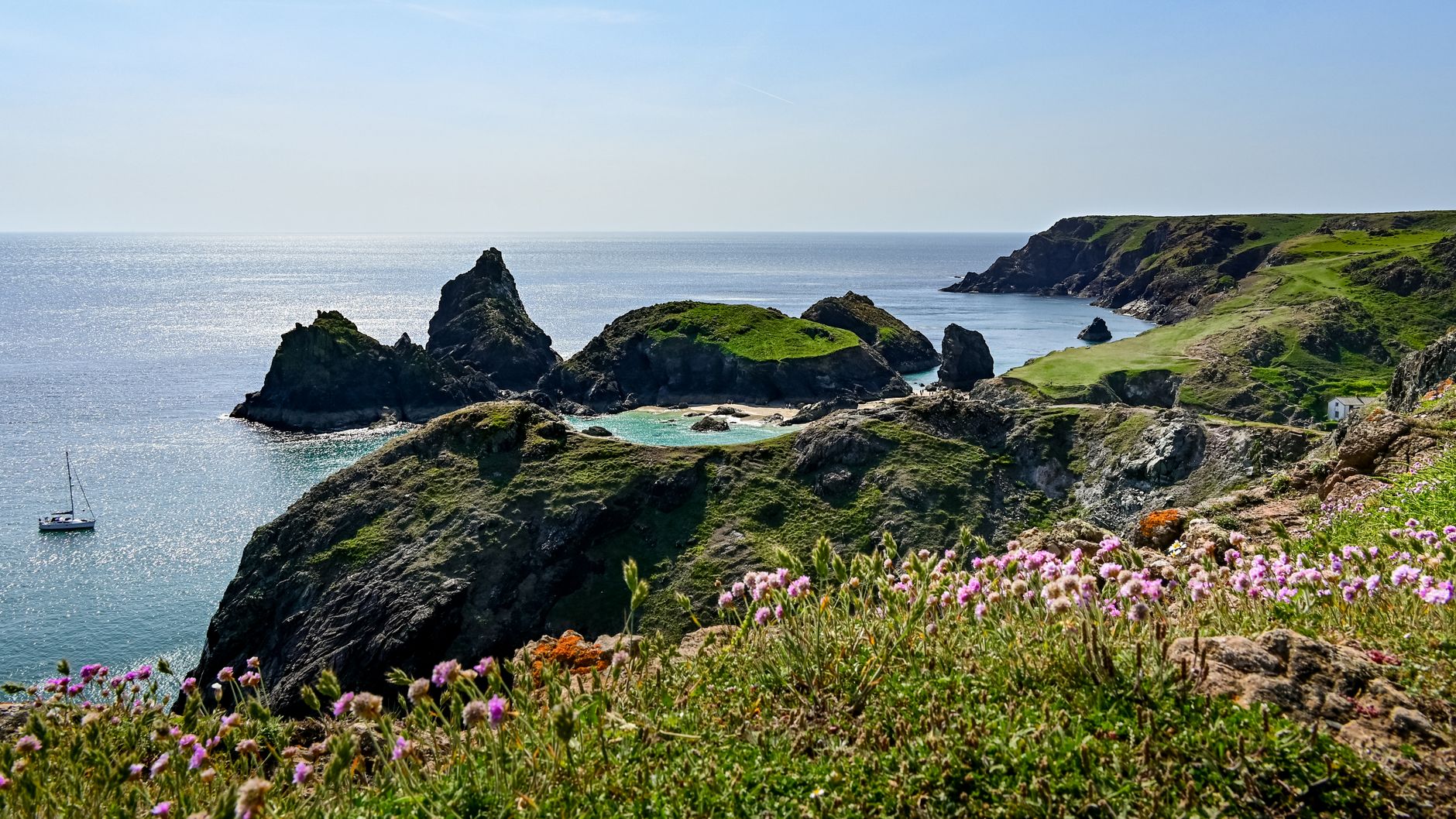
Getting There and Parking
The Lizard is a place you have to want to reach – the single road down the peninsula from Helston is the only way in, and it funnels every visitor towards the same few villages. In high summer that means the car parks at Lizard village, Kynance Cove and Cadgwith fill early, often by mid-morning on a fine day. Arrive before ten or leave it until late afternoon and the difference is enormous.
Lizard village has the largest car park and makes the best base for walking, with the Most Southerly Point a few minutes’ stroll away. The National Trust car park above Kynance is the obvious choice for the cove itself but is exposed and busy; Cadgwith’s car park sits above the village, and you walk the last stretch down. The bus from Helston links the main villages, which makes some one-way walks possible, though the service is sparse enough that you should check the timetable before relying on it. Our Cornwall holiday planning guide has more on reaching the far west without a car.
Tides, Weather and Safety
Kynance Cove is the one place where tides genuinely change your walk. The low-tide route across the sand to the outer beach and the sea caves is magical, but it floods, and people are caught out every year by a tide that comes in faster than expected around the rock stacks. Check a tide table, use the high-tide path when the swell is up, and never linger on the outer sands as the water turns.
The Lizard sticks far enough into the Atlantic to feel the weather before the rest of Cornwall does, and the wind here is real – a calm morning in Helston can be a gale on the Point. Keep back from the crumbling cliff edges, especially after winter storms, and treat sea fog with respect by turning inland rather than pressing on along an exposed cliff. The serpentine rock is beautiful and treacherous in equal measure: polished smooth in places and genuinely slippery when wet, so proper boots are not optional. For swimming, our Cornwall beach safety guide covers tides and currents in more detail.
What to Expect Underfoot
The Lizard’s coast path is a mix of grassy clifftop, bare serpentine, boggy heath and steep little descents into the coves. The going is rockier and more uneven than the sheltered south coast, and the surface changes constantly – firm turf one minute, greasy rock the next. The inland return legs of the circulars run through farmland and lanes, gentler underfoot but muddy after rain.
Boots with ankle support and a good tread are the sensible choice everywhere on the peninsula. The serpentine is the specific hazard: where thousands of feet have polished it, it turns slick in the wet, and a fall on it is a hard one. Our full Cornwall walking packing list goes through footwear and layers for exactly this kind of ground.
Combining Walks with Coves, Villages and a Meal
The Lizard rewards a slow trip. Time a cliff walk to finish at a cove and pack swimwear – Kynance on a calm day at low tide is one of the best swims in Cornwall, and the smaller coves at Cadgwith and Church Cove are quieter still. Build the day around a pub and the walking looks after itself; the Cadgwith Cove Inn, the inn at Lizard village and the Coverack pubs all sit within reach of a good route.
Cadgwith is still a working fishing cove, and the boats land crab and lobster on the shingle much as they always have. If a plate of Cornish seafood at the end of a walk appeals – and after a Lizard day it will – our guide to the best seafood restaurants in Cornwall points to where the day’s catch ends up. For the coves themselves, our guide to Cornwall’s hidden and secret beaches covers the quieter corners of this coast.
Best Time to Walk the Lizard
- May and June: the wildflower peak, and the single best time to walk here. The cliffs are in full colour and the days are long.
- July and August: warmest and busiest. Kynance and Lizard village fill early; the quieter east-coast walks stay manageable.
- September and October: a warm sea, settled light and emptying trails – a close second to late spring.
- Winter: wild and bracing, with big seas at Kynance and Lizard Point. Fewer buses, shorter days, and real drama for those who plan around them.
Suggested Lizard Walking Itineraries
Day Visit
Lizard Point to Kynance and back in the morning, lunch at one of the cafes, then Cadgwith to the Devil’s Frying Pan in the afternoon. A full and varied day without a long drive between walks.
Long Weekend (3 days)
Day one: Lizard Point, Kynance and the Lizard village circular. Day two: Cadgwith and Church Cove. Day three: the Mullion and Poldhu coastline on the west side.
Full Week
Add the full peninsula coast walk over three days, the Helford section to the north, a non-walking afternoon at the Goonhilly Earth Station, and a wildlife morning watching the seals at Mutton Cove.
Practical Tips for Walking the Lizard
- Tides matter at Kynance. The low-tide route into the cove is impassable when the swell is up – check before you go down.
- The wind is real. The Lizard feels weather earlier than the rest of Cornwall; carry a windproof layer even on a bright day.
- Wildflower season is May and June. A walk with the cliffs in full colour is one of Cornwall’s great experiences.
- Book Cadgwith Cove Inn in summer. It is small, popular and often full at lunch.
- Use the Helston park-and-ride in peak season. Lizard parking fills early.
- Wear proper boots. The serpentine rock is genuinely slippery when wet.
Where to Stay for Lizard Walking Holidays
Lizard village is the prime base – small, walkable, and minutes from the Most Southerly Point. Mullion, Cadgwith, Coverack, Helford and Helston all work depending on which part of the peninsula you want to focus on, and many local B&Bs offer drying rooms and packed lunches for walkers. See our main Cornwall B&B guide to choose a base, and our guide to the best dog-friendly walks in Cornwall if you are bringing the dog.
The Lizard’s Two Coasts
It helps to think of the peninsula as two quite different places joined at the Point. The west and south coasts – Mullion, Kynance, Lizard Point, Cadgwith – take the full force of the Atlantic. This is the Lizard of the postcards: serpentine cliffs, turquoise coves, wildflower meadows and a wind that rarely lets up. The walking is more exposed and the drama is relentless, which is exactly why most visitors come.
The northern edge, along the Helford River, could belong to another county. Here the coast softens into wooded creeks and sheltered water, the paths run through oak woodland rather than over open cliff, and the whole mood is gentler and greener. On a wild day when the Point is unwalkable, the Helford side offers shelter and a completely different kind of beauty. Knowing which coast suits the day’s weather is half the art of walking the Lizard well, and it is worth building an itinerary that keeps both in reserve.
Common Mistakes on the Lizard
- Getting caught by the tide at Kynance. The outer sands flood fast; check a tide table and keep an eye on the water.
- Underdressing for the wind. The Point can be a gale when Helston is calm – carry a proper windproof layer.
- Arriving at midday in summer. The main car parks fill by mid-morning; come early or late.
- Wearing smooth-soled shoes. Polished serpentine is treacherous when wet, and a fall on it hurts.
- Disturbing the seals at Mutton Cove. Watch from the clifftop and stay off the beach; the colony is protected.
Easier Options and Accessibility
Not everyone can manage the steep coves and rough serpentine, and the Lizard is more forgiving than its reputation suggests. The clifftop stretch between Lizard Point and the lighthouse is broad and level enough for a gentle stroll with real views, and the short walk out to the Most Southerly Point is manageable for most. Housel Bay and the Coverack seafront offer easy, near-flat walking, and much of the Helford woodland is sheltered and gentle. If the group includes anyone unsteady on their feet, choose these over the full circulars and the Kynance descent, and the Lizard still delivers its wildflowers, its choughs and its extraordinary light.
FAQs: Walking the Lizard Peninsula
What is the best walk on the Lizard?
Lizard Point to Kynance Cove for a first visit. The full Lizard village circular for a serious day. Cadgwith to Church Cove for the quieter, gentler east coast.
How long is the Lizard coastal walk?
The full Lizard coast, from Helford round to Mullion via the southern cliffs, is around 30 miles and walkable in three days. Most visitors do it in sections.
Is Kynance Cove a hard walk?
From the National Trust car park it is a short but steep ten-minute descent. From Lizard Point it is a three-mile clifftop walk of moderate difficulty. Either way, mind the tide at the bottom.
Are there pubs on Lizard walks?
Yes – the inn at Lizard village, the Cadgwith Cove Inn, the pubs at Coverack, and options at Mullion and Gunwalloe. Planning a walk around one is a fine strategy.
When is the best time to walk the Lizard?
May and June for the wildflowers; September and October for warm weather and quiet trails. Avoid Kynance in the middle of the day in July and August, when it is very busy.
Is the Lizard dog-friendly?
Yes, with seasonal restrictions on some beaches. The coast paths are open to dogs year-round. Our guide to the best dog-friendly walks in Cornwall has the details.
If Kynance is your destination rather than a stop along the way, read our Kynance Cove visitor guide first. It explains when the beach appears and disappears with the tide, what the car park costs, and how to explore the caves and blowholes safely.
Most of these walks start or finish in a village worth lingering in. Our guide to Helston and the Lizard villages covers Porthleven, Mullion, Lizard village, Cadgwith, Coverack and the Helford, with where to eat, where to park and what to see in each.
The Lizard is the part of Cornwall many visitors save for last, and many locals quietly think is the best. The walking is wilder, the wildflowers richer, the villages smaller and the views more dramatic than almost anywhere in the county. Spend a few days walking here and Cornwall stops being a holiday destination and starts being a place you understand.