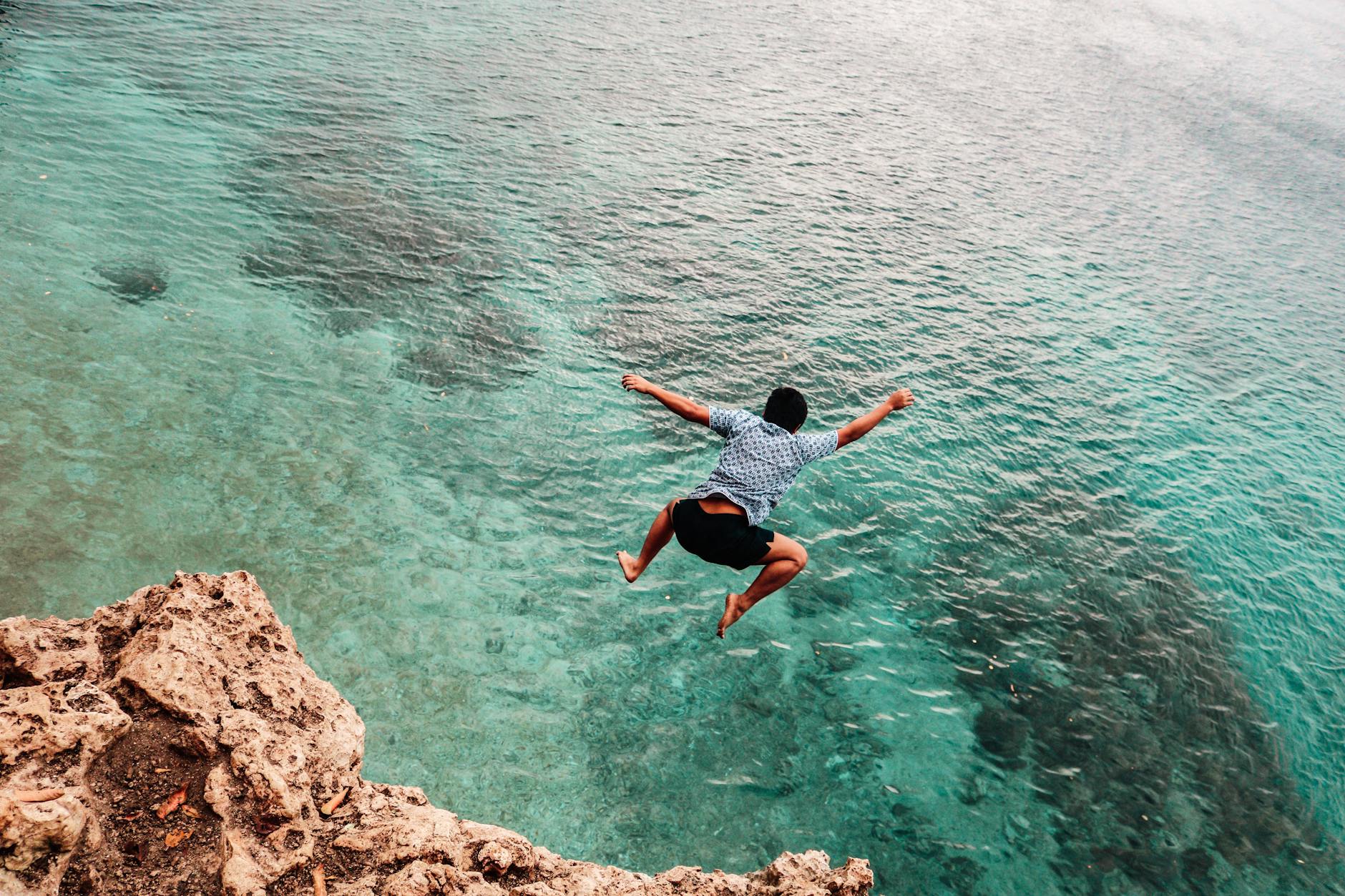
Coasteering is the activity that turns the Cornish coastline into an adventure park. Climb across rocks at sea level, swim through gullies, jump off ledges into deep water, and find caves that are otherwise inaccessible from land. It was invented in Wales in the 1970s, commercialised in Pembrokeshire in the late 1980s, and adopted commercially in Cornwall from the late 1990s onwards. The county is now arguably the second hub for British coasteering, with a string of accredited providers and a coastal geology that suits the activity better than almost anywhere in the UK. This coasteering Cornwall guide is the practical version — where to go, who to book with, what to expect, and the safety rules that matter.
I’ll cover the verified 2026 providers and prices, the locations that produce the best coasteering, the minimum ages and weight limits, what to wear and bring, and the genuinely important distinction between coasteering and the unsupervised cliff-jumping (“tombstoning”) that gets people killed every summer. Our wider Cornwall water sports and surfing guide sets the broader picture, and our Cornwall adventure activities guide covers the wider adrenaline scene.
What Coasteering Actually Is
Coasteering is the combination of three things: traversing the rocks at the wave line, swimming between sections where the rock runs out, and jumping from ledges into deep water. It was named in 1973 by the climbing writer Edward C. Pyatt, combining “coast” and “mountaineering” — though the practice of moving along the wave line had been done by surveyors and rock climbers for decades before that. Andy Middleton at Twr-y-Felin Outdoor Centre in St Davids, Pembrokeshire commercialised it in the late 1980s as an organised activity.
A typical commercial Cornish coasteering session runs two to three hours with a qualified guide. You’re kitted out with a full wetsuit (typically five millimetres in Cornish water), thick-soled wetsuit boots, a helmet, and a buoyancy aid. The guide chooses a route based on tide state, swell size, wind direction and the group’s experience. You traverse the rocks for a stretch, swim across a gully when the rock runs out, climb up to a ledge, jump or step into the water below, and continue. Jumps range from a metre or two for beginners up to ten metres for the more confident. The guide selects every jump based on water depth and the receiving area — they go first to confirm conditions, you follow with the option to step down rather than jump.
The pace is moderate. The water is cold even in summer (sixteen to seventeen degrees at peak). The group is usually six to ten people plus the guide, with a second guide on bigger groups. The drama of the activity is the surroundings — Cornish cliffs, Atlantic swell, the perspective of the coast from sea level — rather than extreme physical exertion.
The Best Coasteering Locations in Cornwall
Port Quin and Port Gaverne (North Cornwall)
The classic north-coast location, on the cliffs between Polzeath and Port Isaac. Cornish Rock Tors runs the bulk of the commercial coasteering here. Slate geology gives proper traverses and the small coves and arches at low tide are properly atmospheric. The wave exposure means sessions are weather-dependent; the guide can shift the route to either Port Quin or Port Gaverne depending on the day.
Lizard Peninsula
The Lizard has the most varied geology of any Cornish coasteering venue. Serpentine cliffs, sea caves, and the spectacular small coves between Cadgwith and Lizard Point. Lizard Adventure runs sessions across multiple put-in points. The advantage of the Lizard is the geology — the serpentine rock erodes into dramatic forms and the caves are some of the most photographed coasteering features in Britain.
Newquay Headlands (Lusty Glaze and Towan)
Newquay Activity Centre runs coasteering from the Lusty Glaze and Towan cliffs above and below the town. The advantage is convenience — you can do a half-day coasteering session in the morning and a surf lesson in the afternoon from the same town. The geology is sandstone rather than the more dramatic serpentine or slate, but the sessions are well-run and the access is unmatched.
Lamorna Cove and the West Penwith Granite
Kernow Coasteering operates the West Cornwall granite coast — Lamorna, Mousehole approach, the Land’s End peninsula coves. Granite produces different climbing texture from slate or serpentine — sharper edges, better holds, but more challenging on the swim sections. The advantage is the remoteness; this is the most properly off-the-beaten-track coasteering in Cornwall.
Pentire Headland (between Newquay and Crantock)
The headland above the Gannel estuary. Various providers run sessions here. The advantage is that the rocks are mostly sheltered from the worst of the Atlantic swell, which makes the activity more reliable on bigger-swell days when other locations are too risky.
Praa Sands and Mount’s Bay (West/South Cornwall)
Coasteering Adventures runs sessions from the Praa Sands cliffs. The south-coast aspect means smaller waves and more reliable conditions. Good choice in winter and shoulder seasons when north-coast sessions are weather-dependent.
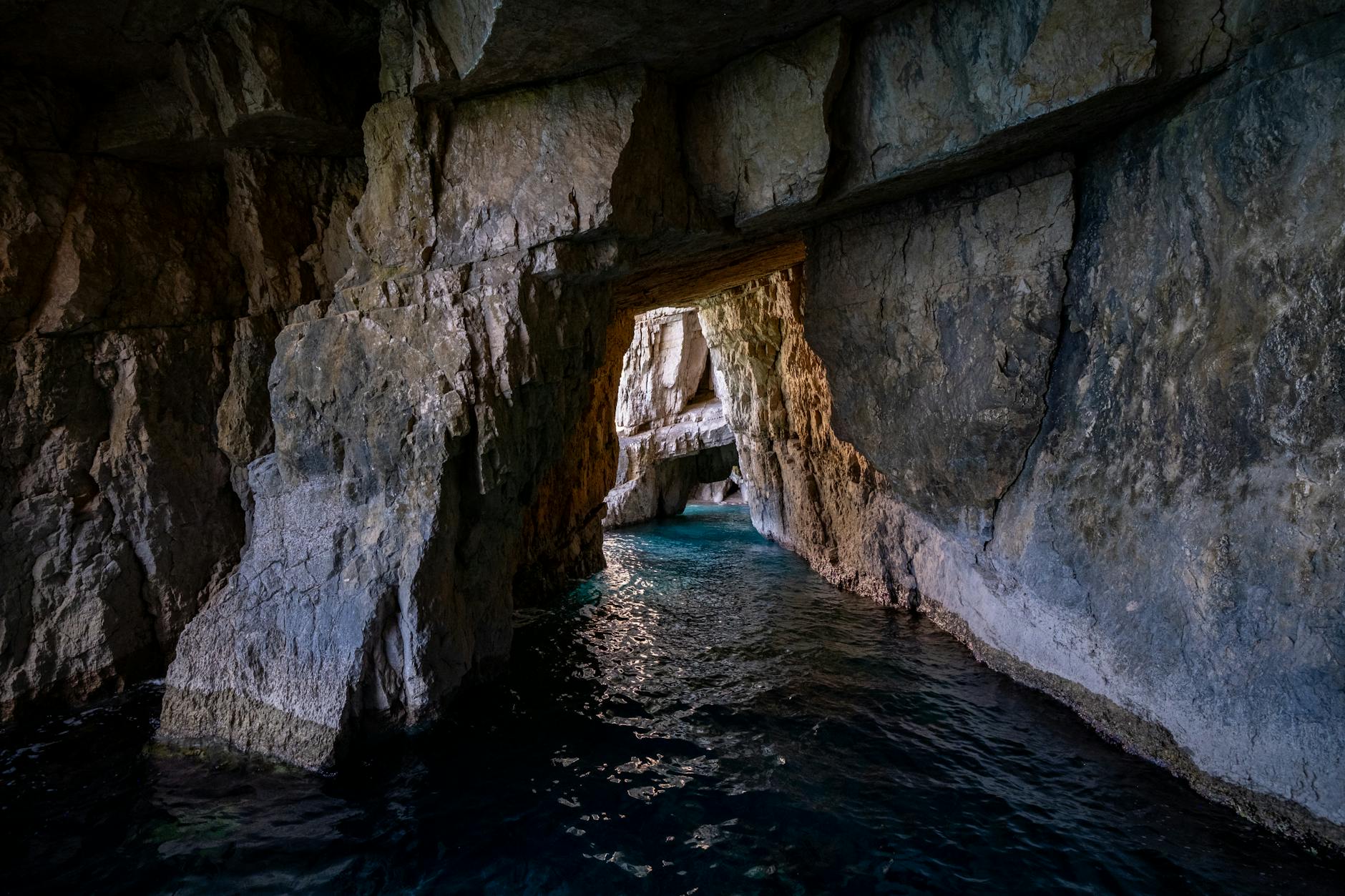
Several of these sit below coves you would otherwise never reach — see hidden and secret beaches in Cornwall.
The Verified 2026 Provider Directory
The seven main providers operating Cornish coasteering in 2026, all with proper Adventure Activities Licensing Authority (AALA) or National Coasteering Charter accreditation.
Newquay Activity Centre (Newquay) — Established 1996, AALA-licensed, £10 million public liability insurance. Twenty-plus years of operation. Heated changing rooms (genuinely useful after a January session). Sessions from £55 per person, up to around £110 for premium small-group experiences. Multi-activity bundles include coasteering with surfing or SUP. newquayactivitycentre.co.uk.
Cornish Rock Tors (Port Gaverne) — The north-coast specialists. Sessions from £45 to £50 per person. AALA and National Coasteering Charter member. Strong reputation for safety briefings and proper guide-to-client ratios. cornishrocktors.com.
Cornish Coast Adventures (North Cornwall) — Sessions £35 to £50 per person, with a £15 supplement for solo bookings. Smaller-scale operation but well-regarded.
Cornish Wave (Newquay) — Since 2012. Cornish Classic Coasteer is the flagship session at £55, two to three hours, 1:8 guide-to-client ratio. cornishwave.com.
Kernow Coasteering (West Cornwall — Praa Sands, Mousehole) — Ten-plus years running, HSE-listed (reference R2148). Operating from the granite coast of West Penwith. kernow-coasteering.co.uk.
Lizard Adventure (Lizard Peninsula) — The Lizard specialists. AALA-listed. Multi-activity including coasteering, kayaking, SUP. lizardadventure.co.uk.
Coasteering Adventures (Praa Sands) — From £60 per person for groups of three to five. South coast aspect makes them a useful winter/shoulder season operator.
Global Boarders — Multi-activity (surf and coasteering) on both north and south coasts. Family coasteering sessions for families with kids ten plus.
Coasteering Versus Tombstoning
This is the safety distinction nobody else writing about coasteering quite gets right. The two activities look superficially similar — jumping from cliffs or ledges into water — but they’re completely different in safety terms.
Coasteering is supervised, risk-assessed and qualified. The guide checks the water depth before each jump (depth changes with tide; what’s safe at high tide can be lethal at low tide). The guide knows the local hazards — submerged rocks, rip currents, kelp, jellyfish, lion’s mane stings. The guide carries safety kit (throw line, first aid, communication device, knife for cutting kelp). The guide has access to AALA or National Coasteering Charter standards including 16-hour rescue training, water-safety qualifications, and first aid certificates.
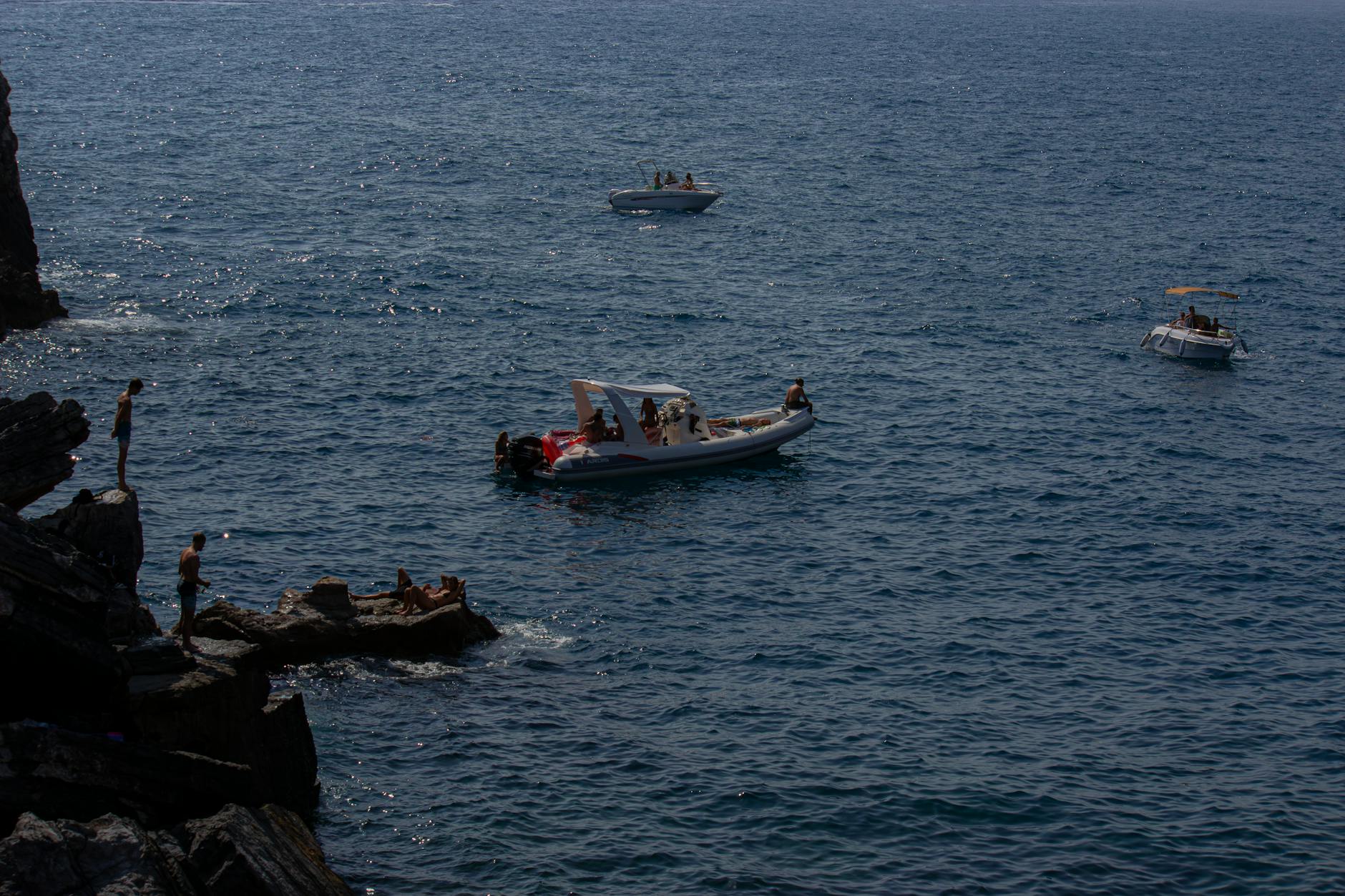
Tombstoning is unsupervised cliff-jumping by people who don’t know the water below. Multiple deaths happen in Britain every summer when people jump from sea cliffs or harbour walls into water that’s deeper or shallower than they expected, or that has submerged rocks, or that has a rip current pulling out. The National Water Safety Forum runs sustained campaigns against tombstoning.
The key practical implications: never jump from any Cornish cliff or harbour wall without a qualified provider. Don’t try to “do your own coasteering” by free-climbing along the rocks at the wave line — Cornish rocks at low tide are properly slippery and the falls have killed people. Always book through an accredited provider with AALA or National Coasteering Charter membership.
Minimum Ages and What to Expect
Most Cornish coasteering providers take ages eight plus with an adult; some go to nine plus or ten plus depending on group session policies. Children under fourteen typically need a parent or guardian in the group. Private family sessions can sometimes take children as young as six with appropriate adult supervision.
The physical requirements are moderate. You need to be a confident swimmer — most providers specify that participants must be able to swim 25 to 50 metres unaided in open water. Basic fitness is helpful but coasteering is more about confidence than strength.
The mental requirements are slightly different. You need to be willing to jump from heights — typically ranging from one to three metres on the lower options, up to eight to ten metres for the higher options. Most providers offer step-down alternatives for anyone who decides they don’t want to jump on a given ledge. The guide reads the group and adapts; nobody is forced into anything.
What to Wear and Bring
The provider supplies:
- A full five-millimetre winter wetsuit (warmer than the three-two you’d use for summer surfing because you’re stationary in the water for longer).
- Thick-soled wetsuit boots (essential for rock-traverse grip).
- A helmet (mandatory throughout the session).
- A buoyancy aid (impact-rated for the jumps).
You bring:
- A swimsuit to wear under the wetsuit.
- A towel.
- A warm change of clothes for after (you’ll be cold post-session).
- Sunscreen — waterproof if possible.
- A drink and a small snack.
- A waterproof phone case if you want photographs (most providers also take photos and share them online).
Don’t bring jewellery, watches, or anything you mind losing — the swim sections will claim them. Don’t bring contact lenses if you can avoid them; salt water plus contact lenses is uncomfortable.
Providers supply wetsuit, helmet and buoyancy aid. If you want your own kit for repeat sessions, see water sports equipment hire in Cornwall.
The Best Season for Coasteering
The peak Cornish coasteering season is May to October. The water is at its warmest (16-18°C from mid-July to early September), the days are longest, and the swell is generally manageable. Most providers operate daily from late spring through to early autumn.
Some providers (notably Newquay Activity Centre and Lizard Adventure) run year-round operations on calmer days. Winter coasteering is properly cold but produces a different kind of experience — empty cliffs, dramatic Atlantic swell, the option to jump into water that’s been agitated by a storm. The fee is the same; the wetsuit is the same; the day is shorter.
The single biggest weather variable is swell size, not air temperature. Coasteering is run on days when the swell is small to moderate and the wind is offshore or light onshore. A big swell day shuts the activity down for safety reasons. The provider makes the call typically the night before and offers reschedule or refund. Trust the guide’s judgement — they have years of experience reading Cornish coast conditions.
How a Typical Session Runs
A typical two-and-a-half-hour session has a familiar pattern:
Pre-session (30 minutes). Arrive at the provider’s base. Sign waiver. Get sized for wetsuit and boots. Helmet and buoyancy aid fitted. Safety briefing covering hand signals, group movement protocols, what to do if separated, what to do if injured. Walk to the put-in point — usually a five-to-fifteen-minute walk along the coast path.
Get-in (15 minutes). The first section is usually a confidence-building swim across a small section to a starting traverse. The guide demonstrates the right swimming position (back-stroke with the buoyancy aid to keep the head up; never head-down swimming with kit on). First small jump — usually one or two metres — to break the ice.
Main session (75-90 minutes). The route. Traverses across the rocks at the wave line. Swims between sections. Jumps from progressively higher ledges (always with the guide’s depth-check). The pace is moderate; the group stops between sections for the slower swimmers to catch up. The guide will adapt — pushing the route harder if the group is confident, or taking the easier options if anyone is finding it tough.
Wrap-up (15-20 minutes). Walk back to the base. Strip the wetsuit. Hot shower if available. Photographs shared (most providers post a session gallery to their social media or send links). Most participants are euphoric, tired, and slightly bruised.
The Photography Question
Most providers take photographs during the session — usually with a waterproof camera held by the lead guide or a separate water-photographer for premium sessions. Photographs are shared via the provider’s website or via WhatsApp/email after the session. Some operations include the photos in the session price; others charge a small extra fee (£5-15 typically).
You can bring your own waterproof camera or phone case but be careful — the swim sections and the impact of jumps have claimed many phones and GoPros over the years. The chest strap or wrist strap helps but doesn’t eliminate the risk. If photographs matter, use the provider’s service rather than risking your own kit.
Coasteering Etiquette
The Cornish coasteering scene has a few unwritten rules:
Respect seal colonies. Several coasteering locations are near grey seal pupping areas (particularly in autumn). Guides will route around seal hauling areas; never approach them on your own initiative.
No drone photography. Drones disturb wildlife and other water users. Most providers ban them on sessions.
Listen to the guide. The guide makes decisions based on their reading of conditions. If they say a jump is too risky for the day, don’t argue. If they say to go feet-first not head-first, do it.
Group cohesion. Don’t get ahead of the lead guide or behind the back-marker. The group moves at the pace of the slowest swimmer.
Leave no trace. Take rubbish out. Don’t disturb rock pool wildlife.
Coasteering as Part of a Cornish Trip
The activity works well as a half-day component of a Cornish week — three to four hours including travel and changing. Most providers run morning sessions (10am-1pm typical) and afternoon sessions (2pm-5pm typical), which lets you build coasteering into a beach day rather than commit the whole day.
Good combinations:
- Morning coasteering at Port Gaverne + afternoon at Polzeath beach.
- Coasteering on the Lizard + lunch at the Cadgwith Cove Inn + afternoon at Kynance Cove.
- Newquay coasteering morning + Fistral surf lesson afternoon (some providers bundle this).
- Praa Sands coasteering + St Michael’s Mount visit.
It pairs naturally with Cornwall adventure activities and wild swimming in Cornwall, and works well as the centrepiece of a trip with teenagers.
How Cornwall Compares to Pembrokeshire
Pembrokeshire in west Wales is the original British coasteering home and still has the largest concentration of providers. Cornwall has caught up over the past two decades and now arguably offers more varied geology — slate in the north, serpentine on the Lizard, granite in West Penwith, sandstone around Newquay. Pembrokeshire’s coastline is more consistent (mostly Old Red Sandstone) but the activity itself is interchangeable.
If you’re choosing between them: Pembrokeshire for the history and the consistent quality; Cornwall for the variety and the integration with other coastal activities (surf, kayaking, SUP).
Frequently Asked Questions
What is coasteering? Combination of rock-traverse, swimming and jumping along a coastline at the wave line, with a guide and full water-safety kit.
Is coasteering safe? With an accredited provider (AALA or National Coasteering Charter member), yes. Without supervision, no — unsupervised cliff-jumping (tombstoning) is dangerous and illegal in places.
How old do you have to be to go coasteering? Most providers take eight-plus with an adult; some nine or ten plus. Private family sessions sometimes take younger kids.
What do you wear for coasteering? The provider supplies wetsuit, boots, helmet and buoyancy aid. You bring a swimsuit, towel and warm change of clothes.
How long is a coasteering session? Two to three hours typically.
How much does coasteering cost in Cornwall? £45-65 per person for a standard session; £55-110 for premium small-group experiences.
Where is the best place to go coasteering in Cornwall? Lizard Peninsula for varied geology; Port Quin/Port Gaverne for north-coast classic; West Penwith for remote granite; Newquay for convenience.
Do you need to be able to swim to go coasteering? Yes — typically 25 to 50 metres unaided in open water.
How high are the jumps in coasteering? Usually two to ten metres, with the option to step down rather than jump. The guide chooses the route based on the group’s confidence.
What’s the difference between coasteering and tombstoning? Coasteering is guided, risk-assessed and qualified. Tombstoning is unsupervised cliff-jumping. The first is safe; the second has killed people.
What is the best time of year to go coasteering in Cornwall? May to October peak; year-round at some providers. The water is warmest July to early September.
Can children do coasteering? Yes — most providers take from age eight with an adult.
Coasteering is one of those Cornish activities that delivers more than the brochure suggests. Book with an accredited provider. Trust the guide. Take the option to step down on the jumps that scare you. The combination of cliff-rock-Atlantic at sea level is the proper Cornwall, and you’ll see parts of the coast that nobody walking the South West Coast Path will ever reach.