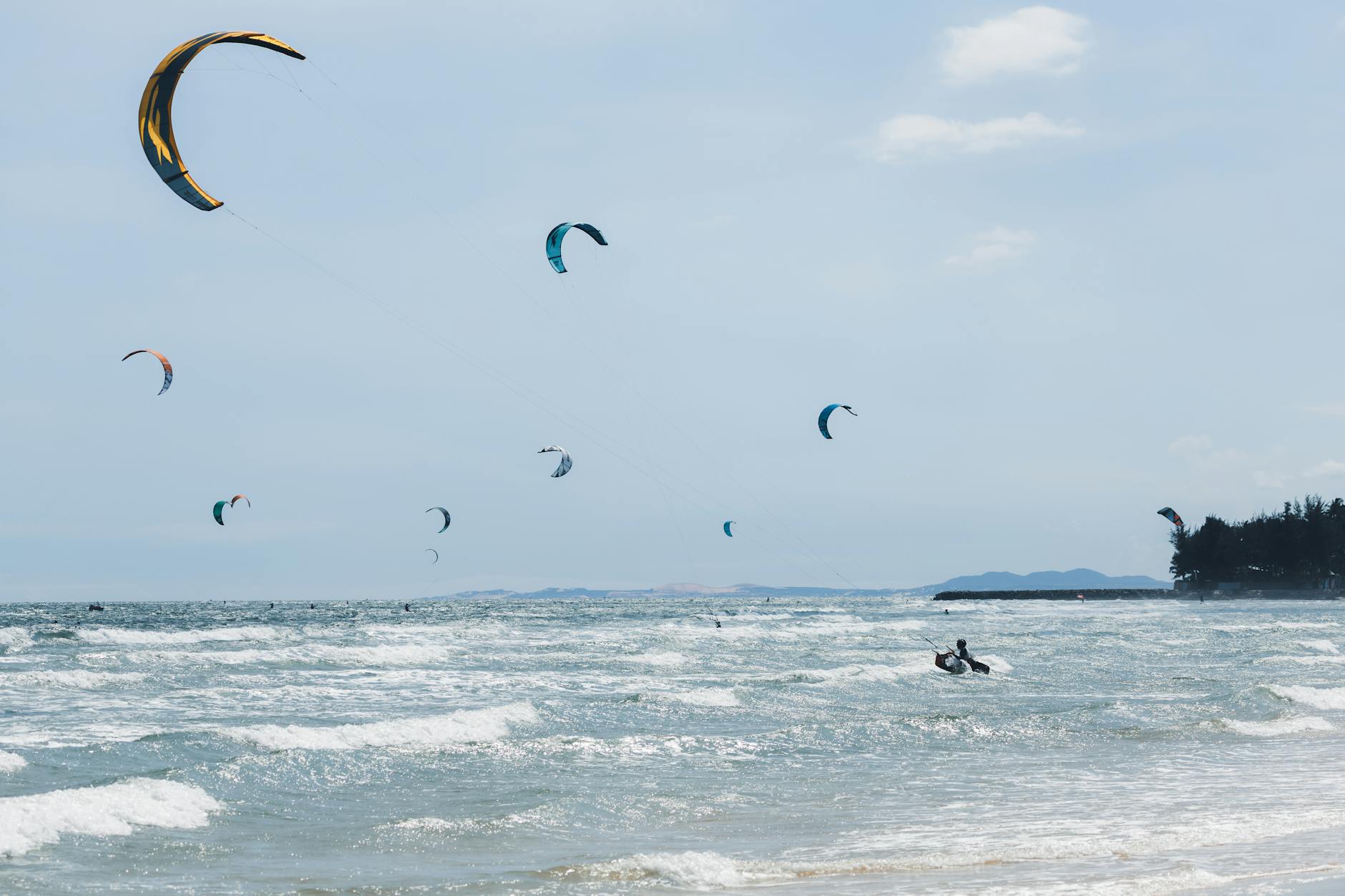
Kitesurfing and windsurfing have a quieter Cornish profile than surfing, but among committed riders Cornwall is the UK’s serious destination for both. Mounts Bay around Marazion has produced a steady stream of British and world-tier kite athletes. Coverack on the Lizard is one of the legendary flatwater windsurfing locations in Europe. The wind patterns — south-westerly through most of the year, with reliable easterly windows in winter and spring — produce the conditions that windsports demand. This kitesurfing Cornwall guide is the one written for riders rather than for visiting tourists who’ve vaguely heard there’s wind in Cornwall.
I’ll cover the best spots for both disciplines with wind-direction guidance, the verified 2026 schools and prices, the certification framework (BKSA, IKO and the practical implications), and the realistic picture of when Cornwall delivers world-class conditions and when it’s just OK. Our wider Cornwall water sports and surfing guide is the parent piece.
Why Cornwall Works for Wind Sports
Three reasons. First, the wind reliability — Cornwall is on the south-western tip of Britain and faces the Atlantic, which means the south-westerly weather patterns produce consistent wind through most of the year. The county averages 12+ mph wind days for roughly 200 days a year, which is the threshold for kitesurfing and windsurfing to be possible.
Second, the variety of spots. Mounts Bay (Marazion, Praa Sands) for south-westerly cross-onshore conditions; Coverack on the east Lizard for the legendary flat-water windsurfing; Daymer Bay and the Camel estuary for easterly-wind sessions; Watergate Bay and Gwithian/Godrevy for north-coast options. Different wind directions activate different spots — there’s almost always somewhere working if the wind blows.
Third, the water temperature is acceptable. The Cornish sea at 14-18°C in summer is warmer than equivalent latitudes elsewhere, and even winter water at 8-10°C is workable with proper thermal kit. The water-temperature window means kitesurfing and windsurfing are practical for nine-plus months of the year.
The Best Cornish Kitesurfing Spots
Marazion (Mount’s Bay)
The classic Cornish kite spot. Mount’s Bay opens to the south-east, which means the prevailing south-westerly wind is cross-onshore — perfect for kite control and safety. The water is shallow with a sandy bottom. The bay has space for multiple riders. St Michael’s Mount as a horizon landmark. Mount’s Bay Watersports and Edge Watersports are the main schools.
Best in: SW, W. Workable in: WNW, SSW. Avoid: E, NE (offshore wind blowing you out to sea is a serious safety risk).
Praa Sands
The south coast alternative to Marazion. South-west-facing, takes the same prevailing wind. Often less crowded than Marazion. Excellent for both kite and wind. Praa Sands Surf School runs lessons including kite training.
Best in: W, WSW. Workable in: SW, NW. Avoid offshore E/NE conditions.
Daymer Bay (Camel Estuary)
The east-wind specialist. When the prevailing south-westerly shifts to easterly (often a winter-spring pattern), Daymer Bay comes alive — sheltered from waves by the Camel estuary shape, with clean flat water from the tidal flow. Best at higher tide states. Limited launch access; check parking.
Best in: E, ENE. Workable in: ESE, NE.
Watergate Bay (Newquay area)
North-coast option that needs the right wind direction. Works in north-westerly to north-easterly winds; the prevailing south-westerly is onshore here. Two-mile beach offers plenty of space.
Best in: N, NW. Workable in: NE, W.
Gwithian and Godrevy
The long sandy beach west of Hayle. Cross-on conditions in most prevailing winds. Excellent for kite progression because the wide flat beach gives plenty of room.
Best in: SW, W cross-on. Workable in: NW, N.
Hayle Estuary
Flat-water specialty spot — at high tide the estuary fills and creates a sheltered flat-water playground for kite jumping and flat-water tricks. Best at high tide; the mudflats at low tide make it impossible.
Best in: SW, W, NW (cross-on). Time the tide carefully.
Loe Bar (near Helston)
The advanced/experienced spot. The shingle bar between Loe Pool and the open sea creates a wave/wind interaction that produces world-class conditions on the right day. Properly committed; not for beginners.
The Bluff (St Ives area)
Training ground for some of the world-class kite surfers who’ve come out of Cornwall. Less crowded than Marazion. Best in the prevailing south-westerly.
Hawker’s Cove (Padstow area)
Quiet, uncrowded option with a large flatwater area. Better for intermediate and above — the launch requires care.
Pentewan and Par Sands (south coast)
Less crowded south coast options. Pentewan Sands and Par Sands are both south coast beaches with kite-friendly conditions in northerly winds.
Widemouth Bay (Bude)
North coast option for kite in the right wind directions.
Perranporth and Penhale
Long beach offering space for multiple kites. School-favourite for progression lessons.
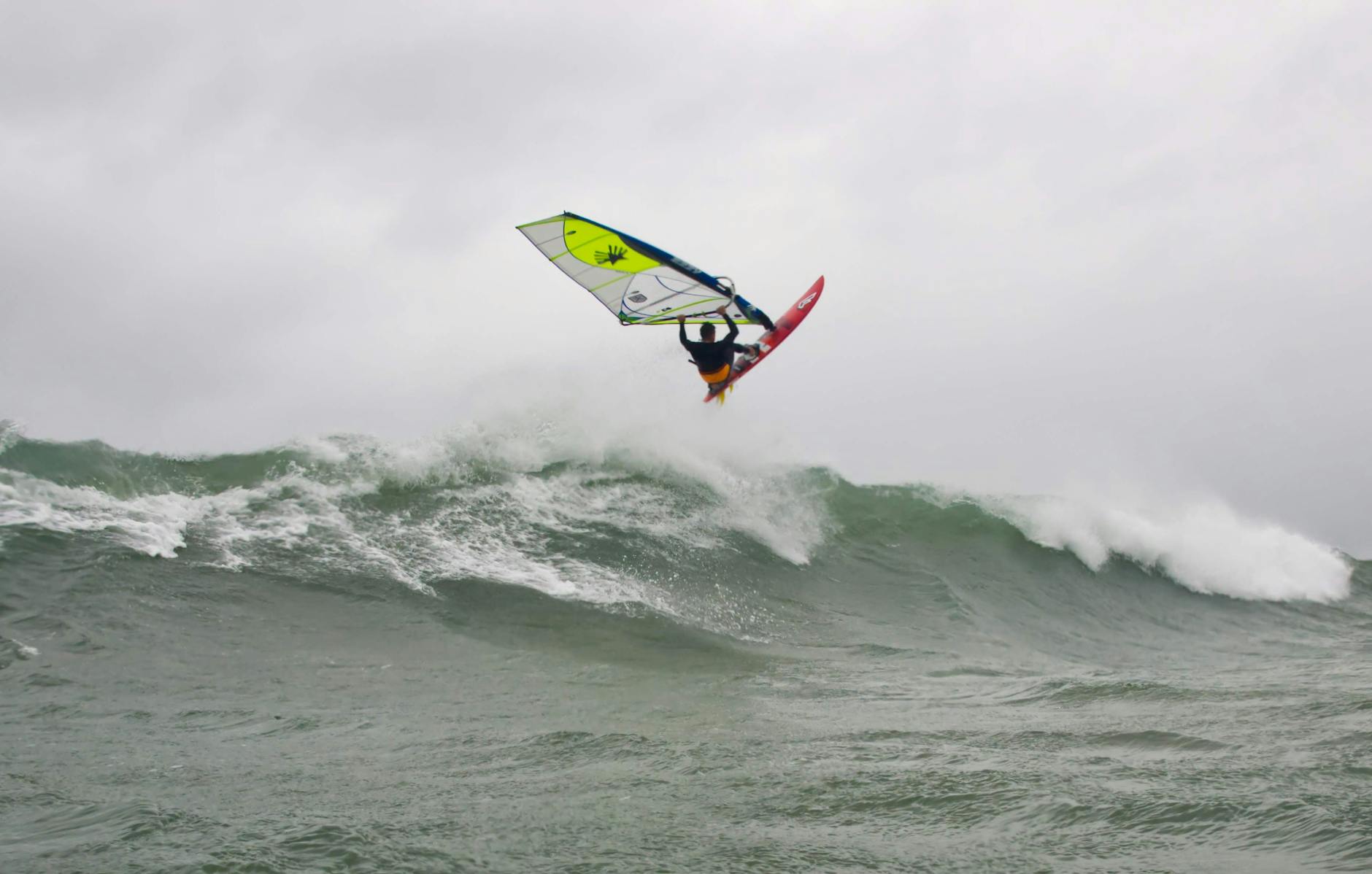
Several double as surf breaks when the wind drops — see the best surfing beaches in Cornwall.
The Best Cornish Windsurfing Spots
Coverack
The legendary Cornish windsurfing location. The east-side Lizard cove sits in a position where the prevailing south-westerly wind hits the cove cross-onshore, producing reliable flat-water windsurfing conditions that have made Coverack one of the most photographed European windsurfing venues. The Coverack Windsurfing Centre has been running BWA-affiliated courses since the 1980s and Coverack regularly hosts UK national-level events.
Best in: SW, W (the legendary cross-on conditions). Workable in: NW, S.
Marazion (Mount’s Bay)
Same spot as the kite operation. The wider Mount’s Bay is windsurfable in the prevailing SW. Several Marazion centres (Edge Watersports, Mounts Bay) cover both disciplines.
Praa Sands
Windsurfable in the prevailing south-westerly. Less crowded than Coverack.
Daymer Bay (Camel Estuary)
The east-wind windsurfing spot, mirror of the kite operation.
Loe Bar (Helston)
Advanced wave-sailing location. Wave-and-wind interaction creates conditions for the experienced.
Wind Direction Matters More Than Wind Speed
The single most important practical lesson for Cornwall wind sports: the wind direction determines which spot to go to. Wind speed alone doesn’t tell you whether a session will work.
A reliable mental map:
South-westerly wind (the prevailing pattern): Marazion, Praa Sands, Coverack, Gwithian/Godrevy, The Bluff. Avoid east-coast spots.
Westerly wind: Same as south-westerly, slightly different cross-on angles.
North-westerly wind: Watergate Bay, Hayle estuary (cross-on), some north-coast options. Marazion still workable.
North-easterly or easterly wind: Daymer Bay, Camel estuary, sheltered north-coast options that face away from the wind. Most south-coast spots are now offshore (avoid).
South-easterly wind: Less common pattern. Some Lizard locations work; check carefully.
Southerly wind: Praa Sands, Marazion (with caveats). Many spots are onshore which is safe but maybe choppy.
Northerly wind: Pentewan, Par Sands, southern Lizard sheltered spots.
The forecasting tools the locals use: Windguru (the kite/windsurf staple), Magic Seaweed/Surfline for combined swell-and-wind, Met Office, Windy.com, Predict Wind for the most granular forecasting. The 12 mph (10 knots) threshold is the minimum for fun kitesurfing; 18+ mph is when sessions get properly engaging.
The Verified 2026 School Directory
Cornwall has a strong network of accredited schools for both disciplines:
Mount’s Bay Watersports (Marazion) — The main Marazion operation. Kite and windsurf lessons; equipment hire for certified riders. BKSA-recognised.
Edge Watersports (Marazion) — The other major Marazion school. Multi-discipline (kite, wind, SUP).
Coverack Windsurfing Centre — The Coverack specialist. Founded in the 1980s. BWA-affiliated. RYA and BSA courses. Equipment hire and lessons. coverack.co.uk.
Praa Sands Surf School — Multi-discipline including kite training in the cross-on Praa Sands conditions.
Pasty Adventures (Marazion) — Run by Lee “Pasty” Harvey, BKSA champion. Personal coaching at the technical level for advanced riders.
Atlantic Riders (Watergate Bay) — Watergate Bay-based kite school. atlanticriders.co.uk.
Ocean High (Marazion) — Personal coaching at the West Cornwall level. oceanhigh.co.uk.
Naish Kitesurfing School — Cornwall-area kite school.
CS Watersports Academy — Multi-discipline. BKSA 3-day course at £400 for 6.5 hours of tuition; per-hour lessons £80. Equipment rental for certified riders £100 per day. Refresher 1-day around £125. cswatersportsacademy.com.
Surf Sanctuary (Polzeath) — North coast multi-activity including kite.
Venturi Watersports (North Coast) — Lessons across north Cornwall locations.
Kernow Kitesurf Club — Not a school but a local club — useful for finding a riding community after lessons. kernowkitesurfclub.co.uk.
For gear rather than tuition, see water sports equipment hire in Cornwall.
Certification and What It Means
Two main certification bodies operate in British kitesurfing: the BKSA (British Kitesurfing Association) and the IKO (International Kiteboarding Organisation). Both produce a recognised certification level (level 1-3 typically) that lets you hire equipment, rent on the beach, and demonstrate skill levels to other riders.
Practical implications:
- Equipment hire shops typically require certification before they’ll rent you a kite. Renting a kite without supervision in Cornish wind conditions is genuinely dangerous; the kit is large and powerful enough to cause serious injury.
- BKSA Level 1 is the standard “launch certification” — you can set up and launch independently in light conditions.
- BKSA Level 2 is the “intermediate riding” certification — you can ride upwind reliably.
- BKSA Level 3 is the “freestyle/advanced” certification — jumps, transitions, and self-rescue.
- IKO has a similar three-level system.
Most Cornish schools offer both certifications. The 3-day course (around £400) typically takes a complete beginner to Level 1-2.
For windsurfing, the RYA (Royal Yachting Association) is the main certification body, with Beginner, Intermediate and Advanced courses. Coverack Windsurfing Centre is the main Cornish RYA school.

Lesson Costs and Course Structures
The verified 2026 bracket for kite and wind lessons in Cornwall:
Kite — 1-day intro lesson: £150-200 typical. Three to four hours of tuition. Covers kite setup, basic flying skills, water relaunch.
Kite — 3-day beginner course (BKSA Level 1-2 typical): £300-500. Six to eight hours of water time total. Most students finish riding upwind by day three.
Kite — per-hour private: £80 typical.
Kite — refresher 1-day for returning riders: £125.
Equipment rental (certified riders only): £100 per day.
Windsurf — 1-day beginner: £100-150 at Coverack and similar centres.
Windsurf — 5-day course (RYA Beginner to Intermediate): £400-600.
For comparison, the Cornish surf school market is at £30-40 for a group lesson — kite and windsurf are significantly more expensive because the lessons are typically smaller (1:2 or 1:3 instructor-to-student), the kit is larger and more expensive to maintain, and the conditions are weather-dependent (school cancels or reschedules around 20% of bookings on average).
Cornwall vs Tarifa, Egypt, Cape Town
The honest comparison for visiting kitesurfers thinking about Cornwall as a destination:
Tarifa (Spain) has more reliable wind (250+ days a year) and warmer water. Egypt (Hurghada, Soma Bay) has the most consistent flat-water conditions in Europe-adjacent destinations. Cape Town has the season at the right time of year for European riders.
Cornwall’s advantages: short flight or drive from the rest of the UK; no overseas travel; English-speaking; the local kiteboarding community is welcoming; reliable summer water temperatures; world-class flat-water spots (Marazion, Hayle estuary at high tide, Coverack); the geography (rocks, headlands) makes the visual character genuinely different from desert beaches.
Cornwall is the destination for committed UK riders who want regular sessions year-round, and for visiting European riders looking for a different-character venue. It’s not the destination if you want guaranteed daily wind sessions in shorts.
The Best Season for Cornwall Wind Sports
The honest seasonal picture:
Spring (March-May): Strong winds, cold water (8-12°C). Five-four wetsuit. Best wind days of the year often happen here. Crowds light.
Summer (June-August): Lighter winds typically; sea breezes fill in by mid-morning and run through afternoon. Warmer water. Crowds peak at Marazion in school holidays. Many sessions are evening-and-morning only.
Autumn (September-November): The kite/windsurf sweet spot. Reliable Atlantic weather systems bringing 15-25 mph winds, water still warm from summer (14-16°C), smaller crowds.
Winter (December-February): Strongest most consistent winds. Cold water (8-10°C); 5/4 with boots and gloves. Empty spots. Properly engaging for committed riders.
The single best month for an experienced rider: September, possibly October. The single best month for a learner: June.
Cornwall surfing conditions by season covers the same weather patterns from a wave perspective, which is useful when the wind fails you.
Tide Awareness
Cornish kite and windsurf spots have varying tide dependencies:
Marazion: Mid to high tide. Low tide exposes too much beach and the rocks.
Praa Sands: Workable through most of the tide.
Hayle estuary: High tide only — the estuary is essentially dry at low tide.
Daymer Bay: Mid to high tide for sufficient depth.
Coverack: Works through the tide.
Watergate Bay: Works through the tide.
Gwithian: Best at higher tides; low-tide exposes too much beach.
Our Cornwall beach safety guide covers tides, rips and flags across the county.
Safety
Kitesurfing and windsurfing have meaningful safety risks. The non-negotiable rules for Cornwall:
- Lessons mandatory for beginners. Don’t attempt to learn from a friend; the kit is powerful enough to cause serious injury.
- Never go alone. Always have someone watching the beach who can call for rescue.
- Lifeguard awareness. Some Cornish lifeguarded beaches restrict kite operations to specific zones. Respect lifeguard instructions.
- Know your wind limits. A 25 mph wind is too much for a Level 1 rider. Don’t ride conditions beyond your skill.
- Self-rescue training. Both BKSA and RYA courses include self-rescue — make sure your training covered it.
- Check the forecast. Sudden wind shifts (offshore squalls) are dangerous; check the forecast before launching.
- Watch for other water users. Surfers, swimmers, boats. Give them right of way.
The Cornish kite/wind community is generally welcoming but expects new riders to learn safety properly. Don’t show up at Marazion without a lesson and rig the largest kite in your bag.
The Marazion vs Coverack Choice
The decision most visiting riders make. Both are flagship Cornish wind-sports venues but they suit different riders:
Marazion is the kitesurfing venue. Wide open Mount’s Bay, prevailing south-westerly cross-onshore, shallow sandy bottom, multiple schools. Better for kite. Mount’s Bay is bigger and more accommodating of multiple riders.
Coverack is the windsurfing venue. Cross-on south-westerly into a sheltered cove, world-class flat water, the Coverack Windsurfing Centre as the resident school. Better for windsurfing — particularly flat-water freestyle and intermediate riding.
Both work for both disciplines, but specialist riders pick the venue that fits their sport.
Frequently Asked Questions
Where are the best kitesurfing spots in Cornwall? Marazion for the main kite location; Praa Sands for an alternative; Daymer Bay for east-wind days; Watergate Bay for north-coast options; The Bluff near St Ives as a quieter alternative.
Is Cornwall good for kitesurfing? Yes — among the UK’s strongest kite destinations. Reliable wind, varied venues, good schools, accessible.
How much do kitesurfing lessons cost in Cornwall? 1-day intro £150-200; 3-day BKSA course £300-500; per-hour private £80; refresher day £125.
When is the best time to kitesurf in Cornwall? September and October for best wind plus warm water. June for learners.
What wind conditions are best for kitesurfing? 12-25 mph (10-22 knots) cross-onshore or onshore (not offshore). Cornwall’s south-westerly works at most spots.
Can beginners learn kitesurfing in Cornwall? Yes — book a 3-day BKSA course at one of the main schools (Mount’s Bay, Edge, Coverack for windsurf instead).
Do I need certification to hire kitesurfing equipment? Yes — BKSA or IKO Level 1 minimum at most rental shops. Rental for certified riders around £100/day.
Is Marazion good for kitesurfing? Yes — the classic Cornish kite spot. Best in south-westerly cross-onshore conditions.
What’s the difference between kitesurfing and windsurfing? Kitesurfing uses a large kite controlled by hand bar; windsurfing uses a fixed sail attached to a board. Both use the wind; different techniques and learning curves.
Where is the best windsurfing in Cornwall? Coverack on the Lizard. World-class flat water in the prevailing south-westerly. Coverack Windsurfing Centre is the resident school.
If you’re planning a session on the north coast, our Watergate Bay guide covers one of the most popular kitesurfing beaches near Newquay, with the practical details on parking, lifeguard zones and tides.
When the wind swings into the south-west, Marazion is one of the busiest kitesurfing beaches in the county, with St Michael’s Mount as the backdrop. Our Marazion guide covers the beach, the parking and the summer dog rules.
Cornwall’s kitesurfing and windsurfing scene rewards committed riders. Pick Marazion or Coverack as your base. Book proper instruction. Build certification level by level. The wind will reward your patience — particularly in autumn, when Cornish wind days are among the best in Europe.