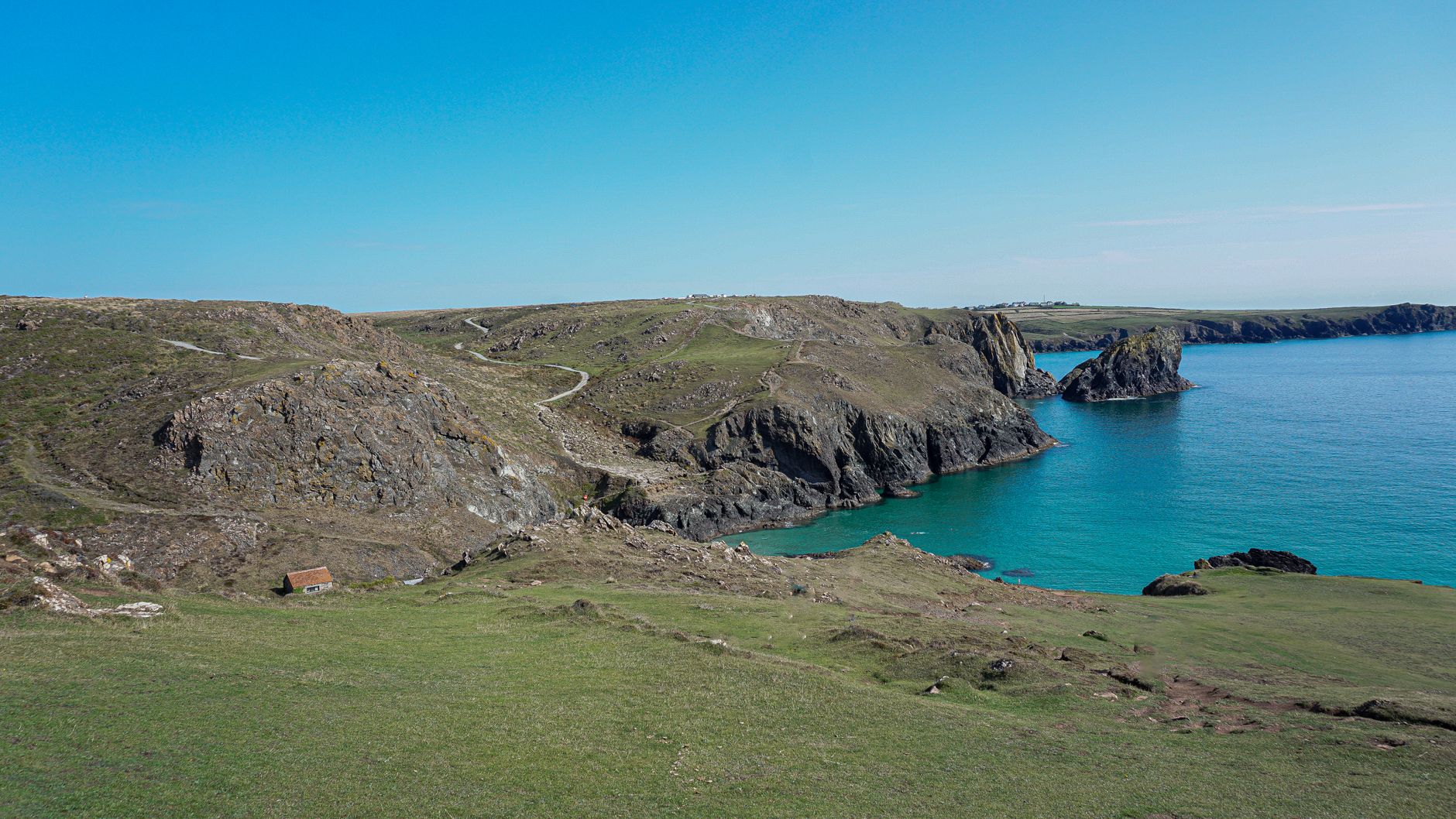
Most travel guides send you to the same dozen Cornwall attractions: Eden, Heligan, Tintagel, the Minack, St Michael’s Mount. They are wonderful, but they are not Cornwall’s secret. The version of the county that locals love, and the one that quietly outlasts every season’s headline destination, lies in the coves you have to climb down to, the eccentric little museums, the half-forgotten ruins, and the small obsessions you only stumble on by going slightly out of your way.
What follows gathers the off-the-beaten-path experiences that visitors most often tell us were the highlight of their trip. They are grouped by category and by region, with honest notes on access, parking, and the best season to go. Many are free, almost all are quieter than the famous names, and a few feel genuinely like discoveries. The one thing they share is that they reward a little effort and a willingness to leave the main road.
Cornwall’s Hidden Coves and Secret Beaches
Cornwall has more shoreline than you can walk in a year, and its quieter coves often feel like private discoveries even at the height of summer. The trade-off is usually a steep cliff path or a tide-dependent scramble in, which is precisely what keeps them empty.
Pedn Vounder
Pedn Vounder is the beach in the photograph everyone shares but few actually find: a curve of white sand under granite cliffs near Treen, with a sandbar that emerges at low tide to make a turquoise lagoon. Reaching it means a steep, unmarked descent and ideally a low-tide arrival, so it is not for unsteady walkers or buggies. The reward, when you get there, is close to unreal.
Nanjizal Bay (Song of the Sea)
Less than a mile from Land’s End, Nanjizal is reached by a 30-minute walk down the coast path. The eastern end has a narrow sea cave nicknamed the Song of the Sea, a deep slit in the cliff that frames a perfect rectangle of ocean. It is best at mid to low tide and in spring or summer, when the colours are at their most saturated.
Portheras Cove
On the far north coast near Pendeen lighthouse, Portheras Cove is a 20-minute walk through fields from the nearest road. The beach is small, sandy, and almost always quiet. Locals walk it daily; visitors rarely find it.
Lantic Bay and Little Lantic
On the south-east coast between Polruan and Polperro, Lantic Bay is a remote, facility-free pair of beaches reached by a steep coast-path descent. The swimming is spectacular, there are almost never crowds, and at low tide you can scramble round to Little Lantic next door.
Hemmick Beach
Tucked between the Dodman and Gorran Haven, Hemmick is a tiny shingle-and-sand cove with a single parking spot and an ankle-deep tide pool that suits younger children. It is best at mid tide.
Mutton Cove, Lizard
A 20-minute walk from Lizard Point along the cliff path leads to a viewpoint where grey seals haul out year-round. Bring binoculars, and do not descend to the beach, as the seals are protected and the cliff is unstable.
These are the pick of them, but there are more; the full guide to hidden and secret beaches in Cornwall has routes and tide notes for each.
Cornwall’s Most Unusual Indoor Attractions
The Museum of Witchcraft and Magic, Boscastle
The largest museum of its kind in the world, with a serious academic collection of ritual objects, books, and artefacts spanning hundreds of years of British folk magic. It is densely packed and quietly fascinating; allow at least 90 minutes. Boscastle harbour itself is worth a wander afterwards.
Goonhilly Earth Station, Lizard
A Cold War satellite-tracking station on Goonhilly Downs, with a visitor centre that ranges from the early space race to current deep-space tracking. It is excellent for older children and any adult who has ever cared about Apollo, Voyager, or the first transatlantic television broadcasts, which passed through here.
The Curiosities at Trago Mills
A genuine Cornish curio: a vast, slightly chaotic department store near Liskeard with side-collections of oddities, mechanical toys, and eccentric statuary in its grounds. Free, largely indoor, and unlike anywhere else you will shop.
The Boscastle Visitor Centre
A small but moving exhibit on the 2004 Boscastle flood, with footage and salvaged objects that bring home how fast the water rose. Free entry, and a natural pairing with the Witchcraft Museum a few doors along.
PK Porthcurno (the Telegraph Museum)
Where transatlantic communication began. The cove at Porthcurno is where a bundle of international telegraph cables once came ashore, and the museum traces the engineering and wartime history with original equipment and a set of tunnels dug into the hillside during the Second World War.

Hidden Gardens, Lost Villages and Wild Places
St Nectan’s Glen
A 60-foot waterfall hidden in a wooded gorge near Tintagel, where the Trevillet River drops through a near-perfect circular hole worn into the slate. It has long been tied to healing legends, and visitors leave ribbons and tokens around the basin. It is about 30 minutes’ walk in along a riverside path, with a small entry fee at the falls.
Kennall Vale, Ponsanooth
A wooded former gunpowder works near Penryn, now a Cornwall Wildlife Trust reserve. The river tumbles through the ruins of stone buildings being slowly reclaimed by moss and hart’s-tongue fern. Free, with no facilities, and eerily beautiful in low light.
Gwennap Pit
An open-air amphitheatre formed by mining subsidence and later shaped by John Wesley’s Methodist preachers into a terraced bowl. It is open every day, free to enter, and astonishingly atmospheric when empty.
Cliff-Top Curiosities and Ruins
- Hawker’s Hut, Morwenstow — the smallest National Trust property, built into the cliff above the Atlantic from ships’ timbers by the eccentric Victorian vicar Robert Hawker. Free, and very much weather-dependent.
- The mining ruins above St Just — Bronze Age circles and roofless engine houses share the moor here, a landscape of industry and prehistory layered together.
- The Lost Gardens of Penjerrick — the wilder, smaller, far quieter cousin of Heligan, near Falmouth.
- Trengwainton’s woodland walks — the National Trust garden has signposted routes, but the unmarked side paths through the old kitchen gardens are the real find.
Cornwall’s Standing Stones, Quoits and Ancient Sites
Cornwall has more Bronze Age and Iron Age remains than almost any English county. Most are free, unfenced, and on common land: you walk to them, find them, and have them more or less to yourself.

- Mên-an-Tol — a holed standing stone near Madron, traditionally crawled through in healing rituals.
- The Merry Maidens — a perfect 19-stone circle on the road to Lamorna.
- Lanyon Quoit — a Neolithic dolmen high on the moor above Madron, visible from the lane.
- Trethevy Quoit, near St Cleer — an astonishing chambered tomb, some 5,000 years old.
- The Hurlers, Bodmin Moor — three Bronze Age stone circles within a few hundred metres, above the village of Minions.
- Boscawen-Un — a quieter, atmospheric circle near St Buryan, with a leaning central pillar.
These sites are the visible edge of a much deeper story; for the wider history of the county’s castles, legends, and ancient monuments, see the guide to Cornwall’s heritage and history. Many of the stones lie along walkable stretches of the coast and moor, and the South West Coast Path guide links several of the West Penwith sites into a single day.
Quirky Festivals and Living Traditions
Cornwall takes its folk customs seriously, and several survive only here. Most are free to watch, though the small harbour towns that host them fill up fast, so plan accommodation and parking well ahead.
- Padstow ‘Obby ‘Oss (1 May) — two horse-figure characters dance through the streets in one of the oldest surviving spring rituals in Britain.
- Helston Flora Day (8 May) — the Furry Dance, with formally dressed pairs dancing in and out of houses through the town.
- Mousehole Sea, Salts and Sail — a small wooden-boat gathering held every other year.
- Crying the Neck — a Cornish harvest custom revived in several villages each September, with the last sheaf of wheat cut and cried three times.
- Montol Festival, Penzance (around 21 December) — a masked midwinter pageant with lantern processions.
- Allantide — Cornwall’s traditional Halloween, with red apples, bonfires, and a bobbing custom older than the modern holiday.
Dates shift and some events run only in alternate years, so check before you travel; the full Cornwall events and festivals calendar lays out the year in order.
Unusual Things to Do With Children in Cornwall
- The Cornish Seal Sanctuary, Gweek — a rescue centre for sick and orphaned grey seals, where you can watch the daily feeds and follow the residents’ stories.
- Carnglaze Caverns — slate caverns with an underground lake, a proper adventure for anyone steady on uneven steps.
- Storm-watching on the Atlantic coast — from late October to March, watching big surf safely from a headland is genuinely thrilling for children.
- Going underground at Geevor — a mine tour that turns Cornwall’s industrial past into something you can touch.
- Falmouth’s working docks — for any child who has ever loved a boat, the great grey ships in for repair are a spectacle.
Older children in particular tend to take to the wilder, odder end of the county; there are more ideas pitched at that age in the guide to Cornwall with teenagers.
Unusual Eating, Drinking and Local Oddities
- The Cornish Cheese Co. cellars, near Liskeard — Cornish Blue maturing in granite-lined cellars, on a working farm.
- Tinners Arms, Zennor — one of Cornwall’s oldest pubs, with a slate floor and no music, in a hamlet on the wild north coast.
- Camel Valley Vineyard, near Bodmin — award-winning English sparkling wine, tasted on the terrace of a working vineyard.
- Saffron buns and hevva cake — Cornish bakes you will not find in standard tea rooms; ask at the independent bakeries in St Just, Marazion, and Mousehole.
The vineyard tastings in particular are a lovely half-day, and the guide to Cornwall’s wine and vineyard country covers who to visit and how to book. A quiet cove picnic bought from a farm shop is another underrated pleasure; the round-up of farm shops and local produce markets shows where to stock up.
Quiet Corners Beyond the Coast
Cornwall’s reputation rests on its coastline, but some of its most surprising corners sit inland, where the crowds thin to nothing within a few miles of the sea. The wooded valleys of the Fal and the Fowey are a different county altogether: sunken lanes, ancient oak, and creekside hamlets that feel closer to Devon than to the surf beaches an hour north. A rowing-boat crossing of one of the tidal creeks, or a walk through the old estate woodland at Lanhydrock or Trelissick, offers a version of Cornwall that most visitors never notice.
The old market towns repay a slow afternoon, too. Lostwithiel, once the medieval capital of Cornwall, has an antiques trade, a ruined castle on the hill above, and a quiet riverside that few day-trippers ever reach. Callington, Camelford, and St Germans each keep a working, unshowy character that the honeypot harbours have long since traded away. For anyone who has tired of queuing for a car-park space at the coast, the interior is the obvious release valve, and it is almost always cooler and greener in high summer.
Then there are the peninsulas that jut south into calmer water. The Roseland, in particular, feels a generation behind the rest of the county, with hidden churches, sub-tropical gardens, and a chain-ferry crossing that pares the pace right down. The guide to Fowey and the Roseland Peninsula covers this quieter south coast in detail, and it makes a fine antidote to the busier north.
Photographing the Unusual Cornwall
Many of the places on this list are as rewarding through a lens as they are in person, and the fact that they are quiet makes them far easier to photograph well. The ancient sites come alive at either end of the day, when low, raking light throws the stones into relief and empties the moor of other people. Mên-an-Tol and the Merry Maidens at dawn, or the Hurlers under a clearing sky at dusk, are among the most atmospheric subjects in the county, and you will very likely have them to yourself.
The hidden coves demand more planning, because the shot everyone wants at Pedn Vounder or Nanjizal depends entirely on the tide, and the walk in is not one to rush at first or last light without a head torch. The inland glens, by contrast, are better on a soft, overcast day, when the even light suits waterfalls and the wet slate glows green. Storm days on the Atlantic headlands are their own genre, thrilling and dangerous in equal measure; keep well back from the edge and let a long lens do the reaching. For a fuller treatment of where and when to shoot across the county, the companion guide to the best photography spots in Cornwall maps out the timing for each.
Getting There, Parking and the Best Time to Go
The off-beat Cornwall does not come with big brown signs and overflow car parks, which is much of the charm and most of the difficulty. Nearly all of these places sit at the end of a single-track lane, a small honesty-box car park, or a stretch of open moor with room for two or three cars on the verge. Arriving early is not just about beating crowds; at the smaller sites it is the difference between parking at all and driving on disappointed.
Season matters more than the guidebooks suggest. The coves are at their turquoise best from late May to September, but the ancient sites and inland glens are arguably better in the shoulder months, when the light is low, the ground is quiet, and you can have a stone circle entirely to yourself. Winter suits the storm-watching headlands and the indoor curiosities. Spring brings wildflowers to the cliff paths and bluebells to the woodland reserves.
Because so many of these spots are unsigned, a decent map is essential. The OS Maps app or the paper Explorer sheets for West Penwith, the Lizard, and Bodmin Moor will save a lot of wrong turns. Reception is patchy across the far west and the moors, so download maps and directions before you set off rather than relying on a signal that may not be there.
Combining Off-Beat Spots into a Day
The pleasure of the unusual Cornwall is that several oddities often cluster together, so you can build a whole day without ever queuing. West Penwith is the richest hunting ground: a morning at Mên-an-Tol and Lanyon Quoit, a pasty in St Just, an afternoon at Geevor or on the cliffs to Botallack, and a pint at the Tinners Arms in Zennor makes a full and entirely uncrowded day. On the north coast around Tintagel, St Nectan’s Glen, Boscastle’s two little museums, and a storm-watch at Hartland Quay sit within easy reach of each other.
The Lizard rewards a slower pace: Goonhilly Earth Station, the seal viewpoint at Mutton Cove, and the fishing villages of Cadgwith and Coverack fill a gentle day with almost no driving between them. Keep the plan loose, allow more time than the mileage suggests, and treat the drive along the lanes as part of the outing rather than an interruption to it. For a fuller set of routes stitched together this way, the Cornwall day-trip itineraries are a good starting point.
Doing Off-the-Beaten-Path Cornwall Properly
A few habits make the difference between a memorable outing and a frustrating one. Go early: even the quietest coves have honeypot moments, and first light is when they truly belong to you. Tide-time everything coastal, because Pedn Vounder, Nanjizal, and Hemmick are all tide-sensitive and not worth a long drive at the wrong state of the water.
Drive the narrow lanes politely: they are single-track with passing places, so reverse uphill where you can, give way with a wave, and be patient. Carry some cash, since many small car parks and the roadside honesty boxes for eggs, flowers, and parking take nothing else. And leave every site as you find it. Most are unstaffed and unfenced, and they survive precisely because the people who find them care enough to protect them.
Common Mistakes
The commonest mistake is treating the unusual Cornwall like the famous Cornwall, and expecting facilities that are not there. There are frequently no toilets, no cafe, no lifeguard, and no phone signal, so come self-sufficient with water, snacks, and a plan. The second is underestimating the coves. A steep, greasy cliff path down to a tide-cut beach is a serious undertaking in the wrong footwear or at the wrong state of the tide, and every year visitors get caught out.
The third is chasing a viral photograph without checking what it takes to reach the spot or whether the conditions in the image are common or once-in-a-year. And the fourth is missing the point entirely by rushing: the reward of these places is space and quiet, which you only feel if you slow down enough to notice it.
FAQs: Unusual Things to Do in Cornwall
What is the most unusual attraction in Cornwall?
There are reasonable cases for the Museum of Witchcraft and Magic in Boscastle, the Telegraph Museum at Porthcurno, and Goonhilly Earth Station on the Lizard. All three are deeply specific, expertly curated, and unlike anything else in the UK.
Where can I find hidden beaches in Cornwall?
Pedn Vounder, Nanjizal, Portheras Cove, Hemmick, Lantic Bay, and Mutton Cove are the classics. The full guide to hidden and secret beaches in Cornwall has the routes and tide notes.
Can you visit Cornwall’s stone circles?
Yes. Almost all of them are on common or open-access land, free and unfenced. The Hurlers, the Merry Maidens, Boscawen-Un, and the sites around St Just are the most easily reached.
What’s the weirdest thing to do in Cornwall?
It is subjective, but our money is on watching grey seals haul out at Mutton Cove at dusk, or standing in Helston on Flora Day while formally dressed strangers dance in and out of the shops around you.
Are these places suitable for children?
Most are, but several involve cliff descents (Pedn Vounder, Nanjizal) or steep, unfenced paths and are not suitable for buggies or unsteady walkers. The museums, gardens, and stone circles are almost all fine for children of any age.
How do I find the truly hidden Cornwall?
Talk to your B&B host. Cornish hospitality runs on local recommendations, and almost every guest-house owner has a private favourite cove, walk, or cafe they will happily share if you ask. A set of OS Explorer maps for the area and a willingness to walk the last half-mile will do the rest.
The most unusual thing about Cornwall, in the end, is that it rewards patience. Drive past the queue, walk past the viewpoint, and follow the smaller path. The Cornwall on the postcards is real, but the better Cornwall is the one you find by carrying on another half-mile. For the bigger picture of everything the county offers, start with the complete guide to things to do in Cornwall, or plan a quiet weekend around one of the romantic bed and breakfasts for couples within reach of the coast.