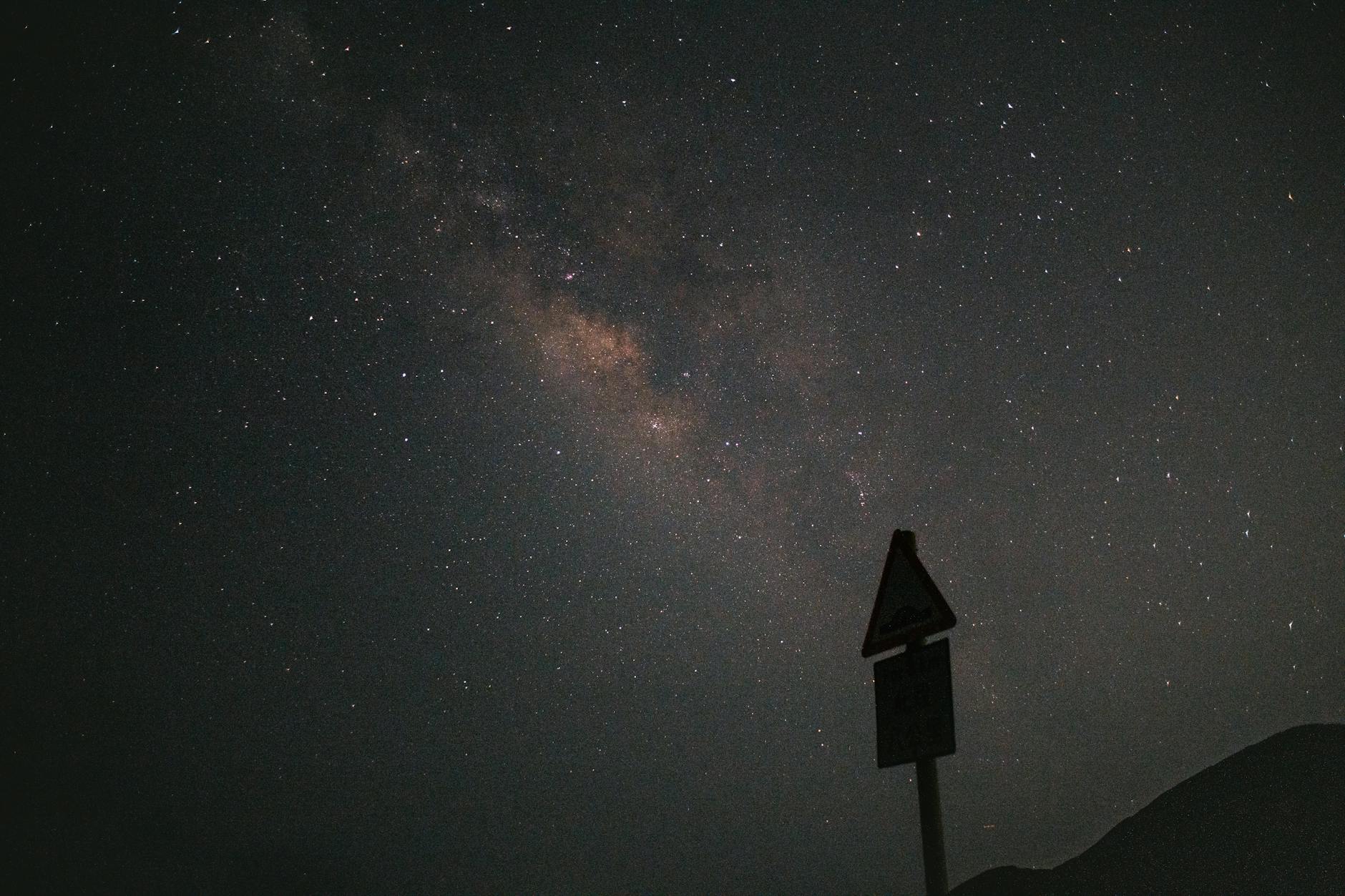
Cornwall has two International Dark Sky designations and one of the lowest light-pollution profiles of any English county. Bodmin Moor was designated an International Dark Sky Landscape in 2017 — the first UK protected landscape with that designation. West Penwith joined the list as an International Dark Sky Park in 2021. The Lizard, St Agnes Head, and Carnewas at Bedruthan are Dark Sky Discovery Sites. The county’s combination of low population density, the right geography (the Atlantic to the west blocking distant city light pollution), and the local council’s dark-sky-friendly lighting policy means Cornwall has some of the darkest skies in mainland Britain. This stargazing Cornwall guide is the practical version.
I’ll cover the two International Dark Sky areas, the major meteor showers and astronomical events of 2026 (including the 12 August partial solar eclipse that covers around 95% of the sun across Cornwall), the gear you need for beginner stargazing, the local astronomy groups, and the connection between West Penwith’s seven hundred Neolithic and Bronze Age monuments and the dark sky overhead. Our wider Cornwall wildlife and nature guide is the parent piece.
The Two International Dark Sky Areas
Bodmin Moor International Dark Sky Landscape (designated 2017)
The first Cornwall Dark Sky designation and the first UK Area of Outstanding Natural Beauty / National Landscape to achieve International Dark Sky status. Covers around 80 square miles of upland Cornwall, including Brown Willy (Cornwall’s highest point), Rough Tor, the Bodmin Moor heartland, and the surrounding parishes. The core dark area sits at Bortle 3-4 (good to very good) on the international light pollution scale.
Best stargazing locations within Bodmin Moor:
Rough Tor and Brown Willy area. The high ground in the north of the moor; reasonable parking near Roughtor Farm; walking access to elevated open ground.
Minions and the Hurlers stone circles. Bronze Age stone circles on the south of the moor; combine archaeology and astronomy.
Jamaica Inn area (Bolventor). The famous coaching inn sits in the middle of the moor; the surrounding land is some of the darkest. Park considerately if pulling up off the A30.
Crowdy Reservoir. Larger expanse of low-horizon sky; rare opportunity to observe horizon-level objects.
Northern moor near Davidstow. Quieter; lower visitor numbers; better dark adaptation.
West Penwith International Dark Sky Park (designated 2021)
The second Cornwall designation. Covers the West Penwith peninsula from roughly St Ives to Mousehole, including Land’s End, Sennen, Zennor, Pendeen, Botallack, Cape Cornwall, the West Penwith hills, and the surrounding cliffs.
What makes West Penwith remarkable beyond the dark sky is the archaeology: over seven hundred Neolithic and Bronze Age structures within the dark sky area. Mên-an-Tol, Boscawen-ûn stone circle, Lanyon Quoit, the Tregeseal Ring, and dozens of other ancient monuments. Some of these have plausible astronomical alignments (solstice sunrise, midwinter sun positions). Standing at Mên-an-Tol on a clear October midnight, you’re observing the same Milky Way that the people who erected the stones four thousand years ago observed.
Best stargazing locations within West Penwith:
Carn Galver. Rocky outcrop overlooking the West Penwith heath. Significantly elevated; almost zero light pollution to the north and west.
Zennor Head. Cliff-top viewpoint with the Atlantic horizon to the west and the open moor inland.
Cape Cornwall. Westernmost mainland headland; properly dramatic location for an astronomy night.
Mên-an-Tol. The famous holed stone in a small enclosure; combine ancient archaeology with stargazing.
Boscawen-ûn stone circle. Nineteen-stone Bronze Age circle in a hidden field; ancient site under modern dark sky.
Pendeen Watch lighthouse area. Coastal dark sky with sea horizon for southern objects.
Both reward a daylight recce first: our Bodmin Moor walking guide and walking the Lizard Peninsula cover the terrain you will be crossing in the dark.
The Dark Sky Discovery Sites
Smaller designated sites with strong dark-sky credentials:
Carnewas at Bedruthan Steps. National Trust headland on the north coast. Dark Sky Discovery Site since 2014. “Milky Way” class rating. Car park access; clifftop viewing. The Milky Way is clearly visible on a moonless night.
St Agnes Head. “Milky Way” class Dark Sky Discovery Site. Open clifftop viewing; Wheal Coates engine house in the foreground for atmospheric photography.
The Lizard. Multiple Dark Sky Discovery viewpoints across the Lizard peninsula. Lizard Point itself is excellent, with the lighthouse providing some local light but the surrounding cliffs and heath properly dark.
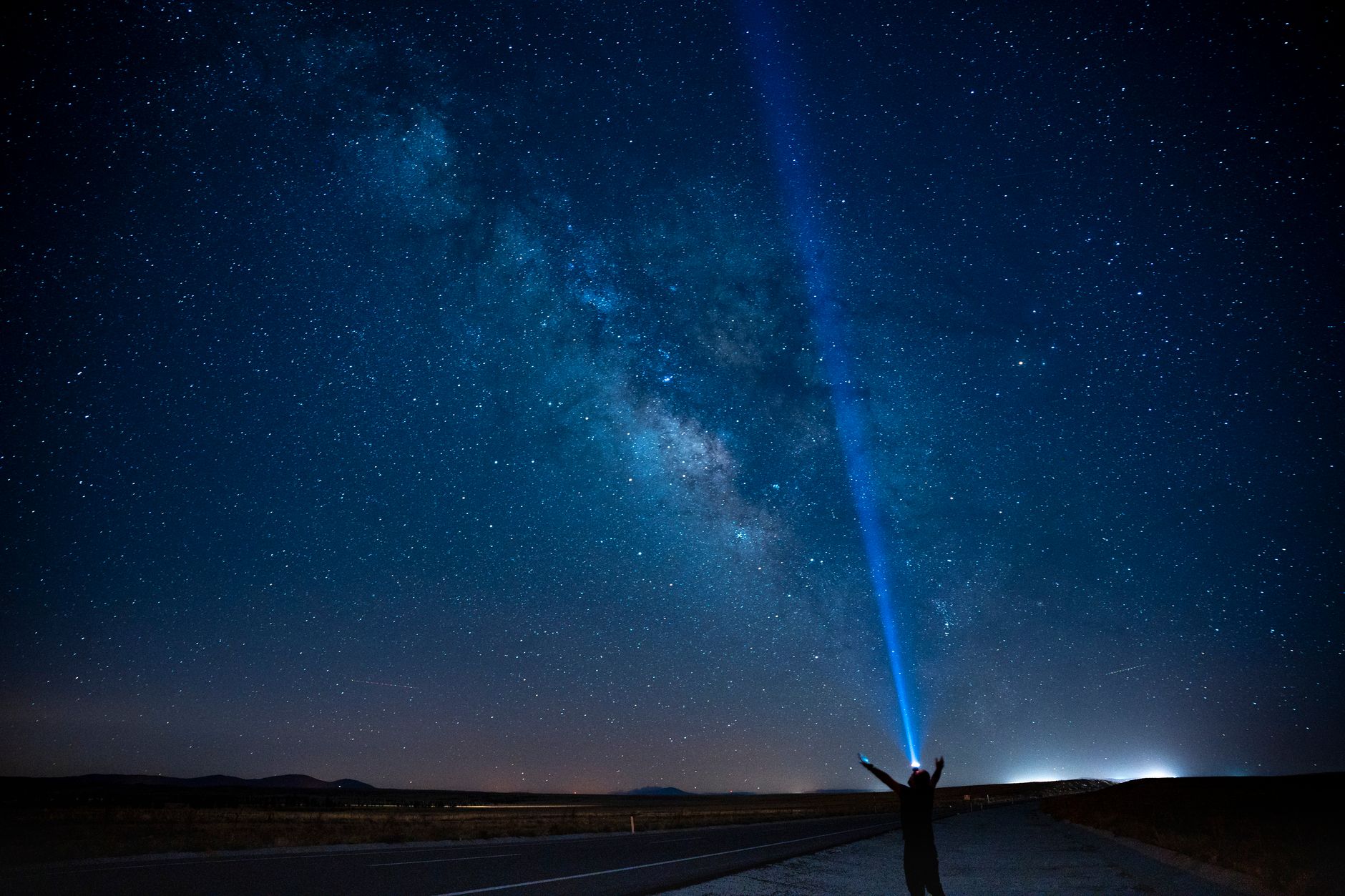
The 2026 Astronomy Calendar
The events worth planning around:
3 January 2026 — Quadrantids meteor shower peak. One of the year’s three biggest meteor showers; up to 120 meteors per hour at maximum from the constellation Boötes. Short peak (a few hours). Best after midnight, with the radiant rising.
22 April 2026 — Lyrids meteor shower peak. Smaller shower; up to 18 meteors per hour. Spring viewing.
21 April-28 April 2026 — International Dark Sky Week. Annual global event; Cornwall Wildlife Trust and Bodmin Moor partners run guided stargazing events.
12 August 2026 — Partial solar eclipse. A major event. The total eclipse path runs over Iceland and northern Spain. Cornwall sees approximately 95% partial eclipse coverage — the best UK coverage and the largest UK partial eclipse since 1999. Mid-afternoon timing; the light dims noticeably; the temperature drops; the natural world reacts. Eye protection essential (eclipse glasses or solar filter). Next UK total: 2090.
13 August 2026 — Perseids meteor shower peak. The summer headline shower. Up to 100 meteors per hour at maximum. New Moon conditions make 2026 ideal — no moon-glare. Best after midnight; the radiant rises through the early hours.
21 October 2026 — Orionids meteor shower peak. Up to 25 meteors per hour. Pre-dawn viewing best.
5 November 2026 — Taurids meteor shower peak. Slow, bright meteors; up to 10 per hour. Cornish Bonfire Night meteor watching.
14 December 2026 — Geminids meteor shower peak. The year’s most productive shower; up to 150 meteors per hour. Often produces fireballs. Best in the early hours after midnight. Wrap up — it’s properly cold.
The 12 August 2026 partial eclipse is the must-see Cornish astronomy event of the year. Plan around it.
What You Can See With the Naked Eye
Cornwall’s dark skies make many objects visible without any optical equipment. The headlines by season:
Spring (April-June). The Beehive open cluster (M44) in Cancer. The Coma star cluster. The Big Dipper / Ursa Major directly overhead.
Summer (July-September). The Milky Way core stretching from Sagittarius through Scorpius and across to Cygnus and Vega. The Summer Triangle (Vega, Deneb, Altair). The Andromeda Galaxy (M31) — visible as a faint smudge to the naked eye in dark sky.
Autumn (October-November). Andromeda still high. The Pleiades star cluster rising in the east. The Hyades and Aldebaran in Taurus.
Winter (December-March). Orion at peak — Betelgeuse, Rigel, the Orion Nebula (M42) visible to the naked eye as a fuzzy patch in the sword. The Pleiades (M45). Sirius (the brightest star in the night sky). Jupiter and other planets at favourable positions.
The planets are visible year-round at varying times: Venus (the bright “morning/evening star”), Mars (red), Jupiter (very bright), Saturn (yellow-cream colour), Mercury (low and brief).
Beginner Stargazing Gear
You can do plenty with no equipment. Adding gear unlocks more depth.
Naked eye. The simplest setup. The Milky Way, major constellations, meteor showers, planets, and the brightest deep-sky objects (M31 Andromeda, M44 Beehive, M45 Pleiades, M42 Orion Nebula) are all naked-eye observable from Bodmin Moor or West Penwith.
Binoculars (10×50 or 7×50). The single best stargazing upgrade. Reveals the Andromeda Galaxy structure, the open clusters in Sagittarius, the four largest moons of Jupiter, lunar detail. Most people prefer binoculars to a small telescope for casual observing. Budget £100-200 for a decent pair.
Spotting scope. If you have one for birdwatching, it also works for low-power astronomy. Limited compared to a proper astronomical telescope but useful.
Refractor telescope (4-5 inch). Entry-level proper astronomy. Budget £200-500. Good for planets, the Moon, brighter deep-sky objects. Easier to use than a reflector.
Reflector telescope (6-10 inch Newtonian or Dobsonian). More aperture for fainter objects. Budget £200-1500. Excellent for galaxies, nebulae and deep-sky observing. Bulkier; longer cool-down time on Cornish nights.
Red torch. Mandatory. White light destroys dark adaptation (which takes 20 minutes to develop and ten seconds to lose). Red light preserves night vision. Cycle lights have red mode; Petzl and other brands sell dedicated red astronomy torches.
Star apps. Stellarium is the canonical free planetarium app — point your phone at the sky and it identifies what you’re seeing. PhotoPills is the photographer’s choice for planning. Sky Map (Android) is the Google alternative.
Warm clothing. Layers. Wind-proof outer. Hat. Insulated boots. Cornish autumn-winter stargazing is properly cold even when the air feels still.
The Cornish Astronomy Community
Cornwall Astronomical Society. County-level astronomy club. Meets second Tuesday of each month at Degibna Chapel in Helston, 8pm. Guest speakers, telescope sessions, member observing. New members welcome. cornwallas.org.uk.
Roseland Observatory. Based at Truro High School for Girls. Public visits arranged with Director Brian Sheen. Telescope sessions for school groups and astronomy clubs. roselandobservatory.co.uk.
Cornwall Wildlife Trust dark sky events. Run during International Dark Sky Week (April) and the Perseid peak (August). Guided sessions with ranger commentary.
Bodmin Moor and West Penwith Dark Sky Park events. Both designated areas run public stargazing events through the year.
Cornish Stargazing Holidays. Specialist tour operators run weekend and week-long stargazing breaks in Bodmin Moor and West Penwith. Cottage accommodation with telescope access; guided sessions with experienced amateur astronomers.
The Bortle Scale and What It Means
Light pollution is measured on the Bortle scale, 1 (totally dark) to 9 (urban centre).
Bortle 1. The Milky Way is dazzling; you can see your shadow by starlight; thousands of stars visible. Found only in the most remote rural areas.
Bortle 2. Excellent dark sky. The Milky Way is highly structured; major dark nebulae visible. Bodmin Moor fringes; some West Penwith locations on clear nights.
Bortle 3. Rural sky. The Milky Way is visible and structured; you can see most major deep-sky objects with binoculars. Most of Bodmin Moor; much of West Penwith.
Bortle 4. Rural-suburban transition. The Milky Way is visible but limited. Sub-Bortle 4 is the threshold for “dark sky” status by the International Dark Sky Association.
Bortle 5. Suburban. The Milky Way is barely visible; major light domes from cities visible.
Bortle 6-7. Bright suburban / urban edge.
Bortle 8-9. Urban / inner city. Very few stars visible.
Cornwall’s two International Dark Sky areas sit at Bortle 2-3 in their darkest cores. By comparison, central London is Bortle 8-9. The difference is dramatic — the Milky Way visible as a structured band of light across the sky, compared to barely seeing a handful of brightest stars.
Astrophotography in Cornwall
Astrophotography in Cornwall ranges from simple smartphone Milky Way shots to serious deep-sky imaging.
Smartphone Milky Way. Modern smartphones (iPhone 11 onwards, recent Pixels, Samsung Galaxy S series) can capture the Milky Way directly with Night Mode. Steady on a rock or tripod; six-to-ten-second exposure; you’ll get a recognisable Milky Way photo. The Bedruthan stacks with the Milky Way overhead is a classic Cornish astro-image.
DSLR Milky Way and night landscape. Tripod + wide-angle lens (14-24mm) + manual mode + ISO 3200-6400 + 20-second exposure + f/2.8 or wider. The standard astro-landscape setup.
Star trails. Multiple long exposures stacked together; produces curved trails as Earth rotates. The Wheal Coates engine house at St Agnes Head is one of the great Cornish star-trail compositions.
Deep-sky imaging. Tracking mount, dedicated astronomy camera, long exposures, multiple stacked frames. The serious end. Cornish dark-sky locations rival many famous American observatory sites for amateur deep-sky work.
PhotoPills app for planning — calculates Milky Way position, Moon phases, sunrise/sunset, twilight times. Essential for planning a serious Cornish astrophotography night.
Best photography spots in Cornwall covers the foreground subjects worth building a night shot around.
The Archaeoastronomy Angle
West Penwith’s seven hundred-plus Neolithic and Bronze Age monuments include several with possible astronomical alignments. The most studied:
Boscawen-ûn stone circle. Nineteen-stone Bronze Age circle (around 2500 BC) with a leaning central stone. The orientation has been proposed to align with various solar and lunar events but archaeological consensus is cautious — the alignments may be coincidental.
Mên-an-Tol. Holed stone with two flanking uprights. Various astronomical and ritual interpretations. The folklore (children passed through the hole for healing) is well-documented; the astronomy is speculative.
Carn Brea, Carn Galver hilltop sites. Bronze Age cairns and ritual platforms with elevated positions giving horizon views — potentially used for solar observation.
The Hurlers (Bodmin Moor, near Minions). Three Bronze Age stone circles in a line. Some researchers propose midsummer solstice alignment.
The strict scientific consensus is that many proposed prehistoric “alignments” are coincidental, but the cultural and atmospheric value of standing at a 4000-year-old ritual site under a dark Cornish sky is real regardless. Stargazing at Mên-an-Tol or Boscawen-ûn is a properly affecting experience.
Planning a First Stargazing Night
The walkthrough for a beginner first night:
Check the weather forecast. Clear skies essential. Met Office Astronomy forecast is excellent. Wind under 15 mph for comfort.
Check the Moon phase. New Moon to first-quarter Moon are best — the Moon’s light pollutes the sky. Full Moon ruins faint-object visibility.
Choose your site. Bodmin Moor (north of the A30) or West Penwith (between St Ives and Land’s End). Carnewas at Bedruthan or St Agnes Head if you’re north-coast based.
Arrive before sunset. Set up while you can see what you’re doing; let your eyes dark-adapt naturally as the light fades.
Park considerately. Don’t block access tracks. Don’t light up neighbouring properties with car headlights.
Wait 20 minutes for dark adaptation. Your eyes need time. Don’t look at phone screens (or use a red filter app).
Start with the bright headline objects. The Milky Way, the major constellations, planets if any are up, the Andromeda Galaxy if visible.
Use a star app to identify what you’re seeing. Stellarium is free and excellent.
Stay for at least an hour. The longer you watch, the more you see.
Pack for cold. Even summer Cornish nights drop into single-digit temperatures. Layers, hat, gloves, insulated boots, hot drink, sleeping bag for serious watchers.
It pairs well with the rest of an evening — see things to do in Cornwall at night — and the clearest skies come in the off season.
Frequently Asked Questions
Where is the best place to stargaze in Cornwall? Bodmin Moor International Dark Sky Landscape and West Penwith International Dark Sky Park are the two designated areas. Both Bortle 2-3 at their cores.
Does Cornwall have a Dark Sky Park? Yes — two. Bodmin Moor (designated 2017) and West Penwith (designated 2021).
When is the best time of year to stargaze in Cornwall? Year-round but autumn (September-November) offers good combination of dark skies, warm clothing manageable, and Milky Way still visible. December-February is technically clearest but properly cold.
Can you see the Milky Way in Cornwall? Yes — clearly visible from Bodmin Moor and West Penwith on any moonless clear night. Among the best UK locations.
What can you see with the naked eye on Bodmin Moor? Milky Way structure, major constellations, planets, the Andromeda Galaxy (faint smudge), the Pleiades cluster, the Orion Nebula.
How dark is West Penwith on the Bortle scale? Bortle 2 in the darkest sections; Bortle 3 in most accessible viewpoints.
When is the 2026 solar eclipse and will it be visible in Cornwall? 12 August 2026. Cornwall sees approximately 95% partial coverage — the best UK coverage and the largest UK partial eclipse since 1999.
What apps are best for stargazing in Cornwall? Stellarium (free planetarium); PhotoPills (planning); Sky Map (Android). Met Office Astronomy for weather.
Do you need a telescope to stargaze in Cornwall? No — naked-eye stargazing reveals the Milky Way, major constellations, planets, meteor showers. Binoculars are the best upgrade. Telescope optional.
Are there guided stargazing tours in Cornwall? Yes — Cornwall Astronomical Society runs sessions; Roseland Observatory takes groups; specialist tour operators run dark sky weekends.
The simplest way to see these skies properly is to sleep under them. Moorland campsites on Bodmin Moor are cheaper, quieter and considerably darker than the coast, and a clear night there with the tent flap open is one of the best free experiences in the county. Our camping and glamping guide covers where to pitch and what to pack for cold nights.
Cornwall is one of the UK’s best dark-sky destinations. Bodmin Moor and West Penwith are properly internationally designated. The 12 August 2026 partial eclipse is the must-see event of the year. Stand at a stone circle on a moonless night and look up. The view hasn’t changed in four thousand years.