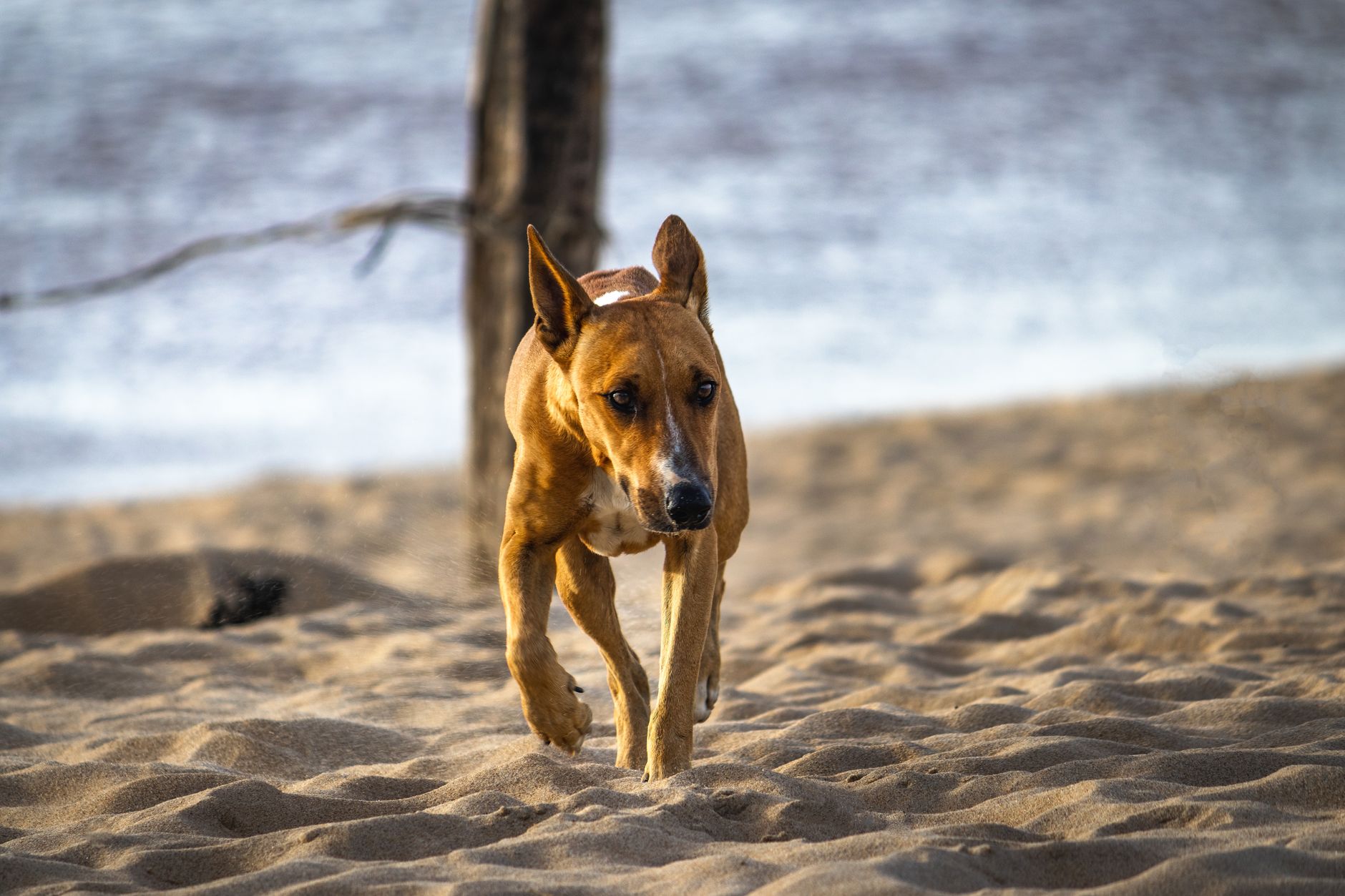
At about five to ten on a July morning, on any of the big Blue Flag beaches in Cornwall, there is a small exodus. People with dogs — spaniels soaked to the skin, a lurcher still carrying a ball, a very small terrier who has not finished — start walking back up the sand towards the car park, while the lifeguards set out the flags and the first families come down the slipway with windbreaks. By ten past, the dogs have gone. By six in the evening they are back.
That daily tide of dogs tells you most of what you need to know about holidaying here with one. Cornwall is genuinely one of the best counties in Britain for a dog: hundreds of miles of coast path, dozens of beaches that welcome dogs all year, pubs where a water bowl by the bar is standard, and a whole industry of cottages and B&Bs that take pets. It also has rules, and the rules are seasonal, local and enforced. This guide is the planning layer — the rules, the logistics, the safety and the timing. The detailed lists of dog-friendly beaches, walks and places to stay each have their own guide, linked where they fit.
How dog-friendly is Cornwall, really?
Very, with one big seasonal exception. From autumn to late spring, almost the entire coast is open to dogs: every beach, every cove, every stretch of path. Pubs welcome them, cafés put water bowls outside, and many attractions let them in. For roughly eight months of the year, the practical answer to “can I bring the dog?” is almost always yes.
The exception is the summer on the popular beaches. Between mid-May and the end of September, a set of the busiest beaches restrict dogs during the day, and the rule is written into law rather than left to goodwill. The majority of Cornish beaches remain open to dogs all year, but they tend to be the smaller, less accessible and less serviced ones, which is exactly why they are open. So much of dog friendly Cornwall comes down to timing — which month, which beach, and which hour of the day.
The other honest point is that the landscape asks things of a dog that a park does not. Cliffs without fences, livestock on the coast path, strong tides, hot car parks and seals on the rocks all come with a Cornish holiday. None is a reason not to come; all are reasons to plan.
The beach rules, explained properly
This is the part that catches people out, so it is worth getting exactly right.
Two kinds of restriction
Cornwall Council enforces seasonal dog restrictions on 46 beaches through Public Space Protection Orders — legal orders, not polite requests. There are two tiers.
- Standard restricted beaches — dogs are banned between 10:00 and 18:00 from 1 July to 31 August.
- Blue Flag and Seaside Award beaches — dogs are banned between 10:00 and 18:00 from 15 May to 30 September, a much longer season.
The practical effect is that the famous, lifeguarded, facility-rich beaches — the ones with the cafés, the toilets and the car parks — are the ones most likely to be restricted, and for the longest.
The hours are the key
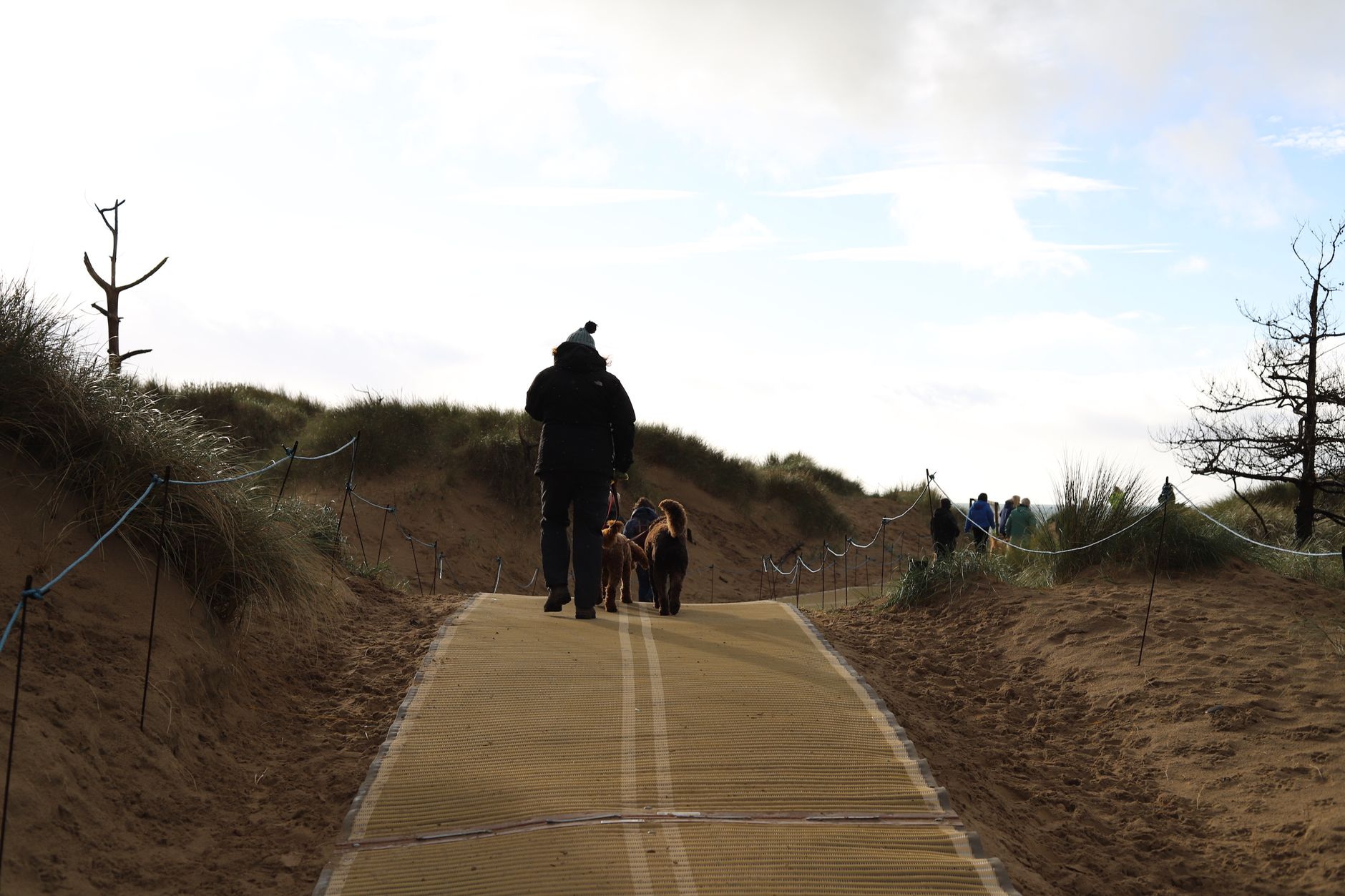
Restrictions apply only between 10:00 and 18:00. Before ten in the morning and after six in the evening, dogs are allowed on every beach in Cornwall, restricted or not. For a dog owner this is not a loophole but a genuinely good arrangement: an early walk on an empty beach before the families arrive, and an evening one as the light goes and the crowds leave, are the best times on the sand anyway.
Year-round closures
A small number of areas are closed to dogs all year for wildlife reasons. The best known are three areas of the Hayle Estuary, protected for wading and wintering birds. Signs mark them clearly.
Local variations
Town councils can and do add their own rules — St Ives, for example, publishes its own dogs-on-beaches arrangements — and restrictions change periodically after consultation. The only reliable source on the day is the sign at the entrance to the beach, which will state the dates and hours. Check it every time.
Fines
Breaking a restriction carries a £100 fixed penalty notice, and the orders are enforced in summer. So is fouling, on every beach and path, all year.
For the beaches themselves — which are open all year, which are restricted, and the best ones for dogs in each part of the county — see our guide to dog-friendly beaches in Cornwall.
Planning the trip around the rules
The single best decision a dog owner can make is when to come.
October to mid-May is the easy season. Every beach is open, accommodation is cheaper, and the coast path is quiet enough that a dog can be off-lead on the long empty stretches without meeting anyone. The weather is the trade-off, and many dogs do not mind it at all.
Mid-May to June and September are the sweet spot for most people: warm, long-dayed and much less crowded than the summer holidays. The Blue Flag beaches are restricted during the day, but the standard restricted beaches are open until July, and September has the warmest sea of the year for dogs that swim.
July and August are the hardest months with a dog — the most restrictions, the most people, the hottest car parks and the busiest paths. It is perfectly workable with some planning: early and late beaches, midday on the coast path or in the woods, and a base near an all-year beach.
That last point is the practical one. If you are coming in summer, choose accommodation within walking distance of a beach that is open to dogs all day. It removes the whole daily calculation, and the smaller all-year beaches are often the nicer ones.
Getting to Cornwall with a dog
By car
Most visitors drive, and the long run down the M5 and A30 on a summer Saturday can take many hours. Plan stops for the dog, carry water, and never leave a dog in a car at a Cornish beach car park in summer — many are unshaded tarmac on open clifftops, and it takes minutes rather than hours for the inside of a car to become dangerous.
By train
Great Western Railway, which runs the main line to Penzance and the Cornish branch lines, carries dogs free, up to two per passenger, on a short lead and not on the seats. The branch lines to St Ives, Newquay, Looe, Falmouth and Gunnislake are a genuinely good way to reach beaches and walks without a car. Our guide to getting to Cornwall covers the routes; in summer, pick a quieter train than the one from London on a Saturday morning.
To the Isles of Scilly
Dogs can sail on the Scillonian III from Penzance, with a fare of around £15, and can fly with Skybus from Land’s End and Newquay — though not from Exeter. The crossing can be rough, and the islands have their own seasonal beach and seabird rules.
Where to stay with a dog
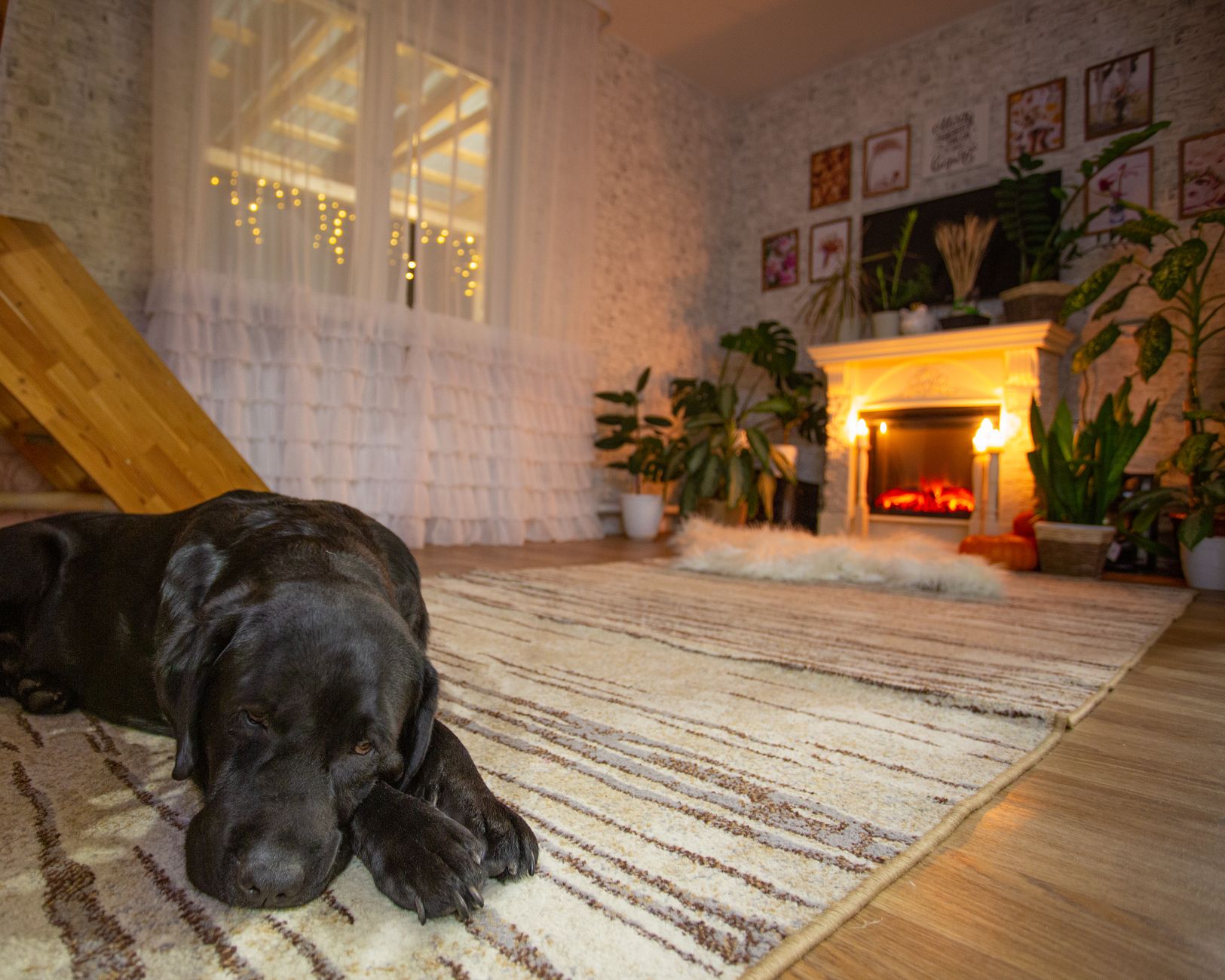
Cornwall has an unusually large supply of dog-friendly accommodation, and it varies more than the label suggests.
- Bed and breakfasts — many welcome dogs in some rooms, often ground-floor rooms with direct outside access. Our guide to dog-friendly bed and breakfasts in Cornwall covers what to look for and where.
- Self-catering cottages — the most flexible option, with a door straight out to the garden. Look for an enclosed garden if your dog wanders, and check the maximum number of dogs.
- Campsites and glamping — most campsites accept dogs, on a lead, sometimes for a small charge; many glamping units do not, or only in specific units.
- Hotels — a growing number take dogs, generally in designated rooms and with limits on where they can go inside.
Questions worth asking before booking: how many dogs, what size, is there a charge, can the dog be left alone in the room, which rooms or areas are dog-friendly, is there an enclosed garden, and how far is the nearest beach that is open to dogs in the month you are visiting. That last one matters more than anything else in summer.
Walking with a dog

This is where Cornwall is at its best for dogs: the South West Coast Path runs around the whole county, the moors have miles of open access land, and the wooded river valleys give shade on a hot day. Our guide to the best dog-friendly walks in Cornwall has the routes; what follows is the practical knowledge that keeps a dog safe on them.
Cliffs
Cornish cliffs are unfenced, high, often undercut, and frequently edged with thrift or bracken that hides the drop. Dogs chasing gulls, rabbits or a ball go over them every year. Keep your dog on a lead on clifftop sections unless you have total recall and the ground is well back from the edge, and never throw anything towards the sea side of the path.
Livestock
Cattle and sheep graze many clifftops and moorland sections, including the ponies and cattle used for conservation grazing on National Trust land. Keep dogs on leads near stock. If cattle become aggressive towards you with a dog, the standard advice is to let the dog off the lead so both of you can get away separately.
Adders
Adders live on Cornish heath and coastal slopes and bask on paths on warm spring and summer days. Bites to dogs are not rare. Keep dogs close on heathland in warm weather, and if a bite happens, keep the dog calm, carry it if you can, and go straight to a vet.
Heat and water
The coast path is exposed, has little shade and often no water for miles. Carry water for the dog, walk early or late in summer, and remember that a dog which has been in salt water all morning still needs fresh water to drink.
Pubs, cafés and eating out
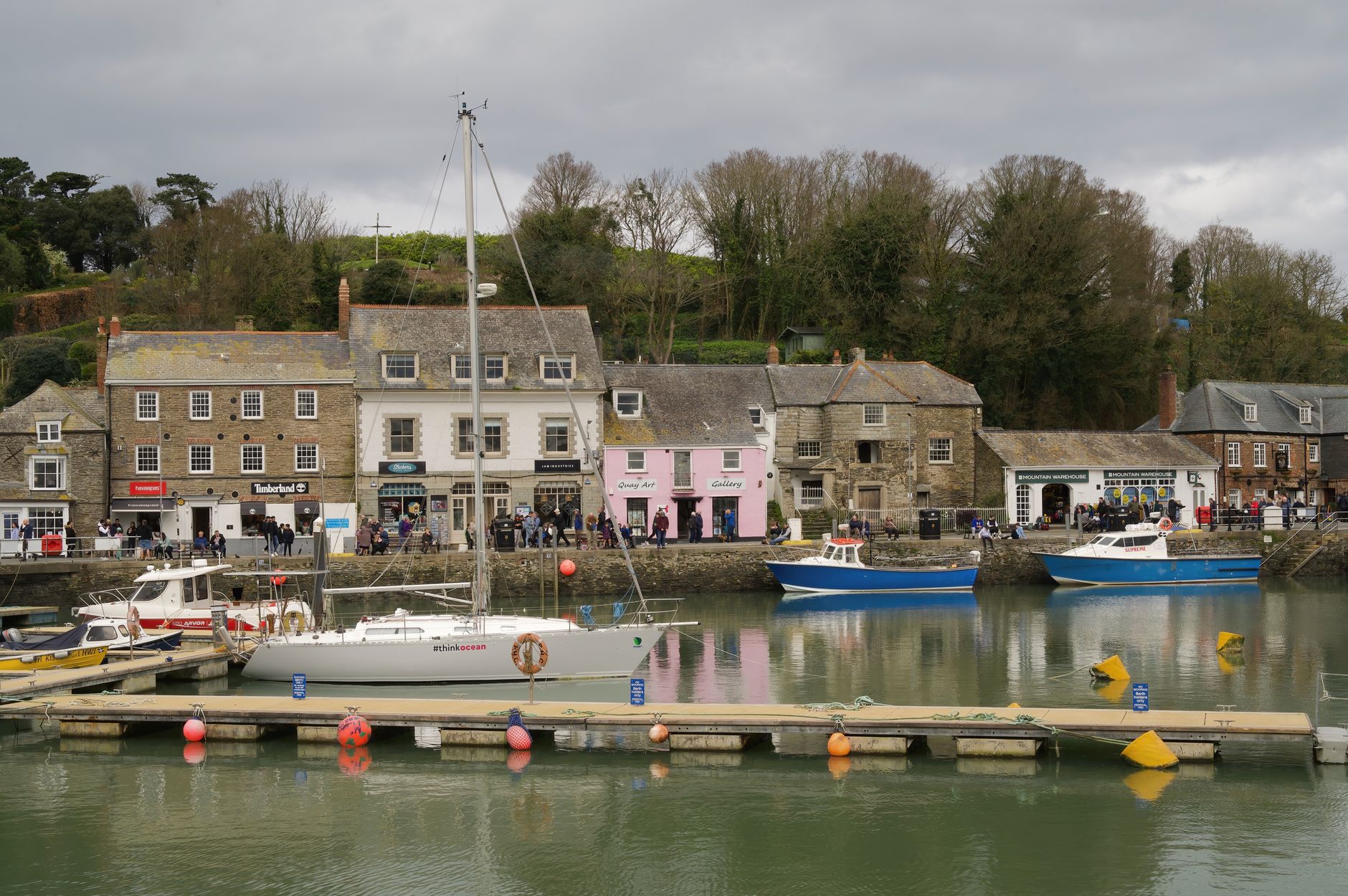
Cornwall is a very easy place to eat out with a dog. The large majority of traditional pubs welcome dogs in the bar, many cafés allow them inside and nearly all allow them on outside tables, and water bowls outside doors are standard. Restaurants are more mixed, and a pub that welcomes dogs in the bar may not allow them in its dining room. Ask first, particularly in summer when tables are scarce.
Our guide to the best pubs in Cornwall covers where to go; almost all of the traditional village and harbour pubs on it are dog-welcoming.
Attractions and days out
Dog access to attractions is patchy and changes, so check each one before setting off. Some rules of thumb help.
- Outdoor and countryside sites are the most likely to welcome dogs: coast, moor, woodland and most country park land.
- National Trust properties vary widely. Coastal and countryside land is generally dog-friendly; gardens and the areas around houses may allow dogs on leads, or only at certain times of year, or not at all. Our National Trust Cornwall guide lists the main properties.
- Indoor attractions — aquariums, museums, theatres — usually admit assistance dogs only.
- Heritage and mining sites are mixed: some welcome dogs on leads around the grounds, others do not.
- Boat trips depend on the operator and the boat, and many small wildlife boats do not take dogs.
The most useful trick for mixed groups is a day that alternates: an attraction in the morning with the dog comfortable at the accommodation, and a long walk or a dog-friendly beach in the afternoon. Never leave a dog in a car while you visit something in summer.
Seals, birds and other wildlife
Cornwall’s coast has large numbers of grey seals, and they haul out on rocks and small beaches, especially in autumn and winter when the pups are born. A dog approaching seals causes them to stampede into the sea, which can injure pups and separate them from their mothers, and an adult seal will bite a dog that gets close. Keep dogs on a lead and well away from any seal on land, and stay back from the edge above coves where seals are resting.
Ground-nesting birds use the clifftops, dunes and heaths in spring and early summer, which is why some areas ask for dogs on leads between March and July. The Hayle Estuary closures exist for wintering birds. Signs make all of this clear, and following them keeps the coast the way you came to see it.
Safety on the beach
- Rip currents pull dogs out as easily as people. Do not throw sticks or balls into surf, and never go into the sea after a dog in trouble — call the coastguard on 999. Dogs very often make it back on their own; people who go in after them often do not.
- Tides cut off coves and headlands. Check the tide table before walking round a point, especially with a dog that will not be carried.
- Heat — sand gets hot, and there is no shade on most Cornish beaches.
- Things on the tideline — dead fish, seabirds and jellyfish all interest dogs and none of them agree with them.
Vets and emergencies
Every sizable town in Cornwall has a veterinary practice, and out-of-hours emergency cover operates across the county. Before you arrive, note the name and number of the nearest practice to your accommodation and its out-of-hours arrangement; searching at eleven at night on a clifftop with no signal is not a plan. Ask your host — dog-friendly accommodation almost always knows the local vet.
What to pack for a dog
- Towels, plural, and something for the car seat. Cornish beaches are sandy and the dog will be wet for most of the week.
- A long line for beaches and open ground where you want freedom without risk.
- A short lead for trains, pubs, clifftops and livestock.
- A collapsible water bowl and water for the coast path.
- Poo bags, more than you expect — bins are scarce on remote paths.
- Your dog’s normal food, because a sudden change on holiday rarely goes well.
- A towel-dry coat or a drying robe for evenings in a pub after a swim.
- A tick remover, for heath and bracken.
- Your vet’s number, and your pet insurance details.
A season-by-season planner
| Period | What it means with a dog |
|---|---|
| October–mid-May | Every beach open all day. Quiet paths, cheaper stays, wild weather. The easiest time to bring a dog. |
| Mid-May–June | Blue Flag and Seaside Award beaches restricted 10:00–18:00; other beaches open. Long, warm days and a good balance. |
| July–August | Both tiers of restriction apply 10:00–18:00. Most crowded, hottest. Plan early and late beach time and a base near an all-year beach. |
| September | Standard restrictions lifted; Blue Flag beaches restricted until the 30th. Warmest sea, quieter county. |
Choosing a base with a dog
Where you stay decides how easy the week is, far more with a dog than without one. Each part of the county has a different balance of beaches, paths, livestock and hazards.
West Penwith
The far west has more small coves open to dogs all year than anywhere else in Cornwall, some of the best walking in Britain, and a lot of unfenced cliff. It suits active dogs with good recall and owners who are happy to keep a lead on above the drops. Many coves are reached by long, steep steps or scrambles, which matters for older dogs.
The Lizard
Quieter than Penwith, gentler underfoot, and with a lot of conservation grazing — ponies and cattle on the clifftops and heaths. Good for calm dogs that are reliable around stock. The famous coves here get busy in summer, but the path between them rarely does.
The north coast
Newquay, Perranporth, Hayle and the St Ives Bay beaches are among the biggest and busiest in Cornwall, and several of the best-known are restricted in summer. The compensation is space: miles of dunes and long beaches that are superb for dogs outside the restricted hours and months. The Hayle Estuary’s year-round closures are here too.
The south coast
Sheltered creeks, woodland paths, estuary walks and harbour villages. The south coast is the best choice in hot weather, because the valleys give shade, and in wind, because the coast is sheltered from the prevailing south-westerly. Small foot ferries across estuaries are a lovely way to string walks together; many take dogs, but check with each one.
Bodmin Moor
Open access land, huge skies, almost nobody about, and a good deal of livestock including free-roaming ponies and cattle. Superb for a dog that is steady around animals, and a reliable fallback when the coast is crowded. Cold and exposed in bad weather.
A day that works in August
The summer restrictions look daunting written down. In practice, a well-shaped day barely notices them.
- Before 10:00 — the beach, restricted or not. This is the best time on the sand anyway: cool, empty, and the light is at its best.
- Mid-morning — a stretch of coast path or a woodland walk while it is still cool. The south-coast valleys are ideal.
- Lunch — a pub garden or a café terrace with a water bowl, in the shade.
- Afternoon — the hottest part of the day, and the time for rest. A dog that has walked since seven will be glad of a long sleep at the accommodation, or a shady spot on an all-year beach.
- After 18:00 — back to the big beaches as the families leave. The evening beach is one of the great Cornish summer experiences, with or without a dog.
Planned like this, the restricted hours line up almost exactly with the time you would want to be off the sand anyway because of the heat and the crowds.
Dogs and the sea
Most dogs love Cornish beaches, and a few precautions keep the love uncomplicated.
Salt water. Dogs that swim and play in the surf swallow a surprising amount of seawater, and too much makes them ill. Offer fresh water often, and bring the dog out for regular breaks rather than letting it play in the waves for hours.
Cold water. The Cornish sea peaks at about 16°C in late summer and is much colder in spring. Small, thin-coated and older dogs chill quickly; dry them off and keep them moving.
Surf. Waves that look playful from the beach knock dogs over and drag them along the bottom. Keep dogs to calmer water, and never throw a ball into breaking surf or towards a rip.
Weever fish. These small fish bury themselves in the sand in warm, shallow water on sandy beaches in summer, and their spines give a painful sting to bare feet and paws. If your dog suddenly lifts a paw and yelps in the shallows, a sting is a likely cause; hot (not scalding) water on the paw eases it, and a vet can help if the pain persists.
Jellyfish. Stranded jellyfish on the tideline can still sting, and dogs like to investigate them. Keep them away.
Older dogs, puppies and nervous dogs
Older dogs find Cornwall’s access harder than the scenery suggests. Many of the best coves are reached by long flights of steps, steep paths or scrambles, and the walk back up after a swim is the hard part. Look for beaches with level access from the car park — often the bigger ones, which is where the restricted hours come in — and pace the week with rest days.
Puppies and young dogs with uncertain recall should stay on a long line on beaches and a short lead on clifftops. The combination of gulls, rabbits, open space and a drop is exactly the one that goes wrong.
Nervous dogs will find busy harbour towns in summer overwhelming — narrow streets, crowds, gulls, noise and other dogs at close quarters. Visit the honeypot towns early in the morning, and base yourself somewhere rural where the daily walk starts at the door.
Leaving a dog, and dog sitters
There will be a day when the plan is an aquarium, a garden that does not take dogs, or dinner somewhere that does not either. Many dog-friendly places to stay do not allow dogs to be left alone in the room, and the rule is there because unfamiliar rooms make anxious dogs noisy and destructive. Check the policy before you book, not on the day. The alternatives are a local dog walker or day-care — ask your host, who will almost always know one — or shaping the week so that dog-free outings are short and the dog comes on everything else. Never solve the problem with the car.
Honest verdicts
Summer holidays are the wrong time for a dog-first trip. It works, but the daily logistics of restricted hours, crowded paths and hot car parks eat into the holiday. If the dog is the point, come in spring or autumn.
The best dog beaches are rarely the famous ones. The all-year beaches are usually smaller, further from the car park and without the café — and far nicer for a dog because of it.
“Dog-friendly” on a booking site can mean almost anything. One dog under a certain size in one room, a charge per night, and not left alone, is still technically dog-friendly. Read the details and ask.
And do not believe any list claiming to name every dog-friendly attraction. Policies change more often than the lists do. Phone before you drive.
For the rest of your planning, our Cornwall holiday planning guide covers the trip as a whole.
Frequently Asked Questions
Are dogs allowed on Cornish beaches?
On most of them, all year. Around 46 beaches have seasonal daytime restrictions: 1 July to 31 August on standard restricted beaches, and 15 May to 30 September on Blue Flag and Seaside Award beaches, in both cases between 10:00 and 18:00.
Can I walk my dog on a restricted beach early in the morning?
Yes. The restrictions apply only between 10:00 and 18:00, so dogs are allowed on every beach before ten and after six, even in August.
What is the fine for taking a dog on a restricted beach?
A £100 fixed penalty notice, under the council’s Public Space Protection Orders.
Do Cornwall’s dog bans start at Easter?
No. Cornwall Council’s restrictions start on 15 May for Blue Flag and Seaside Award beaches and 1 July for other restricted beaches. Some neighbouring councils do use Easter, which causes confusion.
Can dogs go on trains in Cornwall?
Yes. GWR carries up to two dogs per passenger free, on a short lead and not on the seats, including on the branch lines to St Ives, Newquay, Looe and Falmouth.
Are Cornish pubs dog-friendly?
Most traditional pubs welcome dogs in the bar. Dining areas and restaurants are more varied, so ask before sitting down to eat.
Can dogs visit National Trust properties in Cornwall?
The coastal and countryside land usually, on leads where signed. Gardens and house grounds vary by property and season, so check before you go.
What is the best time of year to visit Cornwall with a dog?
October to mid-May, when every beach is open all day and the paths are quiet. June and September are a good compromise if you want warmer weather.
Can I take my dog to the Isles of Scilly?
Yes, on the Scillonian III ferry from Penzance or on Skybus flights from Land’s End and Newquay. Dogs are not carried on the Exeter flights.
Plan around the beach hours, keep a lead handy on the clifftops, and choose a base near a beach that is open to dogs all day, and a Cornish holiday with a dog becomes one of the easiest in Britain. The best walk of the week is usually the one at seven in the morning on a beach that, three hours later, the dog will not be allowed on — and at that hour, you will have it almost to yourselves.