Cornwall is unfairly famous for its surf. The same Atlantic swells that make Fistral a world-class wave also make it a poor choice for a long, leisurely swim, and plenty of first-time visitors arrive expecting Mediterranean conditions and meet a bracing fourteen-degree plunge with a current instead. The truth is that Cornwall has some of the finest sea swimming in Britain, but it is not always at the famous beaches. The best places for a swim are the sheltered south-coast bays, the deep harbour-protected coves, and a handful of north-coast pockets that escape the worst of the surf.
This guide covers Cornwall’s best beaches for swimming, sorted by water temperature, shelter, safety and how easy they are to reach. It includes both shallow, family-friendly spots and deeper water for confident open-water swimmers, along with honest advice on temperature, kit and timing. Every beach named here is real, and the practical guidance further down, on when to swim, where to park, and how to stay safe, applies wherever you end up.
What makes a good swimming beach in Cornwall?
A few things separate a great swimming beach from a merely famous one. Shelter from the prevailing south-westerly wind matters most, which is why the south-coast and east-facing beaches generally beat the exposed Atlantic ones for a calm swim. A gentle, gradual gradient is friendlier and safer than a steep drop-off. Lifeguard cover, where the flags mark a supervised zone, reduces the risk from rip currents and is worth seeking out, especially with children. Clear water is a bonus that the south coast and the Lizard reliably deliver. And easy access counts for a lot: a long descent down a cliff path quietly takes a beach off the list for many swimmers.
As for temperature, the water peaks at around seventeen to eighteen degrees in late August in Mount’s Bay and Falmouth Bay, and drops to eight to ten degrees by February. Most swimmers wear a wetsuit outside the height of summer, and even in August the first thirty seconds are bracing before the sea starts to feel refreshing rather than shocking.
Water quality is worth a thought too. The great majority of Cornwall’s popular swimming beaches hold good or excellent bathing-water classifications, but heavy rain can wash run-off into the sea and temporarily dip quality at some beaches, so many regular swimmers check a service such as the Safer Seas and Rivers app before heading in after a downpour. It is rarely a problem on a settled summer day, but it is a sensible habit, particularly near estuaries and after storms.
The best swimming beaches in Cornwall
Carbis Bay
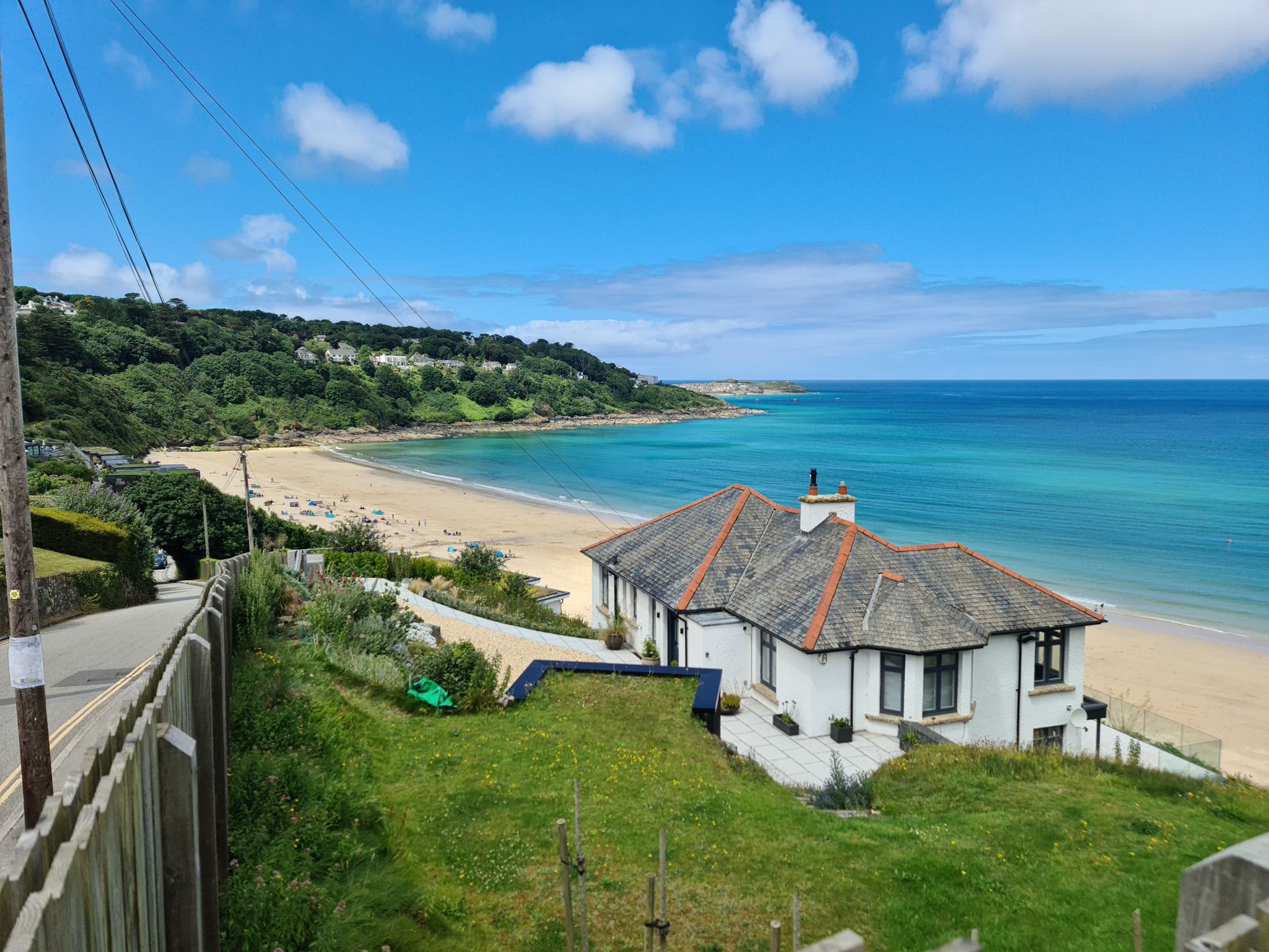
Probably the single best swimming beach in Cornwall. White sand, turquoise water and a sheltered, north-east-facing bay, with lifeguards in season, make it calm enough for nervous swimmers and warm enough by mid-summer for a swim without a wetsuit. There is a train station just above and a pay-and-display car park, and it is a short hop from St Ives on the branch line.
Gyllyngvase Beach, Falmouth
Falmouth’s town beach, and a Blue Flag one: calm, clear and gently shelving, with lifeguard cover and the Gylly Beach Cafe behind. It is within walking distance of the town and Pendennis Castle, and it is one of the most dependable easy swims on the whole coast.
Porthminster Beach, St Ives
Sheltered and south-facing, Porthminster is often the calmest beach in St Ives town. There are lifeguards in season, toilets and baby-change, and the celebrated Porthminster Beach Cafe just behind the sand. An easy, sun-trap swim with the town on your doorstep; our full guide to the best beaches near St Ives covers the others within walking distance.
Maenporth Beach, Falmouth
An east-facing sheltered cove just south of Falmouth, with a gentle slope, shallow water for the first thirty metres or so, and rock pools along the edges. It is one of the friendliest beaches in Cornwall for less confident swimmers and children finding their feet.
Marazion Beach
The great curving beach that faces St Michael’s Mount, sheltered both by the Mount and by the shape of Mount’s Bay. The water is warmer than the open coast, and at high tide there is plenty of room for a proper swim, with the Mount as a backdrop the whole way.
Pendower Beach, Roseland
South-facing on the Roseland, with calm, clear water and a long sandy bottom that shelves gently. It is often almost empty mid-week, which makes it excellent for unhurried open-water swimming.
Porthcurnick Beach, Roseland
A sheltered, sandy Roseland beach behind the famous Hidden Hut cafe. The swimming is calm and clear, and a Cornish-feast lunch afterwards is part of the appeal. Quietly one of the loveliest swimming spots on the south coast.
Trevaunance Cove, St Agnes
A sand-and-shingle beach with turquoise water, sheltered by the cove that surrounds it. It sits on the north coast, so it can pick up surf, but on a calm day it is a fine swim for confident sea swimmers and a good base for exploring St Agnes.
Polurrian Cove, the Lizard
A quiet sandy beach on the western Lizard, sheltered and clean, with a hotel above. It is calmer and far less crowded than the more famous Kynance a little further south, and a rewarding swim for those who make the walk down.
Praa Sands, Mount’s Bay
The south coast’s main multi-use beach: south-facing and sheltered, with a flagged swimming zone in season, a surf school, sand-bottom shallows and warmer water than the north coast. It suits families and swimmers alike, though it is worth keeping to the flags as the surf can build.
Daymer Bay, Camel Estuary
A wide, dune-backed beach with calm water at high tide, sheltered inside the Camel Estuary and dog-friendly year-round. It is excellent for paddling and gentle swimming, though the estuary currents mean it is best enjoyed around high water rather than on a fast ebb.
Kynance Cove, the Lizard
Famous, photogenic and blessed with crystal-clear water, Kynance is a beautiful place to swim, but it needs a little care: there are currents around the rock stacks, so keep to the central bay and check the tide, since the beach shrinks as the water rises.
Polridmouth, near Fowey
A sheltered south-coast cove with a small ornamental lake behind it, reached on foot across the Menabilly estate. Atmospheric, quiet and a little literary, it suits confident swimmers who value privacy over facilities.
Sennen Cove
White sand, lifeguard cover and calm water at low to mid tide make Sennen a lovely swim, even if the Atlantic keeps it cool. On a settled day the clarity of the water and the sweep of the bay are hard to beat.
Watergate Bay (south end)
The southern end, outside the main lifeguarded surf zone, offers calmer water for swimming when conditions allow. Always check the state of the sea first, as the surf here can run unexpectedly and this is an Atlantic-facing beach at heart.
Cornwall’s tidal pools for year-round swimming
When the sea is too rough for the open beaches, Cornwall’s tidal pools and lidos come into their own, offering sheltered swimming almost whatever the weather. Bude Sea Pool, refilled by the tide, is free, lifeguarded in season and open year-round; it is one of the most-loved swimming spots on the north coast. Penzance’s Jubilee Pool is a beautiful Art Deco salt-water lido with a heated, geothermally warmed section that makes it swimmable even in winter. The natural tidal pool at Treyarnon Bay is exposed at low tide and popular with families. Between them, these pools mean a swim is almost always possible somewhere, whatever the Atlantic is doing.

Best swimming beaches by type of swimmer
For first-time sea swimmers
Carbis Bay, Gyllyngvase, Porthminster, Maenporth and Daymer Bay are all sheltered, gently shelving and lifeguarded or calm, which makes them ideal for building confidence. Start in the shallows, stay within your depth, and let the temperature stop feeling like a shock before you go further.
For confident open-water swimmers
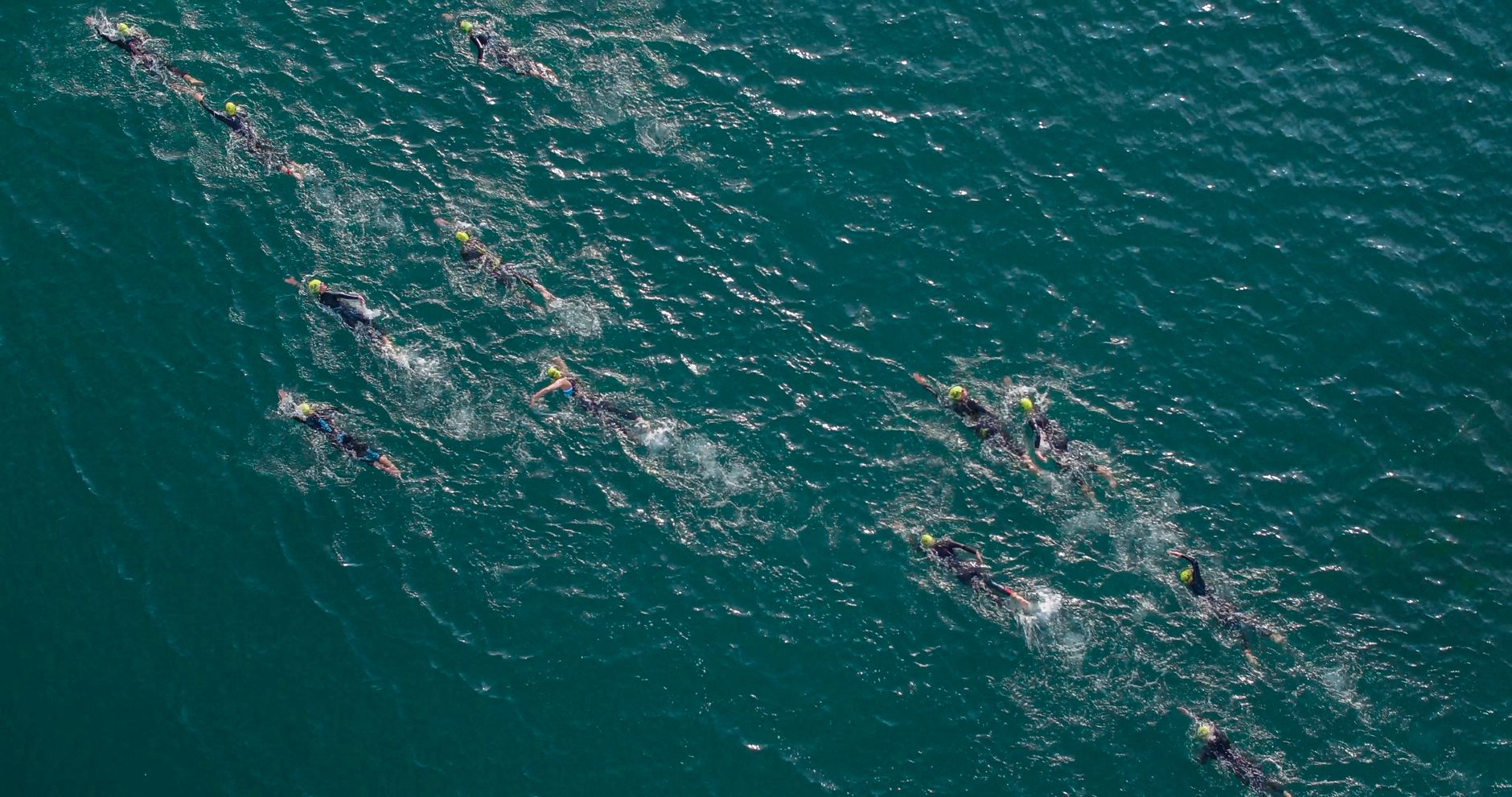
Pendower, Porthcurnick, Polridmouth, Praa Sands, Polurrian and the south end of Watergate Bay all offer deeper water and longer distances. Even so, a bright cap, a tow float and a swim buddy are sensible, and it is worth reading the water before you commit to a long swim.
For year-round swimmers
Bude Sea Pool, the heated Jubilee Pool, Marazion, Carbis Bay and Gyllyngvase all sustain active winter swim communities. Cold water shock is the main risk for anyone new to winter dipping, so build up gradually and never swim alone.
For quiet swims away from the crowds
Pendower, Porthcurnick, Polridmouth, Polurrian, Daymer Bay out of season and the walk-in cove at Lansallos all reward a bit of effort with space and calm. These are the swims to keep for a slow morning or a golden evening.
Cornwall sea swimming by season
Each season swims a little differently. In spring, from March to May, the water sits at around nine to thirteen degrees and a wetsuit is essential; Carbis Bay and Gyllyngvase are popular early-season spots, and the surf is generally smaller after the winter. Through summer, June to August, the water climbs to fourteen to eighteen degrees, and many swimmers go without a wetsuit by late August, when the south coast is at its warmest.
Autumn, September and October, is quietly some of the best swimming of the year: the sea holds onto its summer warmth at fourteen to seventeen degrees, the crowds thin, and the evening light lingers. Winter, November to February, drops to eight to ten degrees, and serious swimmers add gloves and boots and take cold water shock seriously; year-round groups still meet at Sennen, Bude, Falmouth, Carbis Bay and the Jubilee Pool for those who want the company and the safety of numbers.
Getting there, parking and timing
A little planning makes a swimming day far easier. Many of the best swimming beaches, particularly the sheltered Roseland and Helford coves, have small car parks that fill early in summer, so aim to arrive before mid-morning or leave your swim for the late afternoon when the day-trippers head home. Some, such as Polridmouth and Lansallos, are walk-in beaches reached on foot across fields or estate land, so allow time for the approach and pack everything you need. For St Ives and Carbis Bay, the branch line from St Erth sidesteps the town’s notorious parking altogether and drops you close to the sand.
Timing matters as much as the beach. On the estuary swims, Daymer Bay and Marazion among them, high tide gives the calmest, deepest water and avoids the strongest currents of the ebb, while a dropping tide suits the tide-sensitive coves. And the golden rule of a Cornish swimming holiday is to follow the shelter: when the north coast is wild with Atlantic swell, the south coast and the Lizard are often calm, so switch coasts rather than forcing a swim in rough water. Our guide to the best beaches on the south Cornwall coast is a good companion for exactly those days.
Staying safe in the water
Sea swimming in Cornwall is a genuine pleasure, and a few habits keep it that way. On a patrolled beach, always swim between the red and yellow flags, where the lifeguards have chosen and are watching the water. Wear a brightly coloured swim cap and, for open-water swims, a tow float, so you are visible from the shore. Do not swim alone unless you are experienced, watch the tide direction for the strong pulls toward harbours and estuaries, and always plan how you will get out, since steep cliff-backed coves can be hard to climb from in a swell. Warm up gradually afterwards with dry layers and a hot drink, and dress quickly, because the after-swim chill, the so-called afterdrop, can bring on mild hypothermia even on the walk back to the car. For the full picture on rip currents, cold water and tides, our Cornwall beach safety guide is essential reading before your first swim.
What to take for a sea swim
Sea swimming needs little kit, but a few things make it more comfortable and much safer. A wetsuit is worth having for anything outside the warmest weeks of summer, and gloves and boots extend the season into the colder months. A brightly coloured swim cap and a tow float, the inflatable dry bag that trails behind you, keep you visible to boats and to anyone watching from the shore, and the float doubles as somewhere to rest and to stash a phone. Neoprene beach shoes save bare feet on rocky entries and guard against the weever fish that bury in the sand at low tide. And for afterwards, a warm layer, a changing robe or towel, a woolly hat and a hot drink in a flask help you rewarm gradually and stave off the post-swim chill. None of it is expensive, and all of it turns a quick dip into something you will want to repeat.
Cornwall’s sea swimming community
Cornwall has a strong, welcoming and largely informal sea-swimming culture, and joining a group is the safest and most enjoyable way to swim, especially in colder months. The Bluetits Chill Swimmers run open-water groups all over the county; the Mermaids of Mount’s Bay are based around Penzance and Marazion; the Cornish Outdoor Swimming Society organises events and meets; and most towns have a local Facebook group you can find by searching the town name and ‘sea swimmers’. Most welcome newcomers warmly, but the one thing they will all tell you is not to turn up alone for a cold-water dip.
Common mistakes to avoid
The most common mistake is expecting the famous surf beaches to be good for swimming. Fistral and its like are magnificent, but they are surf beaches, and a calm swim there is often neither easy nor sensible; the sheltered bays are what you want instead. The second is ignoring the wind and the tide: turning up at an exposed beach on a big south-westerly, or at an estuary beach on a fast ebb, makes for a poor and sometimes risky swim when a different beach an hour away would have been calm. The third is underestimating the cold, and in particular going in hard and fast rather than letting the body adjust; enter slowly and the sea is a joy rather than a shock. And the fourth is swimming outside the flags, or alone in a quiet cove, without telling anyone; a moment’s thought about visibility and company removes almost all of the risk.
Combining a swim with the rest of your day
The nicest swimming days weave the sea into everything else. A morning swim at Porthcurnick pairs naturally with lunch at the Hidden Hut; a Gyllyngvase dip sits easily alongside a wander round Falmouth and its castle; a Carbis Bay swim slots into a St Ives day of galleries and harbour. Swimmers who also fancy trying a paddleboard, a kayak or a first surf lesson will find plenty of gentle water for it, and our Cornwall water sports and surfing guide covers where to start. When the tide is out, the same sheltered beaches often have good rock pools, so a swim and a session with a bucket and net make an easy family morning; our guide to the best rock pooling beaches in Cornwall for families points the way.
Our guide to the best beaches in Cornwall covers the wider coast, and wild swimming in Cornwall the tidal pools and estuaries beyond the lifeguarded beaches.
Where to stay for a Cornwall swimming holiday
Base yourself near the swims you most want. For Carbis Bay and St Ives, stay in St Ives or Carbis Bay itself. For Falmouth and the Helford, Falmouth or Mawnan Smith work well; for the Roseland’s calm bays, St Mawes or Veryan; and for Mount’s Bay, with Marazion and Praa Sands, Penzance or Marazion. A sea-view base makes it easy to read the water before you head out, and our roundup of coastal B&Bs in Cornwall with sea views is a good place to start.
Frequently asked questions
What is the warmest beach for swimming in Cornwall?
The beaches of Mount’s Bay, such as Marazion and Long Rock, and Falmouth Bay, such as Gyllyngvase and Maenporth, are reliably the warmest, with late-August water reaching around eighteen degrees. The sheltered south coast holds its warmth better than the exposed north.
Which Cornwall beach is best for sea swimming?
Carbis Bay for sheltered, family-friendly swimming; Pendower or Porthcurnick for longer open-water swims; and Bude Sea Pool for lifeguarded, year-round swimming whatever the surf is doing.
Is the sea cold in Cornwall in summer?
By Mediterranean standards, yes. June water is around fourteen degrees, rising to about seventeen or eighteen by late August. Most people find it bracing for the first thirty seconds and refreshing after that, and a wetsuit makes a long swim far more comfortable outside high summer.
Can I swim in Cornwall in winter?
Yes, with a wetsuit and never alone. Many sea-swimming groups meet through the winter, and the heated Jubilee Pool in Penzance is swimmable year-round. Cold water shock is the main risk for newcomers, so build up gradually.
Are sea swims in Cornwall safe?
At a lifeguarded beach, swimming between the flags, they are very safe. Away from the flags, take rip currents, tides and cold water seriously. Our Cornwall beach safety guide explains how to manage each of these.
Where can I swim in Cornwall when the surf is big?
Switch to the south coast, to Falmouth, Maenporth, Praa Sands or Marazion, or to a tidal pool such as Bude or the Jubilee Pool. A big north-coast swell very often coincides with calm, swimmable conditions on the south coast.
Cornwall’s swimming beaches are one of the county’s quiet pleasures. Pick a sheltered south-coast bay, a Carbis Bay or Falmouth morning, or a dip in Bude Sea Pool, plan around the tide and the wind, and you have the makings of a holiday where the sea is the highlight rather than the hazard.