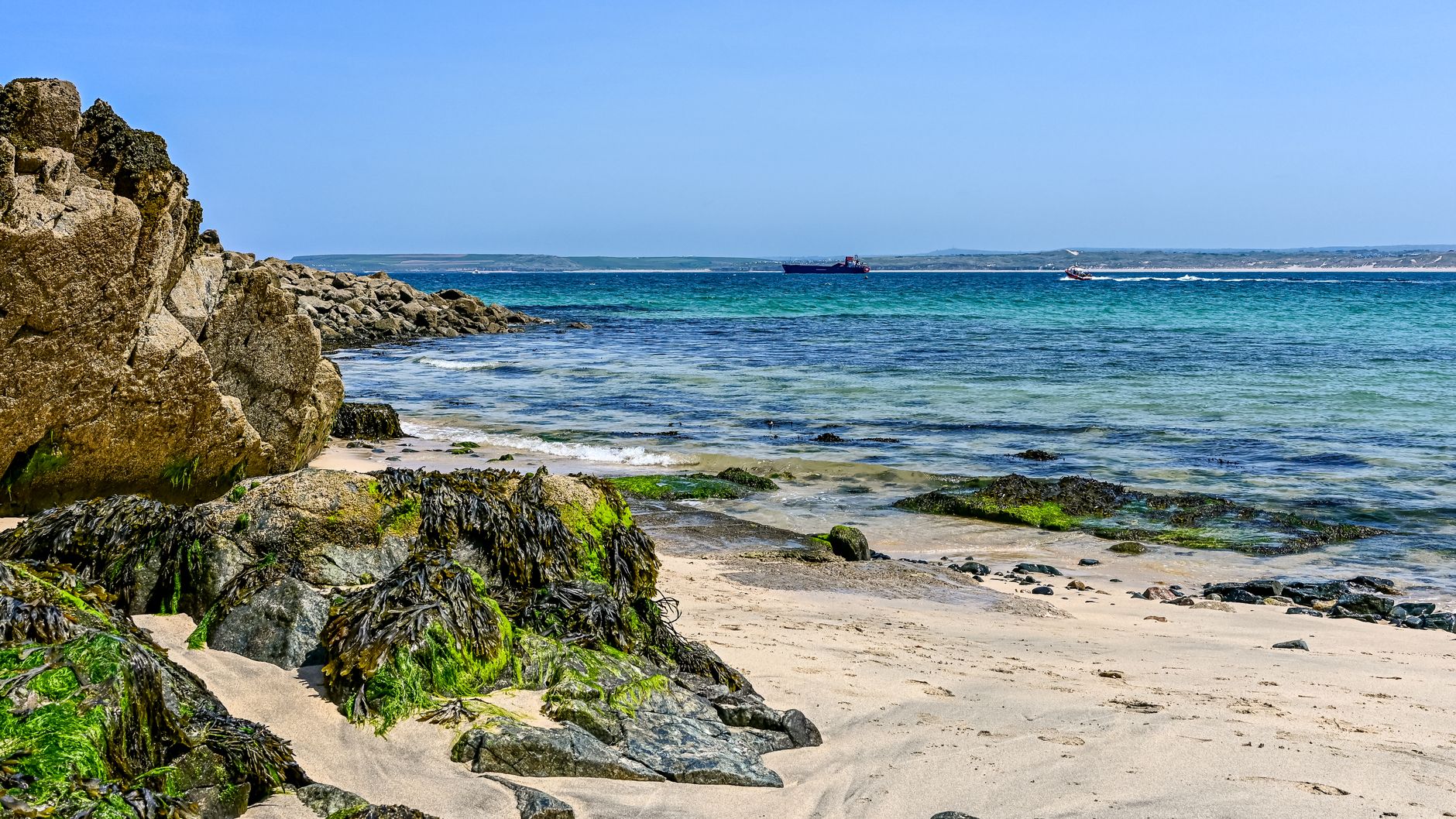
St Ives is the rare Cornish town where you can walk between four genuinely excellent beaches inside half an hour, then reach a fifth, Carbis Bay, on foot or a single stop by train. Clean Atlantic water, white-sand bays that face different directions, and a town that behaves like an extension of the coast make this one of the most rewarding bases in Cornwall for a beach-led holiday. You rarely need the car once you have arrived.
This guide covers the best beaches near St Ives: the four central town beaches, the calmer bays just outside, and a handful of quieter options a short walk, train ride or drive away. For each one you will find notes on lifeguard cover, parking, the state of the tide that suits it, and which beach to choose for which kind of day. Everything here is real and reachable; nothing depends on a private path or a scramble you would not want your children attempting.
St Ives town beaches
The four town beaches sit within a few minutes of each other, wrapped around the harbour and the headland the locals call The Island. Each one faces a slightly different way, which is the whole trick of St Ives: when the wind ruins one beach, another is usually sheltered. Learn the four and you can nearly always find calm water or catch the sun, whatever the forecast decides to do.
Porthmeor Beach
The west-facing surf beach, with the Tate St Ives behind it and a long arc of pale sand looking straight out at the Atlantic. RNLI lifeguards patrol in season and St Ives Surf School runs from the sand, so it is a sensible place to take a first lesson. There is a cafe and the usual ice cream van. Porthmeor works best from low to mid tide; at high water the sand narrows and the sea pushes right up under the promenade. It is famously good at sunset, when half the town seems to drift up onto the beach to watch the light go.
Choose Porthmeor for surfing, for a session after visiting the Tate, and for that end-of-day Atlantic glow.
Porthminster Beach
The sheltered, south-facing town beach, and probably the best swim in St Ives itself. The sand shelves gently, the water stays calmer than anywhere on the Atlantic side, and the celebrated Porthminster Beach Cafe sits right behind it (book ahead in summer, when it sells out daily). Lifeguards cover the beach in season, and there are toilets, baby-change and step-free access from the coast path. If you are travelling with toddlers or nervous swimmers, start here.
Porthgwidden Beach
A small sandy cove tucked under The Island, with a row of beach huts, some available to hire, and the Porthgwidden Beach Cafe above. It is quieter than Porthmeor and often sheltered when the bigger beaches are breezy, which makes it a reliable pick for younger children and for anyone who wants to sunbathe out of the wind. On a blustery afternoon this is frequently the calmest corner in town.
Bamaluz Beach
A short, sandy beach beside St Ives harbour, known to locals as a low-key alternative to the show-piece bays. It is smaller and rougher underfoot than the others, but it stays free of the crowds and is one of the best spots in town for crabbing off the rocks. Dogs are welcome here year-round, which makes it valuable in high summer when the main beaches enforce their seasonal restrictions.
St Ives Harbour Beach
Strictly this is the working harbour, but as the tide drops it becomes a broad, calm family beach with shallow water and plenty of room to dig. Children love crabbing along the harbour wall with a line and a bucket. Keep an eye on the returning tide and the occasional moving boat, and it makes an easy, sheltered hour between other plans.
Beaches within a short walk or train ride
Walk out of town along the coast path, or hop on the branch line, and the bay opens up into longer, emptier stretches of sand. The St Ives Bay Line from St Ives through Carbis Bay and Lelant is one of the prettiest short rail journeys in Britain, and using it neatly sidesteps the town’s notorious parking. More on that below.
Carbis Bay
White sand and clear, shallow water that has been earning St Ives its “Caribbean of Cornwall” headlines for decades. The bay faces north-east, which shelters it from the prevailing south-westerlies, so the water is usually calm and, by late summer, about as warm as Cornwall gets. Lifeguards patrol in season, and the Carbis Bay Hotel and its beach restaurant sit behind. It is one stop from St Ives on the railway or a 25-minute walk along the cliff path, and it consistently ranks among the best beaches for swimming in Cornwall for exactly these reasons.

Porthkidney Sands
A vast sweep of sand at the mouth of the Hayle Estuary, reached by a 15-minute walk from Carbis Bay or from Lelant church. It is wide enough that even a hot bank holiday leaves room to spread out, though facilities are minimal, so bring what you need. There are currents where the estuary meets the sea, so swim toward the Carbis Bay end and keep clear of the channel. For long walks and big-horizon picnics it is hard to beat.
Hayle Towans
The three-mile run of dunes and sand that starts at Hayle and stretches round toward Godrevy, with access points at Hayle, Mexico Towans and Gwithian. It is reliably less crowded than the town beaches, good for surfing, and easy to find an empty stretch even in August. The lifeguarded zone sits down at the Gwithian end, so head there if you plan to swim rather than just walk.
Beaches a short drive from St Ives
With a car and a little tide-planning, the whole of Penwith opens up: the wilder north coast one way, the turquoise coves of the far west the other. None of the drives below is long, but the roads are narrow and slow in summer, so give yourself more time than the sat-nav promises and set off earlier than feels necessary.
Gwithian and Godrevy (about 4 miles)
The northern arm of St Ives Bay, with multiple surf peaks, the Sunset Surf Cafe, and reef breaks out toward Godrevy. At low tide there are good rock pools, and grey seals often haul out on the rocks beyond Godrevy Lighthouse; you can usually spot them from the clifftop without disturbing them. It is an easy half-day from St Ives and a favourite of local surfers.
Sennen Cove (about 15 miles)
The far-western beach, a half-hour drive over the Penwith moors. White sand, a lifeguarded zone, gentle waves that make it ideal for a first surf lesson, and sunsets that are hard to overstate. On a settled evening it is worth the drive for the light alone.
Porthcurno (about 18 miles)
Turquoise water and white sand below the cliffs that hold the Minack Theatre. It is one of the most photographed beaches in Cornwall, and the sand narrows sharply at high tide, so aim for the lower half of the tide. Pair it with an evening performance at the Minack or a look round the Telegraph Museum in the valley behind.

Pedn Vounder (about 18 miles)
The blue-water beach reached by a steep scramble down from Treen, near Porthcurno. Sandbars appear at low tide and the colour of the sea is genuinely startling, but the descent is not for young children or the unsure-footed, and the beach cuts off on a rising tide. Go on a dropping tide, watch your timing, and read our guide to hidden and secret beaches in Cornwall before you set out.
Portheras Cove (about 15 miles)
A 20-minute walk from Pendeen on the far north coast leads to a sandy, dog-friendly cove that stays quiet even in season. It is a lovely reward at the end of the path, though there are no facilities and the swimming needs the usual care with tides and currents.
Getting there and parking
St Ives parking is the town’s one real headache, and it catches out visitors every summer. The central car parks fill early, the streets are steep and largely permit-only, and by mid-morning in August the queues to get in can crawl. The fix that residents will tell you about is the park-and-ride at Lelant Saltings and the seasonal option at Trenwith, near the top of town, where you leave the car and drop in by train or shuttle.
Better still, arrive by train. The branch line from St Erth runs down to Lelant, Carbis Bay and St Ives, hugging the coast for the last few miles, and it turns the “where do we park” problem into part of the day out. If you are staying in the area, work out which beaches you can reach on foot and by rail before you plan any driving; for many visitors the answer is “nearly all of them”. Should you decide to base yourself here, our roundup of the best bed and breakfasts in St Ives covers where to stay within walking distance of the sand.
Reading the tide and the wind
Two things shape a St Ives beach day more than the forecast headline: the state of the tide and the direction of the wind. Get both roughly right and an ordinary day becomes a very good one.
Tide first. Porthmeor and the Atlantic-facing beaches give you the most sand at low to mid tide and shrink at high water, so if you want space to lay out towels, aim for the falling tide. Porthcurno and Pedn Vounder more or less require the lower half of the tide to be worth the trip. The harbour beach only appears as the water drops. A free tide table, from the BBC coast pages or any tide app, is all you need; local tables are also posted at the beach car parks.
Then the wind. Because the town beaches face different ways, the same breeze that flattens one is offshore and clean at another. A south-westerly blows Porthmeor out but leaves Porthminster and Porthgwidden calm; an easterly does the reverse and grooms Porthmeor into something surfers get excited about. If a beach looks messy and wind-blown when you arrive, do not write off the day. Walk round the headland and try one that faces the other way.
Lifeguards, flags and staying safe
The main St Ives beaches, Porthmeor, Porthminster, Carbis Bay and Gwithian, are patrolled by RNLI lifeguards through the summer season, typically from late May to late September, with cover through the middle of the day. Wherever you swim on a patrolled beach, stay between the red and yellow flags: that zone is chosen and watched by the lifeguards, and it keeps you clear of the worst of any rip currents.
The specific hazards here are the ones common to the whole coast. Rip currents can form on the surf beaches; if you are ever caught in one, do not try to swim against it, keep hold of your energy, and swim parallel to the beach until you are out of the pull before heading in. Watch the tide on the beaches that cut off, particularly Pedn Vounder and the coves at the foot of cliffs. And treat inflatables with respect, because an offshore wind can carry a lilo out to sea faster than a parent can react. Our full Cornwall beach safety guide covers rip currents, tide tables and cold-water swimming in proper detail, and it is worth ten minutes before your first swim of the trip.
Facilities, families and dogs
For families, the easy picks are Porthminster, Carbis Bay and Porthgwidden: sheltered, gently shelving, with cafes, toilets and manageable access. All three suit toddlers on a calm day, and the harbour beach at low tide is a gentle spot for a first go at crabbing. Older children who want to surf are better off at Porthmeor with the surf school, or out at Sennen for a lesson on softer waves.
Toilets and cafes cluster around the town beaches; the further-flung bays such as Porthkidney, Portheras and Pedn Vounder have few or none, so pack water, snacks and everything you will need for the day. Rock pooling is reliably good at Gwithian and Godrevy at low tide, and if a whole day of pools appeals, our guide to the best rock pooling beaches in Cornwall for families points you to the richest spots in the county.
Dogs are the one thing to check carefully. Most of the main beaches carry a seasonal dog ban, usually from around mid-May to the end of September, so in high summer you are looking at Bamaluz, quieter stretches of Hayle Towans and Porthkidney, and Portheras Cove, all of which stay dog-friendly year-round. Out of season the restrictions lift and the whole coast is fair game. For the up-to-date picture across the county, see our guide to the best dog-friendly beaches in Cornwall, and always double-check the signs at the beach itself, since the exact dates can change year to year.
Combining beaches with the rest of St Ives
The pleasure of St Ives is that the beaches, the town and the coast path all knit together, so you are never choosing between a beach day and everything else. A single good day might be a morning at the Tate and Porthmeor, lunch at Porthminster, the train down to Carbis Bay for the afternoon, and back on Porthmeor for sunset. None of that needs a car.
If you would rather walk, the clifftop path in either direction is superb: east toward Carbis Bay and Lelant, or west along the wild, gorse-clad stretch toward Zennor. Our guide to coastal walks near St Ives maps the best of these routes, including the seal-watching stretch out to Godrevy. And when you want to step back from the sand entirely, the galleries, harbour and cobbled lanes of the town reward an afternoon’s wander; our full St Ives travel guide covers the art, the food and the practicalities.
Common mistakes to avoid
The first is driving in and hoping. On a warm summer morning the town car parks are full by nine or ten, and circling for a space wastes the best of the day. Use the park-and-ride or the train and the problem disappears.
The second is ignoring the tide. Turning up at Porthcurno or Pedn Vounder at high water, or letting a rising tide creep up on you at the foot of a cliff, spoils a good plan and occasionally causes a genuine scare. A ten-second glance at a tide table prevents both.
The third is committing to one beach for the whole day regardless of conditions. St Ives rewards the flexible. If the wind has ruined your first choice, the beach round the corner is very often calm, and moving takes minutes on foot.
The fourth is turning up at Porthminster Beach Cafe at one o’clock in August expecting a table. Book it days ahead, or plan to eat somewhere else and save the cafe for a day you have organised in advance.
When to visit
Midsummer brings the warmest water and the liveliest town, along with the busiest beaches and the tightest parking. If you can, aim for the shoulder seasons. Late May and June often deliver settled, bright days before the school holidays fill the sand, and September is a local favourite: the sea has soaked up a summer’s warmth, the light softens, and the crowds thin out. Out of season the beaches empty entirely, the dog restrictions lift, and a bright winter day on Porthmeor, wrapped up against the wind, has a stark beauty all of its own.
Whenever you come, a couple of hours either side of low tide tends to give the best of the sand, and an early start beats both the crowds and the parking. Plan around the tide and the wind rather than the calendar, and St Ives rarely disappoints.
Where to stay for beaches near St Ives
St Ives town is the obvious base, within walking distance of four beaches and a short train ride from Carbis Bay. Carbis Bay itself offers quieter streets and direct access to its own beach, while Hayle, Lelant and Gwithian put you at the southern end of the bay, close to the long open sands and a little further from the summer crush. Wherever you land, our roundup of the best B&Bs in St Ives covers options within reach of the coast, and the wider complete guide to the best beaches in Cornwall sets St Ives Bay in the context of the whole county if you fancy ranging further afield.
Frequently asked questions
What is the best beach in St Ives?
For sheltered swimming and a sun-trap of a day, Porthminster. For surfing and Atlantic atmosphere, Porthmeor. For families with young children, Carbis Bay or Porthgwidden. Because the beaches face different ways, the “best” one on any given day is usually whichever is sheltered from the wind.
How far is Carbis Bay from St Ives?
Carbis Bay is a single stop on the railway from St Ives, or a 25-minute walk along the coast path. The two are effectively parts of the same bay, and the train makes it easy to combine both in a day.
Are the beaches near St Ives safe for swimming?
The lifeguarded zones at Porthmeor, Porthminster, Carbis Bay and Gwithian are safe when you swim between the red and yellow flags. Rip currents and tides are the main hazards on the surf beaches and the estuary edges, so read the flags, watch the tide, and keep inflatables for the flagged, patrolled areas.
Which St Ives beach is best for surfing?
Porthmeor for the town surf and a first lesson with the on-beach surf school. Gwithian and Godrevy offer more variety for improving surfers, and Sennen Cove out to the west is gentle enough for absolute beginners.
Can you walk between the St Ives beaches?
Yes. All four town beaches sit within about half an hour’s walk of each other around the harbour and headland, and Carbis Bay is a further 25 minutes along the coast path. For a full day out you can string several together on foot without touching the car.
Are dogs allowed on St Ives beaches?
Most of the main beaches ban dogs from around mid-May to the end of September. Out of season they are all dog-friendly, and Bamaluz allows dogs year-round, as do quieter parts of Hayle Towans and Porthkidney and the walk-in cove at Portheras. Always check the signs at the beach, as the exact dates can shift.
The beaches are why so many visitors to St Ives come back year after year. Pick one for the morning and another for the afternoon, plan around the tide rather than the clock, and you have a Cornwall beach holiday distilled into a single, walkable town.