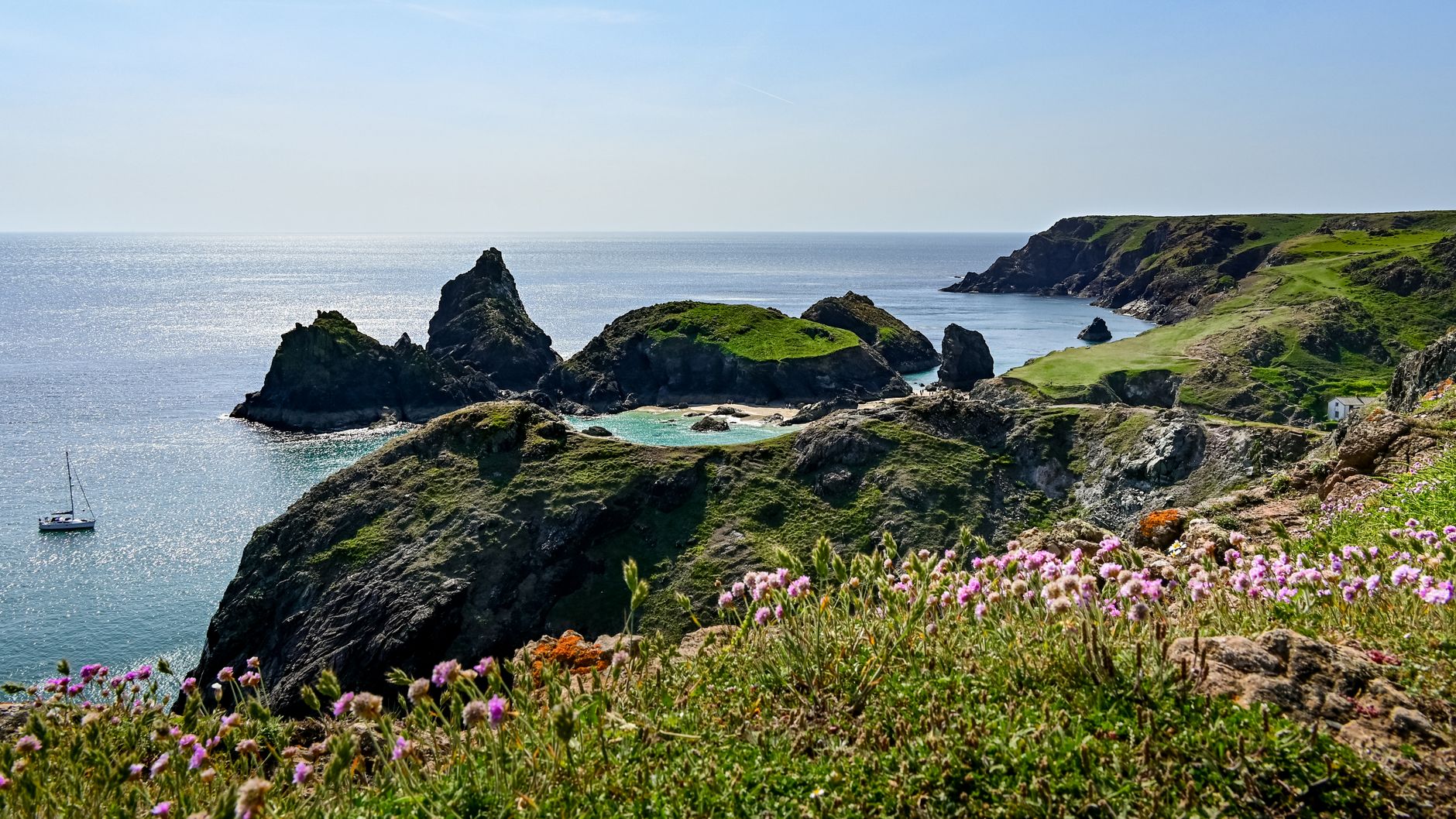
The single most useful fact about Cornwall weather is one that never appears on a forecast graphic: the county gets about seven days of air frost a year. Seven. Inland Cambridgeshire gets fifty. That one number explains the palm trees in Penzance front gardens, the subtropical gardens on the Helford, the daffodils cut in January and the reason retired people move here from Yorkshire.
The second most useful fact is that mild is not the same as warm, dry or sunny. Cornwall gets over a metre of rain a year, a good deal of it between October and January, and the wind arrives off three thousand miles of Atlantic with nothing in the way. This guide gives you the actual monthly numbers, month by month, from the Met Office’s Camborne station, and then tells you what they feel like — which is a different thing, and the part that decides whether your week works.
The numbers
These are the 1991–2020 long-term averages for Camborne, near the middle of the county and about as representative as a single station gets. Coastal spots run a fraction milder in winter; the moors are colder and wetter than anything here.
| Month | Avg high °C | Avg low °C | Sunshine hrs | Rainfall mm | Frost days |
|---|---|---|---|---|---|
| January | 9.2 | 4.9 | 61 | 121 | 2.2 |
| February | 9.2 | 4.6 | 85 | 95 | 2.1 |
| March | 10.2 | 5.4 | 125 | 72 | 1.1 |
| April | 12.1 | 6.6 | 187 | 73 | 0 |
| May | 14.5 | 8.8 | 216 | 61 | 0 |
| June | 16.9 | 11.3 | 215 | 63 | 0 |
| July | 18.7 | 13.2 | 199 | 69 | 0 |
| August | 19.0 | 13.4 | 187 | 78 | 0 |
| September | 17.5 | 12.0 | 160 | 78 | 0 |
| October | 14.6 | 10.0 | 112 | 111 | 0 |
| November | 11.8 | 7.4 | 70 | 130 | 0.2 |
| December | 9.9 | 5.6 | 55 | 126 | 1.7 |
| Year | 13.7 | 8.6 | 1672 | 1076 | 7.4 |
Four things jump out of that table, and they are worth stating plainly.
The summer is not hot. August, the warmest month, averages 19°C. That is a pleasant temperature for walking and a cool one for lying still on sand. Heatwaves happen and the far south-west usually gets less of them than the rest of England, because there is sea on three sides.
The winter is genuinely mild. January and February average highs of 9°C and lows just under 5°C. Snow that settles is a once-every-several-years event on the coast and a slightly more frequent one on Bodmin Moor.
May is the sunniest month, not July. Camborne gets 216 hours in May against 199 in July, and 187 in both April and August. This surprises people every year, and it is the strongest single argument for a late-spring trip.
The rain is seasonal, not constant. November, December and January take about a third of the annual total between them. May, at 61mm, is drier than a great many places people consider dry.
Month by month
January
Highs of 9°C, lows of 5°C, 61 hours of sun and 121mm of rain across the month. January is dark, wet and windy, and it is also the month in which the daffodil fields around Penzance and the Tamar valley are cut. Storms roll through on a three- or four-day cycle, which means genuinely wild days at Porthleven and Sennen alternating with unexpectedly still, clear ones.
Much is closed. Beach cafés, many attractions and a good proportion of restaurants outside the larger towns shut for January or open at weekends only. What stays open is the coast path, the big gardens, and the pubs. The Cornwall in winter guide covers what to actually do with the month.
February
Statistically almost identical to January for temperature but with a quarter more sunshine — 85 hours against 61 — and noticeably less rain at 95mm. February is when the difference between Cornwall and everywhere else in England starts to show: magnolias flower at Caerhays and Trebah, camellias are out, and the light gets its edge back.
Half term brings the first real influx of visitors and the first attractions reopening. The sea is at its annual coldest, somewhere around 9 or 10°C, which is the point at which swimming without a wetsuit is a matter for the committed rather than the brave.
March
The turn. Highs climb to 10°C, sunshine doubles again to 125 hours, and rainfall drops sharply to 72mm — March is the first month of the drier half of the year. Frost effectively ends. The clocks change late in the month and the evenings suddenly work.
This is the beginning of the good months for walking, before the coast path gets busy and while the gorse is at its most absurd. Accommodation is cheap, the gardens are at their spring peak, and the Scillonian III restarts its season.
April
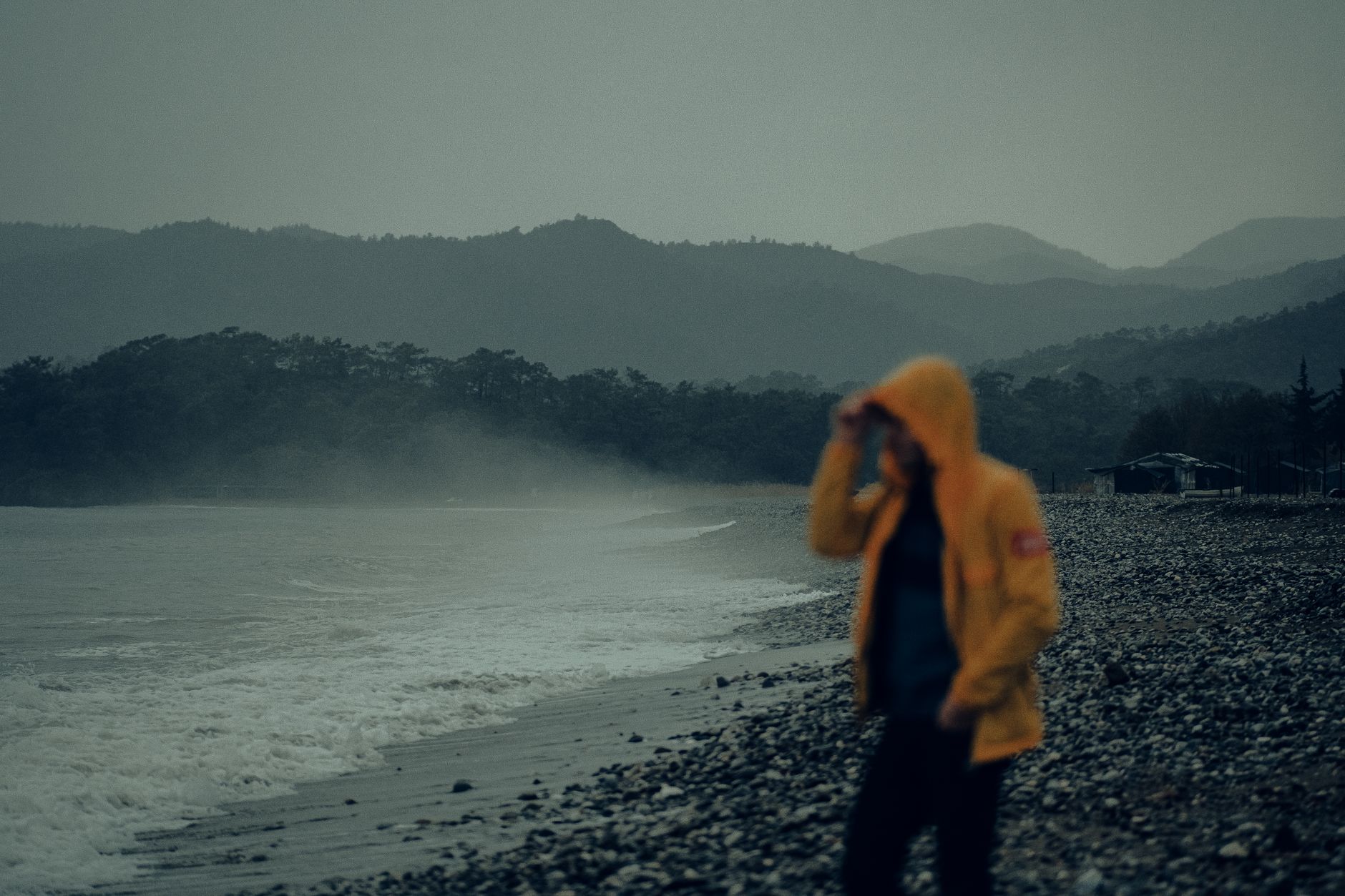
187 hours of sun, 73mm of rain, highs of 12°C. April is the first month that genuinely feels like a holiday, and it is one of the best-value ones. Wildflowers start on the clifftops — thrift, sea campion, bluebells in the woods — and the Easter holidays produce a fortnight of high-season prices and crowds in the middle of an otherwise quiet month.
The catch is the sea, which lags the air badly. At around 10 or 11°C the water in April is colder than it was in December, because the ocean takes months to respond. Wetsuits, without exception.
May
The best month in Cornwall, and the numbers agree: 216 hours of sunshine, the most of any month, and 61mm of rain, the least. Highs of 14.5°C are comfortable for walking all day. Everything is open, nothing is full, the hedgerows are three feet deep in cow parsley and foxgloves, and the coast path is at its absolute peak.
Two things to know. The May bank holidays fill the county twice. And Flora Day in Helston falls on 8 May every year, closing the town for a genuine, unmodernised medieval festival, which is either the reason to come or the reason to avoid Helston that day. Our events calendar has the full year.
June
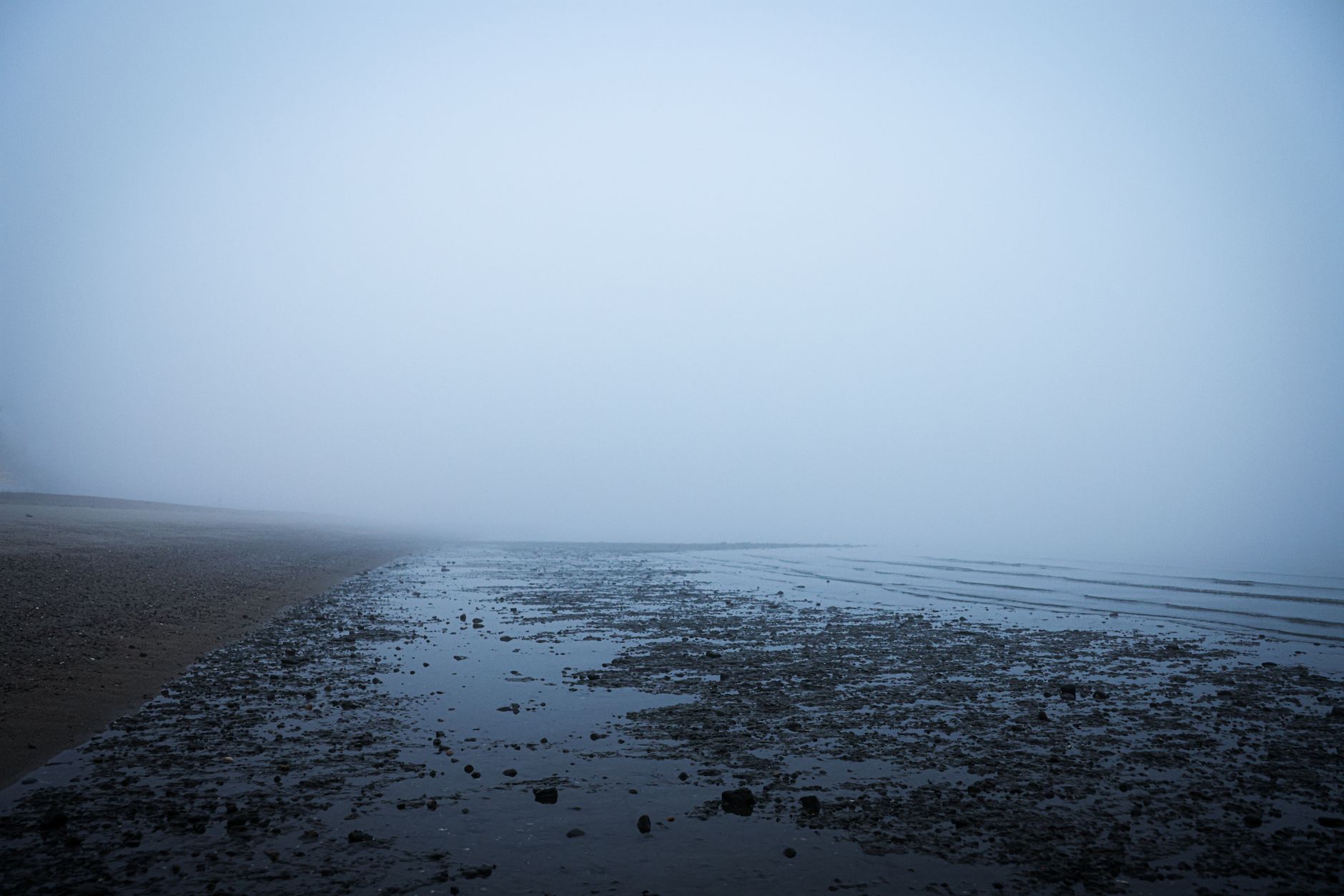
215 hours of sun, 63mm of rain, highs of 17°C, the longest days of the year and school still in. June is the second-best month and, on a good year, the best.
The June wild card is the sea fret — a fog bank formed when warm air moves over cold water, which can sit on the coast for a day or two while ten miles inland is in full sun. It is the reason a June forecast for St Ives can be wrong in both directions. If you wake up to fret, drive inland to the moor or the gardens rather than waiting for it to lift.
July
199 hours of sun, 69mm of rain, highs of 18.7°C. The schools break up in the third week and the county changes character overnight. Before that, early July is superb — warm, long-dayed, and still navigable.
After it, the roads matter more than the weather. The A30 backs up on Saturdays, the popular car parks fill before ten, and the difference between a good and bad day becomes a question of what time you left the house. Sea temperature is climbing but has not peaked.
August
The warmest month on paper — 19°C average high, 13.4°C at night — and the busiest by a distance. Sunshine drops slightly from July to 187 hours and rain rises to 78mm, which catches out people who assume August is the driest month. It is not; May is.

August weather is genuinely good more often than not, but a wet week in August is a real possibility and it is the worst week to be caught by one, because every indoor attraction in the county is also full. Our guide to rainy day activities is worth reading before you need it rather than after.
September
The connoisseur’s month. Highs of 17.5°C, 160 hours of sun, 78mm of rain — and, crucially, the sea at its annual warmest, around 16°C. The schools go back in the first week and the county empties. Prices fall. The light gets long and low. Surf improves as the first autumn swells arrive.
If you can travel outside school holidays and you want one recommendation from this entire guide, it is the second and third weeks of September. Our seasonal guide to visiting Cornwall weighs that against the other options in more detail.
October
The pivot back. Rain jumps to 111mm and sunshine falls to 112 hours, but highs of 14.6°C are still mild and the sea holds much of its warmth. Autumn colour in the wooded valleys of the Fowey and the Fal is genuinely good, half term brings a week of crowds, and the storms start.
October is the best month for surfers with some experience — consistent Atlantic swell, water still bearable, beaches empty — and covered in more detail in our guide to Cornish surf conditions by season.
November
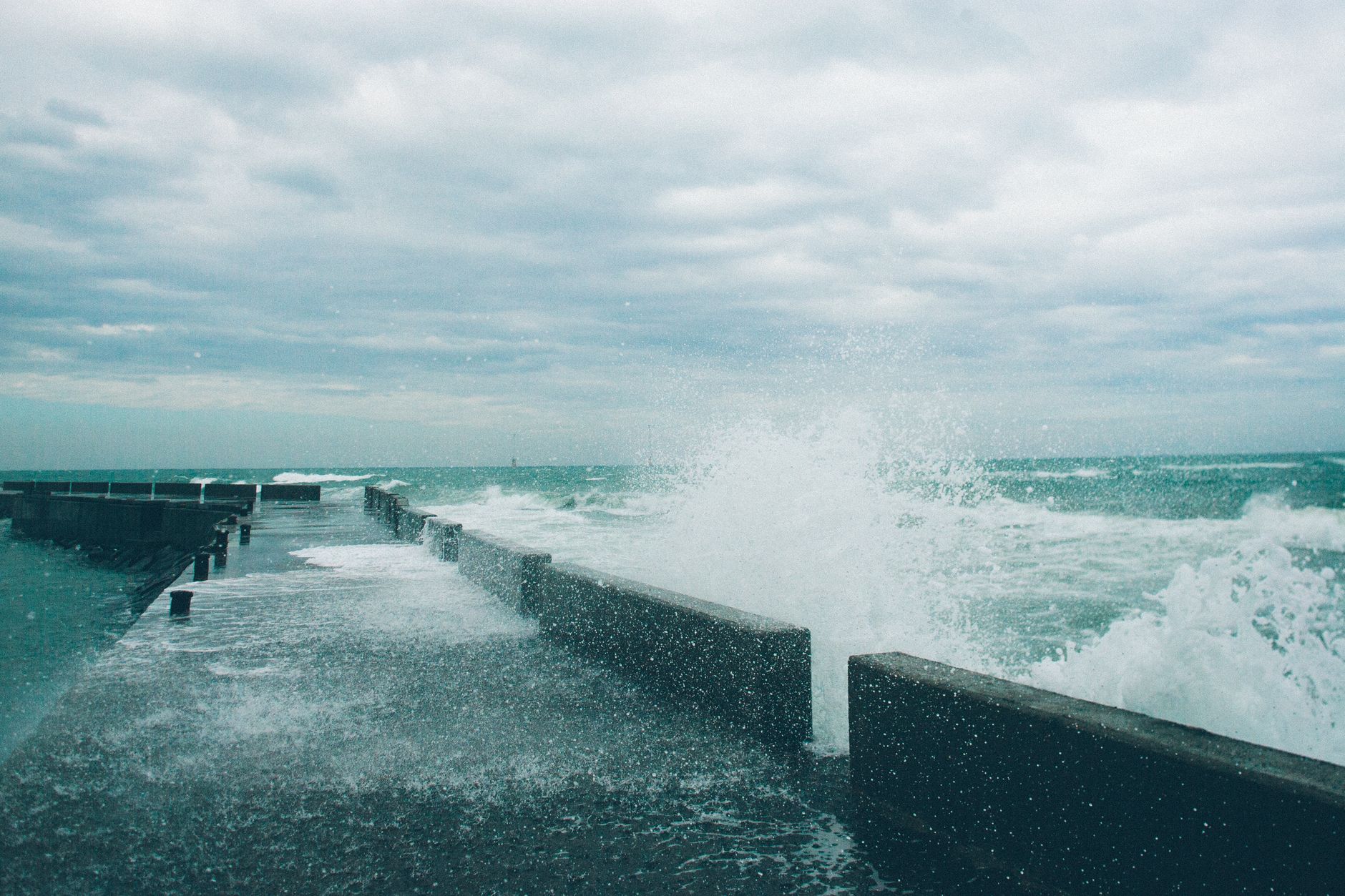
The wettest month of the year at 130mm, with only 70 hours of sunshine and highs of 11.8°C. November is the month Cornwall belongs to the people who live there. Attractions close, the coast path is empty, and the big Atlantic depressions start arriving properly.
It is also, for a certain kind of visitor, the best month of all — storm-watching at Porthleven, empty beaches, cheap rooms, fires in pubs. Just do not expect to swim, sunbathe or find a beach café open.
December
The darkest month: 55 hours of sunshine across the whole month, 126mm of rain, and a little over eight hours of daylight around the solstice. Highs of about 10°C and lows of 5.6°C mean it rarely freezes.
Christmas transforms the coastal villages — Mousehole‘s harbour lights and Padstow‘s Obby Oss town in festive mode are both genuine draws — and the county is properly busy again between Christmas and New Year. Book early; the good places go months ahead.
Sea temperature
Air temperature and sea temperature are not in step, and confusing the two is the single most common Cornish planning error.
- Coldest: late February and March, at somewhere around 9–10°C. The sea is still losing heat well after the air has started gaining it.
- Spring lag: April to June. The air is pleasant and the water is not. June sea temperatures are lower than September’s despite June being sunnier.
- Warmest: late August and September, peaking around 16°C. This is the swimming season, whatever the calendar says.
- Autumn hold: October retains much of September’s warmth and is the reason autumn surfing is comfortable in a 4/3 wetsuit.
Sixteen degrees is the Cornish maximum and it is not warm. People do swim without wetsuits in August and September, and they do not stay in for very long. If swimming is central to your trip, read the wild swimming guide for the cold-water sense, and the beach safety guide for the rips, which kill more people here than the temperature does.
Daylight
Cornwall is the far south-west of Britain, which gives it a distinctive daylight pattern: later sunrises and later sunsets than London in winter, and slightly shorter summer days than the north of England.
- Late June — around sixteen and a half hours of daylight, with usable light until well after ten in the evening.
- Late December — a little over eight hours, with the sun down before half past four.
- Late October — the clocks go back and the afternoons collapse. This is a real planning factor for walkers.
- Late March — the clocks go forward and the evenings suddenly hold a whole extra activity.
North coast, south coast and the moor
Cornwall is narrow enough that the whole county shares a forecast and different enough that the forecast is wrong somewhere.
The north coast — Bude, Newquay, St Ives, Sennen — takes the Atlantic full on. It is windier, gets the swell, gets the sea fret, and clears faster after rain. It is several degrees cooler in a stiff onshore breeze than the number suggests.
The south coast — Falmouth, Fowey, the Helford, the Roseland — is sheltered from the prevailing south-westerly by the bulk of the peninsula, warmer in practice, and where the subtropical gardens are for exactly that reason. On a windy day this is where to go.
Bodmin Moor is a different climate: 300 metres up, wetter, colder, cloudier and capable of being in fog while both coasts are clear. Add several degrees of chill and a decent chance of rain to any forecast you have for the coast.
The far west — Penwith and the Lizard — is the mildest and most exposed at once. Frost is almost unknown; wind is constant. That combination is what grows the aeoniums.
Wind and storms
The prevailing wind is south-westerly and it is the dominant weather fact of the county. It determines which beaches are swimmable, which coast is sheltered, whether the Scillonian sails, whether the surf is clean or blown out, and how cold 15°C feels.
Named Atlantic storms run roughly October to March, arriving every week or two in an active winter. They bring genuine hazards: overtopping waves at Porthleven and Sennen, closed coast paths, flooded lanes and power cuts. Storm-watching is a legitimate Cornish pastime, and every winter somebody is swept off a harbour wall doing it. Watch from high ground, well back, and never from a sea wall or slipway.
What to pack, by season
- All year — a properly waterproof jacket, not a shower-resistant one, and shoes with grip. Cornish rain arrives sideways.
- Spring — layers, sunglasses and sunscreen. The UV in April surprises people who are dressed for 12°C.
- Summer — a jumper for the evening, a windproof for the beach, and swimwear you can get into while shivering. Beach days end early when the wind gets up.
- Autumn — waterproof trousers if you plan to walk, and a torch for the short afternoons.
- Winter — a hat that stays on in wind, boots that cope with mud, and something warm for pubs with stone floors.
The full seasonal breakdown is in our Cornwall packing list, which covers what to bring for each month rather than each season.
How to read a Cornish forecast
Forecasts perform worse here than almost anywhere else in England, and it is not incompetence. A narrow peninsula surrounded by sea, with high ground down the middle and a coastline facing every direction, produces weather at a scale finer than a national forecast model resolves. Four habits make the difference.
Forecast the coast you are on, not the county. A south-westerly that has St Ives grey and blown out often leaves Falmouth and the Helford sunny and still. If your app shows rain, check a town on the other coast before abandoning the day.
Distinguish showers from fronts. A frontal band is a fixed few hours of rain and then it has gone; showers under a north-westerly airstream come and go all day and any one of them lasts fifteen minutes. The forecast will show both as rain. The hourly view tells you which you have — solid blocks are fronts, scattered blobs are showers, and a shower day is often a perfectly good beach day with three interruptions.
Read the wind, not just the temperature. Seventeen degrees in a Force 5 onshore feels like eleven. Wind speed and direction are the numbers that decide whether a beach day works, which beach to choose and whether the boats run; temperature barely matters between May and September.
Use the inshore waters forecast if you are going near the sea. The Met Office issues a specific coastal forecast covering wind, sea state and visibility, and it is far more useful for a beach or boat day than the town forecast. Surf forecasts add swell height and period, which is what actually determines whether the water is safe for swimming.
One local rule of thumb worth having: if you wake to fog on the north coast in May or June, go inland or south. Sea fret is a coastal phenomenon a few miles deep, and Bodmin Moor or the Fal valley is very often in sunshine while St Ives cannot see the end of the harbour.
Weather and the tide: the other timetable
Half the Cornish days that go wrong are ruined by the tide rather than the weather, and unlike weather the tide is known months in advance, which makes it the easier of the two to plan around.
Cornwall has a big tidal range — several metres between high and low water on a spring tide — and it changes what a place is. At Kynance Cove the beach almost entirely disappears at high water, so arriving at the wrong hour means a car park, a walk down and no sand. The causeway to St Michael’s Mount is walkable only for a few hours around low water; at other times you pay for the boat or you wait. Rock pools, caves, sandbars and half the county’s best beaches only exist on a falling or low tide.
Spring tides — around the new and full moon — give the biggest range: the lowest lows, which are best for rock pooling and caves, and the highest highs, which are when harbour walls get overtopped in a storm. Neap tides in between are gentler in both directions.
Practical version: look up the tide table for the nearest port the evening before, plan the beach for the three hours either side of low water, and treat high tide as the time to be walking the coast path or eating lunch. Printed tables are free or nearly so in harbour shops and every surf shop has one on the wall.
What the weather actually closes
Weather in Cornwall does not just make you wet, it cancels things. Knowing what is fragile lets you build a plan with a fallback rather than a hole in it.
- The Isles of Scilly ferry and flights. The Scillonian III does not sail in a big enough sea and Skybus does not fly in fog. Both are routine in the shoulder seasons.
- Boat trips and inter-island launches. Wildlife trips, ferries across the Fal and Helford and seal-watching boats are cancelled by wind direction as much as wind strength.
- Lifeguard cover. Patrols run roughly from Easter to the end of October on the main beaches, with far fewer beaches covered outside the peak weeks — check the current list rather than assuming a flag.
- Sections of the coast path. Landslips and storm damage close stretches for months at a time, particularly on the softer south-coast cliffs.
- Open-top buses and clifftop attractions in high wind, and the Minack Theatre performs in weather that would close most venues but not in all of it.
- Roads. Lanes flood in the valley bottoms after heavy rain, and the moorland roads go to fog quickly.
The corollary is that a wet-weather plan should be made before you arrive, not at nine in the morning in a car park with three disappointed children. Aquariums, the Eden Project biomes, the big houses and the mining museums all work in rain and all of them are full by eleven on the first wet day of a school holiday.
What has changed, and what has not
Cornwall’s climate is shifting in ways that are visible over a couple of decades rather than a couple of years, and it is worth knowing which parts of the received wisdom still hold.
Winters have got milder and wetter. The frost figure in the table above — around seven days a year — is lower than the equivalent for the previous thirty-year period, and the growing season is longer, which is why Cornish vineyards have gone from a curiosity to a real industry and why the gardens flower earlier than the guidebooks say.
Summers have warmed less than inland England, because the sea moderates them. The practical effect is that Cornwall increasingly offers the thing a hot inland summer does not: somewhere that stays in the high teens and low twenties when the south-east is in the mid-thirties.
Storminess is the contested one. Big Atlantic storms have always come; whether there are more of them is harder to say than whether they cause more damage, which they demonstrably do, because there is more built on the coast than there used to be. What is certain is that winter rainfall totals have risen and that flooding in the valley bottoms is a more frequent nuisance than it was.
What has not changed: the wind, the sea temperature ceiling of about 16°C, the fact that May is the sunniest month, and the near-certainty that whatever the forecast says, it will be different on the other coast.
Honest verdicts on the months
Best overall: May. Most sunshine, least rain, everything open, nothing full, and the flowers at their peak. The bank holidays are the only caveat.
Best for swimming: September. Warmest water of the year and the beaches back to being usable. Second half of the month for preference.
Best value: March and October. Mild enough to walk all day, cheap enough to stay somewhere you could not otherwise afford, and quiet.
Most overrated: August. It is the warmest month by less than a degree and a half over July, it is not the driest, and it is by far the most crowded and most expensive. If you have any choice at all in the matter, do not come in August.
Most underrated: February. Not for a beach holiday, obviously, but the sunshine has already doubled from January, the gardens are extraordinary, and half the county is yours.
The one to avoid: November, unless the point of the trip is weather. Wettest, nearly the darkest, most things closed, and without December’s Christmas compensation.
Frequently Asked Questions
What is the warmest month in Cornwall?
August, with an average daily high of about 19°C and overnight lows around 13°C. July is only a fraction cooler and considerably less crowded in its first three weeks.
Which month has the most sunshine?
May, with around 216 hours at Camborne — more than June, July or August. It is also the driest month, at about 61mm of rain.
When is it wettest?
November, at roughly 130mm, followed by December and January. Together those three months take about a third of the county’s annual rainfall.
Does it snow in Cornwall?
Rarely and briefly. The county averages about seven days of air frost a year and settling snow on the coast is a once-in-several-years event, though Bodmin Moor sees it more often.
How cold is the sea?
It peaks around 16°C in late August and September and bottoms out around 9–10°C in late February and March. It lags the air by about two months in both directions.
Is Cornwall warmer than the rest of England?
Milder rather than warmer. Winters are significantly milder — the annual average is about 13.7°C by day — but summers are cooler than inland southern England because of the surrounding sea.
What is the sea fret?
A fog bank that forms when warm air moves over cold water, most common in late spring and early summer. It can shroud a coastal town for a day or two while the interior is in sun.
When should I avoid Cornwall?
The school summer holidays if you dislike crowds, and November if you want anything to be open. Both are matters of tolerance rather than weather.
How many hours of daylight are there in winter?
A little over eight around the December solstice, with sunset before half past four. In late June you get roughly sixteen and a half hours and usable light past ten in the evening.
Plan by month rather than by season and Cornwall becomes a much more reliable place to visit. The county has three or four genuinely excellent months that most visitors never see, one badly overrated one that most of them insist on, and a winter that is far softer than its reputation — and the only piece of kit that matters in any of them is a jacket that actually keeps the rain out.