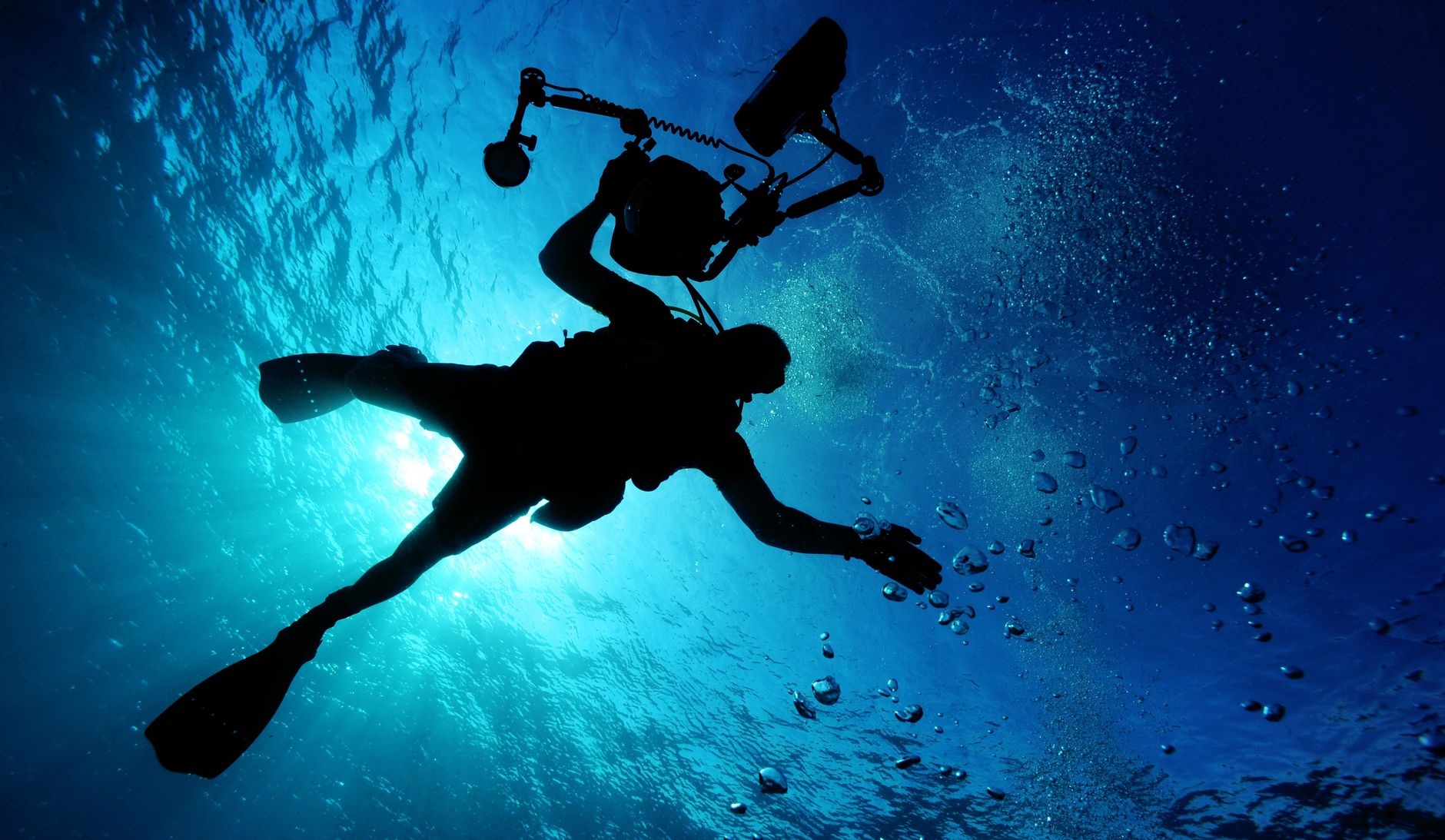
Diving in Cornwall is the open secret of British scuba diving. The county sits at the most south-westerly point of mainland Britain, where the warmer Atlantic currents meet the deep Cornish-shelf waters, and the result is a network of shipwrecks, kelp forests, marine reserves and clear-water sites that put Cornish diving genuinely among the best in the UK. The Manacles reef off the Lizard has 100-plus shipwrecks; the Isles of Scilly have 150-plus dive sites in an area smaller than the Lake District; the artificial reef HMS Scylla has become one of the most-dived wrecks in northern Europe. This diving Cornwall guide is the practical version — where to dive, who to book with, what visibility to expect, and how to read the local water.
I’ll cover the major dive sites with their depths and conditions, the snorkelling spots for non-divers, the basking shark encounter trips, the qualified providers, and the realities of Cornish dive visibility (5-15m typical, 20m+ on the best days). Our wider Cornwall water sports and surfing guide sets the broader picture.
Why Cornwall Is the Best UK Diving Destination
Three reasons make Cornwall the UK’s strongest diving destination outside Scotland. First, the wrecks. Cornish coastal waters have over 1,000 documented shipwrecks dating back to the seventeenth century, with around 100 of those in divable depths and conditions. The Manacles reef alone has accounted for over 100 lost vessels — a major shipping hazard for centuries.
Second, the variety of geology. Cornish underwater habitats include slate reefs (north coast), serpentine and granite cliffs (Lizard and West Penwith), kelp forests in sheltered bays, sand and shell substrates, and the artificial reef sites including the HMS Scylla (sunk deliberately in 2004). Each habitat hosts different marine life.
Third, the proximity to the Gulf Stream’s eastern flank. Cornish waters are warmer than equivalent latitudes elsewhere in Britain, which extends the diving season (May through October genuinely, with shoulder months possible) and increases the diversity of marine life — basking sharks, sunfish, ballan wrasse, John Dory, conger eels, jewel anemones, and a soft-coral assemblage that competes with Mediterranean sites.
The Headline Dive Sites
The Isles of Scilly
Twenty-eight miles off Land’s End, the Scilly Isles have what most informed UK divers will tell you is the best diving in Britain. 150-plus named dive sites in an archipelago about 10×6 miles. Visibility is consistently the best in Britain at 10-30 metres, often exceeding 30 metres on settled summer days — closer to Caribbean conditions than UK norms.
The Scilly wrecks include Cita (15-40m, sank 1997, beginner-suitable bow at 8-15m), Italia (13-40m, sank 1917, advanced stern at 35-40m), Plympton (1909), Hathor (17-48m, sank 1920), King Cadwallon, Minnehaha and Douro. The Lady Charlotte and the bow of Cita are accessible to relatively new divers; Italia and the deeper Cita sections are for advanced wreck divers.
Tides and currents at exposed Scilly sites are significant — slack water windows can be short. The diving is properly conditions-dependent. Scilly Diving School is the local operator; trips can also be organised from mainland Cornwall via Atlantic Scuba (Falmouth) and Porthkerris Divers (Lizard).
The Manacles (Lizard Peninsula)
The notorious shipwreck reef off Coverack and Porthoustock on the east side of the Lizard. Over 100 ships wrecked here over the centuries, with documented sinkings of named vessels back to the seventeenth century. The reef is a series of pinnacles (Raglan, Vase, and others) descending well below 40 metres. Conditions can be ferocious — strong tidal streams, exposed to all Atlantic swell — but on slack-water summer days the diving is among the most dramatic in the UK.
The SS Mohegan, which sank on 14 October 1898 after hitting Vase Rock and then the Voices reef, is the headline wreck. 106 people died. The wreck’s bow sits at around 20 metres. Jewel anemones, soft corals, conger eels and ballan wrasse populate the reef.
Porthkerris Divers is the local operator (01326 280620) — based at Drawna Rocks on the west side of the Lizard. Full PADI Open Water, Advanced, Drysuit, Nitrox, Deep, Wreck courses; shore-dive set-up.
HMS Scylla (Plymouth Sound, technically Devon side)
The UK’s first artificial reef, deliberately sunk on 27 March 2004. A 100-metre frigate sat at around 24 metres on the sea bed. Now teeming with life — plumose anemones, dead-man’s-fingers, conger eels, pollack, John Dory, occasional cuttlefish, and the corkwing wrasse that have made the wreck their permanent home. One of the UK’s most-dived wrecks.
Cross-coast access from Cornwall: operators in Falmouth and Looe can run trips to Plymouth Sound.
Falmouth Bay
Multiple dive sites at all levels. Pendennis Point and Castle Beach are popular shore-dive options including night dives. The two WWI German U-Boat remains lie off Pendennis — historic deep wrecks. HMS Volunteer (32 metres) and Hera (24 metres) are intermediate wrecks. Atlantic Scuba is the main Falmouth operator. atlanticscuba.co.uk.
The Eddystone Reef (offshore Plymouth)
Around 14 miles off Plymouth/Looe. Famous for the Eddystone Lighthouse but for divers it’s the seal colony — 100-plus animals routinely encountered. Best seal-encounter dive on the south-west coast.
James Egan Layne (Whitsand Bay)
WWII Liberty ship, torpedoed and ran aground 21 March 1945. Sits at 24 metres in Whitsand Bay (south-east Cornwall). One of the UK’s most popular wreck dives. Excellent visibility for the depth; structure clearly visible from above; multiple penetration options for trained wreck divers.
Mounts Bay (West Cornwall)
The Mohegan tragedy isn’t the only wreck of the era. The RMS Mulheim (sank 2003, German cargo ship) sits off Land’s End at 15-20 metres. Various older wrecks in the bay including the Manacles-area vessels accessed from Penzance.
Stepper Point and Padstow
The Camel estuary mouth has wreck sites at varying depths. Best accessed by boat from Padstow. Cornish Diving Centre runs trips.
Lamorna Cove
The kelp forest just outside Lamorna harbour is one of the best night-dive sites in Cornwall. Easy shore access; depth 8-15 metres; rich marine life. The kelp itself is the attraction — diving through kelp at night with a torch is genuinely one of the more unusual UK underwater experiences.

Snorkelling Spots (For Non-Divers)
Cornwall has excellent snorkelling for those who don’t want to commit to scuba. The best sites:
Castle Beach and Silver Steps (Falmouth) — The best shore snorkel in Cornwall. Sheltered, easy access from the path below Pendennis Castle, depth 1-4 metres. Rich marine life — wrasse, blennies, cuttlefish, the occasional small octopus.
Swanpool Beach (Falmouth) — Low-tide snorkel, shallow and family-friendly. Rock pools transition into snorkel-depth water.
Polzeath — Lifeguarded family-friendly snorkel option on the north coast.
Kynance Cove (Lizard) — Turquoise water, crabs, occasional seals. The most photographed snorkelling location in Cornwall.
Porthcurno — Crystal-clear shallow water in a sheltered bay. The cliffs and the Minack Theatre as the backdrop.
Prussia Cove — Hidden, vibrant marine life, properly off the beaten track.
Helford River — Estuarine snorkelling at high tide. Different species from the open-coast snorkel sites.
Lamorna — Kelp forest snorkelling (the daytime version of the night dive). Sheltered cove, easy entry.
Sennen Cove — On calm days only. Properly exposed to swell, but on flat days the water clarity is excellent.
If you would rather stay on the surface, wild swimming in Cornwall and the calmest swimming beaches cover the sheltered options.
The Marine Life
The species worth knowing for Cornish diving and snorkelling:
Grey seals — Year-round residents. Largest colony at Mutton Cove (Godrevy). Likely encounters at the Eddystone Reef, Helford River, Lizard caves, Carbis Bay area.
Basking sharks — May to September, peaking June-July. World’s second-largest fish (up to 10 metres). Filter-feeding on plankton; completely harmless. Sightings have declined over the past decade but still possible.
Common dolphins — May to October. Off the Lizard, Land’s End area.
Conger eels — Year-round residents on most wreck sites. Some specimens over 2 metres.
Ballan wrasse — The Cornish reef fish; large (up to 50cm), territorial, present on almost every dive site.
John Dory — The “St Peter’s Fish”; iconic dorsal spine, distinctive face spot. Present on most wreck sites.
Cuttlefish — Migration through Cornish waters in late spring; reliable sightings May-July.
Pollack — Schooling around wrecks; one of the most common Cornish reef fish.
Octopus — Both common octopus and the smaller curled octopus; nocturnal mostly, found in rock crevices.
Jewel anemones — The colorful encrusting anemones on Cornish reef rocks. Pink, orange, white, mauve. Dense colonies on the Manacles pinnacles.
Soft corals (dead-man’s-fingers, sea fans) — Present on deeper sites. The Falmouth Bay deep wrecks have particularly good soft-coral coverage.
Kelp forests — Lamorna, parts of the Lizard, sheltered north-coast sections.
Jellyfish — Compass jellyfish (white with brown markings, mildly stinging), lion’s mane (red, painfully stinging), barrel jellyfish (massive, occasional). Late summer is the worst for jellyfish; wear a full suit.
Dolphins and marine life in Cornwall covers the bigger species, and our rockpool marine life guide identifies what you find in the shallows.
Visibility — The Honest Picture
UK diving visibility is the question prospective Cornish divers ask first. The honest answer: average 5-10 metres, can reach 15-20 metres on good days, occasionally exceeds 30 metres on the very best days (Scilly summer in particular).
This is meaningfully less than tropical destinations. A Cornish diver coming back from Egypt or the Caribbean will find the contrast stark. But for a UK divers’ perspective, Cornish visibility is among the best in Britain — better than the south coast of England, better than most Scottish dive sites.
Visibility patterns:
- Best: late summer and early autumn (July-September), after the spring plankton blooms have cleared.
- Worst: spring (April-May), when the plankton bloom is at its peak and visibility can drop to 3-5 metres.
- South coast is consistently clearer than north coast (less wave action).
- Sheltered sites (Helford, Lamorna, Castle Beach) are clearer than exposed sites (Manacles, Falmouth Bay outer wrecks).
- The Scilly Isles are genuinely better than the mainland Cornish coast.
The Dive Operators
The main Cornish dive operators in 2026:
Porthkerris Divers (Lizard Peninsula, Drawna Rocks) — The Lizard specialists. PADI Open Water, Advanced, Drysuit, Nitrox, Deep, Wreck specialties. Full shore-dive setup at Drawna Rocks. The Manacles boat trips. Phone 01326 280620. porthkerris.com.
Atlantic Scuba (Falmouth) — PADI, SDI, TDI, PSAI and Microdive certifications. Falmouth Bay dive sites; trips to the Manacles, Scilly Isles, and further afield. atlanticscuba.co.uk.
Cornish Diving Centre (Falmouth) — Long-established Falmouth operator.
Falmouth Diving Centre — Another Falmouth-based operation.
Scilly Diving School (St Mary’s, Isles of Scilly) — The Scilly specialists; trips to all major Scilly sites.
Dive Project Cornwall — Marine conservation-led diving with a focus on Marine Conservation Zones and ecological surveys. The “ethical diver” choice.

Try-Dives and Open Water Training
For complete beginners, Cornwall has a strong network of try-dive options:
Pool taster (Discover Scuba) — Around £40-60. Two-hour session in a heated pool covering basic skills. PADI or SSI accredited.
Discover Scuba Diving (open water) — Around £80-120. Half-day in pool then one open-water dive in a sheltered site (typically Castle Beach or Lamorna).
PADI Open Water Diver (full certification) — Around £400-500 for the four-day course, including pool sessions, four open-water dives, and certification. Multiple Cornish operators offer this.
The progression from try-dive to fully certified open-water diver is typically 4-6 days of training spread over a week or two. Most Cornish dive schools offer accommodation packages or partnership rates with local B&Bs.
Water Temperature and Wetsuit Needs
Cornish water peaks at 16-18 degrees in August and September; coldest at 8 degrees in February-March. The wetsuit reality:
- Summer (June-September): 7mm semi-dry wetsuit minimum. Some experienced divers can manage 5mm in August.
- Spring/Autumn (April-May, October-November): 7mm semi-dry with hood, boots, gloves, or drysuit.
- Winter (December-March): Drysuit only. The cold-water exposure of multi-hour Cornish winter diving requires proper thermal protection.
Drysuits are common Cornish dive kit. Worth the investment for serious divers.
Rental thicknesses and prices are covered in water sports equipment hire in Cornwall.
Basking Shark Snorkelling
Charles Hood Shark Adventures runs basking shark snorkelling trips from Penzance and Sennen. Six-hour trips out to the offshore feeding grounds (15-20 miles offshore typically), with snorkelling encounters in the water with basking sharks. Sighting rate is reportedly around 75% when conditions are right, though sightings have become less reliable in recent years as basking shark populations have shifted.
Trips run May to September. Around £150-250 per person typically. Not for beginners — open-water snorkelling at significant offshore distance requires confident swimmers in good condition.
Marine Conservation Zones
Cornwall’s underwater habitats are partly protected by Marine Conservation Zones. The Manacles MCZ is the most prominent — designated to protect the underwater habitats, soft corals and fish populations.
Diving in MCZs requires good practice: no touching corals or sponges; no disturbing the bottom; no collecting marine life; respect any seasonal restrictions; report rare sightings to Seasearch or Cornwall Wildlife Trust.
Several of the larger dive operators (Dive Project Cornwall in particular) integrate Marine Conservation Zone monitoring into their diving — ecological surveys alongside the recreational diving.
The Climate Change Caveat
Cornish marine ecosystems are shifting. Basking shark sightings have declined over the last decade — the predictable patterns of the 1990s have broken down and some seasons produce zero offshore sightings even on dedicated trips. Water temperature increases are bringing southern species (Mediterranean wrasse species, octopus migrations) and shifting the distribution of plankton-feeders.
Practical implication for divers: book trips for what they reliably offer (wrecks, kelp, fish populations, seals, the dive experience itself), not for guaranteed wildlife sightings. Treat any basking shark or dolphin encounter as a bonus.
The Best Single Diving Week in Cornwall
For an experienced diver planning a Cornish week, the ideal itinerary:
Day 1: Shore dive at Castle Beach (acclimatise), evening review at Atlantic Scuba.
Day 2: Boat dive to the Manacles via Porthkerris — one shallow pinnacle, one deep.
Day 3: Lamorna kelp dive or Falmouth Bay wreck dive.
Day 4: Travel day or rest day; option of a basking shark snorkel trip from Penzance.
Day 5-6: Ferry to Scilly Isles, two days of Scilly wreck and reef diving.
Day 7: Return to mainland, evening shore dive at Lamorna for the night dive.
This combination covers all the major Cornish dive categories — wreck, reef, kelp, drift, night, archipelago — in a single week.
Frequently Asked Questions
Is the diving in Cornwall good? Yes — among the best in the UK. Wrecks, reefs, kelp forests, the Isles of Scilly. Visibility lower than tropical destinations but excellent by UK standards.
Where is the best place to dive in Cornwall? Isles of Scilly for the best UK visibility and the wrecks; The Manacles for the dramatic reef diving; Falmouth Bay for accessible boat diving; Lamorna for shore-based kelp diving.
What is the visibility like for diving in Cornwall? Average 5-10 metres; can reach 15-20 metres on good days; 20-30+ metres at the Scilly Isles in summer.
Can you scuba dive in Cornwall as a beginner? Yes — Discover Scuba and PADI Open Water training widely available; sheltered sites like Castle Beach work for first open-water dives.
What is the water temperature for diving in Cornwall? 8°C in February-March; 16-18°C peak August-September.
Do you need a drysuit to dive in Cornwall? Recommended for year-round diving. Summer-only divers can manage with 7mm semi-dry.
Where can you see basking sharks in Cornwall? Offshore from Penzance, Sennen and Land’s End. Charles Hood Shark Adventures runs dedicated snorkelling trips. Sightings May-September but less reliable than they used to be.
Are there shipwrecks to dive in Cornwall? Yes — 100+ in divable depths. The Manacles, Falmouth Bay wrecks, James Egan Layne (Whitsand Bay), HMS Scylla artificial reef, and the Scilly Isles wrecks.
How much does it cost to learn to dive in Cornwall? PADI Open Water around £400-500 for the four-day full certification. Discover Scuba half-day around £80-120.
What is the best time of year to dive in Cornwall? July to October for visibility, temperature and weather window. Scilly best in late summer.
Where can you snorkel with seals in Cornwall? The Eddystone Reef boat dives (technically Plymouth Sound); the Helford caves; occasional encounters off Mutton Cove.
Is snorkelling free in Cornwall? Yes — bring your own mask, snorkel, fins and wetsuit. The best free sites are Castle Beach (Falmouth), Kynance Cove, Porthcurno and Lamorna.
Cornish diving deserves more attention than it gets. The Manacles for the drama, the Scilly Isles for the visibility, Lamorna for the easy kelp, Falmouth Bay for the variety. Book with an accredited operator. Bring (or rent) a proper 7mm semi-dry or drysuit. Plan around the visibility windows. The UK has nothing better.