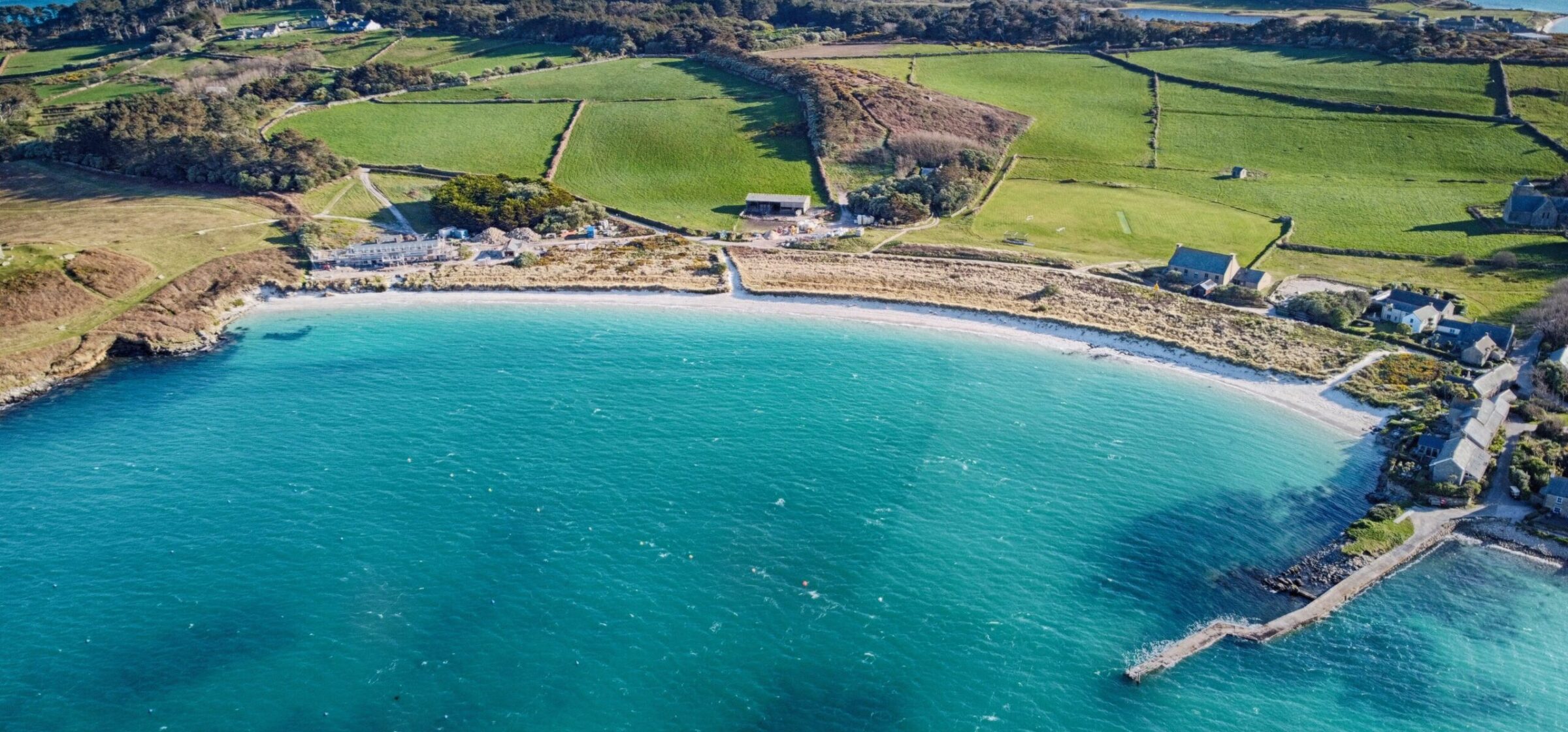
The moment that tells you you have actually left Cornwall comes about two hours into the crossing, when the mainland has gone and the water underneath the boat changes colour. It stops being the deep grey-green of the Atlantic approaches and turns a pale, sandy blue, the sort of blue that people photograph in the Caribbean and nobody quite believes when they see it captioned “England”. That shift happens because the Isles of Scilly sit on a shallow granite shelf twenty-eight miles off Land’s End, and the sea between the islands is often only a few metres deep over white shell sand.
They are administratively part of Cornwall and emotionally somewhere else entirely. There are no chain shops, no traffic lights, one small supermarket, and a speed limit that most drivers on St Mary’s treat as ambitious. Getting here takes planning and costs more than a day out to St Ives, and there are people who arrive expecting a bigger, busier version of the Cornish coast and come away underwhelmed. This guide is written to help you work out, honestly, whether you are one of them — and if you are not, to get you there with the right ticket, on the right island, in the right month.
Where the Isles of Scilly actually are
The archipelago is roughly 140 islands and rocks, depending on how generously you define an island and where the tide is. Five are inhabited: St Mary’s, Tresco, St Martin’s, Bryher and St Agnes. The total resident population is a little over two thousand, and around three quarters of them live on St Mary’s, which is also where the ferry docks, where the airport sits and where every arriving visitor begins.
Distances are small in a way that takes some adjusting to. St Mary’s, the largest island, is about three miles across. You can walk its entire coastal path in a day at a gentle pace and still stop for a long lunch. Bryher is a mile and a half long. St Agnes has a permanent population you could fit in a village hall. The islands are close enough that on a still evening you can hear a dog barking on the next one, and far enough apart that a lumpy sea will cancel the boat between them.
Weather, and the myth of the sunshine islands
Scilly is genuinely milder than the mainland. Frost is rare, snow almost unheard of, and palms, agapanthus and aeoniums grow in front gardens with no protection at all. What Scilly is not is reliably sunny. It is a low, exposed group of islands in the open Atlantic, and it gets weather that arrives from three hundred miles of open water with nothing in the way. Sea mist can sit over the islands for two days in June. Gales in the shoulder seasons close the sea routes.
The practical version of this: the climate makes the gardens extraordinary and the winters soft, but it does not guarantee you a beach week. If you need certainty of sunshine, this is the wrong archipelago and possibly the wrong country. Our guide to the best time to visit Cornwall covers the seasonal trade-offs for the mainland, and most of them apply out here with the volume turned up.
Getting to the Isles of Scilly
There are exactly two ways to arrive, and they suit different people. Everything else — which island, which week, what it costs — hangs off this decision, because the ferry runs to a fixed daily rhythm and the planes do not.
The Scillonian III ferry from Penzance
The Scillonian III sails from Penzance to St Mary’s, roughly March to November, six days a week and seven at the height of summer. She leaves at 09:15 and gets in around midday; the return sails at 16:30 and is back on the quay at Penzance about 19:10. The crossing takes two hours and forty-five minutes each way. Day-trip fares start from around £35 for an adult, £17.50 for a child, £10.50 for an infant and £15 for a dog, though prices move with season and demand, so check current fares before you book.
The ship has reclining seats, a café and free wifi, and the route out is one of the best coastal views in Britain: you pass below the cliffs at Porthcurno and the Minack Theatre, round Land’s End and then watch Cornwall shrink behind you. Operators bill it as the UK ferry crossing with the greatest wildlife diversity, and on a calm day with a bit of luck you will see dolphins, gannets working the water and, in late summer, the occasional basking shark or sunfish.
Now the honest bit, because it matters more than anything else in this guide. The Scillonian III has a shallow draught and a reputation. In a following swell she rolls, and she rolls in a way a Channel ferry does not. Regular passengers take tablets before boarding, sit low and central, and stay outside on deck watching the horizon. If you are a poor sailor, take the crossing seriously, medicate in advance, and consider flying one way. A rough outward crossing sets the tone for an entire holiday.
Flying with Skybus
Skybus flies year-round to St Mary’s Airport from three mainland airports, all on the same 19-seat DHC-6 Twin Otter. Land’s End is twenty minutes in the air, Newquay thirty, and Exeter about an hour. Dogs travel from Land’s End and Newquay but not from Exeter. It is a small aircraft with a hard baggage limit, and both the allowance and the weather policy are worth confirming when you book rather than assuming.
Flying is faster, obviously — Land’s End to Scilly takes less time than the drive from Truro to Penzance. It is also the option that gets cancelled. Fog is the routine culprit, and Scilly fog does not announce itself the day before. Flights get held, delayed, consolidated and occasionally scrubbed, and when that happens on a Friday in August a lot of people want the same seats. If you fly, do not book a same-day onward connection from the mainland, and build in a night’s slack at the end of a trip if you have a flight home to catch.
Getting to the departure point
Penzance is the end of the line for the Great Western main line from London Paddington, which makes the ferry the easiest option for anyone travelling by train. The station, the coach stop and the quay are all within a few minutes’ walk of each other, which is unusual and useful. Our guide to getting to Cornwall covers the train, coach and driving routes down; the Penzance town guide is worth reading if you are staying the night before, which you very often should be.
Parking in Penzance for the duration of a trip is done at long-stay car parks near the harbour and priced accordingly; leaving a car there for a week is a real line in the budget. Land’s End Airport has its own parking and a transfer from Penzance for foot passengers. Whichever you use, treat the last mainland night as part of the trip rather than an inconvenience — a 09:15 sailing is a brutal start from Bristol.
The five inhabited islands, and which one to base yourself on
This is the decision that shapes the holiday, and it is the one most first-timers get wrong by defaulting to whichever island happens to have a room free.
St Mary’s
The practical island. Hugh Town sits on a low sandbar between two beaches, with the harbour on one side and Porthcressa on the other, and it holds the shops, the Co-op, the bank, most of the pubs and the majority of the beds. St Mary’s has the only real road network, a bus, taxis and bike hire, and the boats to everywhere else leave from its quay. If you want to island-hop, if you are here for a short stay, or if the idea of being weather-stranded somewhere with one shop makes you anxious, base yourself here.
Its coast path is the single best thing about it — around nine miles right round the island, past the Bronze Age entrance graves at Innisidgen, the wind-carved granite of Peninnis Head and the long, empty sand at Pelistry. It is also the island where you are most aware of other visitors, particularly on a day when the ferry is in and four hundred day-trippers are walking the same loop.
Tresco
The manicured one. Tresco is leased and run as a single estate, and it shows: the tracks are tidy, the cottages are painted, the golf buggies outnumber the cars, and the whole island has the pleasant, slightly unreal quality of somewhere maintained to a standard. It holds Tresco Abbey Garden, the reason a large fraction of all Scilly day-trippers come at all, plus two of the finest beaches in the archipelago at Pentle Bay and Appletree Bay.
Staying on Tresco is expensive and lovely. Visiting for a day is straightforward and, for most people, enough. If you resent paying for things, you may find the estate model grating; if you want to walk out of a cottage door onto white sand with nobody on it, you will not do better anywhere in England.
Bryher
The wild one, and the one that converts people. Bryher is a mile and a half of hill and heather with about eighty residents, and its two ends are effectively different islands. Rushy Bay in the south is sheltered, shallow and turquoise; Hell Bay in the north-west takes the full Atlantic and is genuinely frightening in a westerly gale. Walking from one to the other in twenty minutes is the most Scillonian experience available.
There is a hotel, a campsite, a well-known bakery, a couple of honesty stalls selling flowers and vegetables, and not a great deal else. Some visitors find it too quiet by day three. Others book the same week every year for a decade.
St Martin’s
The beach island. St Martin’s has the best sand in Scilly and it is not a close contest — Great Bay on the north coast is a long, pale, empty curve that would be a national landmark anywhere else in England. The island runs along a spine with settlements at Higher Town, Middle Town and Lower Town, has a vineyard, a bakery and a small dive school, and rewards people who are happy to walk between them rather than expecting to be driven.
St Agnes
The far one. St Agnes is the most south-westerly community in Britain, joined to the island of Gugh by a sandbar that covers at high tide — check the times before you cross, because people do get caught. It has a lighthouse, a maze of disputed age at Troy Town, one pub with an exceptional view, and a quality of quiet that visitors either love or find unnerving. Boats here are more weather-dependent than to any of the others.
Island hopping: how the boats actually work
Inter-island transport is run by the St Mary’s Boatmen’s Association, a co-operative founded in 1958 whose ten independently owned launches have been carrying passengers between the islands for generations. There is no fixed year-round timetable published far in advance. What happens instead is this: the day’s sailings are chalked up on boards at the quay and outside the shops the evening before and again in the morning, and the boats line up on St Mary’s Quay at around ten o’clock each day for the off-islands.
You turn up, read the board, join the queue for the island you want, and pay at the kiosk or on board. Fares are not published online and they change, so ask at the quay rather than trusting a figure you read somewhere. Afternoon returns are generally around four or five, which gives you five or six hours ashore — enough for one island properly, not two.
The thing nobody tells you: the boats do not always run. Wind direction matters more than wind strength, because some landings are exposed and some are not, and a north-westerly that closes one quay may leave another perfectly workable. Build flexibility into the plan, do not buy a non-refundable ticket for a specific morning on a specific island, and accept that a day of enforced staying-put is part of the deal rather than a disaster.
Tresco Abbey Garden
Started in the 1830s by Augustus Smith inside the ruins of a Benedictine priory, Tresco Abbey Garden grows around two thousand species from the Mediterranean, South Africa, Australia and South America across a series of walled terraces that trap heat and break the wind. Aeoniums self-seed in the gravel. Flame trees flower in a British spring. It works because the Gulf Stream keeps the frost away and because three shelterbelts of Monterey pine take the salt off the wind.
Admission is £18 for adults, £17 concessions and £5 for under-16s, with under-5s free; a family ticket covering two adults and up to three children is £40, and a weekly ticket is £25, which pays for itself on the second visit. Guests staying on Tresco go in free. It opens daily from 10:00 to 16:00 with last entry at 15:15, from 14 March to 31 October. There is no advance booking — you pay at the gate. Allow two hours minimum, three if you also want the Valhalla collection of ships’ figureheads salvaged from wrecks on the surrounding reefs, which sits inside the garden and is one of the strangest and most affecting small museums in Britain.
Paths are shingle and mostly manageable, with a few mobility scooters available first-come. Drones are banned. If you have any interest at all in Cornish gardens, this is the one that makes the rest of them look merely temperate.
Beaches
Scilly’s beaches are the reason for the photographs. They are white shell sand over pale granite, which is why the water reads turquoise even under cloud, and they are almost always empty, because there are not enough people on the islands to fill them.
- Great Bay, St Martin’s — the best in the archipelago. A long north-facing crescent, no facilities, no shade, nobody there.
- Pentle Bay, Tresco — wide, pale and shallow, backed by dunes and pines. The postcard shot.
- Rushy Bay, Bryher — small, sheltered and warm by Scilly standards, with the uninhabited hump of Samson across the water.
- Pelistry Bay, St Mary’s — a sand bar out to Toll’s Island, a strong tidal run in the channel, and far fewer people than Porthcressa.
- Par Beach, St Martin’s — the arrival beach below Higher Town, where the boat lands at low water and you step straight onto sand.
Two cautions. The water is Atlantic water: gorgeous to look at, cold to enter, and about 16°C at its late-summer peak, which is the same as the mainland. Take a wetsuit if you plan to be in it for longer than a dash. And there are no lifeguards on Scilly beaches — none, anywhere, unlike the patrolled mainland stretches covered in our Cornwall beach safety guide. The tidal streams between the islands are strong and not obvious from the sand. Swim inshore, swim with someone, and read the water before you commit. If open water is the point of the trip, our wild swimming guide covers the kit and the cold-water sense.
Wildlife
The archipelago is a genuine wildlife destination rather than a pretty place that happens to have some birds in it. Around 40 per cent of England’s breeding seabirds nest here. The uninhabited western rocks hold Atlantic grey seals in numbers you simply do not see from the mainland coast path, and the seal-swimming and wildlife trips out of St Mary’s and St Martin’s are the closest thing to a guaranteed encounter anywhere in the south-west.
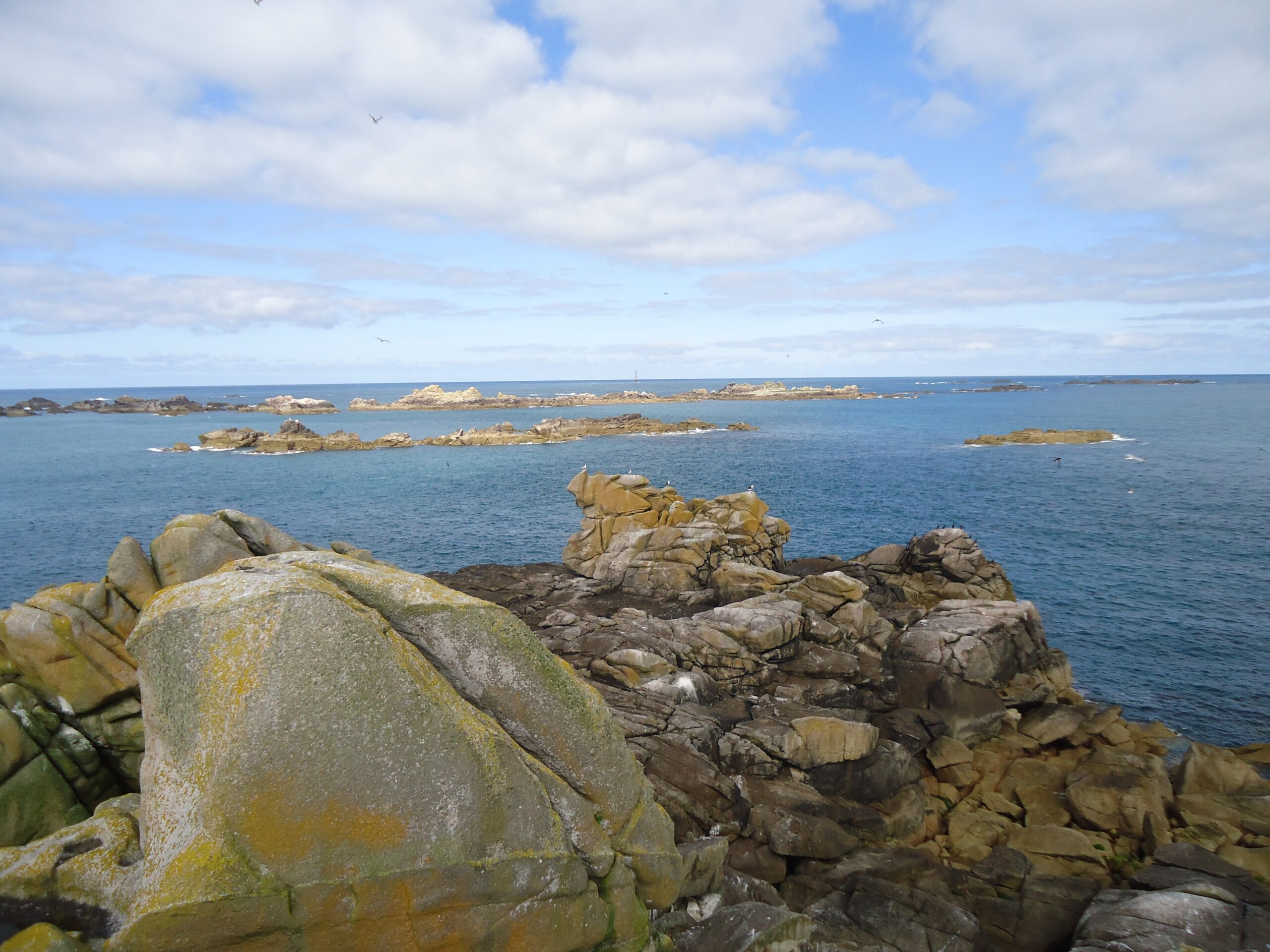
Seabird highlights are puffins, present roughly April to July and gone by August, plus Manx shearwaters, storm petrels, razorbills and shags. Annet is the seabird sanctuary and landing there is prohibited, so bird trips circle it. Autumn brings the rarity hunters: Scilly in October is one of the best places in Europe for lost American vagrants, and the islands fill up with people carrying telescopes and pagers and an expression of enormous concentration.

Two species you will meet without trying: the Scilly shrew, a lesser white-toothed shrew found nowhere else in Britain and often seen scuttling along stone hedges at dusk, and the islands’ gulls, which are large, confident and entirely willing to remove a pasty from your hand. If wildlife is the point of your trip, our guide to seal watching in Cornwall covers what you can still see back on the mainland when the boats are off.
Where to stay
Accommodation on the Isles of Scilly is limited, seasonal and booked a long way ahead — a good week in August is often gone by the previous autumn. The stock breaks down into small hotels, guesthouses and bed and breakfasts, self-catering cottages and flats, and a handful of campsites, one on each of the inhabited islands.
- St Mary’s has the widest choice and the only realistic chance of a late booking. Hugh Town puts you within walking distance of the quay, the shops and the pubs.
- Tresco is estate-run cottages and a hotel, at the top of the price range and booked furthest ahead.
- Bryher, St Martin’s and St Agnes have a handful of properties each. Book early or not at all.
- Campsites exist on all five islands and are the cheapest way to stay, but they are exposed, and a week under canvas in an Atlantic westerly is a commitment rather than a saving.
Expect to pay noticeably more than for an equivalent room on the mainland. Everything on the islands arrives by boat, including the laundry, and the season is short. Many places have minimum stays in summer, and Saturday-to-Saturday changeovers are common because they match the ferry pattern. If a Scilly trip is looking beyond budget, the Cornwall bed and breakfast guide covers what the same money buys on the mainland, and a day trip is a way to see the islands without the accommodation cost at all.
Money, supplies and practicalities
A short list of the things that catch people out.
- Cash still matters. Card acceptance is now widespread but not universal — honesty stalls, some boatmen and small off-island shops still work on coins and a tin.
- There is one bank and very limited cash machines, essentially all on St Mary’s. Draw money out before you go off-island.
- Mobile signal is patchy, particularly in the middle of the off-islands and on the water. Download your maps before you sail.
- The Co-op on St Mary’s is the only supermarket. Off-island shops are small, close early, and several are honesty-box arrangements.
- Bring your medication. There is a hospital and a pharmacy on St Mary’s but not a full mainland range, and the boat is not a delivery service.
- Cars are pointless. You cannot take a vehicle across on the Scillonian the way you would on a car ferry, and you would not want one if you could.
- Luggage is handled for you at both ends of the ferry and between the quay and most accommodation. Use it rather than dragging a suitcase along the sandbar.
What it costs, roughly
Scilly is not a budget destination and pretending otherwise does nobody any favours. The fixed costs before you have eaten anything are travel to Penzance or an airport, mainland parking or a night’s accommodation, the crossing or the flight, inter-island boat fares, and accommodation at island rates. Against that, once you are there the daily spend can be modest, because the entertainment is walking, swimming and looking at things, and the only significant ticketed attraction is Tresco Abbey Garden.
The cheapest realistic versions are a day trip on the ferry from Penzance, which is a single fare and a picnic, or a week camping on St Mary’s and self-catering. The most expensive is a Tresco cottage in August. Most people land somewhere in between. If you are counting pennies across a wider Cornish trip, our guide to Cornwall on a budget has the mainland savings that free up the fare.
When to go
| Period | What it is like |
|---|---|
| March–April | Ferry season restarts. Gardens waking up, daffodil fields still in flower, cold water, very quiet, some places not yet open. |
| May–June | The sweet spot. Long days, wildflowers along the coast paths, puffins present, boats running reliably, rates below peak. |
| July–August | Warmest, busiest, most expensive. Everything open and everything booked. Gig racing crowds the calendar. |
| September–October | Sea at its warmest, light at its best, crowds thinning. October is peak birdwatching. Weather increasingly unreliable. |
| November–February | Ferry stops; Skybus only, weather permitting. Most accommodation and the Abbey Garden closed. For residents and the very committed. |
If you have one week and want the best odds, take late May or the first half of June. If you want an empty beach and the warmest water and can absorb a cancelled boat without sulking, take mid-September.
A workable four-night first visit
Four nights is the shortest stay that justifies the journey and still lets you see more than one island. This is the shape that works.
- Day one — sail from Penzance, arrive at midday, walk into Hugh Town, do the Garrison loop above the harbour in the afternoon and eat in town. Do not attempt an off-island on arrival day.
- Day two — the ten o’clock boat to Tresco. Abbey Garden in the morning, Pentle Bay in the afternoon, back on the late boat.
- Day three — Bryher or St Martin’s, depending on the wind and what the board at the quay says. Take lunch with you; the shops are small.
- Day four — the St Mary’s coast path in full, roughly nine miles with swimming stops, or a seal and seabird trip out to the western rocks.
- Day five — the 16:30 sailing home, which leaves you most of a final morning.
Anything shorter and you are essentially doing a long day trip with sleep in the middle. Anything longer than a week and you should be honest with yourself about how much you enjoy walking, reading and weather.
Is it worth it? The honest verdict
Yes, for the right person, and emphatically no for the wrong one.
It is worth it if you like walking, wildlife, empty beaches, boats, gardens or birds; if you can enjoy a day whose plan has been cancelled by weather; if you find small places restful rather than claustrophobic. The islands do something almost nowhere else in England manages, which is to feel genuinely remote while still having a decent pub and a functioning bus.
It is not worth it if you are chasing guaranteed sun, if you want nightlife beyond a pub and a gig race, if you have small children who need constant novelty, or if the budget is already stretched — because the money that buys four nights out here buys a week in St Ives or Padstow with change to spare. It is also a poor choice for a first, single-week visit to Cornwall in general: you will spend two of your seven days travelling and miss the mainland entirely.
Frequently Asked Questions
How long does the ferry to the Isles of Scilly take?
Two hours forty-five minutes each way between Penzance Quay and St Mary’s. The Scillonian III leaves Penzance at 09:15, arrives around midday, and sails back at 16:30, reaching Penzance at about 19:10.
Can you visit as a day trip?
Yes. The ferry timetable is built for it, giving roughly four and a half hours ashore, and day-trip fares start from about £35 for an adult. You will see St Mary’s properly, or Tresco Abbey Garden if you make the connection promptly, but not both.
Do you need a car on the islands?
No, and you cannot easily take one. St Mary’s has a bus, taxis and bike hire; the other islands have tracks. Everything else is done by boat and on foot.
Is the sea warm enough to swim in?
It looks tropical and it is not. Sea temperature peaks at around 16°C in late summer, the same as the Cornish mainland. Plenty of people swim without a wetsuit in August; most of them are quick about it.
Which island should I stay on?
St Mary’s for a first visit, for convenience, for a choice of places to eat and for easy access to the boats. Tresco for comfort and beaches at a price. Bryher, St Martin’s or St Agnes once you have been before and know that quiet suits you.
When is the best time to visit?
Late May and early June for flowers, puffins, long days and reliable boats. Mid-September for the warmest sea and thinner crowds. October if you are a birdwatcher.
What happens if the weather cancels my flight?
Skybus will rebook you, and in some conditions passengers are transferred to the ferry, but neither is instant in peak season. Never book a same-day onward connection, and leave slack at the end of a trip.
Are there lifeguards on the beaches?
No — there are no lifeguarded beaches anywhere in the archipelago. Tidal streams between the islands are strong, so stay inshore and swim with company.
Can I take a dog?
Yes on the Scillonian III, for a fare of around £15, and on Skybus from Land’s End and Newquay but not from Exeter. Check individual accommodation and the off-island boats before you commit.
Book the crossing and the bed in the same sitting, because one without the other is worth very little on an archipelago with this little accommodation, and give yourself a mainland night in Penzance at either end. The islands reward people who arrive unhurried and leave the plan loose — the best day of most trips turns out to be the one that got rearranged at ten o’clock on the quay.
For the full detail on the crossing itself — check-in times, the 15 kg luggage allowance, which colour label goes with which island, where to sit if you are prone to seasickness and what you will see as the ship rounds Land’s End — read our Scillonian III ferry guide.
If you only have one day, the choice between sailing both ways, flying out and sailing back, or flying both ways matters more than anything else — it decides whether you see St Mary’s alone or have a real chance at Tresco. Our Isles of Scilly day trip guide sets out the timings and costs of each.
For the full detail on the garden itself — its history, what grows on each terrace, the Valhalla figurehead collection and how to time a visit around the boats to Carn Near or the Grimsbys — see our Tresco Abbey Garden guide.
Nearly every trip to Scilly starts on the largest island. For a full breakdown of Hugh Town, the Garrison walls, the ancient sites and the best beaches to head for first, see our complete guide to St Mary’s.
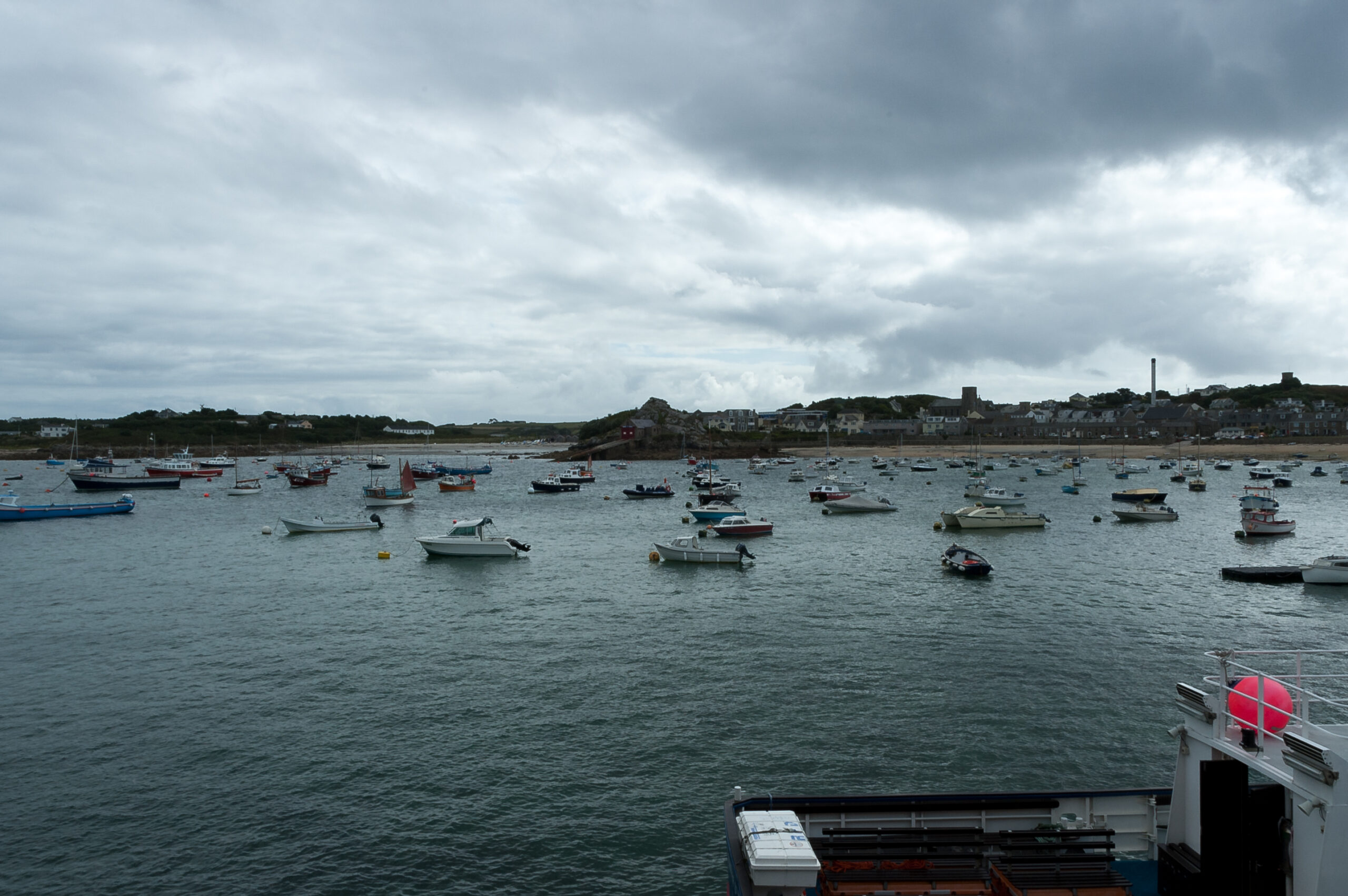
Photo credits: arrival at St Mary’s Pool: Isles of Scilly, St Mary’s – Hugh Town harbour by Chris Gorringe, CC BY-SA 2.0 (licence). Old Grimsby beach, Tresco: Old Grimsby Beach Isles of Scilly by Kernow Skies, CC BY-SA 3.0 (licence). The Western Rocks: Isles of Scilly, The Western Rocks from Gorregan by Michael Earnshaw, CC BY-SA 2.0 (licence).