Cornwall has a reputation for being expensive — partly because the famous attractions (Eden Project, Minack Theatre, the Lost Gardens of Heligan) carry hefty entry fees, and partly because peak season prices can sting. But here is the truth most travel guides bury: the very best of Cornwall is free. Its beaches, its 300 miles of coast path, its ancient stones, its tide pools, its harbour towns, and its sunsets do not charge admission, and you can fill a week with high-quality days out without spending more than the cost of parking and a pasty.
This guide to free things to do Cornwall is built for travellers who want to enjoy Cornwall properly without burning through a holiday budget. We have organised it by category and by region, with practical notes on parking, opening times, and what to bring. Most of these are family-friendly, dog-friendly, and accessible year-round.
Cornwall’s Free Coast: Beaches, Walks and Cliff Tops
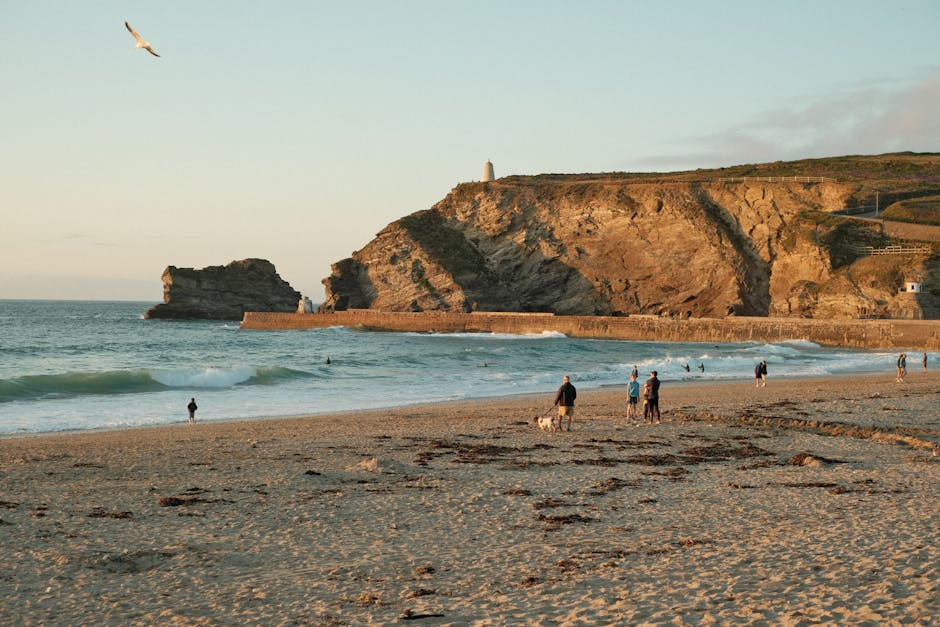
The single biggest argument for Cornwall as a free holiday destination is its coastline. There is no charge to walk on a Cornish beach, swim in the sea, surf, paddle, build sandcastles, or rock-pool. Add the cost of an ice cream and a coffee and you have a full day out for almost nothing.
Free Beaches Worth Planning a Day Around
- Perranporth — three miles of golden sand on the north coast, lifeguarded in season, with a free-to-walk dune system behind. Free to roam; pay-and-display car park at the end of the beach road.
- Sennen Cove — Cornwall’s westernmost beach, framed by white sand and clear water. Brilliant for surfing beginners; lifeguards in summer.
- Gyllyngvase, Falmouth — sheltered south-coast bay, easy access, and Queen Mary Gardens behind it (also free).
- Porthcurno — turquoise water and white sand under the Minack Theatre cliffs. The beach itself is free; only the theatre tour costs money.
- Pedn Vounder — a hidden beach reached by a steep cliff scramble, with sandbars at low tide. Free, but only for confident walkers.
- Whitsand Bay — a vast three-mile sweep on the south east coast, much quieter than the better-known beaches.
- Treyarnon Bay — natural rock pool at low tide, perfect for free swimming and rock pooling.
For complete coverage of the coast, our best beaches in Cornwall guide breaks them down by region, and we have a dedicated family-friendly beaches guide.
Free Walks on the South West Coast Path
Cornwall makes up over 300 miles of the South West Coast Path, and walking any of it is free. A few favourite free sections:
- St Ives to Zennor — six miles of wild north coast walking with seal-spotting at Zennor Head.
- Mousehole to Lamorna — a quieter section through Cornish hedgerows and granite stiles.
- Lizard Point to Kynance Cove — possibly the most beautiful single mile in Cornwall.
- Tintagel to Boscastle — high cliffs, smugglers’ coves, Arthurian legend.
- Polruan to Polperro — six miles of working coast on the south east.
You will find printable route notes and difficulty grades on the South West Coast Path Association website. Most car parks at the end points cost £3–£8 for the day; aim to arrive before 10am in summer to guarantee a space.
Inland Walks and Trails
- The Camel Trail — 18 miles of traffic-free, level path along a former railway line from Padstow through Wadebridge to Bodmin. Free to walk or cycle (bring your own bike or hire one for a small fee).
- The Bissoe Trail (Coast to Coast) — 11 miles linking the south coast to the north through old mining country.
- Bodmin Moor — wild moorland walking with Bronze Age remains, tors, and free parking at Minions and Jamaica Inn.
- Cardinham Woods — Forestry England woodland near Bodmin with marked trails and a stream. Free entry; small charge for parking.
Free Things to Do in Cornwall for Families With Kids
Children’s attractions in Cornwall can mount up quickly, but the best activities for younger kids are not in theme parks — they are in tide pools, on beaches, and on harboursides. Most of these need only a bucket, a net, and a sense of curiosity.
- Crabbing at any harbour — Padstow, Mevagissey, Looe, Charlestown, and Mousehole are the classics. Bring a line, bait (bacon works), and a bucket; release crabs back into the harbour at the end. Hours of free entertainment.
- Rock pooling — every Cornish beach has good pools at low tide; Polzeath, Gunwalloe, Treyarnon, and Kennack Sands are particularly rich. See our Cornwall rock pooling guide.
- Beach scavenger hunts — print a coastal life checklist (easily found online) and let kids tick off seaweed, limpets, mermaid’s purses, and so on.
- Free playgrounds — most coastal towns have well-maintained free parks, often with sea views (Falmouth’s Gyllyngdune Gardens and Penzance’s Wherrytown park are excellent).
- Cornwall Gold, Redruth — free entry, free parking, and you can pan for gold (small charge for the panning kit, optional).
- Flicka Foundation Donkey Sanctuary — free to visit, home to over 100 rescued donkeys (donations welcomed).
- Tehidy Country Park — 250 acres of woodland and lake, free to explore, with marked family trails and a free play area.
For many more ideas, see our Cornwall family holiday guide.
Free Museums and Cultural Attractions in Cornwall
Most of Cornwall’s big-ticket attractions charge admission, but a small and rewarding handful are free. They are also less crowded than the famous names.
- Royal Cornwall Museum, Truro — free entry to a respectable collection covering Cornish archaeology, mineralogy, art, and the natural history of the county.
- Falmouth Art Gallery — free entry, a strong permanent collection (including Henry Scott Tuke), and changing exhibitions.
- Penlee House Gallery, Penzance — free entry on Saturdays for the permanent collection of Newlyn School paintings.
- Truro Cathedral — free to enter, with stained glass, a working organ, and lunchtime recitals during the week.
- Geevor Tin Mine grounds — the underground tour is paid, but the surface site, museum exhibits in some buildings, and cliff walks around the mine are free.
- St Ives parish church — fifteenth-century granite, sea-facing, and a Barbara Hepworth Madonna and Child.
Free Ancient and Historic Sites
Cornwall has more prehistoric remains than almost any English county, and a remarkable number are free to visit, with no fences and no opening hours.
- The Hurlers Stone Circles, Bodmin Moor — three Bronze Age stone circles in open moorland, free to walk among.
- Carn Euny ancient village — Iron Age settlement near Sancreed with a famous fogou (underground passage). English Heritage, free.
- Mên-an-Tol — a holed standing stone associated with healing legends, free to visit (short walk from Madron).
- Lanyon Quoit — a Neolithic dolmen on the moors above Penzance, visible from the road.
- Trethevy Quoit — a Neolithic burial chamber, completely free, near St Cleer.
- Castle-an-Dinas hill fort — Iron Age earthwork with views to both coasts.
- Tintagel village (not the castle) — Cornish heritage with the Old Post Office (small fee) but plenty of free coastal exploration around the headland.
Our ancient Cornwall guide goes into detail on each of these, with directions and parking.
Free Festivals and Cultural Events
Cornwall’s calendar is rich with traditional festivals that cost nothing to watch — most are very old, very local, and very atmospheric.
- Padstow ‘Obby ‘Oss (May 1st) — one of the oldest folk customs in Britain, with two horse figures dancing through Padstow streets.
- Flora Day, Helston (May 8th) — Furry Dance through the streets of the town, with morning, midday and evening dances all free to watch.
- Falmouth Week (August) — a free maritime festival of sailing regattas, parades, fireworks, and shoreline music.
- Newlyn Fish Festival (August) — free entry, with cooking demonstrations and quayside displays.
- Mousehole Christmas Lights (December) — the harbour is transformed by lights every evening from mid-December.
- Montol Festival, Penzance (December 21st) — a midwinter pageant with masked characters and fire torches in the old streets.
For the full annual calendar, see our Cornwall events and festivals guide.
Free Things to Do in Cornwall in Bad Weather
Some honest advice: most of the genuinely free attractions in Cornwall are outdoors, so a wet day inevitably costs more. That said, there are still good free options on a rainy day:
- Browse independent bookshops and galleries — particularly in St Ives, Penzance, Fowey, and Truro. No purchase obligation.
- Visit the free museums above — most are open year-round.
- Sit it out in a Cornish pub — a coffee or a half pint buys you several hours of fire-side comfort.
- Storm watch from a coastal car park — safer than walking the cliff path in a gale, and astonishing in its own right. Try Porthleven, Hartland Quay, and Bedruthan Steps.
For paid indoor backup, our rainy day activities Cornwall guide has the full list.
Free Things to Do in Cornwall by Region
West Cornwall (Penzance, St Ives, Land’s End)
- Walk the coast path between St Ives and Zennor.
- Explore Carn Euny ancient village and the Mên-an-Tol stones.
- Visit Penlee House (free Saturdays) and Penzance Promenade.
- Picnic at Sennen Cove and walk to Land’s End along the cliff path (avoiding the paid theme park).
North Cornwall (Padstow, Tintagel, Bude)
- Cycle the Camel Trail (with your own bike).
- Walk around Stepper Point above Padstow.
- Explore Tintagel village, the headland, and Glebe Cliff.
- Watch the Atlantic from Crackington Haven and Hartland Point.
South Cornwall (Falmouth, Truro, Roseland)
- Falmouth Art Gallery, Royal Cornwall Museum, and Truro Cathedral all free.
- The St Mawes ferry costs a few pounds, but the Roseland Peninsula’s lanes and beaches are free.
- Carrick Roads viewpoints from Pendennis Point.
Lizard Peninsula and South West
- Walk Lizard Point to Kynance Cove.
- Watch the seals at Mutton Cove.
- Explore the fishing villages of Cadgwith, Coverack, and Mullion.
Bodmin and East Cornwall
- Bodmin Moor walks at Brown Willy and Rough Tor.
- Trethevy Quoit and the Hurlers Stone Circles.
- Cardinham Woods walking trails.
- Looe and Polperro harbours.
Tips for Doing Cornwall on a Free or Low-Budget Trip
- Use the bus — the AA-rated A1 bus along the north coast and the Atlantic Coaster are scenic and a fraction of car costs.
- Bring a picnic — the most expensive thing in Cornwall is lunch out. A well-stocked cool bag means you can eat on the cliff above £20 of restaurant food.
- Park further out — every honeypot town has a cheaper car park 10–15 minutes’ walk away.
- Visit shoulder season — late April, early May, late September, and October still deliver the experience at a much lower price.
- Watch the tide tables — free experiences like Pedn Vounder beach, the causeway to St Michael’s Mount viewing, and rock pooling are all tide-dependent.
For more practical advice on stretching a holiday budget, our Cornwall on a budget guide covers everything from accommodation choices to fuel costs.
FAQs: Free Things to Do in Cornwall
Are Cornwall’s beaches really all free?
Yes — every beach in Cornwall is legally accessible free of charge. You may pay for parking nearby, and a few private holiday parks have private beach areas, but the foreshore itself is always free.
Are National Trust properties free in Cornwall?
Most National Trust paid attractions in Cornwall (Lanhydrock, Trerice, Trelissick) charge entry, but their grounds and surrounding paths are sometimes accessible without buying a ticket. National Trust members enter free; many gardens have free outdoor sections.
Is the Eden Project free?
No, the Eden Project charges admission, but it is well-priced for what you get and tickets are valid for a year of return visits. Locals can apply for resident rates if you are staying longer.
What’s the cheapest way to spend a week in Cornwall?
Self-catering or budget B&B (see our budget Cornwall B&B guide), supermarket-bought picnics, and one paid attraction every other day. Most days should be coast, walks, free villages, and free events.
Can I see the Minack Theatre for free?
The theatre charges for performances and daytime tours. However, you can walk along the cliff path right above and around it, and the views over Porthcurno Bay from that section of the coast path are arguably better than from inside the theatre — and entirely free.
Cornwall rewards travellers who slow down. Spend an afternoon at one tide pool, take a long walk on a coast path, watch a fishing boat come in — and you will leave feeling like you saw the real Cornwall, without ever needing to swipe a card.