Cornwall is one of Britain’s most reliably photogenic counties. The combination of dramatic coastline, atmospheric weather, working harbours, ancient monuments, and 300 days a year of usable light makes it a destination that landscape photographers return to repeatedly. The challenge is not finding good photography spots Cornwall — it is choosing between them, knowing when to be there, and resisting the urge to copy whatever is currently going viral on Instagram.
This guide is written for serious photographers and serious smartphone-camera carriers alike. Each location includes the best time of day, the best season, parking and access notes, and what kind of image it actually delivers. The list mixes the famous names with under-the-radar spots that often produce better photographs than the postcards everyone already knows.
Cornwall’s Iconic Photography Locations
St Michael’s Mount, Marazion
Cornwall’s signature image: a tidal island castle reflected in the wet sand at low tide. Best photographed from Marazion beach at sunrise (when the Mount catches the eastern sun) or at sunset (when reflected light glows behind it). The classic shot includes the granite causeway curving across the water; check tide times to find when it is half-submerged.
Best time: Sunrise April–September; sunset October–March.
Parking: Marazion long-stay car park.
Kynance Cove, Lizard Peninsula
Turquoise water, white sand, weird rock stacks. Probably Cornwall’s most-photographed beach. Best shot from the cliff path coming down from the National Trust car park, around an hour after sunrise when the light is still low. Avoid mid-day; the contrast is brutal and the colours flatten.
Best time: Early morning at low tide, May–September.
Parking: Kynance Cove NT car park; arrive by 8am in summer.
The Minack Theatre, Porthcurno
The carved-cliff theatre above Porthcurno Beach. Iconic from inside, but the best photographs are usually from the coast path slightly to the east — looking back at the theatre with the turquoise bay below. Late afternoon light hits this angle perfectly.
Best time: Mid-afternoon to golden hour.
Parking: Porthcurno Telegraph Museum or Minack visitor car park.
Tintagel Castle and Bridge
The new Tintagel footbridge has changed the photographic landscape: from below at Merlin’s Cave the bridge frames the headland, and from the bridge itself you get cliff and sea in three directions. Best in stormy weather or at sunset; particularly photogenic on misty mornings.
Best time: Golden hour, year-round.
Parking: Tintagel village car park.
Botallack and the Crowns Engine Houses
Two ruined Cornish tin-mine engine houses perched on the cliffs above the Atlantic. Almost certainly Cornwall’s most photographed industrial heritage site, and for good reason. Best shot from above looking down — the cliff path west of the National Trust car park gives you the angle.
Best time: Sunset year-round; particularly dramatic on cloudy days.
Parking: Crowns car park, Botallack.
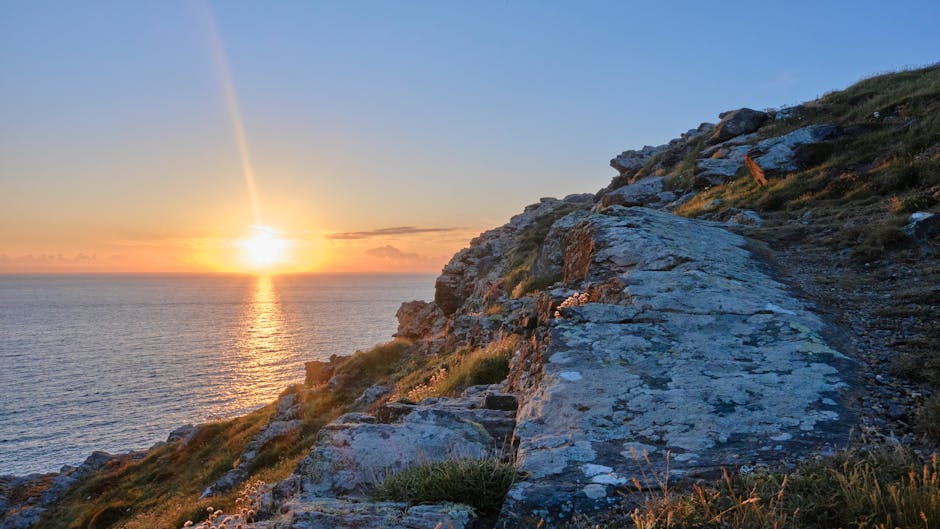
Bedruthan Steps
A row of giant rock stacks rising from the surf on the north coast. Best photographed from the National Trust car park along the cliff path, especially in evening light when the stacks throw long shadows. Excellent for both wide landscapes and intimate compositions.
Best time: Sunset May–August.
Parking: Bedruthan Steps NT car park.
Mousehole Harbour
One of Britain’s most picturesque fishing villages. Best photographed at high tide (full harbour) and either at first light or in the magical December evenings when the Christmas lights come on.
Best time: Sunrise summer; evenings December.
Parking: Mousehole village (limited; consider walking from Penzance).
St Ives Harbour and Porthminster
Cornwall’s most accessibly photogenic town. The classic compositions are: looking back at the harbour from the South Pier in early morning, looking down on Porthminster Beach from the railway path, and looking across the bay to Godrevy Lighthouse from Porthmeor in evening light.
Best time: Sunrise harbour; sunset Porthmeor.
Parking: Park-and-ride from Lelant Saltings.
Less-Famous Photography Locations That Deliver
Pendeen Watch Lighthouse
Far west coast, dramatically positioned, and far less crowded than the headline spots. Excellent for lighthouse silhouettes against an Atlantic sunset. The cliffs either side give you composition options for hours.
Levant and Geevor Tin Mines
Cliff-top mining heritage west of St Just. The Cornish Mining UNESCO World Heritage Site is photographically rich; the engine house at Levant is hauntingly placed against the sea.
Boscastle Harbour
A narrow inlet between cliffs on the north coast. Best photographed from the headland to the east, with the harbour and the village layered against the sea. Excellent in stormy weather.
Charlestown
An 18th-century working harbour preserved in time, often used as a film location (Poldark, Doctor Who). Best at high tide with a tall ship in port.
The Lizard Lighthouse and Cliffs
Cornwall’s most southerly point. The lighthouse, the white cliffs, and the cottages above Polpeor Cove all combine for excellent landscape photography. Quieter than the rest of the Lizard.
Hawker’s Hut, Morwenstow
The smallest National Trust property — a tiny cliff-side hut built by a Victorian vicar — perched on the wildest part of the north coast. Photogenic, atmospheric, and rarely crowded.
Hartland Quay and the Slate Folds
Just over the Devon border but Cornwall-adjacent and one of the most dramatic geological photography sites in southwest England — folded slate cliffs that look like they should be in Iceland.
Polperro Harbour
Tightly-packed white-washed cottages around a tiny working harbour. Best at high tide with morning light striking the eastern wall.
Cape Cornwall and Priest’s Cove
The “real” Land’s End according to many locals. A more dramatic and far quieter alternative to the corporate Land’s End attraction, with a chimney stack on the headland and a tiny harbour at Priest’s Cove.
Cornwall Photography by Subject
Best Sunrise Photography Spots
- St Michael’s Mount (east-facing).
- Charlestown harbour.
- Mevagissey harbour.
- Kynance Cove (light enters the cove early).
- Porthminster Beach (east-facing in St Ives Bay).
Best Sunset Photography Spots
- Botallack Crowns engine houses.
- Pendeen Watch lighthouse.
- Sennen Cove and Whitesands Bay.
- Porthmeor Beach, St Ives.
- Trevose Head lighthouse.
- Lizard Point.
Best Storm Photography Spots
- Porthleven harbour wall (always from a safe distance).
- Bude breakwater.
- Hartland Quay.
- Mullion Cove.
- Boscastle harbour mouth.
Best Wildlife Photography Spots
- Mutton Cove (Lizard) for grey seals year-round.
- Hayle Estuary for waders and wintering wildfowl.
- Marazion Marsh for birding.
- Pelistry Bay (Scilly) for seabirds.
- The South West Coast Path’s headlands for choughs and peregrines.
Best Aerial / Drone Locations
Drones have legal restrictions in Cornwall, particularly around the National Trust properties, military sites, and during seabird breeding season. Always check NT, Cornwall Council, and CAA rules before flying. Recommended responsible-use spots:
- Coastal stretches between settlements.
- Bedruthan Steps area (outside breeding season).
- Cape Cornwall.
- The Lizard cliffs (with caution).
Best Astrophotography Locations
Cornwall has two International Dark Sky Parks: Bodmin Moor and West Penwith. Best spots:
- The Hurlers stone circles, Minions, Bodmin Moor.
- Carn Galver moor, West Penwith.
- Carnewas and Bedruthan Steps.
- St Agnes Head.
See our Cornwall stargazing guide for more.
Photography Spots by Cornwall Region
West Cornwall (Penzance, St Ives, Land’s End)
St Michael’s Mount, Mousehole, Cape Cornwall, Botallack, Pendeen, Sennen, Porthcurno, Minack Theatre, St Ives, Carbis Bay.
North Cornwall (Padstow to Bude)
Bedruthan Steps, Trevose Head, Tintagel, Boscastle, Crackington Haven, Hartland Quay, Bude breakwater.
South Cornwall (Falmouth, Truro, Roseland)
Charlestown, Mevagissey, Falmouth seafront, Pendennis Castle, St Mawes, Porthcurnick, Roseland Peninsula churches.
Lizard Peninsula
Kynance Cove, Lizard Point, Mullion Cove, Cadgwith, Coverack, Mutton Cove (seals).
East Cornwall and Bodmin Moor
Polperro, Looe, Lanhydrock, the Hurlers, Brown Willy, Carnglaze Caverns, Trethevy Quoit.
Practical Photography Tips for Cornwall
- Dawn beats dusk for crowds. Iconic locations are empty at sunrise; sunset is busy.
- Cloudy days are not “bad” weather. Cornish skies are most photogenic when overcast or partly stormy.
- Bring an ND filter for long-exposure surf and waterfall shots.
- Watch tide tables. Many compositions only work at high or low tide.
- Watch your lenses. Salt spray and fine sand are murderous for cameras; clean immediately.
- Allow buffer time. Cornish lanes will eat the timing of any “drive to shoot” plan.
- Respect access. Many beaches are accessed via private paths; stay on the route.
- Don’t drone over wildlife or beaches in summer. Disturbing seabirds is illegal during breeding season.
Cornwall Photography Workshops and Tours
If you want guided photography days, several established Cornish photographers run small-group workshops, particularly around the Lizard, West Penwith, and the north coast. Search “Cornwall landscape photography workshop” plus the season — autumn and winter sessions tend to focus on dramatic skies, summer on coast and tides.
FAQs: Cornwall Photography Spots
What is the most photogenic spot in Cornwall?
Subjective, but the strongest cases are St Michael’s Mount, Kynance Cove, and the Botallack engine houses. The Minack Theatre is up there in clear afternoon light.
When is the best time of year for Cornwall photography?
For dramatic skies and stormy seas: October to February. For long golden hours and turquoise water: late May to early September. Spring (April–May) is exceptional for gardens and wildflowers.
What’s the best Cornwall photo spot for sunset?
Botallack Crowns, Pendeen Watch, and Sennen Cove are the three classic west-facing options. Cape Cornwall and Lizard Point are the slightly less-known alternatives.
Can I fly a drone in Cornwall?
With caveats. Many National Trust and Cornish Mining World Heritage sites prohibit drones; coastal areas have seabird restrictions in spring/summer. Always check before flying. Stay clear of beaches with people, lifeguard zones, and military sites.
What gear should I bring for Cornwall photography?
A wide-angle for landscapes (16–35mm equivalent), a mid-zoom for compositions (24–70 or 24–105), a longer lens for wildlife (200mm+), polariser, ND filter, sturdy tripod, weather sealing or rain cover, and a microfibre cloth for spray.
Are Cornwall photography spots accessible?
Many require coast-path walks of 15–30 minutes from a car park. The headline locations (St Michael’s Mount, Charlestown, St Ives) are generally accessible from parking.
Cornwall does not really need photographers to find it — the coast, weather, and history do most of the work. But the best Cornwall photographs come from getting up before the light, staying out after the postcard hour, and choosing the spot that suits the day’s weather rather than the spot you planned to shoot. Bring waterproofs, watch the tide, and the county will deliver.