Most travel guides will send you to the same dozen Cornwall attractions: Eden, Heligan, Tintagel, the Minack, St Michael’s Mount. They are wonderful, but they are not Cornwall’s secret. The version of the county that locals love — and the one that quietly outlasts every season’s headline destination — lies in the hidden coves, eccentric museums, half-forgotten ruins, and small obsessions that you only find by going slightly out of your way.
This guide to unusual things to do Cornwall gathers the off-the-beaten-path Cornwall experiences that visitors consistently tell us were the highlight of their trip. They are organised by category and by region, with practical notes on access, parking, and the best season to visit. Many are free; almost all are quieter than the famous names; and a few feel genuinely like discoveries.
Cornwall’s Hidden Coves and Secret Beaches
Cornwall has more shoreline than you can walk in a year, and its quieter coves often feel like private discoveries even at the height of summer. The trade-off is usually a steep cliff path or a tide-dependent walk in.
Pedn Vounder
Pedn Vounder is the beach in the photographs everyone shares but few find: a curve of white sand under granite cliffs near Treen, with a sandbar that emerges at low tide to create a turquoise lagoon. Reaching it requires a steep, unmarked descent and ideally a low-tide arrival; it is not suitable for unsteady walkers or buggies. Reward, when you get there, is unreal.
Nanjizal Bay (Song of the Sea)
Less than a mile from Land’s End, Nanjizal is reached by a 30-minute walk down the coast path. The eastern end has a narrow sea cave nicknamed the “Song of the Sea” — a deep slit in the cliff that frames a perfect rectangle of ocean. Best at mid to low tide and in spring or summer, when the colours are at their most extreme.
Portheras Cove
Hidden on the far north coast near Pendeen lighthouse, Portheras Cove is a 20-minute walk through fields from the nearest road. The beach is small, sandy, and almost always quiet. Locals walk it daily; visitors rarely find it.
Lantic Bay and Little Lantic
On the south east coast between Polruan and Polperro, Lantic Bay is a remote, facility-free pair of beaches reached by a steep coast path descent. Spectacular swimming, almost no people, and at low tide you can scramble around to Little Lantic next door.
Hemmick Beach
Tucked between the Dodman and Gorran Haven, Hemmick is a tiny shingle and sand cove with one parking spot and an ankle-deep tide pool perfect for younger children. Best at mid tide.
Mutton Cove (Lizard)
A 20-minute walk from Lizard Point along the cliff path leads to a viewing point where grey seals haul out year-round. Bring binoculars; do not descend to the beach (the seals are protected and the cliff is unstable).
Cornwall’s Most Unusual Indoor Attractions
The Museum of Witchcraft and Magic, Boscastle
The largest museum of its kind in the world, with a serious academic collection of ritual objects, books, and artefacts spanning hundreds of years of British folk magic. Densely packed and quietly fascinating; allow at least 90 minutes. Boscastle harbour itself is also worth a wander.
Goonhilly Earth Station, Lizard
A Cold War satellite tracking station on Goonhilly Downs, with a visitor centre that ranges from early space race history to current deep-space tracking. Excellent for older children and any adult who has ever cared about Apollo, Voyager, or the early history of transatlantic television.
The House of Marbles (and the Cornwall Eccentric Museum at Trago Mills)
A genuine Cornish curio: vast, slightly chaotic department stores with side-collections of marbles, antique mechanical toys, and oddities. Free and almost entirely indoor.
Bodmin Jail’s “Dark Walk”
Listed among rainy-day options elsewhere, but worth flagging here for its sheer commitment to atmosphere — actor-narrated cells, real prisoner stories, and a level of theatrical staging you do not expect in a county museum.
The Boscastle Visitor Centre
A small but moving exhibit on the 2004 Boscastle flood, with footage and salvaged objects. Free entry.
Telegraph Museum, Porthcurno
Where transatlantic communication began. The cove at Porthcurno is where 14 international telegraph cables once landed, and the museum traces the engineering and Cold War history with original cipher machines and underground tunnels.
Hidden Gardens, Lost Villages and Wild Places
St Nectan’s Glen
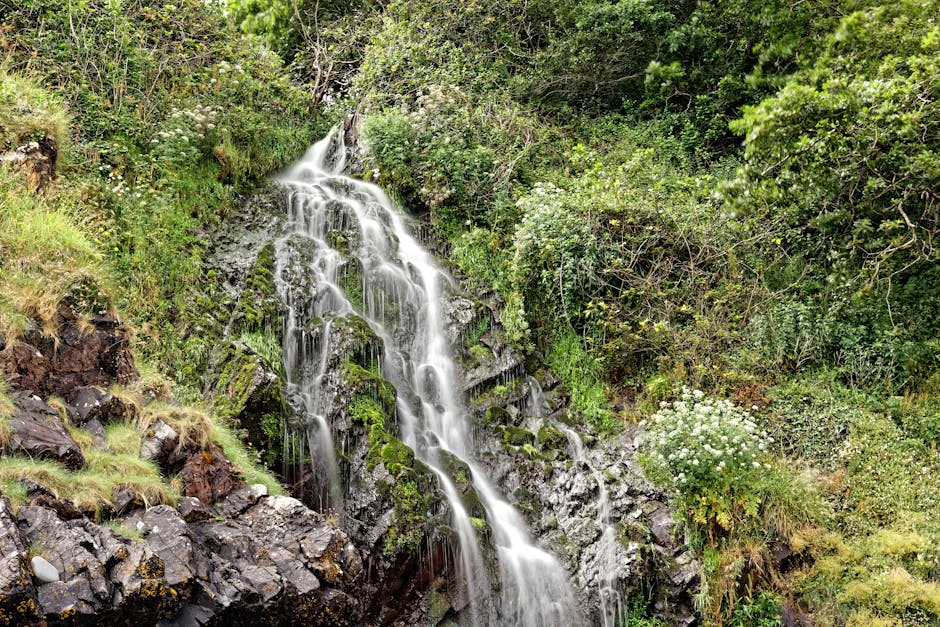
A 60-foot waterfall hidden in a wooded gorge near Tintagel, where the Trevillet River drops through a perfect circular hole carved into the slate. Long associated with healing legends; visitors leave ribbons and tokens around the basin. About 30 minutes’ walk in along a riverside path; small entry fee at the falls.
Kennall Vale, Ponsanooth
A wooded former gunpowder works near Penryn, now a Cornwall Wildlife Trust reserve. The river tumbles through ruins of stone buildings being slowly reclaimed by moss and hart’s tongue ferns. Free; no facilities.
Gwennap Pit
An open-air amphitheatre formed by mining subsidence and shaped by John Wesley’s Methodist preachers into a perfect terraced bowl. Open every day, free entry, and astonishingly atmospheric.
Lost Villages of Cornwall
- Tyneham of the West — the Cape Cornwall area has several fishermen’s hamlets that disappeared in the 19th century and survive as ruins in the moor.
- Hawker’s Hut, Morwenstow — the smallest National Trust property, built into a cliff above the Atlantic by the eccentric vicar Robert Hawker. Free; tide-and-weather sensitive.
- The deserted village of Tregeseal — Bronze Age circles and ruined cottages on the moor above St Just.
Bonsai and Stone Garden Oddities
- The Lost Gardens of Penjerrick — the wilder, smaller, much quieter cousin of Heligan, near Falmouth.
- Tregwainton’s woodland walks — the National Trust garden has signposted routes; the unmarked side paths through old kitchen gardens are the gem.
Cornwall’s Standing Stones, Quoits and Ancient Sites
Cornwall has more Bronze Age and Iron Age remains than almost any English county. Most are free, unfenced, and on common land — you walk to them, find them, and have them more or less to yourself.
- Mên-an-Tol — a holed standing stone near Madron, traditionally used in healing rituals.
- The Merry Maidens — a perfect 19-stone circle on the road to Lamorna.
- Lanyon Quoit — a Neolithic dolmen high on the moor above Madron.
- Trethevy Quoit, near St Cleer — astonishing chambered tomb, 5,000 years old.
- The Hurlers, Bodmin Moor — three Bronze Age stone circles within a few hundred metres.
- Boscawen-Un Stone Circle — a quieter and atmospheric circle near St Buryan, with a leaning central pillar.
For a deeper history, see our ancient Cornwall stone circles guide.
Quirky Festivals and Living Traditions
Cornwall takes its folk customs seriously, and several survive only here. Most are completely free to watch.
- Padstow ‘Obby ‘Oss (May 1st) — two horse-figure characters dance through the streets in one of the oldest surviving spring rituals in Britain.
- Helston Flora Day (May 8th) — the Furry Dance, with formally dressed pairs dancing in and out of houses through the town.
- Mousehole Sea, Salts and Sail festival — small wooden boat gathering held biennially.
- Crying the Neck — a Cornish harvest custom revived in several villages each September, with the last sheaf of wheat cut and “cried” three times.
- Montol Festival, Penzance (December 21st) — masked midwinter pageant.
- Allantide — Cornwall’s traditional Halloween festival, with red apples, bonfires, and a bobbing custom older than the modern holiday.
Our Flora Day and Cornish celebrations guide covers the calendar in more depth.
Unusual Things to Do With Kids in Cornwall
- The Cornish Seal Sanctuary, Gweek — rescue centre for sick and orphaned grey seals; you can watch the daily feeds and follow the residents’ stories.
- Lost Caves of Lamorna and the Pipers — a guided cliff walk with mythology.
- Cornish Caves at Carnglaze — slate caverns with an underground lake.
- Atlantic Highway storm safari — late-October to March, watching big surf safely from headlands.
- Mining tours at Geevor and Poldark Mine — going underground in a working tin mine.
- Falmouth’s docks tour — for any child who has ever loved a boat.
Unusual Eating, Drinking and Local Oddities
- Star Castle Hotel honesty shop, Scilly — technically not Cornwall but worth the boat: pay-what-you-think for fresh flowers and produce.
- Cornish Cheese Co. cellar tour, Liskeard — Cornish Blue cheese maturing in granite-lined cellars.
- Tinners Arms, Zennor — Cornwall’s oldest pub, with no music, no menu screens, and a slate floor older than the Victorian era.
- Camel Valley Vineyard tours, near Bodmin — award-winning English sparkling wine tastings on a working vineyard. See our Cornwall vineyard guide.
- Saffron buns and Hevva cake — Cornish bakes you will not find in standard tea rooms; ask at independent bakeries in St Just, Marazion, and Mousehole.
Unusual Things to Do in Cornwall by Region
West Penwith (Land’s End area)
- Mên-an-Tol holed stone
- Lanyon and Chûn Quoits
- Pedn Vounder and Nanjizal beaches
- Geevor Tin Mine and the cliffs to Botallack
- Telegraph Museum, Porthcurno
Lizard Peninsula
- Goonhilly Earth Station
- Mutton Cove seal viewpoint
- Cadgwith and Coverack fishing villages
- Kynance Cove walk via Lizard Point (early morning to avoid crowds)
North Coast (Tintagel to Bude)
- St Nectan’s Glen waterfall
- Hawker’s Hut at Morwenstow
- Boscastle Witchcraft Museum
- Hartland Quay storm watch
Bodmin Moor and Inland
- The Hurlers and Trethevy Quoit
- Cardinham Woods hidden trails
- Carnglaze Caverns
- Brown Willy and Rough Tor scrambles
South Coast (Falmouth to Looe)
- Kennall Vale woodland reserve
- Penjerrick Garden
- Hemmick Beach and the Dodman
- Lantic Bay walk from Polruan
Tips for Doing Off-Beaten-Path Cornwall Properly
- Go early. Even hidden gems have honeypot moments; first light is when they belong to you.
- Use OS maps. Many of these sites are not signposted. The OS Maps app or paper Explorer 102, 103, and 109 are your friends.
- Tide-time everything coastal. Pedn Vounder, Nanjizal, and Hemmick are all tide-sensitive — check before you commit to a long drive.
- Drive narrow lanes politely. Cornish lanes are single-track with passing places; reverse uphill, smile at locals, and be patient.
- Take cash. Many smaller car parks and roadside honesty boxes (for parking, eggs, flowers, donations) are cash only.
- Leave it as you find it. Most of these sites are unstaffed and unfenced. They survive because visitors care.
FAQs: Unusual Things to Do in Cornwall
What is the most unusual attraction in Cornwall?
Reasonable cases for the Museum of Witchcraft and Magic in Boscastle, the Telegraph Museum at Porthcurno, and the Goonhilly Earth Station. All three are deeply specific, expert-curated, and unlike anything else in the UK.
Where can I find hidden beaches in Cornwall?
Pedn Vounder, Nanjizal, Portheras Cove, Hemmick, Lantic Bay, and Mutton Cove are the classics. See our full hidden beaches in Cornwall guide for routes.
Can you visit Cornwall’s stone circles?
Yes, almost all of them are on common or open access land and are free and unfenced. The Hurlers, Merry Maidens, Boscawen-Un, and Tregeseal are the most easily accessible.
What’s the weirdest thing to do in Cornwall?
Subjective, but our money is on watching grey seals haul out at Mutton Cove at sunset, or attending Helston’s Flora Day in formal Edwardian dress while strangers dance through your hotel lobby.
Are these places suitable for children?
Most are, but several involve cliff descents (Pedn Vounder, Nanjizal) or steep paths and are not suitable for buggies or unsteady walkers. The museums, gardens, and stone circles are universally fine for kids.
How do I find the truly hidden Cornwall?
Talk to your B&B host. Cornish hospitality lives on local recommendations, and almost every guest house owner has a private favourite cove, walk, or cafe they will share if asked. Books worth packing: Wainwright’s Cornwall guides, the Cornish Pilgrim’s Guide, and the OS Explorer maps.
The most unusual thing about Cornwall, in the end, is that it rewards patience. Drive past the queue, walk past the viewpoint, and follow the smaller path. The Cornwall in the postcards is real — but the better Cornwall is the one you find by walking another half-mile.