Cornwall is small enough to feel manageable on a first visit and big enough to need a plan. The county packs more must-see attractions per square mile than almost anywhere else in England, and the difference between a great first trip and a disappointing one is usually a question of choosing the right ones — and visiting them in the right order.
This guide to the best Cornwall attractions for first-time visitors is built around the experiences that most consistently land well with new arrivals: dramatic landmarks, world-class gardens, characterful harbour towns, and a couple of less-famous places that punch above their weight. Each entry has practical notes on cost, timing, and how to fit it into a wider itinerary.
The Ten Cornwall Attractions Every First-Time Visitor Should See
1. The Eden Project
Two enormous geodesic biomes — Mediterranean and Rainforest — built into a former china clay pit near St Austell. The Eden Project is Cornwall’s most famous modern attraction for good reason: the Rainforest Biome alone is one of the most extraordinary indoor environments in the UK, complete with tropical waterfalls, suspended walkways, and thousands of plant species. Tickets last for a full year and include unlimited return visits, which softens the price.
Plan three to four hours minimum. Best visited mid-week or early in the day in summer. Excellent in any weather; particularly good as a rainy-day backup.
2. St Michael’s Mount
A tidal island off Marazion crowned by a medieval castle and chapel, accessible at low tide via a granite causeway and at high tide by small ferry boats. The combination of the walk across the causeway, the climb up to the castle, and the gardens cascading down the south side makes this one of Cornwall’s most photogenic attractions.
Check the National Trust tide times before you go — the causeway is only crossable for a few hours each side of low water. Allow half a day. Closed Saturdays in summer.
3. Tintagel Castle
The legendary birthplace of King Arthur (and, more historically, the seat of medieval Cornish kings). The site itself is split between a mainland headland and an island connected by a footbridge, and the views down the cliffs to the cave below are extraordinary. English Heritage runs the site; Merlin’s Cave at the foot of the cliffs is freely accessible at low tide.
Tintagel pairs well with a visit to Boscastle just along the coast and a stop at the Old Post Office in the village (National Trust). See our Tintagel Castle and King Arthur guide.
4. The Minack Theatre
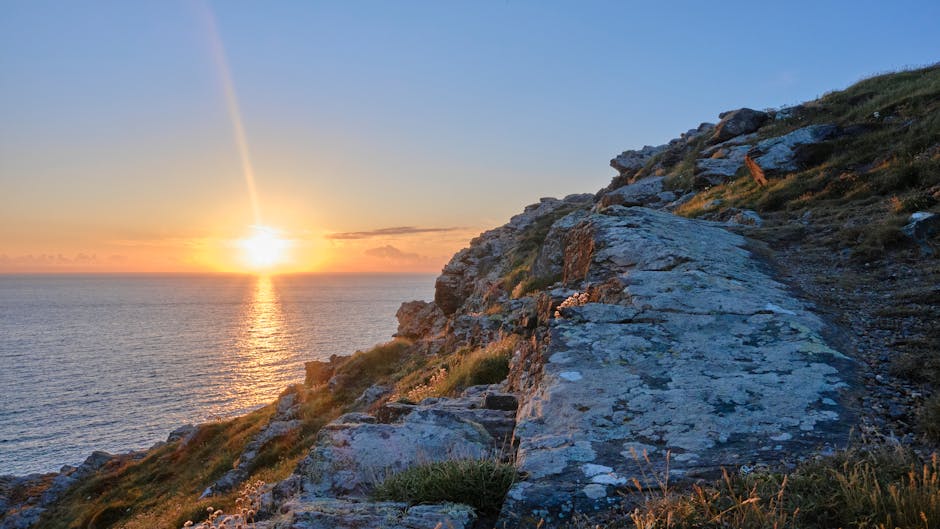
An open-air amphitheatre carved into the cliffs above Porthcurno Beach. Even when there is no performance, the daytime visitor experience — with the gardens, exhibition, and the ridiculous view down to the beach — justifies the trip. If you can time your visit to a performance, do so: a summer evening at the Minack is one of the most memorable things a first-time visitor can do in Cornwall.
Book performance tickets months in advance for popular shows. Daytime visits do not need pre-booking outside July–August.
5. The Lost Gardens of Heligan
Two hundred acres of restored Victorian gardens near Mevagissey, with a productive walled garden, a sub-tropical “Jungle” valley, and the famous “Mud Maid” and “Giant’s Head” sculptures. Heligan rewards slower visitors — give it the better part of a day if you can. Pairs well with the south coast around Mevagissey, Charlestown, and the Roseland Peninsula.
6. Land’s End and the Far West
Cornwall’s south-westernmost point. The corporate Land’s End theme park sits at the headland and is skippable, but the cliff walks either side of it are spectacular and free. Walk a mile north for Sennen Cove and a mile south for Nanjizal Bay; both are better than the Land’s End sign itself. Combine with the Minack, Porthcurno, and Mousehole on a full west-Cornwall day.
7. St Ives
The picturesque harbour town that defines Cornwall for many visitors: white-washed cottages, four sandy beaches within walking distance, the Tate St Ives gallery, and a thriving food scene. Park out of town and use the park-and-ride or the small Penzance–St Ives railway line, which is itself a scenic attraction.
For where to stay, see our best B&Bs in St Ives guide.
8. Padstow and the Camel Estuary
Padstow is Cornwall’s foodie capital, home to Rick Stein’s empire of restaurants and a working fishing harbour. Walking around the harbour, eating at Stein’s Fish & Chips or one of the many independent alternatives, and cycling part of the Camel Trail to Wadebridge are the classic first-time experiences. Across the estuary, Rock and Polzeath have wide sandy beaches.
9. The Lizard Peninsula and Kynance Cove
The most southerly point of mainland Britain, with rugged cliffs, traditional fishing villages, and Kynance Cove — arguably the most beautiful single beach in England. The walk from Lizard Point along the coast to Kynance is a Cornish classic. Allow a full day. Smaller and quieter than the rest of the county; many first-time visitors say it was their favourite.
10. Falmouth
A maritime university town with the National Maritime Museum Cornwall, Pendennis Castle, three beaches, and a strong food and arts scene. Falmouth is a brilliant rainy-day alternative to the more outdoor-focused parts of Cornwall, and a good base for exploring the south coast.
How to Fit These Cornwall Attractions Into a First-Time Itinerary
If You Have 3 Days
- Day 1: St Michael’s Mount + Penzance + Minack (evening performance if possible).
- Day 2: Eden Project + Lost Gardens of Heligan.
- Day 3: St Ives + Tate + Carbis Bay beach.
If You Have 5 Days
- Day 1: Eden Project + Heligan or Charlestown.
- Day 2: Falmouth + Pendennis Castle + Maritime Museum.
- Day 3: Lizard Peninsula + Kynance Cove walk.
- Day 4: St Ives + Lands End + Minack.
- Day 5: Padstow + Camel Trail cycle + north coast.
If You Have 7 Days
Add Tintagel + Boscastle on the north coast, a day on Bodmin Moor for the Hurlers and walking, and a Roseland Peninsula day from Falmouth. Our Cornwall 7-day itinerary spells out the route.
Cornwall Attractions Worth Skipping (or Saving for Later)
Some honest opinions, kindly meant:
- Land’s End theme park — the cliffs are free; the paid attractions feel dated.
- Flambards (closed in 2024) — was a beloved theme park but no longer operating; if you see it on old itineraries, skip.
- Crowded peak-week St Ives — the town is wonderful, but the third week of August can feel airless. Visit early or late season.
- Tintagel mid-summer — extremely busy. Book the timed entry, arrive at opening, and you will enjoy it more.
Practical Tips for First-Time Cornwall Visitors
- Hire a car. Cornwall is reachable by train (London to Penzance is direct), but to see the attractions you really need wheels. Pick up at Truro, Newquay, or Penzance to skip Devon driving.
- Arrive early at popular sites. Eden Project, St Michael’s Mount, and Heligan are all calmer before 11am.
- Don’t try to do too much. Cornwall’s narrow lanes mean a 30-mile drive can take 90 minutes. Plan two attractions per day, with food and beach time around them.
- Book performance tickets early. The Minack sells out fast in season.
- Check tide tables. St Michael’s Mount, Pedn Vounder, and many beaches are tide-sensitive.
- Use park-and-rides. St Ives, Padstow, and Truro all have them; town-centre parking is painful in summer.
When to Visit Cornwall for the First Time
Late May, June, and the first three weeks of September are the sweet spots: long daylight, warm sea, lifeguarded beaches, but quieter than the school summer holidays. July and August are the busiest weeks of the year — beautiful but expensive and crowded. October half term is fun but requires waterproofs. Winter is increasingly popular for cliff walks, Christmas lights, and lower prices; see our Cornwall in winter guide.
Cornwall Attractions by Region
West Cornwall (Penzance, St Ives, Land’s End)
St Michael’s Mount, Minack Theatre, St Ives, Land’s End, Mousehole, Geevor Tin Mine, Telegraph Museum at Porthcurno.
North Cornwall (Padstow, Tintagel, Bude)
Padstow harbour, Camel Trail, Tintagel Castle, Boscastle, Bedruthan Steps, Bude beaches.
South Cornwall (Falmouth, Truro, Roseland)
Falmouth, Pendennis Castle, National Maritime Museum, Trelissick, Charlestown, Mevagissey, Lost Gardens of Heligan, Roseland Peninsula.
Lizard Peninsula
Kynance Cove, Lizard Point, Cadgwith, Mullion Cove, Goonhilly Earth Station.
Bodmin and East Cornwall
Bodmin Jail, Bodmin Moor (Hurlers, Brown Willy, Rough Tor), Carnglaze Caverns, Looe and Polperro.
FAQs: First-Time Cornwall Attractions
What is the most-visited attraction in Cornwall?
The Eden Project is consistently Cornwall’s most-visited paid attraction, with over a million visitors a year. St Michael’s Mount and the Lost Gardens of Heligan follow closely.
What is the most beautiful place in Cornwall?
Subjective, but the strongest cases are for Kynance Cove on the Lizard, the Minack Theatre at sunset, and the view across to St Michael’s Mount on a clear morning.
Can you see the main Cornwall attractions in one day?
Honestly, no. Cornwall is around 80 miles long and the roads are slow. Plan a minimum of three days for a sampler, five to seven days for a proper first trip. See our day trip itineraries if you have only 24 hours.
Is Cornwall worth visiting?
Yes — and especially as a first-time visitor, the combination of coast, food, history, and small-scale charm is genuinely distinctive within the UK. Pace yourself; do not try to see everything.
What’s the most under-rated Cornwall attraction?
The Roseland Peninsula and the Helford River area on the south coast. Quiet, exquisite, and often overlooked in favour of the bigger names.
Are Cornwall attractions free?
Most beaches, coast paths, ancient sites, and harbour towns are free. Major paid attractions include Eden, Heligan, Tintagel, St Michael’s Mount, and the Minack. See our free things to do in Cornwall guide for the full free list.
Cornwall is a destination that rewards repeat visits — but a great first trip leaves the right impressions: a windswept walk, a perfect pasty, an unforgettable view, and a list of reasons to come back. Choose three or four of the attractions above, pace yourself, and let the rest happen by accident.