Cornwall’s beaches are among the most enjoyed in Britain — and among the most dangerous when respected too lightly. Atlantic surf, fast-rising tides, cold water, hidden rocks, and rip currents are real hazards that catch out experienced sea swimmers most years, never mind first-time visitors. The good news is that the RNLI lifeguards, the Coastguard, and Cornwall Council all do excellent work to keep visitors safe — and almost every serious incident is preventable with the simple rules in this guide.
This Cornwall beach safety guide is written for visitors planning a Cornwall trip. It explains the lifeguard system, the flag colours, what rip currents are and how to escape one, how to read tide tables, and what to do in the small handful of emergencies that can happen on the coast. None of it is alarming — but all of it is genuinely useful.
RNLI Lifeguards in Cornwall
Around 60 Cornish beaches are RNLI-lifeguarded during the main season (typically late May to late September), and a smaller subset are patrolled at Easter and during the autumn shoulder. Lifeguards run from 10am to 6pm at peak times. The current list is at rnli.org/find-my-nearest.
The Beach Flag System
Lifeguarded beaches use coloured flags to mark zones:
- Red and yellow flag: safest area for swimming and bodyboarding. Always swim within these flags.
- Black and white chequered flag: surfing zone (boards only — keep out if you are not on a board).
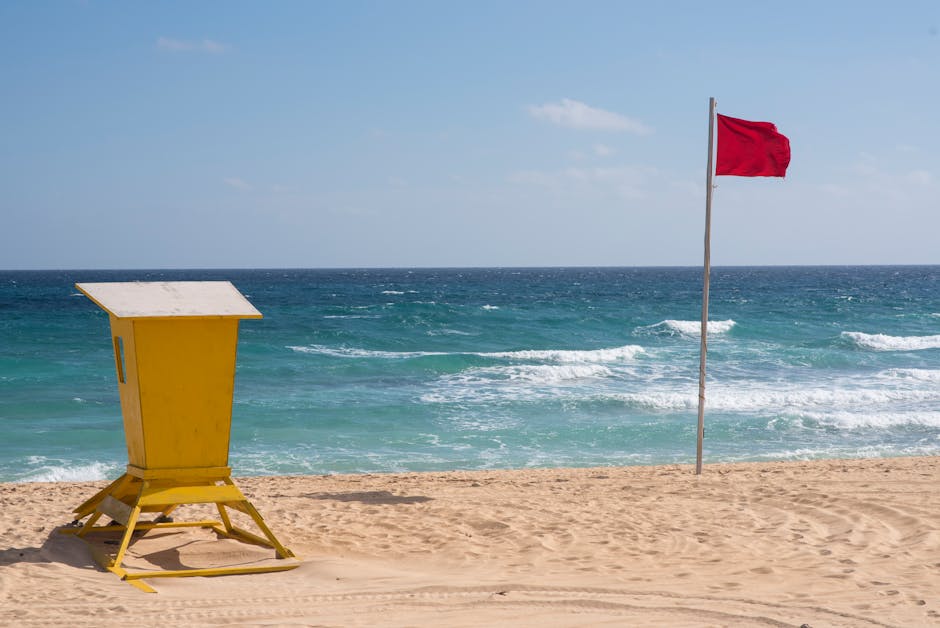
- Red flag: too dangerous to enter the water. Do not swim or surf.
- Orange windsock: strong offshore wind — inflatables (lilos, paddleboards) at serious risk of being blown out to sea.
If you can only remember one rule, it is this: swim between the red and yellow flags.
Rip Currents: What They Are and How to Escape Them
Rip currents are the single biggest cause of beach rescues in Cornwall. A rip is a fast, narrow channel of water flowing seaward, formed when surf piles water onto a beach and finds a return path. They can pull strong swimmers out to sea in seconds.
How to Spot a Rip Current
- A channel of churning, choppy water moving away from the beach.
- A line of foam, debris, or seaweed moving steadily seaward.
- A noticeable difference in water colour (often darker due to deeper water).
- A gap in the breaking waves where the surf appears flat.
What To Do If You Are Caught in a Rip
- Don’t panic. Rips do not pull you under; they take you out. Conserve energy.
- Don’t swim against it. You cannot beat a rip current head-on; it will exhaust you.
- If you can stand, wade. Often shoulder-deep water near the beach is shallow enough to walk back.
- Swim parallel to the shore. Most rips are 5–30m wide; swimming sideways gets you out quickly.
- Once free, swim back to shore at an angle.
- If you cannot escape, signal for help. Raise one arm and shout. A lifeguard will reach you fast.
Beaches With Persistent Rip Currents
Almost every surf beach has rips. The most well-known for strong rips include Perranporth, Crantock (river-mouth currents), Mawgan Porth, Watergate Bay, Sennen, Holywell Bay, Tregantle (Whitsand Bay), and Polzeath. Always swim between the lifeguard flags at any of these.
Tide Times and Tidal Hazards
Cornwall’s tides have a range of around 4–7 metres between high and low tide. The water comes in fast — particularly on rising spring tides around full and new moons — and several beaches genuinely cut off at high tide.
Tide-Sensitive Beaches
- Bossiney Cove and Benoath Cove (Tintagel area) — disappear at high tide; can cut off rock-pool walkers.
- Pedn Vounder — narrow at high tide; the access scramble becomes impossible.
- Marazion to St Michael’s Mount — the causeway is only walkable a few hours each side of low tide.
- Helford River and Camel Estuary — sandbanks change rapidly.
- Coves at the foot of cliffs — many require going up before high tide returns.
How To Check Tide Times
- BBC Tide Times (bbc.co.uk/weather/coast_and_sea) — free, accurate.
- Tide Times UK app.
- Local tide tables are posted at most beach car parks and lifeguard stations.
Always check before walking on a tide-cut beach. If in doubt, ask a lifeguard.
Cold Water Shock
Cornwall’s water is cold even in summer — typically 12–18°C between June and September. Sudden immersion can cause cold water shock: gasping, hyperventilation, and panic, all in the first 30–60 seconds. It contributes to a significant share of British drowning deaths each year.
How to Reduce the Risk
- Wear a wetsuit — even a thin “shorty” makes a big difference.
- Enter slowly. Splashing your face and chest first lets the body adjust.
- Float on your back if you start gasping; do not try to swim hard.
- Stay close to shore until your breathing settles.
- Never enter cold water alone if you are an inexperienced swimmer.
Inflatables and Toys
Lilos, paddleboards, and inflatable rings cause a disproportionate number of Cornish rescues. The classic incident: a calm-looking morning, a lilo, and an offshore wind that takes a child out to sea before the parents notice. The RNLI recommends:
- Watch for the orange windsock; if it is up, do not use inflatables.
- Use inflatables only on lifeguarded beaches.
- Always have an adult in the water alongside.
- Tether inflatables when in shallow water.
Cliffs and Coast Path Safety
- Cornish cliffs are unstable in places — stay back from the edge, especially after rain.
- Do not climb cliffs to access “secret” beaches; many are dangerous and unstable.
- Mind the wind. Coast path edges in storms are deeply unsafe.
- Avoid wave-cut platforms when storm waves are running; freak waves catch people every winter.
Other Hazards
Weever Fish
Small sandy fish that bury themselves with venomous spines exposed. Painful sting if stepped on. Wear neoprene “wave shoes” or beach trainers when wading.
Jellyfish
Compass and barrel jellyfish are common in summer. Most are mild stings; lion’s mane and Portuguese man-of-war (rare visitors) are more serious. Treatment: rinse with sea water (not fresh), remove tentacles with the edge of a card, do not pee on it.
Sun and UV
Cornwall’s UV index in summer is higher than visitors expect, with reflective sand and water doubling exposure. Use factor 30+ regularly; reapply after swimming.
Sand Banks and Sand Bars
Crantock, Hayle Estuary, and the Helford have shifting sandbanks that hide deeper channels. Stay between flagged zones.
What to Do in an Emergency
For a Person in Trouble in the Water
- Tell a lifeguard immediately if one is on duty.
- Call 999 and ask for the Coastguard if no lifeguard is present.
- Throw a buoyancy aid if available — most lifeguarded beaches have rescue rings or boards.
- Do not enter the water yourself unless you are trained and certain you can return.
- Try to keep eyes on the casualty and direct rescue services.
For Cliff Falls or Walking Emergencies
Call 999 and ask for the Coastguard. Stay where you are; the Coastguard helicopter and rescue teams respond quickly along the South West Coast Path.
For Suspected Hypothermia
Get the person out of the water and out of the wind. Wrap in dry layers. Call 999 if they cannot warm up after 10–15 minutes or are confused.
Beach Safety for Children
- Always swim between the lifeguard flags as a family.
- Brief children on what to do if they get separated (stay where they are; ask a lifeguard).
- Wristbands with parent phone numbers help younger children.
- Show kids what a rip current looks like.
- Keep a constant eye on younger children near rock pools (slips are the most common injury).
Beach Safety Checklist Before You Go
- Choose a lifeguarded beach if you plan to swim, especially with children.
- Check the tide times.
- Check the weather and wind direction.
- Note where the lifeguard station is.
- Identify the red and yellow flags.
- Know the name of your beach (you may need to give it to the Coastguard).
- Keep a phone charged and accessible.
- Pack a first aid kit, sun cream, water, and warm layers.
Resources
- RNLI Lifeguards — rnli.org/find-my-nearest for current beach cover.
- HM Coastguard — 999 in emergencies.
- Cornwall Council Beach Safety — cornwall.gov.uk/beach-safety.
- BBC Tide Times — for daily tide tables.
FAQs: Cornwall Beach Safety
Are Cornwall beaches safe?
Yes, when respected. The lifeguarded beaches between the red and yellow flags are very safe. The hazards are real but predictable: rip currents, tides, cold water, and cliff edges. None catch sensible visitors out.
Which Cornwall beaches have lifeguards?
Around 60 beaches are RNLI-lifeguarded in the main season. Major ones include Fistral, Watergate, Perranporth, Polzeath, Sennen, Crantock, Holywell, Mawgan Porth, Carbis Bay, Porthminster, Porthmeor, Gwithian, Praa Sands, Gyllyngvase, Widemouth, Summerleaze. Check current dates at rnli.org.
What is the most common Cornwall beach hazard?
Rip currents on surf beaches. Always swim between the red and yellow flags.
Can you swim in Cornwall in winter?
Yes, with a wetsuit. Many sea swimmers do. Cold water shock is the main risk; never swim alone.
What happens if I get caught in a rip current?
Stay calm; do not swim against it. Swim parallel to shore, then back to the beach at an angle. Signal for help if you cannot escape.
Should I be worried about jellyfish in Cornwall?
Most Cornwall jellyfish are mild stings. Compass and barrel jellyfish are common; lion’s mane is rare. Rinse stings with sea water; do not use fresh water.
Cornwall’s coast rewards visitors who treat it as the working sea it is. The lifeguards, the flags, and the simple rules above turn a potentially dangerous environment into one of the safest holiday coastlines in Europe — but only if you choose to swim between the flags, check the tide, and watch the weather. Get those right, and the beach side of a Cornwall holiday is exactly as good as it should be.