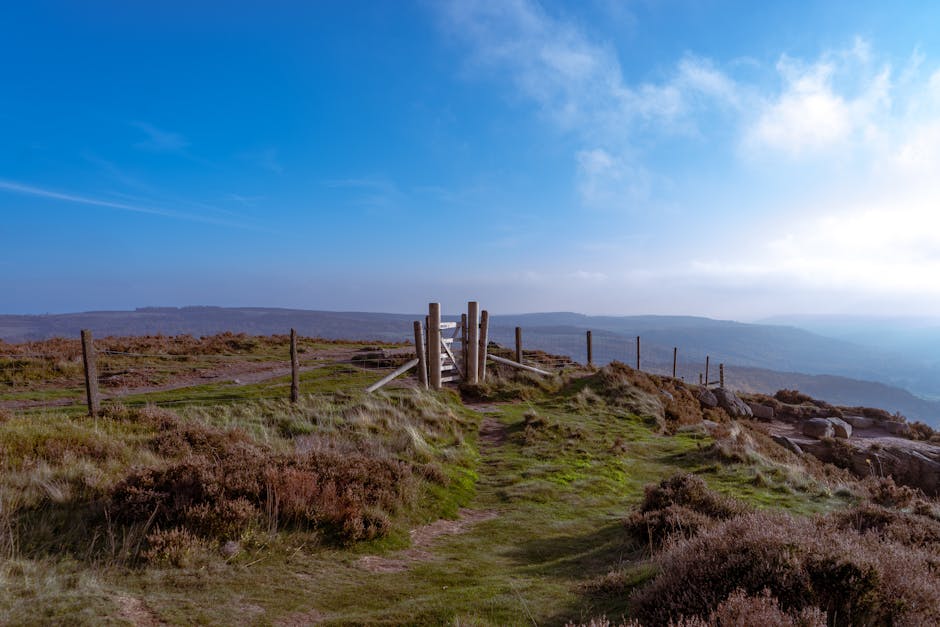
Most visitors to Cornwall stick to the coast. Locals know that Bodmin Moor — the wild granite uplands at the heart of the county — is where the other half of Cornwall hides. The walking is open, broody, and unlike anywhere else in the south west: hill-form tors rising from heath, Bronze Age remains scattered across the moor, choughs and ravens overhead, and a sense of space that the cliff path cannot give you. For walkers willing to swap the famous coast for a few days, Bodmin Moor walks deliver some of the most rewarding hill-walking in southern England.
This guide covers the moor’s best walking — Brown Willy and Rough Tor, the Hurlers and the Cheesewring, the Copper Trail, and a handful of less-known circulars. Each entry has the distance, terrain, parking, and pub-lunch options. We have organised them by difficulty so you can pick a walk that fits the day.
What Makes Bodmin Moor Special
- Cornwall’s only large area of true upland walking.
- Brown Willy is Cornwall’s highest point at 420m.
- Some of the densest concentrations of Bronze Age remains in southern England (stone circles, hut circles, cairns).
- An International Dark Sky Park since 2017.
- Dramatically different from coastal Cornwall — open, exposed, and weather-dependent.
Bodmin Moor Walks: The Classics
1. Rough Tor and Brown Willy Circular
Distance: 7 km (4.5 miles).
Time: 2.5–3 hours.
Difficulty: Moderate to challenging — boggy in places, scrambling over rocks at the summits.
Cornwall’s two highest peaks in a single half-day walk. From the Rough Tor car park, climb to the Rough Tor summit (covered in granite outcrops and Bronze Age stone settings), descend to the col, and ascend Brown Willy. Return via the open moor. Conditions vary wildly — a clear day rewards you with views over both coasts; a misty day requires careful navigation.
2. The Hurlers and the Cheesewring
Distance: 6 km (4 miles).
Time: 2 hours.
Difficulty: Moderate.
From Minions village, walk past the Bronze Age Hurlers stone circles and on to the Cheesewring — a natural granite outcrop balanced on the moor like a stack of plates. Return via the disused Caradon mine workings. One of the most rewarding short Bodmin walks; pubs at Minions for lunch.
3. Trethevy Quoit and Stowe’s Hill
Distance: 5 km (3 miles).
Time: 2 hours.
Difficulty: Easy to moderate.
From St Cleer, walk to the 5,000-year-old Trethevy Quoit (one of the best-preserved Neolithic chambered tombs in Britain), continue across moorland to Stowe’s Hill, and return via the Hurlers. Excellent introduction to the moor’s prehistoric heritage.
4. Golitha Falls and Draynes Wood
Distance: 3 km (2 miles).
Time: 1 hour.
Difficulty: Easy.
The River Fowey cascades through ancient oak woodland on the moor’s southern edge. The walk is short, sheltered, and a brilliant rainy-day option when the high moor is foggy. Free parking at the roadside.
5. The Copper Trail
Distance: 60 km (37 miles) full circuit.
Time: 4–6 days.
Difficulty: Demanding multi-day.
The classic long-distance Bodmin Moor route, circling the entire moor over several days. Takes in the Hurlers, Brown Willy, Rough Tor, Dozmary Pool (where King Arthur returned Excalibur), and the abandoned mining country of Caradon Hill. Best done with B&B accommodation at Minions, Bolventor, and Camelford.
Easier Bodmin Moor Walks
Dozmary Pool Circular
Distance: 4 km (2.5 miles).
Time: 1.5 hours.
Difficulty: Easy moorland walking.
Around the legendary lake said to hold Excalibur. Easy walking on flat moorland; great introduction for first-timers.
Cardinham Woods
Distance: 0.5–6 miles of marked trails.
Time: Choose your own length.
Difficulty: Easy.
Forestry England woodland on the moor’s western edge. Multiple loops, bike trails, a cafe, and clean facilities. Perfect for families and shoulder-season walks.
Siblyback Lake
Distance: 5 km (3 miles).
Time: 1.5 hours.
Difficulty: Easy.
An easy lakeside loop with a cafe and watersports centre. Ideal as a half-day with kids; pair with a Hurlers visit nearby.
Challenging Bodmin Moor Walks
The Five-Tor Round
Distance: 18 km (11 miles).
Time: Full day.
Difficulty: Demanding.
A full-day circuit taking in Brown Willy, Rough Tor, Garrow Tor, Brown Gelly, and Catshole Tor. Requires good navigation; pathless in places. The classic Bodmin Moor expedition.
Twelve Men’s Moor
Distance: 12 km (7.5 miles).
Time: 4 hours.
Difficulty: Moderate to demanding.
Wild, less-walked area east of Minions. Best in clear weather; OS Explorer 109 essential. Bronze Age remains scattered throughout.
Practical Notes for Walking Bodmin Moor
- OS Explorer 109 covers the entire moor. Carry it (paper) and a compass.
- Phone signal is patchy. Do not rely on GPS apps alone.
- Weather changes fast. Mist can roll in within minutes; what was a clear morning can become 50-yard visibility by lunch.
- Boggy ground is real. Even in summer, peat hollows can be ankle-deep.
- Wear proper walking boots. Trail runners are not enough.
- Tell someone where you are going. Allow extra time on demanding routes.
- Cattle and sheep roam free. Keep dogs on leads; close gates.
- Park considerately. Many access points are at small lay-bys.
Wildlife and Heritage on Bodmin Moor
The moor supports Cornish chough, raven, kestrel, and skylark. Otters live along the Fowey valley. Wild ponies graze the open moor in places. Bronze Age remains include the Hurlers (three stone circles), Trethevy Quoit (a 5,000-year-old tomb), Stripple Stones, King Arthur’s Hall, and dozens of hut circles. Industrial heritage includes the granite quarrying that built much of London (the Cheesewring quarry shipped granite to Tower Bridge), and the Caradon Hill copper-mining ruins.
Best Pubs and Lunches Near Bodmin Moor Walks
- Jamaica Inn (Bolventor) — famous Daphne du Maurier inn at the heart of the moor.
- Cheesewring Hotel, Minions — a few yards from the Hurlers walk.
- The Crows Nest Inn, Darite — atmospheric edge-of-moor pub.
- The Old Inn, St Breward — Cornwall’s highest pub, on the western edge of the moor.
- The Rising Sun, Altarnun — quiet village pub, good for after-walk pints.
Where to Stay for Bodmin Moor Walking Holidays
Best bases: Minions village (centre of the moor, walkable to the Hurlers), Bolventor (Jamaica Inn area), Camelford (close to Rough Tor and Brown Willy), Bodmin or Liskeard for more facilities. Most pubs and small B&Bs are walker-friendly with drying rooms and packed lunches. See our Cornwall B&B guide.
Bodmin Moor by Season
- Spring (March–May): bracken brown but warming; fewest crowds.
- Summer (June–August): heather coming on; warm but humid.
- Autumn (September–November): heather peak in late August/September; crisp clear walking weather.
- Winter (December–February): dramatic, often misty, snow occasionally on the tors. Experienced walkers only.
FAQs: Bodmin Moor Walks
What is the highest point on Bodmin Moor?
Brown Willy at 420m. Rough Tor next to it is 400m. Both are walkable in a single half-day circular.
Is Bodmin Moor safe to walk?
Yes, with sensible precautions: take an OS map, watch the weather, and tell someone your route. Mist is the biggest hazard.
Can you walk on Bodmin Moor without a map?
Not safely on the higher routes. Even the popular Rough Tor / Brown Willy circular has pathless sections. OS Explorer 109 is essential.
Are dogs allowed on Bodmin Moor?
Yes, but on leads near livestock. Cattle, sheep, and ponies graze across most of the open moor.
How long does it take to walk Brown Willy?
From the Rough Tor car park, the round trip including Rough Tor is 2.5–3 hours. Brown Willy alone (out and back) is around 2 hours.
What’s the easiest walk on Bodmin Moor?
Golitha Falls (woodland), Cardinham Woods, and Siblyback Lake are all easy and well-suited to beginners or families.
Bodmin Moor is the version of Cornwall locals love and visitors keep meaning to explore. A single day on the moor is a brilliant counterpoint to the coast; a long weekend is enough to see why so many of Britain’s greatest landscape writers (Daphne du Maurier, Charles Causley) rooted their work here. Bring a map, a thermos, and the right boots, and the moor will deliver.