The Cornish pasty is more than a lunch. It is a designated Protected Geographical Indication, a folk symbol of Cornwall on a par with the Cornish flag, and the food most asked about by visitors. Walk through any Cornish town and you will pass three or four bakeries claiming to make the best pasty; eat one a day for a week and you will quickly understand why locals have strong opinions about which one is genuinely worth a queue. This Cornish pasty guide covers everything: the history, the legally protected recipe, where to find the best pasties in Cornwall, and how to tell a real one from a service-station imitation.
What Is a Cornish Pasty?
A Cornish pasty is a savoury baked pastry parcel filled with chunky-cut beef, swede (rutabaga), potato, onion, salt, and pepper — and nothing else, if it is genuine. The pastry is wrapped around the filling raw, sealed with a thick rope crimp along the side, and baked slowly until the meat and vegetables cook in their own juices.
The Protected Designation
In 2011 the Cornish pasty was awarded Protected Geographical Indication (PGI) status by the European Union (and inherited under UK law since Brexit). To be called a “Cornish pasty” the product must:
- Be made in Cornwall.
- Contain only beef (minimum 12.5%), swede, potato, onion, salt, and pepper.
- Have ingredients raw when the pastry is sealed, then slowly baked.
- Be crimped on the side (not the top).
- Have a “D” shape.
Anything else can be a tasty pastry, but is not a Cornish pasty.
The History of the Cornish Pasty
The pasty was developed for Cornish miners in the 18th and 19th centuries. Cornwall was the world’s largest producer of tin and one of the largest of copper; thousands of miners worked underground for ten-hour shifts and needed a portable, durable lunch that could be eaten with dirty hands.
The thick crust served three purposes:
- It kept the contents warm for hours.
- It provided a “handle” for miners to hold while eating.
- The handle was thrown away after eating, so traces of arsenic and other toxic minerals on the miners’ fingers did not contaminate the meal.
The classic legend that pasties had savoury filling at one end and sweet (apple, jam) at the other is largely myth — most miners ate single-flavour pasties.
The Crimp
The side crimp is the visual signature of a real Cornish pasty. It is created by folding the pastry edge over itself in a series of overlapping pinches that create a thick rope along the side of the pasty. A skilled crimper can do it one-handed in under 30 seconds.
What Makes a Great Cornish Pasty
- Pastry: golden, crisp on the outside, slightly soft underneath. Made with strong flour, lard or butter (some recipes use both).
- Meat: hand-cut chunks of skirt steak (preferred) or chuck. Never minced.
- Vegetables: swede, potato, and onion, all chunky. Some bakeries cut into half-moons; others into small dice.
- Seasoning: simple salt and white pepper. Plenty of it.
- Crimp: thick, uneven (handmade), running along one side.
- Heat distribution: a great pasty has visible juices when you cut it; the meat is tender but still recognisable as chunks.
Where to Buy the Best Cornish Pasties
Iconic Cornish Pasty Bakeries
- Philps Pasties — bakeries across Cornwall (Hayle, St Ives, Marazion, Truro). Consistently excellent; widely held as one of the most authentic.
- Ann’s Pasties — Lizard-based, beloved by locals. Their walk-in shop in Helston and the Lizard village shop are pilgrimage sites.
- Aunty May’s — small artisan bakery near Padstow with a cult following.
- Sarah’s Pasty Shop, Looe — multi-time pasty-festival winner.
- The Cornish Bakery — chain across Cornwall (Padstow, St Ives, Falmouth, Truro). Reliable rather than legendary; consistent quality.
- Pengenna Pasties — multiple branches; popular with locals.
- Warrens Bakery — Britain’s oldest Cornish pasty maker (founded 1860); now widespread.
- Rowe’s Cornish Bakers — a chain originating from Falmouth, well-loved.
- Stein’s Patisserie, Padstow — pricier but excellent.
- The Chough Bakery, Padstow — multi-award winning.
Local Heroes Worth a Detour
- The St Ives Bakery — small, behind the harbour.
- Cornish Premier Pasties, Liskeard — wholesale-quality at retail prices.
- Tregenna Bakehouse, Helston — authentic and unfussy.
- Buttermilk Cornwall, Padstow — small artisan bakery.
Pasties Beyond the Classic
Although the classic beef-and-swede is the protected version, Cornish bakeries also sell several non-PGI variations:
- Cheese and onion: classic vegetarian alternative.
- Steak and Stilton: more upmarket; still made with chunky meat.
- Lamb and mint: occasional summer special.
- Vegan beef-style: increasingly common; some are excellent.
- Sweet pasties: apple, blackberry, chocolate. Mostly novelty.
How to Spot a Fake Cornish Pasty
- Crimp on the top: it’s a Devon pasty.
- Made outside Cornwall: cannot legally be called Cornish.
- Minced beef: a real Cornish pasty uses chunks.
- Carrots, peas, gravy: extra ingredients = not authentic.
- Soggy bottom: a great pasty has firm pastry top and bottom.
- Pre-cooked filling: a real pasty has raw filling sealed in raw pastry.
The Pasty Lifecycle: How They Are Made
Pastry
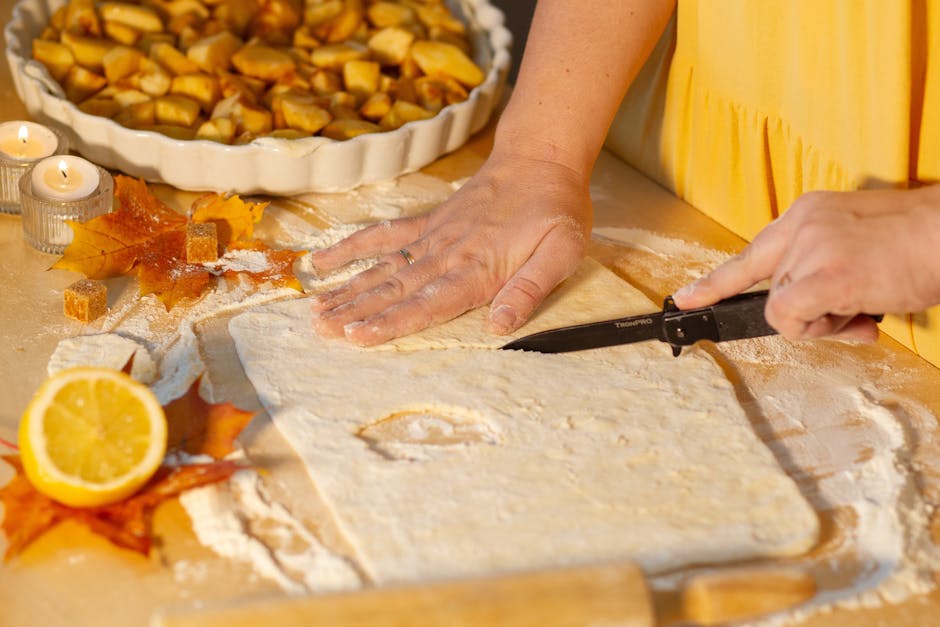
Strong bread flour, fat (lard or butter), salt, and water. Mixed, kneaded briefly, and rested. Some bakeries use a “rough puff” approach for added flakiness.
Filling
Skirt steak cut into chunks (around 1cm), swede sliced into thin half-moons, potato also sliced, onion finely chopped. Salt and lots of pepper.
Assembly
The pastry is rolled into a circle 18–22cm across. The filling is layered on one side: potato, swede, beef, onion. The pastry is folded over and crimped along the seam.
Baking
200°C for 15 minutes; 160°C for 45–55 minutes. The slow second stage allows the meat and vegetables to cook in their own juices, melding flavours.
How to Eat a Cornish Pasty
- Hand only — no plate or cutlery needed.
- Hold by the crimp.
- Bite from the end — the steam will escape.
- Best eaten fresh from the oven; reheats well in a low oven (foil) but never the microwave.
- A real Cornish pasty does not need ketchup or sauce. (Some locals will fight you over this.)
Pasty Festivals and Events
- World Pasty Championships, Eden Project (March) — competitions across multiple categories.
- St Piran’s Day (March 5th) — Cornwall’s national day, with pasty events.
- Cornish Pasty Week (late February) — celebrated by bakeries across the county.
Pairing Cornish Pasties With Drink
- Cornish ale: Skinner’s Cornish Knocker or Sharp’s Atlantic.
- Cider: Cornish Orchards or Sharp’s Cold River.
- Tea: a strong builders’ brew is the traditional accompaniment.
- Cornish wine: Camel Valley sparkling for celebratory pasties.
For more on local drinks, see our Cornwall brewery and distillery tours guide.
Where to Pair Pasties With Walks
A pasty in a paper bag and a 5-mile cliff walk is one of Cornwall’s great rituals. Best combinations:
- Padstow pasty (Chough or Stein’s) + Camel Trail.
- St Ives pasty (Philps or Warrens) + St Ives to Carbis Bay walk.
- Lizard pasty (Ann’s, Helston or Lizard village) + Lizard Point walk.
- Newquay pasty (Pengenna) + Watergate Bay walk.
FAQs: Cornish Pasty Guide
What is a real Cornish pasty?
A side-crimped, D-shaped baked pastry made in Cornwall, filled with chunky beef, swede, potato, onion, salt, and pepper. The recipe is legally protected (PGI status).
Where is the best place to buy a pasty in Cornwall?
Subjective, but consensus favours Philps (Hayle and west Cornwall), Ann’s Pasties (the Lizard), the Chough Bakery (Padstow), and Aunty May’s (north Cornwall).
Can a pasty be vegetarian and still be a Cornish pasty?
By the PGI rules, no — only beef-filled pasties qualify. Cheese-and-onion or vegan pasties are common in Cornwall but cannot legally be called “Cornish pasties”.
What’s the difference between a Cornish pasty and a Devon pasty?
The crimp. Cornish pasties are crimped on the side; Devon pasties on the top. Recipes also differ in tradition.
Can I freeze Cornish pasties?
Yes, both raw and cooked. Cooked pasties freeze for 1–2 months; reheat from frozen in a 180°C oven for 25–35 minutes.
Are pasties always meat?
The protected version is, but Cornish bakeries make many non-meat varieties. Cheese and onion is the most common alternative.
The Cornish pasty is the food that gives a Cornwall holiday its punctuation. A walk without a pasty halfway feels incomplete; a beach day without one is missing something. Try a couple of the bakeries above, take it to a clifftop with the right view, and you have the simplest perfect lunch the county can offer.