Cornwall walking weather is famously variable. A morning of clear sun can turn into an afternoon of horizontal rain by the time you have crossed the second headland; a balmy day in May can punish you with cold wind on the cliff at Sennen. The point of walking gear Cornwall is not to look like a serious mountaineer — it is to be comfortable enough to keep enjoying the walk when the weather changes its mind. The right kit is what turns a punishing day into a memorable one.
This guide is built from Cornish hosts, walking-holiday operators, and the South West Coast Path Association’s recommendations. It covers what you genuinely need for a day walk on the coast path, a multi-day section walk, and a moor walk on Bodmin. We have separated essentials from optional kit and added some specifics that catch first-time visitors out — like the strength of UV reflected off the sea, and how quickly Cornish bogs can fill walking boots that aren’t actually waterproof.
The Essential Kit for Cornwall Walking
Footwear
Walking boots are the right choice for almost any Cornwall walk. The coast path is rocky, root-strewn, sometimes boggy, and consistently uneven — boots provide the ankle support that stops minor twists becoming holiday-ending injuries.
- Waterproof leather or synthetic boots are best. Gore-Tex linings genuinely help.
- A real ankle cuff matters. Trail shoes are too low for Cornish terrain.
- Lugged sole for grip on wet granite, slate, and seaweed.
- Break them in on flat ground at home before you arrive — a new boot on day one of a coastal walking holiday is a guaranteed blister story.
Trail running shoes work for shorter, drier walks, but they will not last on the rougher Penwith and Lizard sections.
Socks
Merino wool walking socks are the small luxury that makes the biggest difference. Look for:
- Cushioned heel and toe areas.
- Wicking fabric to keep feet dry.
- Seamless construction at the toe.
- Mid-calf or higher to stop boots rubbing.
Pack at least one pair more than you think you need. Wet socks shorten any walk fast.
Waterproof Jacket
The single most important piece of Cornwall walking kit. The cliff-top wind makes any rain feel colder, and a poor jacket is misery within minutes. Look for:
- Waterproof, not just water-resistant. Look for a hydrostatic head of 10,000mm+.
- Breathable fabric (Gore-Tex, eVent, or similar) — Cornwall rain is rarely cold enough to need a non-breathable shell.
- A proper hood with a peaked brim and adjusters.
- Pit zips for ventilation when the rain stops but you keep walking.
- Pockets that close fully to protect phone and map.
Waterproof Trousers
For multi-day walks and any winter walking, waterproof trousers are essential. Side-zips help you put them on over boots without removing footwear.
Layers
Layered clothing beats a single heavy jacket every time on the Cornish coast. The standard system:
- Base layer: merino wool or synthetic; wicking and quick-drying. Avoid cotton.
- Mid layer: fleece or light insulated jacket for warmth.
- Outer layer: waterproof shell as above.
For walking trousers, a quick-drying synthetic walking trouser is far better than jeans. Some walkers prefer convertible trousers (zip-off legs) for hot summer days.
Daypack
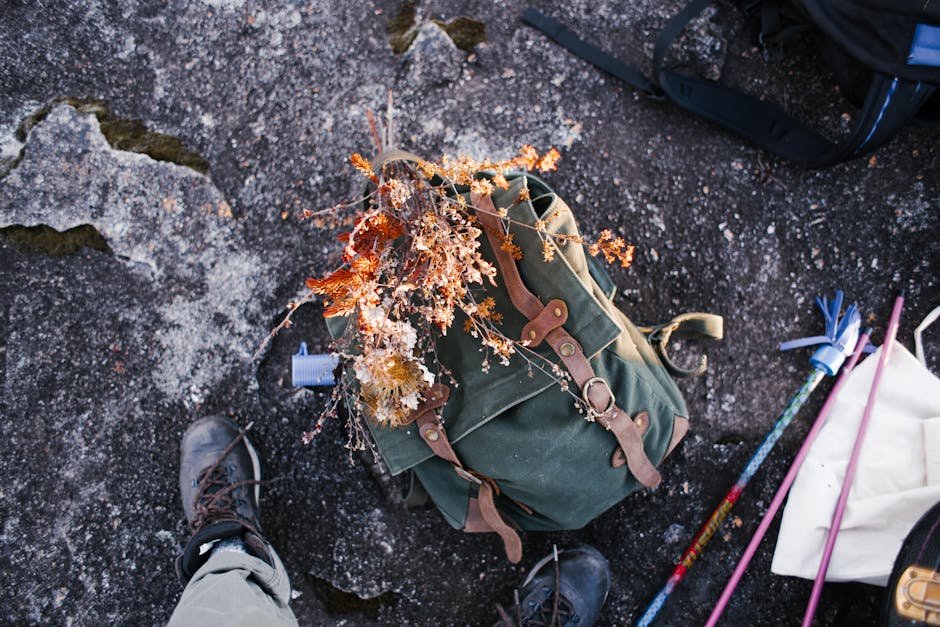
20–30 litres is the sweet spot for day walks. Look for:
- Adjustable hip belt and chest strap.
- Compression straps to keep contents stable.
- External hydration sleeve.
- Rain cover (or buy separately).
- Multiple pockets for small items (phone, map, snacks).
For multi-day walks where luggage is being transferred, the daypack is all you need on you.
Important Small Kit
Maps and Navigation
- OS Explorer maps: 102, 103, 104, 105, 106, 107 cover Cornwall.
- Compass for navigation when visibility drops.
- OS Maps app with offline downloads — phone signal is patchy.
- Power bank for the phone (an extra few thousand mAh).
Water and Food
- 1.5L water minimum for a half-day; more in summer.
- A water filter or purification tablets for multi-day independent walks.
- Energy snacks: oat bars, trail mix, dried fruit.
- A pasty or sandwich wrapped in a beeswax wrap or a sturdy lunchbox.
Sun Protection
Cornwall’s UV is stronger than visitors expect, with sea reflection compounding it. Always carry:
- Factor 30+ sun cream.
- SPF lip balm.
- A wide-brimmed hat or cap.
- Sunglasses.
First Aid
- Blister plasters (Compeed or similar) — non-negotiable.
- Antiseptic wipes.
- Painkillers.
- Antihistamines.
- A small bandage.
- Tweezers (for ticks — Bodmin Moor has them).
Other Useful Kit
- Walking poles: brilliant on Cornwall’s relentless ups and downs. Telescopic, lightweight.
- Head torch if there is any chance of finishing in the dark.
- Whistle: most rucksack chest straps have one built in.
- Penknife.
- Microfibre towel (small) for unexpected swims and rain.
- Swimwear — Cornwall walking pairs incredibly well with sea swimming.
- Beeswax wrap or food box: for lunch.
Cornwall Walking Kit by Season
Spring (March–May)
Layered system with insulated mid-layer; full waterproofs always; gloves and hat for high-cliff walks; sun cream once the cloud breaks.
Summer (June–August)
Lighter base layers, breathable shell jacket, sun hat, plenty of water, swimwear.
Autumn (September–November)
Back to the spring kit; storms more likely; full waterproofs essential.
Winter (December–February)
Heavier insulated mid-layer; gloves and hat always; head torch (early dark); waterproof trousers; consider gaiters for boggy sections.
Bodmin Moor Walking Kit
Moor walking adds a few specific items:
- Compass and paper map: phone signal is unreliable.
- Gaiters: bog water reaches above ankle height in places.
- A whistle for emergency.
- An emergency bivvy bag: weather changes fast on the moor.
- More food and water than for a coast walk; no shops or cafes.
What NOT to Pack
- Cotton clothing (slow-drying, cold when wet).
- Brand-new boots for a multi-day walk.
- Heavy denim jeans.
- Single-layer thick coats (too inflexible for changing weather).
- Open-toe sandals on cliff paths.
- A massive 70L backpack for a day walk.
Where to Buy Walking Kit in Cornwall
If you arrive without something, several Cornish outdoor retailers can sort you out:
- Cotswold Outdoor — branches in Truro and Newquay.
- Mountain Warehouse — multiple Cornwall branches.
- Trespass — budget options, several locations.
- Independent gear shops in St Ives and Penzance for surf-and-walk crossover gear.
Walking Kit for Independent Multi-Day Trips
If you are walking with luggage transfer, the daypack covers the day. If you are walking unsupported (no transfer), you will need:
- 40–50L backpack with proper hip belt.
- Lightweight sleeping bag or B&B-only kit.
- Toiletries in small bottles.
- Spare base layers and socks.
- A book and an evening kit (slip-on shoes, change of clothes).
- Lightweight repair kit (sewing, cord, duct tape).
Common Cornwall Walking Kit Mistakes
- Wearing trail runners on the rougher coast — they wear out fast and offer poor ankle protection.
- Skipping a real waterproof — Cornish rain is sideways and surprisingly cold.
- Carrying too much water on coast walks where cafes are frequent (or too little where they are not).
- Not breaking in boots.
- Forgetting blister plasters.
- No hat in summer — sun and wind make headwear essential.
FAQs: Walking Gear Cornwall
What boots are best for walking in Cornwall?
Mid-cut, waterproof leather or synthetic walking boots with a Vibram-style sole. Brands like Salomon, Scarpa, Meindl, and Brasher all make good options.
Do I need waterproof trousers for Cornwall?
For multi-day walks or autumn/winter, yes. For a single day-walk in summer, you can usually get away with quick-drying walking trousers and a long jacket.
What’s the best waterproof jacket for Cornwall walking?
Any 3-layer Gore-Tex or eVent jacket from a reputable brand. Cheaper Pertex Shield jackets work for occasional walks. Avoid pure rain ponchos — Cornish wind shreds them.
Are walking poles useful in Cornwall?
Yes — particularly on the steeper coast-path sections (St Ives to Zennor, Lizard cliffs, Hartland). Telescopic poles fold into a daypack when not needed.
How big a daypack do I need?
20–30L for a day walk; 40L+ for unsupported multi-day; 30–35L for luggage-transfer multi-day.
Do I need crampons or ice axes in Cornwall?
No. Cornwall almost never has snow, and frost on the coast is rare. Ice spikes might help on a few winter days; crampons and axes are unnecessary.
The right Cornwall walking gear is the kind that lets you forget about it. Boots that don’t blister, a jacket that doesn’t soak through, layers you can put on or take off in 30 seconds, and a daypack that doesn’t make you sweat. Get those right, and the cliff path becomes the holiday it should be.