Truro is the awkward case in any Cornwall guide. It is Cornwall’s only city, which is more of a constitutional fact than a felt difference — Truro is roughly the size of a small market town, smaller than St Austell and not much bigger than Falmouth. The cathedral is the tell. Walk down Lemon Street with the three spires looming over the rooftops above and you understand that this is not Newquay or Padstow; it is something with the architectural ambition of a city even if the population doesn’t quite back the claim. This Truro Cornwall guide is the case for stopping properly rather than just shopping and moving on.
The reasons to stay in Truro are practical. It is the most central town in Cornwall. It has the main rail hub, with direct trains from London Paddington running roughly eighteen times a day. It has two Park & Ride sites, supermarkets, the only major hospital, the only Marks & Spencer and Primark, and the only purpose-built theatre. Whether you are using Truro as a base or just passing through, it is the town that connects Cornwall together. For the wider picture, our Cornwall towns and villages guide sets the context.
Cornwall’s Only City: A Short History
Truro got a Royal Charter from King John in the early thirteenth century, which made it one of Cornwall’s stannary towns — the official assay points where tin from the Cornish mines was weighed, taxed and stamped before shipping. The stannary status gave Truro its early wealth. The Georgian expansion of the town in the late eighteenth century, when Lemon Street and the surrounding grid were laid out, came from the second wave of Cornish mining money — copper this time, the boom that lasted into the 1860s.
City status was granted by Queen Victoria in 1877 — a political reward for the lobbying that had created the Diocese of Truro the year before. Until 1876, Cornwall had no Anglican bishop of its own. The Diocese of Truro was created in 1876 from territory previously in the Diocese of Exeter, and the new diocese needed a cathedral. Truro Cathedral was the result.
What’s interesting historically is that this is the only English cathedral built between the medieval period and the twentieth century — the first new Anglican cathedral in Britain since Salisbury was completed in 1220. It sat at the heart of late-Victorian England’s confidence-building and church-building, and the Cornish character of it — the granite, the maritime symbolism — is the architectural answer to “what would a Cornish cathedral look like if Cornwall had had one all along?”.
Truro Cathedral: The Three Spires
The cathedral dominates the town. The central spire reaches 250 feet (76 metres) — the tallest building in Cornwall — and the two western spires both reach 200 feet. It is one of only three cathedrals in the British Isles with three spires; the others are Lichfield and St Mary’s in Edinburgh.
The architect was John Loughborough Pearson, the great Victorian Gothic Revival church architect (his other major work is the unfinished St John the Divine in Brisbane). Construction ran from 1880 to 1910, on the site of the sixteenth-century St Mary’s parish church, which was partially incorporated into the south aisle — the only English cathedral to swallow a complete parish church inside its fabric. The foundation stone was laid by the future Edward VII in 1880, in his capacity as Duke of Cornwall.
The Gothic style is “Early English” — narrow lancet windows, restrained ornament — but the three-spire silhouette is French Gothic in inspiration (Chartres and Laon being the obvious precedents). The interior is high, narrow, dignified, with excellent stained glass and a particularly good carved choir.
The cathedral is free to enter. Open Monday to Saturday 10am to 5pm, Sunday 11.30am to 4pm. Free guided tours run Monday to Thursday at 11am from 30 March to 29 October 2026 — they’re excellent, take an hour, and give you the architectural detail you’d miss on your own. Donations welcomed.
Cornwall Museum and Art Gallery (Formerly Royal Cornwall Museum)
The Royal Cornwall Museum on River Street was rebranded recently to Cornwall Museum and Art Gallery. It is Cornwall’s main museum, and it has been through a recent transformation with new galleries — a Mineral Gallery, a Nature Gallery, and the Heart of Cornwall Gallery — opened in the last few years.
The headline exhibits are the Egyptian mummy (curatorially controversial, kept in a dedicated room, with current display practice respectfully framed), the mineral collection (Cornwall’s mining heritage gives the museum a world-class set of rocks and ores), and the rotating art gallery. The mineral cabinets are genuinely remarkable; if Cornwall’s geological story is unfamiliar, this is the place to encounter it.
Admission is now structured as a £10 annual pass for adults, free for under-18s, which is one of the better museum deals in the country — you can use it on every visit for a year. Open seven days a week, 10am to 4pm, with the 2026 season running 31 March to 3 November.
Hall for Cornwall
Hall for Cornwall is the region’s largest performing arts venue, recently renovated and reopened in 2021. The 2026 programme runs to 300-plus shows a year and includes major touring productions: Mamma Mia! (2-13 June 2026), Priscilla Queen of the Desert (13-18 July), Peppa Pig Live! for family audiences (1-2 August), James Acaster (24-27 August), Chris Ramsey (15 October), Lulu (17 October) and Agatha Christie’s The Hollow (20-24 October).
The venue is on Back Quay in the centre of town, walking distance from everything else. Tickets via hallforcornwall.co.uk. If you’re planning a Truro visit for more than a day, check what’s on while you’re there — even out-of-the-way shows draw a serious Cornish audience.
Shopping in Truro
This is the practical reason most non-Truro Cornwall visitors arrive in Truro at some point during a trip. Cornwall has very limited shopping outside Truro. Almost every major chain in the county is in this town, and the independent boutiques on the side streets are excellent.
The major chains are mostly on Lemon Quay and Fairmantle Street: Marks & Spencer, Primark, Waterstones, White Stuff, FatFace, Crew Clothing, The White Company, Hotel Chocolat, TK Maxx, Lush. Lemon Street Market, on Lemon Street itself, is an indoor two-floor independent market with cafés (Oscars, Fig Café), an Atrium Gallery upstairs, a wholefoods refill store, a barber and a string of independent boutiques. Open Monday to Saturday 8am-5.30pm.
The Truro Farmers Market runs on Lemon Quay Wednesday and Saturday 9am-4pm, with organic vegetables, seafood, meats, cider, beer, wine, gin and bread from across Cornwall. It’s the best food market in the county and worth planning around if you’re cooking. The independent boutiques cluster on Pydar Street, Boscawen Street and River Street — slow shopping, good art-school clothing, jewellery from local makers.
Eating and Drinking in Truro
Truro’s food scene is less famous than Padstow’s or Falmouth’s but more varied than either. Here’s the locals’ shortlist.
108 Coffee on Kenwyn Street is the city’s original speciality coffee shop, running since 2011, serving Cornish Origin coffee and Tregothnan tea (Tregothnan is the British tea estate just outside Truro that produces actual UK-grown tea). Banana bread and home-made cakes; the best remote-work spot in central Truro. Monday to Saturday 8am-4pm, Sunday 9.30am-3pm.
The Old Ale House on Quay Street is the city’s character pub — real ales, live music most evenings, low ceilings, no televisions. Bustopher Jones on Lemon Street operates in a listed building with Cornish-ingredient cooking from working-lunch through to à la carte dinner; a garden lounge and basement private dining room give it a flexibility most Truro restaurants don’t have. The Old Grammar School / Boho 18 behind the cathedral occupies a 1500s building with Mediterranean tapas, cocktails and an outdoor courtyard.
For a riverside meal: The Heron Inn at Malpas, two miles outside town along the river, is the best Sunday lunch within walking distance of the city centre (the walk along the river is an easy hour, lovely on a sunny day). For burgers, Hubbox is the Cornish burger chain. For pizza, Veneziano. For brunch, Penrose on Lemon Street.
Boscawen Park and the River Walk to Malpas
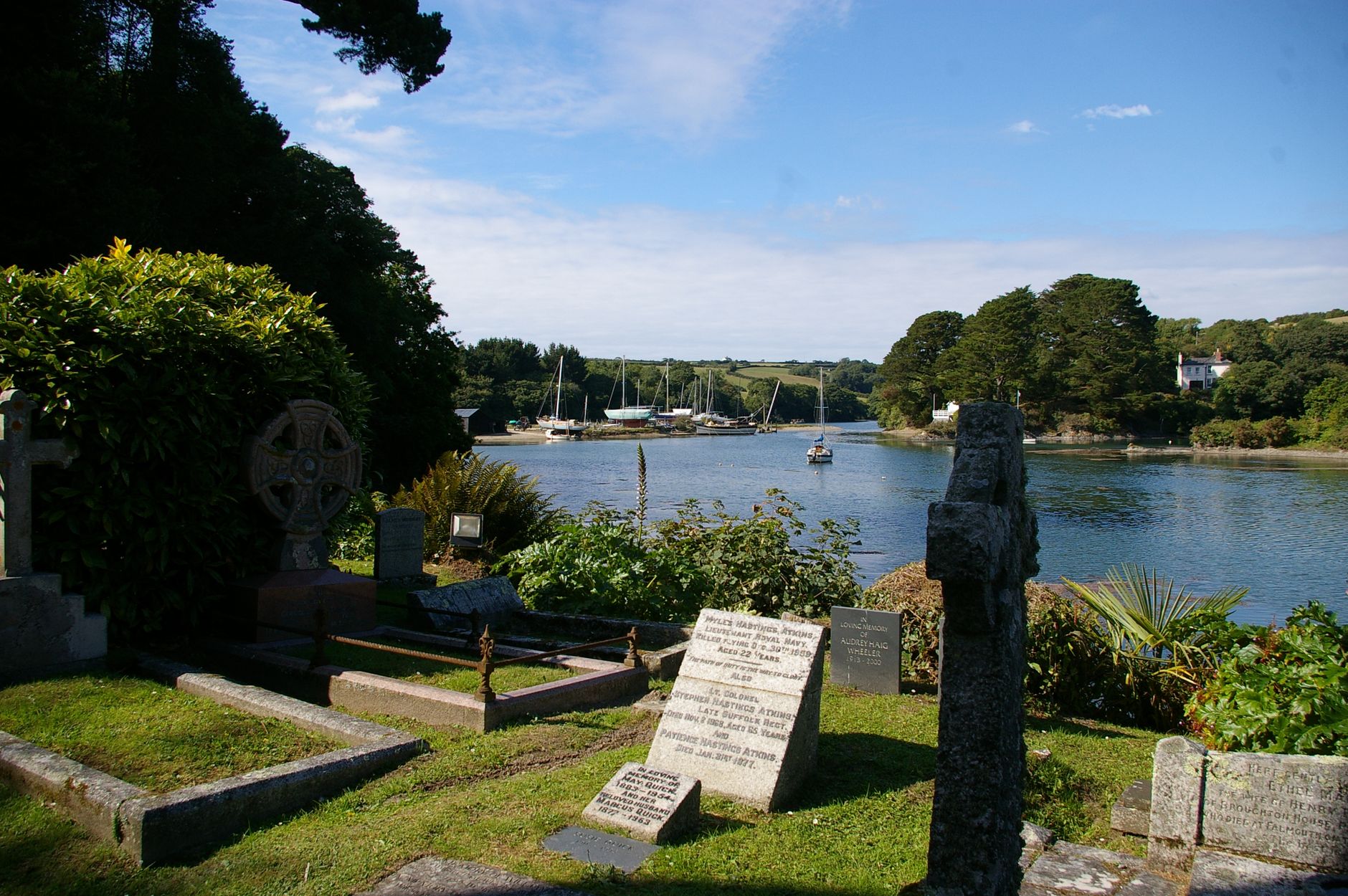
Truro’s secret outdoor asset is the river walk. The town sits at the confluence of the rivers Kenwyn, Allen and Truro, which feed downstream into the Fal. A circular walk from Boscawen Park along the Truro River to St Clement and on via Tresillian River and Malpas back to town is around four miles, easy, and takes roughly an hour and a half. The Heron Inn at Malpas is the natural lunch stop; from Malpas you can also (in summer) catch the Enterprise Boat down to Trelissick Gardens or all the way to Falmouth.
Trelissick Garden and the Enterprise Boats
Trelissick Garden, owned by the National Trust, sits four miles south of Truro on the B3289 just before King Harry Ferry. The garden is at its peak in spring (rhododendrons, camellias, magnolias) and overlooks the Carrick Roads. Two hundred thousand visitors a year. Parking is £6 for non-members; free for National Trust members. Open daily; the café and shop are open year-round.
The smart Truro approach: take the Enterprise Boats from Truro down the river. They run from Truro (or Malpas at low tide) to Trelissick to Falmouth and back. The full Truro-Falmouth journey is around two hours each way, through some of the prettiest estuary landscape in the country. The 2026 schedule runs spring through to early September, with Sunday-only services from 25 May to 6 September. At low tide the boats leave from Malpas rather than Truro; an Enterprise Link Bus (route 496) connects Malpas to Truro Monday to Saturday.
Truro at Christmas: City of Lights
Truro’s annual Christmas event is the City of Lights lantern parade, typically held on a Wednesday late-night shopping evening in mid-to-late November. Community-made willow-and-tissue lanterns are paraded through the town centre by hundreds of participants from local schools and groups, ending with a Father Christmas parade and the switching-on of the city’s Christmas lights. The exact 2026 date is published closer to the event; check the Truro City of Lights Facebook page for confirmation.
The lantern-making workshops at Hall for Cornwall in the weeks before the event let visitors join in. It is one of the genuine community traditions in modern Cornish life, started in the 1990s by Hall for Cornwall’s outreach programme, and is now one of the city’s most photographed evenings.
Practical Truro: Park & Ride, Trains, the Hospital
Truro’s Park & Ride scheme (officially “Park for Cornwall”) operates two sites. Tregurra, on the Newquay Road at the east side of town (postcode TR1 1RH), handles eastbound traffic. Langarth, at Threemilestone on the west side (TR4 9AN), handles westbound and is also the planned Stadium for Cornwall site. Buses run Monday to Saturday, not bank holidays. First bus out 6.30am-6.45am, last bus back 7.06-7.25pm. The car parks themselves are open 6.30am-8.30pm (11pm on stadium event nights). EV chargers at both sites. 2026 fares from 1 April: £2.70 adult day, £12.50 five-day, £45.40 twenty-day, £111.80 sixty-day.
Truro railway station handles around eighteen direct trains a day from London Paddington, with the fastest service taking four hours and twelve minutes (average four hours fifty-one). Route stops: Reading, Exeter St Davids, Newton Abbot, Totnes, Plymouth, Saltash, Liskeard, Bodmin Parkway, Par, St Austell. Direct services also run from South Wales (occasional) and as far as Edinburgh and Aberdeen (the famous CrossCountry Penzance-to-Aberdeen service). The Night Riviera sleeper from Paddington stops here too.
Royal Cornwall Hospital at Treliske is the county’s main hospital with the only A&E department serving the western half of Cornwall. Worth knowing about for practical reasons.
Truro as a Base for Exploring Cornwall
This is, I’d argue, the strongest case for Truro. The city is the most central town in Cornwall — almost equidistant from the north coast (Newquay 25 minutes), the south coast (Falmouth 25 minutes), the Lizard (45 minutes), the Roseland Peninsula (30 minutes), St Ives (50 minutes), Padstow (40 minutes) and Eden Project (35 minutes). Add the railway access, the supermarkets, the choice of restaurants, the hospital, and the city becomes the obvious smart-money base if you’re doing a touring Cornwall trip rather than focusing on one town.
The downside is that Truro itself is not on the coast. If you want to walk out of your door into a sea view, choose a coastal town. If you want to drive twenty-five minutes to whichever coast suits the day’s weather, choose Truro.
Where to Stay in Truro
The two main hotels are The Alverton (a Victorian Gothic former convent on Tregolls Road, now a four-star country-house hotel with grounds, a restaurant and an excellent spa) and The Royal (the centrally-placed traditional town hotel on Lemon Street). Around the cathedral and the city centre, there’s a good selection of B&Bs and guest houses with parking and easy walking access to the train station and the shops. Self-catering apartments are less common in Truro than in coastal towns but exist.
For a deeper look at Truro accommodation, our guide to Cornwall B&Bs has wider context, and the country-cottage options just outside town (in villages like Tresillian, Probus and Feock) are worth considering if you want quiet evenings.
Truro Versus the Coastal Towns
The honest comparison: Truro for shopping, services, central location and rail access; the coastal towns for sea views, beaches, harbour atmosphere. If you’re spending a single short trip in Cornwall, base yourself coastally. If you’re doing a touring trip with day-by-day movement, Truro is the smart hub.
Frequently Asked Questions
Is Truro worth visiting? Yes — the cathedral, the museum, the shopping and the river walks make it a comfortable day or two-day stop. As a base it’s strategic rather than scenic.
How long do you need in Truro? One full day for the city itself; longer if using it as a base.
What is Truro famous for? Being Cornwall’s only city, the three-spired cathedral, the central rail hub, the shopping.
Why is Truro the only city in Cornwall? City status was granted by Queen Victoria in 1877 when the new Diocese of Truro needed a seat.
Is Truro Cathedral free to enter? Yes, free entry with donations welcomed.
What are the three cathedrals in the UK with three spires? Lichfield, St Mary’s Edinburgh, and Truro.
How do you get from Truro to Falmouth? Direct train on the Maritime Line, around 25 minutes. Or the Enterprise Boats down the Fal in summer (two hours, scenic).
Is there a Park and Ride in Truro? Yes — Tregurra (east) and Langarth (west). £2.70 adult day from 1 April 2026.
Can you walk from Truro to Malpas? Yes — about two miles along the river path. Easy walking. The Heron Inn at Malpas is the lunch stop.
What is the best time to visit Truro? May to September for weather; late November for City of Lights; December for Christmas shopping.
Is there a direct train from London to Truro? Yes — around 18 direct services a day from Paddington. Fastest just over four hours.
Where do locals eat in Truro? 108 Coffee for breakfast; the Old Ale House for pub lunch; Bustopher Jones for dinner; The Heron Inn at Malpas for Sunday lunch.
Truro is the city Cornwall earned itself by lobbying Victorian England, and the cathedral is the architectural ambition that lobbying produced. The town beneath it is friendly, walkable, well-connected, and quietly the most useful base in the county. Walk under the three spires at dusk. Have a flat white at 108 Coffee. Take the river boat to Falmouth. You’ll understand why Cornwall decided this should be its city.