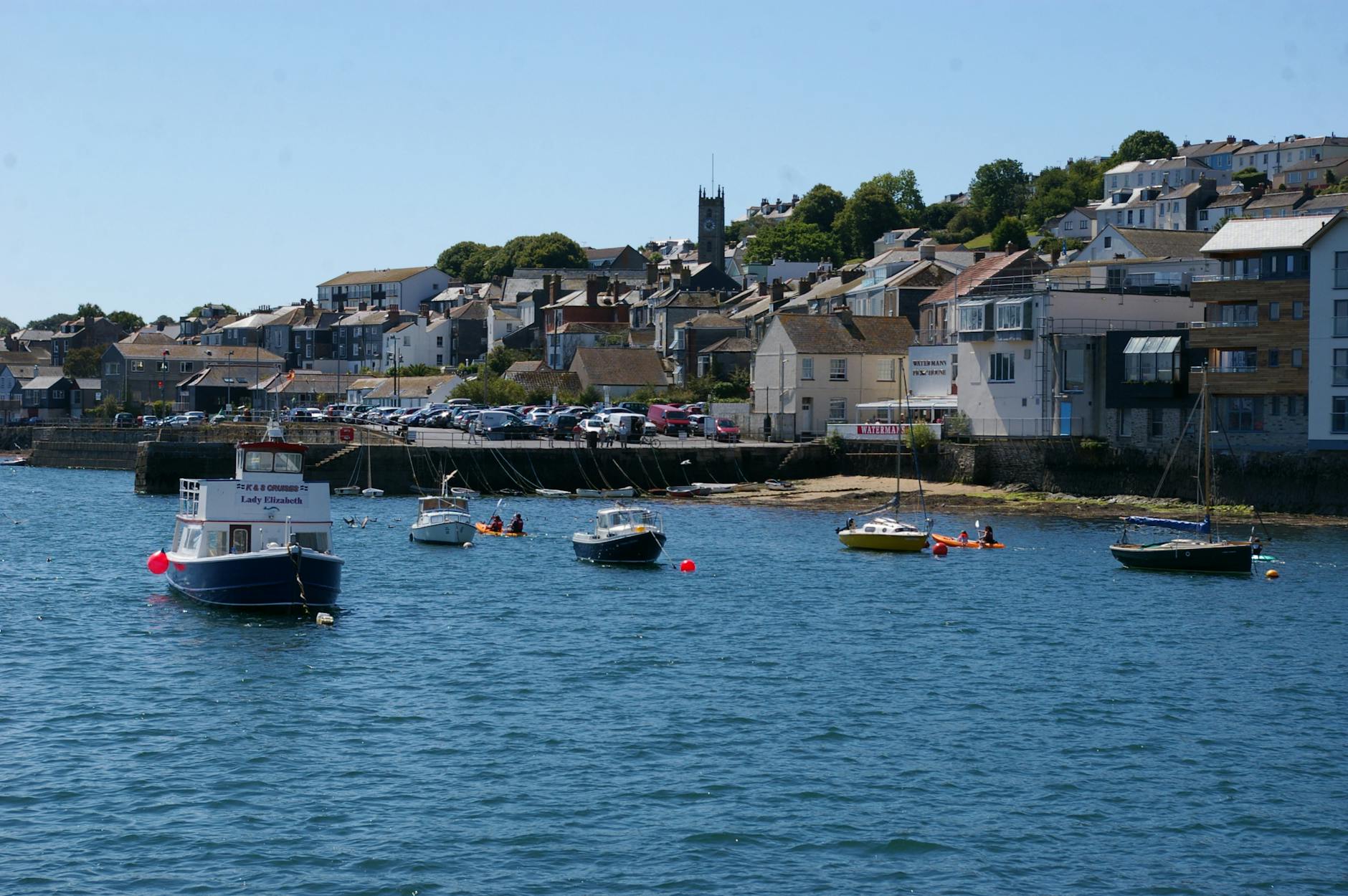
Falmouth is a town that doesn’t quite get its due. Walk down the High Street on a Saturday morning and you’ll see what I mean — independent bookshops next to bohemian record stores next to a fisherman’s chandlery that’s been there for a century, with second-year illustration students from the university drinking flat whites outside Espressini and Royal Navy reservists doing the same on the next bench. It is, I’d argue, the most genuinely interesting town in Cornwall, with a maritime history that punches above its weight, a creative scene that ought to be more famous, and a position at the head of one of the world’s deepest natural harbours that makes it the launchpad for half the best day-trips in the county. This Falmouth Cornwall guide will tell you why, and how to make the most of a stay here.
Falmouth is where Henry VIII built one of his great Tudor coastal forts; where the Royal Mail’s Packet ships connected Britain to its empire for a hundred and fifty years; where Robin Knox-Johnston finished his round-the-world solo voyage in 1969; and where Ellen MacArthur started and finished hers in 2005. It is also where the National Maritime Museum Cornwall sits in a glass-and-timber building over the harbour, where Falmouth University reshaped the town’s creative DNA in the early 2000s, and where the ferries that go out to St Mawes, Truro and the Helford River turn an obvious base into one of the best in the county. For where Falmouth sits in a wider Cornwall trip, our Cornwall towns and villages guide is the parent.
The Most Underrated Town in Cornwall
People who don’t know Falmouth tend to know two things about it. They know Pendennis Castle sits on the headland, and they know the harbour is deep. Both are correct as far as they go. Pendennis Castle is one of Henry VIII’s surviving Tudor coastal forts, completed in 1545. The harbour is the third-deepest natural harbour in the world, after Sydney and Mahon on Menorca — thirty-four metres at its deepest point, which is why aircraft carriers can and do refuge here in winter storms and why the cruise lines still occasionally anchor up offshore.
What people miss is the bit underneath those headline facts. From 1688 to 1850, Falmouth was the Royal Mail Packet station for Britain’s overseas mail — every letter to and from North America, the Mediterranean, the Caribbean, the South Atlantic and India left or arrived at Falmouth. The town’s wealth and its sense of itself comes from that period. The harbour was the busiest single point in Britain’s communications with its empire. The streets that fan back from the harbour — Arwenack, High Street, Market Street, Church Street — were built when the town was, in effect, a small but globally connected port city.
That history has left Falmouth with a working harbour, a town that still feels maritime rather than touristic, and a population that thinks of itself in a different way from the rest of Cornwall. The creative scene that grew around Falmouth University (granted full university status in 2012, though tracing its lineage to the Falmouth School of Art founded in 1902) has layered onto that maritime base rather than replacing it. The result is a town where you can have a flat white at an art-school café in the morning, watch a tall ship coming in past Pendennis Point at lunchtime, and eat at a working-boat pub in the evening.
Getting to Falmouth
Falmouth is on a branch line from Truro, with regular GWR services running through to Falmouth Docks station (the town itself), Falmouth Town, Penmere and Penryn. The journey from London Paddington is around five and a quarter to five and a half hours with a change at Truro. By car, A30 down from the M5, then A39 from Carland Cross. Around five hours from London, three from Bristol.
Parking in Falmouth is a different proposition from St Ives or Padstow. The town is bigger, the road system is more spread out, and there’s a Park & Float scheme for peak summer that you should know about. Park & Float operates from 25 May to 25 September from the Ponsharden site, with a boat shuttle (not a bus) running you to Custom House Quay. First bus at 9.45am, last return 6pm from Falmouth town. The boat-shuttle approach is a Falmouth quirk — most park-and-rides use buses; here you actually take a small ferry to town, which is much more pleasant. If you’re not Park & Floating, the Quarry Hill, Discovery Quay and Maritime Museum car parks are the main town-centre options.
Pendennis Castle: Henry VIII’s Cornish Fortress
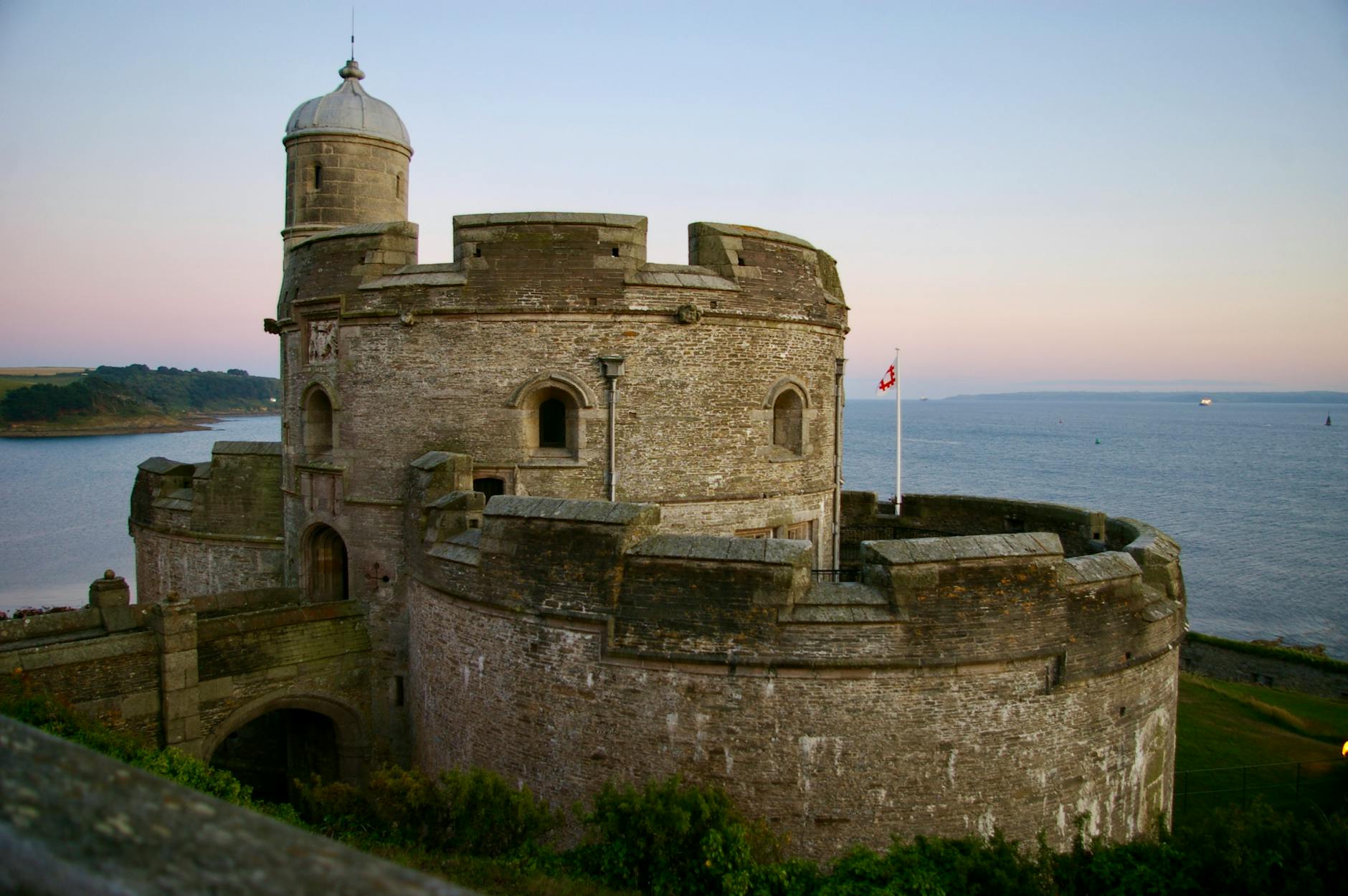
Pendennis Castle sits on the headland east of the town, with its sister castle St Mawes Castle on the headland opposite. They were built between 1540 and 1545 to defend the Carrick Roads against French and Spanish fleets after Henry VIII’s break with Rome left Britain newly vulnerable to Catholic Europe’s military attention. They are among the most important Tudor military fortifications in Britain and they sit on one of the most photographed headlands in Cornwall.
English Heritage manages Pendennis. The walk up from town takes twenty to thirty minutes through residential streets and the castle’s outer earthworks. The castle itself is multi-layered: the Tudor keep at the centre, the Elizabethan ramparts around it, and the nineteenth and twentieth-century military additions that turned this into a coast-artillery fort right through both World Wars. The Half-Moon Battery, the WWI-era guns and the WWII observation posts are all preserved and tell a coherent story about why this headland mattered for five hundred years of British coastal defence.
Admission for 2026 sits in the £14-16 adult range, with family tickets available and free entry for English Heritage members. Open daily in summer; reduced winter hours. Special opening dates for 2026 include 23-31 May (10am-5pm) and 4-6 August (10am-5pm). The Easter Quest at £2 per child runs during school holidays. Check the English Heritage website for current prices and opening times before you visit — they update annually in spring.
The headland walk around Pendennis Point gives you free access to the views even if you don’t go inside the castle. It’s a thirty-minute circular and one of the great free things to do in Falmouth.
National Maritime Museum Cornwall
The NMMC sits at Discovery Quay in a striking glass-and-timber building with a lookout tower and an underwater viewing window that lets you watch fish in the harbour from below the waterline. Fifteen galleries across five floors cover everything from a comprehensive small-boat collection (the basement Flotilla gallery, with hulls of every era suspended from the ceiling) to the ocean-going Packet ships, naval history, immigration and emigration through Cornish ports, and changing temporary exhibitions.
The genuine pricing trick to know: adult admission is around £19, and this converts into a free annual pass — unlimited returns for a year. If you’re visiting Cornwall more than once or staying a few days, this is a remarkable deal. Pre-book online for ten per cent off. Open daily 10am-5pm, closed Christmas Eve, Christmas Day and Boxing Day. It’s an independent charity, not part of the National Maritime Museum Greenwich despite the name affinity. Allow three hours minimum; an enthusiastic visitor can spend a full day.
The Beaches of Falmouth
Falmouth has town beaches, which is unusual for a Cornish port and which makes it an excellent family base. They’re not the wild Atlantic surf beaches of the north coast — they’re sheltered south-coast beaches with calmer water, generally smaller and more swimmable.
Gyllyngvase, known locally as Gylly, is the main beach. A wide arc of sand south of Pendennis, lifeguarded in summer, with the Gylly Beach Café right on the sand and good rock pools at the eastern end at low tide. This is where most visitors swim and where Falmouth’s standup paddleboarders launch in the mornings.
Swanpool is the next bay south. Smaller, sandier, with a freshwater nature reserve behind the beach and a café-bar. Quieter than Gylly even in August.
Maenporth is two miles south, walkable from town via the coast path or accessible by car. Wide sand, family-friendly, with the Cove restaurant right on the beach. The walk from Falmouth out to Maenporth via the coast path is one of the best coastal day-walks in Cornwall — around four miles each way, easy underfoot, with sea views the whole way.
Castle Beach is the small bay below Pendennis Castle, accessible via Castle Drive. Rocky, more for rock-pooling than swimming, but a pretty cove that often has the town beaches to itself even on a Bank Holiday.
The Creative Town: Falmouth University and the Art Scene
Falmouth’s creative reputation is real and getting stronger. The Falmouth School of Art opened in 1902. It expanded into design, film, fashion, music, theatre, games and architecture, became Falmouth University in 2012, and now operates two campuses — Falmouth Campus near the town centre and Penryn Campus shared with Exeter’s Cornwall provision. Student population sits around 5,000-7,000.
What that means for visitors is that Falmouth has a year-round creative-economy heartbeat that towns like Padstow or St Ives don’t. Indie boutiques, gallery openings, gig nights, the kind of food and coffee culture that goes with a young creative population. The Beerwolf Books pub on Bell’s Court is part bookshop, part craft-beer pub, part live-music venue; it’s the cult favourite. Bean Hive and Ondine Ash are the boutiques worth poking your head into. The Falmouth Art Gallery on The Moor punches above its weight with a small permanent collection (Tuke, Munnings, Mary Newcomb) and lively temporary shows.
The Penryn campus side of the university is worth knowing because the Daphne du Maurier Building there (opened 2004) is a striking modern academic building set in former tin streamworks landscaping.
Eating and Drinking in Falmouth
Falmouth’s food scene is bigger and more varied than any other Cornish town of its size. Here are the names to know.
Hooked on the Rocks at Swanpool is the destination seafood restaurant — Cornish fish cooked simply, sea views, often a special-occasion booking. Star & Garter on the High Street is the gastropub with a proper kitchen and a long beer list. Provedore on Berkeley Vale specialises in cicchetti — Venetian small plates and natural wine, run by a chef who turns up at the farmers’ market most weeks. Espressini on Killigrew Street is the local landmark coffee shop, equal parts brunch venue and coffee bar; the breakfasts are excellent. Stones Bakery on the High Street produces some of the best sourdough in Cornwall — go early for the breakfast croissants. Beerwolf Books is the bookshop-pub-music venue I mentioned. The Working Boat at the Greenbank Hotel is the harbourside pub with the working-fisherman regulars and the best seafood pub menu in town.
For coffee and brunch: Espressini, Espressini Dulce (the sweet sibling), Good Vibes Café, Pickwicks. For a casual lunch: the Cornish Bakery on Market Street for pasties, the Maritime Café for harbour views. For something more substantial: Oliver’s, Sennen’s Restaurant, the Greenbank Hotel for dinner.
Falmouth’s Ferries: The Gateway to the Roseland and the Helford
This is the underused superpower of Falmouth as a holiday base. Three ferries leave from Falmouth quays, each opening up a completely different day out.
The St Mawes Ferry runs year-round from either Prince of Wales Pier or Custom House Quay, with up to three sailings an hour in summer and hourly in winter. Twenty-minute crossing. From May to September there’s a Thursday evening service extension. This is the obvious half-day or full-day trip — pretty crossing across the Carrick Roads, St Mawes village on the other side with its own Tudor castle (the sister to Pendennis), the Idle Rocks for lunch on the terrace, the Place Ferry on from St Mawes for further onward Roseland walks. Our Fowey and Roseland Peninsula guide covers the Roseland in detail.
The Enterprise Boats run up the Fal river to Truro, dropping at Trelissick Garden along the way. Tidal — at low tide the boats can’t reach Truro itself and dock at Malpas with a connecting bus into town. The full Falmouth-to-Truro trip is two hours each way through some of the prettiest river estuary scenery in Britain.
The Helford Passenger Ferry from Helford Passage to Helford village (a different ferry from the Falmouth ones, but reachable via a forty-minute drive from town) opens up the Helford River and Frenchman’s Creek — Daphne du Maurier country, with sub-tropical creeks, oyster beds and some of the most beautiful sheltered water in the South West.
The Gardens: Trebah and Glendurgan
Trebah Garden, fifteen minutes’ drive south of Falmouth, is a twenty-six-acre sub-tropical valley garden running down to its own private beach on the Helford River. 2026 admission with Gift Aid: £17.60 adult, £8.80 child five to fifteen, free under fives. RHS members go free from 1 November 2025 to 31 March 2026. Disabled visitors and carers pay half the standard rate. The Trebah gunnera valley, with its giant Brazilian rhubarb-style leaves, is the photograph people remember.
Glendurgan Garden, next door, is National Trust owned. £10 adult, NT members free. Open Tuesday to Sunday 10.30am-5pm. Parking £2 for two hours or £4 all day. The famous cherry laurel maze, planted in 1833, is the headline attraction, and there’s a private beach access at the bottom of the valley.
Both gardens are at their peak in late spring (April-May) when the magnolias, camellias and rhododendrons are flowering. Trebah is the more dramatic; Glendurgan is the more genteel. Doing both in a single day is possible but tight.
Falmouth’s Festivals: Sea Shanty Week, Falmouth Week, Oyster Festival
Falmouth has three major events that define its year, and any of them is a good reason to plan a visit.
The Falmouth International Sea Shanty Festival runs 12-14 June 2026. Free to attend, with sea shanty groups from across the maritime world performing in pubs, on the quays and on outdoor stages. A new “Shanty Shuttle” Park & Ride operates with Falmouth University and Exeter to handle the crowds. It is exactly as much fun as it sounds.
Falmouth Week is 7-16 August 2026. Ten days shoreside, with the sailing regatta running 9-15 August and a three-day short series 13-15 August. One of the UK’s largest sailing regattas, with carnival events, fireworks and live music alongside the racing. Town is busy; accommodation books months ahead.
The Falmouth Oyster Festival is 8-11 October 2026. Celebrates the start of the oyster dredging season — the Fal is one of the last sail-and-oar-only oyster fisheries in Europe, fishing under a system of byelaws that go back centuries. Oyster bar, seafood, wines, real ales, chef demonstrations and Cornish music. October weather can be glorious or wet; come prepared.
Day Trips From Falmouth
Falmouth is one of the best bases in Cornwall for day trips because of its central south-coast position and its ferries.
St Mawes via ferry: half-day. Castle, lunch, walk. The Roseland Peninsula: full day combining St Mawes, St Anthony Head and St Just-in-Roseland Church. Trebah and Glendurgan: half-day garden visit. Helford River: half-day for the village and Frenchman’s Creek walk. Truro via Enterprise Boats or twenty-minute drive: half-day for the cathedral, museum and shopping. Penzance: forty-five minutes west by car. Mevagissey and Heligan: forty minutes east; combine the working harbour with the Lost Gardens. Eden Project: forty-five minutes east. St Ives: an hour each way west, doable as a long day.
Where to Stay in Falmouth
Falmouth is a larger town with a wider range of accommodation than the smaller Cornish destinations. The Greenbank Hotel is the historic harbour-front hotel, with rooms overlooking the working harbour and the Working Boat pub on its quay. The Falmouth Hotel and the Royal Duchy Hotel are the other two grand seafront options, both Victorian, both with sea views. St Michael’s Resort on Gyllyngvase Beach has been redeveloped over the past decade and is now the spa-and-pool destination.
The middle tier is the network of B&Bs and small guesthouses across the town, particularly in the area between the High Street and Castle Drive. Many of these are walking distance from Pendennis, the beaches and the harbour. Self-catering apartments in the harbour-front buildings are increasingly available. For a deeper look, our guide to B&Bs in Falmouth covers the best options in detail.
Falmouth Versus St Ives
The eternal Cornwall comparison question. The honest answer: they’re different towns serving different needs. Falmouth is bigger, more “town” in feel, with shops and a working harbour and more variety of restaurants. St Ives is more concentrated, more art-focused, more obviously beautiful as a setting. Falmouth’s strength is its position — it’s the best ferry hub in the county. St Ives’s strength is its setting and its galleries. If you’re choosing between them for a single trip, choose Falmouth for variety and ferry-based day trips, choose St Ives for art, light and one focused destination. Better, do both. Our guide to B&Bs in St Ives is the comparison piece.
Frequently Asked Questions
Is Falmouth worth visiting? Yes — it’s arguably the most varied and characterful town in Cornwall and an excellent base for day trips.
How many days do you need in Falmouth? Three or four for the town and immediate area; a week if you’re using it as a base for day trips.
What is Falmouth famous for? Its harbour (third deepest natural in the world), Pendennis Castle, the Royal Mail Packet ship history, the National Maritime Museum, Falmouth University, sailing, and seafood.
Is Falmouth better than St Ives? Different rather than better. Falmouth for variety and ferries; St Ives for art and light.
What are the best beaches in Falmouth? Gyllyngvase (Gylly) is the main one. Swanpool, Maenporth and Castle Beach are the others.
How do you get from Falmouth to St Mawes? The St Mawes Ferry runs year-round from Prince of Wales Pier or Custom House Quay. Around 20 minutes.
Where is the best place to stay in Falmouth? The Greenbank Hotel for harbour-front; B&Bs around the High Street for town-centre walking access; Gyllyngvase area for beach access.
Is Pendennis Castle worth visiting? Yes, especially if you’re interested in Tudor or military history. The headland walk around the outside is free and excellent too.
What is the best time of year to visit Falmouth? May to September for weather and festivals; April/May for the gardens; October for the Oyster Festival.
How do you get to Falmouth from London? Train from Paddington via Truro, five and a quarter hours. Or drive A30/A39, around five hours.
Falmouth is the Cornish town with the deepest harbour, the most maritime history and the most underrated creative scene. Walk up to Pendennis Point at sunset. Take the St Mawes Ferry. Eat at Provedore. Get lost in Beerwolf Books. Catch the Sea Shanty Festival if you can time it. You’ll wonder why nobody put Falmouth higher on your shortlist.