Cornwall has more pretty fishing villages than any other coastline in Britain, and probably more than any other coastline of equivalent length anywhere in Europe. Some of them you have heard of. Many of them you have not. The most famous — Mousehole, Port Isaac, Polperro, Mevagissey — get put on every shortlist, written up in every Sunday-supplement feature, and visited in summer by more people than the harbours can really hold. The less famous ones — Portloe, Coverack, Helford, Cadgwith — are kept quietly to themselves, and the locals would prefer it to stay that way. After a decade running a B&B that puts up guests on village-hopping itineraries, I have my own ranking. This article is the case for and against each of them.
The honest framing is that Cornwall’s fishing villages divide into two categories. There are the working ports, where fish is still landed and the harbour is still part of the local economy — Newlyn, Mevagissey, Cadgwith and Porthleven. And there are the heritage villages, where the fishing has mostly gone and the harbours are preserved as much-photographed shells — Mousehole, Polperro, Charlestown. Both categories have their pleasures. Both have their downsides. Knowing which is which before you plan a day saves disappointment. The wider context is in our Cornwall towns and villages guide, and many of these villages link to the broader best beaches in Cornwall guide too.
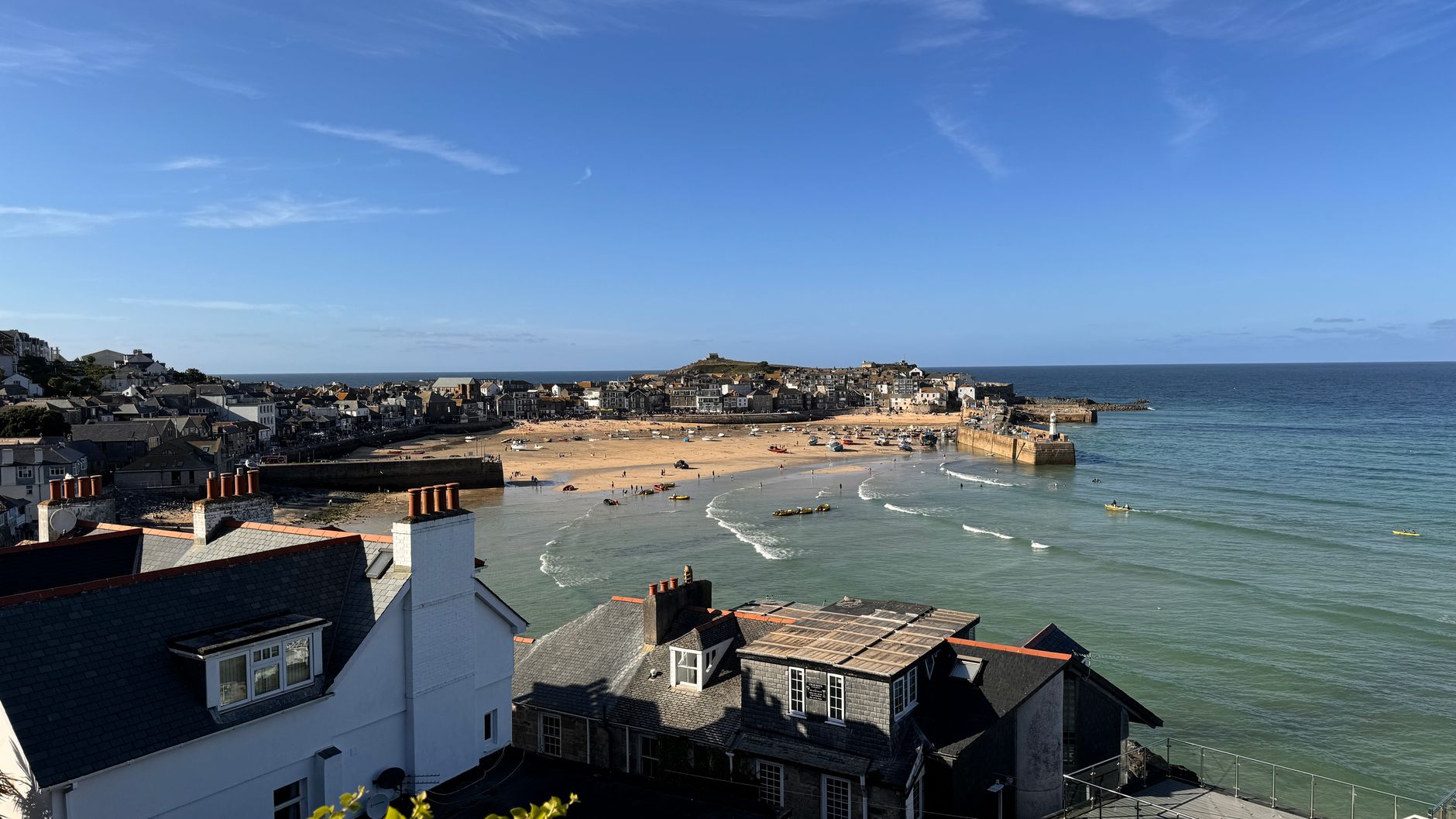
Mousehole: The Postcard Village (West Cornwall)
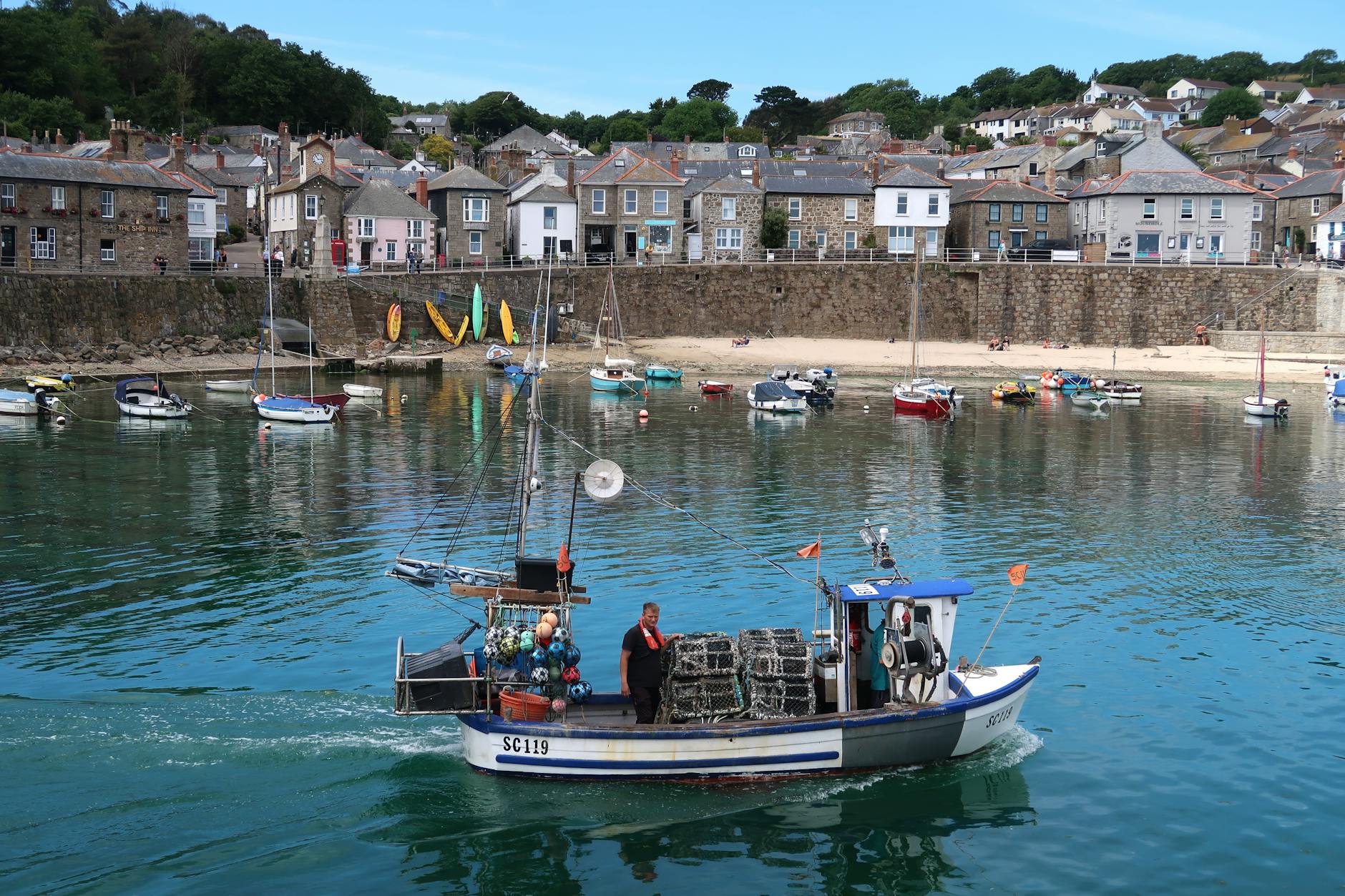
Mousehole, pronounced “Mowzul” by everyone who lives within thirty miles, sits three miles south of Penzance round the curve of Mount’s Bay. The harbour is medieval — the breakwater was first built in the fourteenth century — and the cottages cluster up the slope behind it as if huddled against the prevailing south-westerly. Dylan Thomas called it “the loveliest village in England,” which is the kind of quote a village can dine out on for a century, and Mousehole has.
Parking is the problem. The harbour-side spaces are tiny and reserved for residents. The best options are the small car park above the village (a steep ten-minute downhill walk to the harbour, ten uphill back), the free roadside parking on the approach road from Newlyn (limited and competitive), or — much better — bus 6 from Penzance Green Market, every half hour, journey time fifteen minutes. During the Christmas lights season the only realistic option is to leave the car in Penzance and bus in. The lights run mid-December to around 5 January, lit from 5pm to 10pm, and they make Mousehole the busiest village in the country over Christmas.
The Christmas lights are a tradition since 1963 — locally made displays involving sixty-plus illuminated tableaux and seven thousand bulbs. Tom Bawcock’s Eve on 23 December commemorates the local fisherman who, the legend says, went out into a winter storm to save the village from famine. The Ship Inn serves Stargazy Pie that night (a pie with fish heads pointing through the pastry crust) and a children’s lantern procession runs through the village.
Outside the Christmas season, Mousehole is a quiet morning’s exploration. 2 Fore Street is the bistro to know — Mediterranean-leaning, locally sourced, with a small terrace overlooking the harbour. The Ship Inn is the harbour-front pub. The Rock Pool Café does morning coffee and lunch. Hole Foods is the deli for picnic supplies. The walk from Mousehole to Lamorna Cove along the South West Coast Path is two and a half dramatic miles south. The Mousehole Wild Bird Hospital, founded in 1928, accepts injured seabirds from across West Cornwall and is one of those quietly remarkable village institutions that doesn’t advertise.
Port Isaac: The TV Village (North Cornwall)
Port Isaac sits twenty-five minutes north-west of Wadebridge on the north coast. The village is small, steep, and improbably picturesque — fishermen’s cottages tumbling down the cliff to a small working harbour where slate-roofed fish cellars still line the quay. It is also, famously, where Doc Martin was filmed.
The Doc Martin news is that the show has ended. Series 10, the final, was filmed February to September 2022 and broadcast in autumn 2022 with a Christmas special on 25 December 2022. The locations — Doc’s surgery (the blue-shuttered Fern Cottage), the school, Mrs Tishell’s pharmacy, Large’s Restaurant — are all still there to walk past. The cottage that played Fern Cottage sold for £1.25 million in 2024. Fans still arrive daily, but the cast and crew are gone.
The other Port Isaac headline acts are Nathan Outlaw’s Outlaw’s Fish Kitchen, the harbour-front Michelin-starred fish restaurant (still operating, still excellent, book months ahead), and Restaurant Nathan Outlaw, which has had multiple Michelin recognitions and operates in the village. The Fisherman’s Friends shanty group is also a Port Isaac institution; the free Friday-evening harbour Platt performances have stopped because the crowds became unmanageable, but the group still tours, with a 2026 UK tour and a first-ever Australian tour in January 2026. The inaugural Fisherman’s Friends Festival runs 22-24 May 2026 in Cornwall.
Parking is at the top of the village, with a steep walk down. The lower harbour parking on the beach itself only operates between certain tides and is risky for cars left too long. Walk Roscarrock Hill at the top of the village, squeeze through Squeezy Belly Alley (a Port Isaac landmark, narrow enough that anyone over a certain width gets stuck), and walk the coast path to Port Quin (two miles) or Port Gaverne next door (fifteen minutes).
Polperro: The Cars-Banned Village (South-East Cornwall)
Polperro sits five miles west of Looe on the south-east coast. The village is unique in Cornwall in that cars are effectively banned from the centre in summer — you park at Crumplehorn at the top, walk fifteen to twenty minutes down through narrow lanes to the harbour, and walk back up at the end of the day. The Crumplehorn car park is the only realistic option; it costs around £7 for three hours, up to £40 for a week, and an Easter-to-October tuk-tuk service runs people up and down the hill from the car park for those who don’t want to walk. In November to March there’s a 10% off-season discount at local businesses for parking customers.
The village itself is beautiful and is, unlike the rest of Cornwall, almost unchanged from its eighteenth-century peak as a smuggling port. The harbour is tiny. The House on Props, a wooden cottage on stilts over the stream, is a Polperro landmark. The Polperro Heritage Museum of Smuggling and Fishing, in The Warren overlooking the harbour, is housed in an old pilchard factory and tells the actual smuggling story (which centres on Zephaniah Job, “The Smuggler’s Banker” of the late 1700s, who handled the financial side of the village’s industrial-scale contraband operation). Open Easter to end October, £3 adult, under-16s free. The Polperro Model Village & Land of Legend is a children’s attraction that has been running for sixty-plus years and miraculously survived both fire and flood.
The Three Pilchards is the oldest pub in Polperro, with exposed beams and a log stove. The Blue Peter Inn is built from two former smugglers’ cottages and has been a pub since the 1960s. Couch’s Great House Restaurant is the fine-dining option, with head chef Richard McGeown (Gordon Ramsay, Marco Pierre White and Raymond Blanc on his CV). For more on Polperro’s twin village, see our Looe and Polperro guide.
Mevagissey: The Working Harbour (South Coast)
Mevagissey, six miles south of St Austell, is a proper working fishing port — bigger than Polperro or Mousehole, with a fleet of working boats that still go out for crab, lobster and line-caught mackerel. The village has a double harbour, inner and outer, with the inner harbour drying out at low tide. The Mevagissey Museum on the south quay is free and small; the Mevagissey Aquarium on the north pier, housed in the old RNLI station, is small but charming.
The crucial Mevagissey practical: the Lost Gardens of Heligan are 1.5 miles north-east of the village, walkable via a footpath in about fifty minutes or a short drive. Mevagissey is the natural lunch stop before or after Heligan. Eat at The Sharksfin, Salamander, Mr Bistro or Alvorada (the surprise Portuguese place). The walk south from Mevagissey to Gorran Haven (three miles via the South West Coast Path) is one of the prettiest short walks on the south Cornish coast.
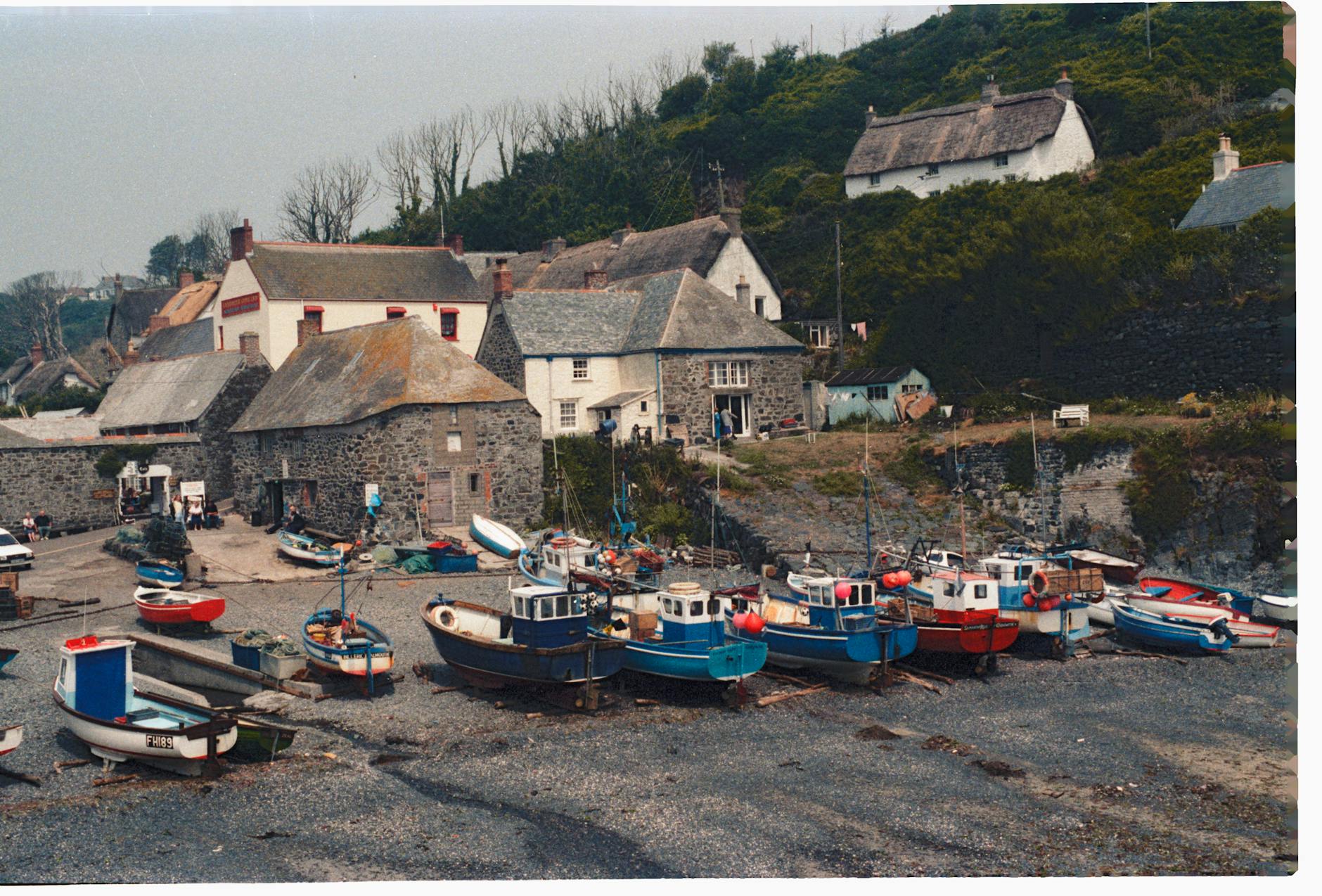
Cadgwith: The Thatched Cove (Lizard Peninsula)
Cadgwith is the village photographers come to. East side of the Lizard Peninsula, between Lizard Point and Coverack, with a working shingle cove where the day-boats are hauled up on the beach every evening because the cove is too shallow to leave them moored. The cottages are thatched. The fish cellars are still in use. The setting is among the most quietly cinematic in Cornwall — there are no big hotels, no chain shops, no major tourist infrastructure.
Park at the seventy-five-space car park up the hill (£3 all day, free in winter; no vehicles in the cove itself). The walk down takes five minutes; the walk back up takes ten. The Devil’s Frying Pan, a collapsed sea cave forming a natural amphitheatre, is a ten-minute walk south along the coast path. The Cadgwith Cove Inn is the village pub — the Friday evening shanties are a Cornish institution. The Crab & Lobster Shack on the beach in summer does day-caught crab sandwiches. The coast walk south to Lizard Point (three miles) is spectacular; the walk north to Coverack (five miles) is longer and quieter.
Coverack: The Lizard’s Quiet Half (Lizard Peninsula)
Coverack sits on the eastern side of the Lizard six miles south-east of Helston. Less photographed than Cadgwith, less visited even in August, with a crescent of sand and shingle, a working harbour, and a windsurfing and standup paddleboard centre that has built a small following over the past decade. The Paris Hotel on the front is named after the SS Paris, wrecked offshore on the Manacles reef in 1899 — the Manacles are the notorious shipwreck reef that lies just offshore and has caught dozens of vessels over the centuries.
This is the village to come to if you want the Cornwall-fishing-village atmosphere without the Cornwall-fishing-village crowds. Eat at the Paris Hotel or the Cove Café. Walk north to Porthoustock (three miles) or south to Kennack Sands. Dog-friendly all year. Pay-and-display by the harbour. The kind of place that locals quietly try to keep out of the listicles.
Charlestown: The Tall Ship Harbour (South Coast)
Charlestown sits two miles south-east of St Austell — a Grade II listed Georgian harbour, built in the 1790s by Charles Rashleigh as a port for shipping china clay, and preserved largely unchanged. The cobbled quays and the slate-roofed warehouses gave the harbour its career as a filming location: Poldark used it through all five series (2015-2019), with the harbour scenes doubling for Truro and Falmouth. The Square Sail company kept a small fleet of tall ships moored at the quays for years (worth checking the current state of the fleet before visiting, as the tall ship operations have shifted).
One important update many older guides miss: the Shipwreck Treasure Museum (which was Charlestown’s main paid attraction) closed permanently at the end of 2024. The final event was the “Tunnel of Lights” on 31 December 2024. The Charlestown History Group secured key artifacts, and there is now no museum at the harbour. The site is still worth visiting for the harbour itself; just don’t arrive expecting the museum.
The Longstore does steak and seafood. Wreckers Restaurant is the harbour-front option. Walk the coast path to Carlyon Bay (one mile) or Porthpean (two miles).
Portloe: Cornwall’s Most Hidden Cove (Roseland Peninsula)
Portloe, east side of the Roseland between Veryan and Portscatho, is possibly Cornwall’s most under-touristed picture-perfect fishing village. A tiny pilchard port from the seventeenth and eighteenth centuries, once with fifty-plus pilchard boats, now with three crab and lobster boats. The valley is steep enough that the village has never been able to expand, which is why it looks the way it does.
The Lugger Hotel on the seafront is the village’s main establishment — a five-star AA hotel with two AA rosettes in twenty-two rooms, in a building that dates to 1701 as a smugglers’ inn and became a hotel in 1951. Recently celebrated sixty-five years as a hotel. Eat at the Lugger or at the village café. Walk the coast path south to Portholland (two miles) or north to Nare Head. There is no major tourist infrastructure. This is what Cornwall looked like in 1960 and it’s worth seeing while it lasts.
Gorran Haven: Mevagissey’s Quieter Sibling (South Coast)
Gorran Haven sits two miles south of Mevagissey in the shadow of Dodman Point (the 400-foot headland that dominates the bay east). The village has a sandy beach, a nineteenth-century stone pier, a fish-and-chip shop, a bakery (Cakebreads), and the Beachside Café for pasties on the sand. Iron Age fort traces survive on Dodman Point above the village. Dogs are allowed on the beach year-round, on leads from Easter to 30 September. The walk south around Dodman Point is steep and spectacular; the walk north to Mevagissey is three miles of easy clifftop.
Helford and Helford Passage: Daphne du Maurier Country (South Coast)
The Helford River, south-west of Falmouth, is the most secret estuary in Cornwall — a tree-lined, deep-creek system that opens out to the sea between Rosemullion Head and the Manacles. Helford village sits on the south bank, Helford Passage on the north bank, and they’re connected by a thousand-year-old pedestrian-and-cycle ferry (Helford River Boats, April to October only, summoned by raising a yellow disc on the slipway).
The Shipwrights Arms on the Helford side is a sixteenth-century thatched pub with local seafood and a garden running down to the water. The Ferry Boat Inn on the Helford Passage side is a three-hundred-year-old waterfront pub with its own beach. The walk from Helford village around Frenchman’s Creek (the setting for Daphne du Maurier’s 1941 novel of the same name) is three and a half miles of quiet wooded creekside path.
Newlyn: The Working Port Most Visitors Skip (West Cornwall)
Newlyn sits a mile south of Penzance and is the UK’s largest fishing port by value of fish landed. It is genuinely a working port, not a tourist version. Most visitors driving from Penzance to Mousehole pass straight through. They are missing the point.
Newlyn is not picture-postcard pretty in the cottage sense. It is gritty, working, authentic. The fish auction runs from before dawn (you can’t attend it as a visitor, but the morning bustle at the harbour is unique). Newlyn Art Gallery, founded in 1895 and one of the founding institutions of the Newlyn School, is the contemporary art space — sister to The Exchange in Penzance. The Penlee Lifeboat Memorial commemorates the 1981 Solomon Browne lifeboat disaster, in which the entire crew was lost. The Newlyn Tidal Observatory on the harbour wall defines the UK Ordnance Datum — every height in Britain measured against sea level is measured against the Newlyn datum.
Eat at the Tolcarne Inn (Top 50 Gastropub, chef Ben Tunnicliffe), Mackerel Sky (no bookings, queue at the door), or Duke Street Café. Walk the Promenade from Penzance through Newlyn to Mousehole — three miles, flat, paved, sea-side the whole way.
Porthleven: The Storm-Watching Harbour (Lizard, West Side)
Porthleven sits three miles south-west of Helston and is the most southerly port on the British mainland. The Bickford-Smith Institute clocktower on the harbour wall is the canonical Porthleven photograph, particularly during winter storms when Atlantic swells break against the breakwater and the spray rises above the clocktower — those photographs you’ve seen of Cornish storm-watching are mostly here.
The village is also Cornwall’s serious-food town. Kota (Michelin-recommended, Maori and Pan-Asian seafood), The Square (Michelin-recognised brasserie), Amélies (the bistro), Origin Coffee Roasters (the canonical Cornish speciality coffee). The Porthleven Food Festival runs 24-26 April 2026 around the harbour — free entry, dozens of chef demos and food stalls. The walk east to Loe Bar and Loe Pool (Cornwall’s largest natural lake, separated from the sea by a shingle bar) is three easy miles of coastal path.
Boscastle: The Witchcraft Museum and the Flood (North Coast)
Boscastle, five miles north of Tintagel on the north coast, has a natural double-dogleg harbour cut by two streams between high cliffs. The village is small, the harbour is dramatic, and the place is best known nationally for two things: the Museum of Witchcraft and Magic, and the 2004 flood.
The Museum of Witchcraft and Magic, founded in 1960, holds the world’s largest collection of witchcraft-related artefacts — over 10,000 items including charms, talismans, curse-cabinets and ritual objects from the European pagan and witchcraft traditions. It is an extraordinary museum and entirely uncategorisable. Worth a half-day visit.
The 2004 flood on 16 August 2004 was one of the most dramatic peacetime disasters in modern British history. Five hours of torrential rain dumped 440 million gallons of water down the Valency Valley above the village. Three metres of water raced through the harbour, a bridge and four buildings were washed away, and 115 cars were swept into the harbour. No one was killed, thanks to what remains the largest peacetime air rescue operation in British history. The museum curator Graham King’s quick action saved most of the museum’s contents. The village rebuilt. Today, the only sign of the flood is the new flood-defence work along the river.
Walk out along the harbour to Penally Point for the Devil’s Bellows blowhole (which sprays at mid-tide), and on to Willapark for the National Coastwatch lookout. Inland: the Valency Valley walk (Thomas Hardy met his first wife here). Eat at the Wellington Hotel, the Cobweb Inn or the Harbour Light tearoom.
Which Village Is Right for Your Day Trip?
For pure photographs: Mousehole or Cadgwith.
For working harbour atmosphere: Mevagissey or Newlyn.
For total escape from crowds: Portloe.
For dramatic geology: Boscastle.
For pubs with shanty culture: Cadgwith (Friday nights).
For a half-day with Lost Gardens of Heligan: Mevagissey.
For storm-watching: Porthleven, October to March.
For Christmas: Mousehole.
For a day with great food: Porthleven.
For TV-village curiosity: Port Isaac.
For Daphne du Maurier: Helford.
For Poldark: Charlestown.
For accessibility on a tight schedule: Polperro (with the tuk-tuk) or Mevagissey (level harbour).
Best Photography Times for Each Village
If photography is part of why you’re going, the timing changes the result. Mousehole at blue hour during the Christmas lights (15 December to 5 January, 4.30pm to 5.30pm) is genuinely special. Port Isaac in summer at pre-7am before the tour buses arrive. Cadgwith at sunrise — the cove is east-facing and the boats are hauled up. Charlestown at golden hour with the tall ships’ rigging silhouetted against the western sky. Porthleven on storm days from October to March with the clocktower and the waves. Boscastle at low tide for the harbour structure, and from Penally Point at sunset.
Off-Season Pleasures (November to March)
The crowds disappear, the cafés that stay open are warmer welcomes than they are in August, the pubs return to local conversation, and the harbours are at their photographic best. Cadgwith’s Friday-night shanties become much more authentic without summer audiences. Several villages have free winter parking (Coverack and Cadgwith). The wild swimmers are out in Coverack and Helford all year. And Mousehole’s Christmas lights make December a destination in itself.
Frequently Asked Questions
What is the prettiest fishing village in Cornwall? Mousehole for the postcard view; Cadgwith for the working-cove atmosphere; Portloe for the genuine hidden-gem feeling.
What is the most famous fishing village in Cornwall? Mousehole and Polperro are equally famous in the tourist imagination; Port Isaac is famous because of Doc Martin.
Where was Doc Martin filmed in Cornwall? Port Isaac. The show ended in December 2022.
Can you drive into Polperro? No, effectively. Park at Crumplehorn and walk fifteen minutes down through the village, or take the Easter-October tuk-tuk service.
Where did they film Poldark in Cornwall? Charlestown harbour, used for all five series 2015-2019.
Which Cornish village has Christmas lights? Mousehole — sixty-plus displays, lit from mid-December to early January.
What is the smallest fishing village in Cornwall? Cadgwith and Portloe are both contenders.
Is Port Isaac worth visiting? Yes, but expect crowds even now the show has ended. Best in early morning or out of school holidays.
What is the best time of year to visit Cornish fishing villages? May, June, September for weather and lower crowds. December for Mousehole’s lights. Storm season (Oct-March) for Porthleven.
Where can you eat fresh seafood in Cornwall fishing villages? The Tolcarne in Newlyn, the Outlaw restaurants in Port Isaac, Kota in Porthleven, the Lugger Hotel in Portloe, the Cadgwith Cove Inn.
Are there any fishing villages in Cornwall without tourists? Portloe, Coverack and Cadgwith come closest. Helford village too.
Cornwall’s fishing villages are the best argument for slowing down a holiday. Pick three or four. Visit one each morning. Build the trip around fishing village A in the morning, beach B in the afternoon, fishing village C the next morning. You’ll get a more layered version of Cornwall than the people who race round trying to see everything in a week.